How otters' muscles enable their cold, aquatic life
Texas A&M researchers found that the small mammals are internally warmed by thermogenic leak from their skeletal muscle, which elevates their metabolic rate
Published 2021-07-09 · Original archive entry · Explore research explainers
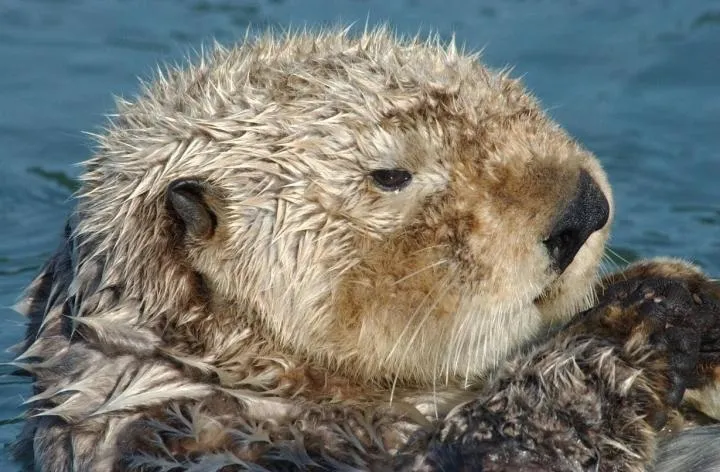
Sea otters are the smallest marine mammal. As cold-water dwellers, staying warm is a top priority, but their dense fur only goes so far. We have long known that high metabolism generates the heat they need to survive, but we didn't know how they were producing the heat -- until now.
Researchers recently discovered that sea otters' muscles use enough energy through leak respiration, energy not used to perform tasks, that it accounts for their high metabolic rate. The finding explains how sea otters survive in cold water.
Physiologist Tray Wright, research assistant professor in Texas A&M University's College of Education & Human Development, conducted the study along with colleagues Melinda Sheffield-Moore, an expert on human skeletal muscle metabolism, Randall Davis and Heidi Pearson, marine mammal ecology experts, and Michael Murray, veterinarian at the Monterey Bay Aquarium. Their findings were published in the journal END
Researchers recently discovered that sea otters' muscles use enough energy through leak respiration, energy not used to perform tasks, that it accounts for their high metabolic rate. The finding explains how sea otters survive in cold water.
Physiologist Tray Wright, research assistant professor in Texas A&M University's College of Education & Human Development, conducted the study along with colleagues Melinda Sheffield-Moore, an expert on human skeletal muscle metabolism, Randall Davis and Heidi Pearson, marine mammal ecology experts, and Michael Murray, veterinarian at the Monterey Bay Aquarium. Their findings were published in the journal END