Soil Under Sweden's Ancient Forests Holds More Carbon Than Entire Managed Stands
Stanford Doerr School of Sustainability / Science
Rob Jackson had expected the old trees to hold more carbon. Bigger trunks, more dead wood on the forest floor, centuries of uninterrupted growth. What he did not expect was what lay beneath them.
In the lowland primary forests of Sweden, the top meter of soil contained roughly 64% of the total carbon in an average plot. Live trees accounted for about 30%. Dead wood, just 6%. The carbon story of these forests was not written in their canopy. It was written underground.
Eight years of fieldwork, one stark number
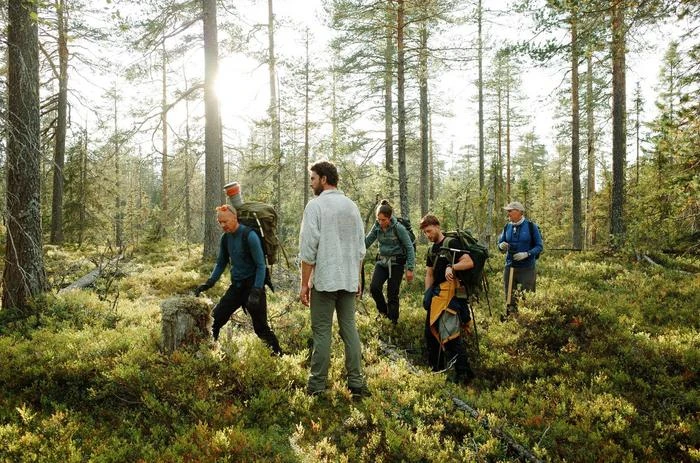
Jackson, a professor of Earth system science at Stanford's Doerr School of Sustainability, is a senior author on a study that took eight years to complete. The project was spearheaded by Anders Ahlstrom, who began the work as a postdoctoral scholar in Jackson's Stanford lab and continued it after joining Lund University in Sweden as a senior lecturer.
The team mapped old-growth forests across Sweden, measured carbon at more than 200 forest plots over three years, then combined their field data with decades of national forest and soil carbon inventory data and statistical models. The result is the first analysis to quantify carbon across all compartments: vegetation, dead wood, soil, and harvested timber products.
Published March 19 in Science, the findings show that undisturbed primary forests store 72% more carbon per acre than the managed forests replacing them. That figure generously credits managed forests with all carbon stored in goods made from harvested wood, including paper, bioenergy, and building materials. Without that credit, the gap widens to 83%.
The difference is 2.7 to 8 times larger than current official estimates.
Two centuries of emissions, locked in the ground
Scaling up from per-acre measurements to the national level produces numbers that demand attention. Restoring carbon storage in Sweden's managed forests to the level maintained by primary forests would mean keeping nearly 8 billion tons of carbon dioxide out of the atmosphere. That is equivalent to Sweden's cumulative fossil fuel emissions over the last two centuries, and it dwarfs the country's current annual emissions by a factor of several hundred.
Lead author Didac Pascual, a postdoctoral scholar at Lund, noted that primary forests stored more carbon in their soil alone than managed forests held in trees, dead wood, and soils combined. This is the central finding, and it is one that previous models badly underestimated.
Why the gap is so persistent
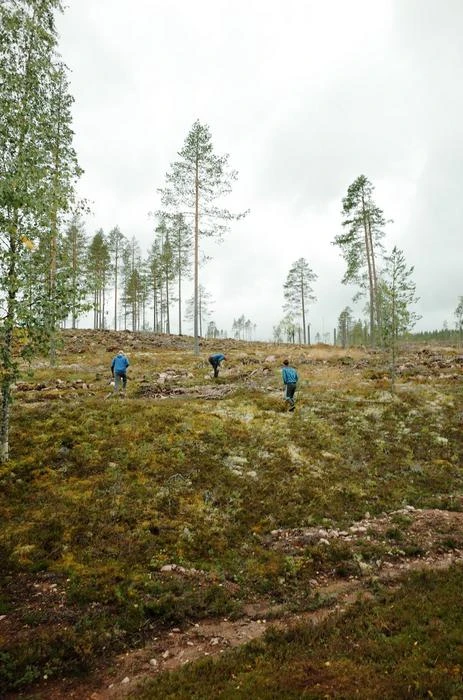
Industrial forestry in Sweden typically involves clear-cutting old forests and replanting with single-species stands. The process disrupts soil in multiple ways: heavy machinery compacts it, drainage ditches alter hydrology, and the removal of dead wood eliminates a major source of organic carbon input. Boreal soils accumulate carbon slowly, over centuries, as cold temperatures retard decomposition. Once that carbon is released, replacing it is not a matter of planting new trees and waiting a few decades. It can take centuries.
Most harvested wood makes the problem worse, not better. The majority of products are short-lived, paper burns or decomposes, bioenergy releases carbon immediately, and even construction timber has a limited lifespan compared to a living forest. The carbon stored in wood products does not compensate even for the difference in dead wood between old-growth and managed stands.
Sweden is losing old-growth forests faster than Brazil
Previous research has shown that between 2003 and 2019, Sweden lost unprotected old-growth forests to clear-cutting at a rate of 1.4% per year. That is six times the rate at which primary forests are disappearing in the Brazilian Amazon. The comparison is startling, but there is a reason Sweden's losses receive less attention: satellite sensors struggle to distinguish between old-growth boreal forest and a managed spruce plantation. Both are green. Both contain native species. From space, they look similar.
This invisibility makes the problem politically convenient to ignore. But on the ground, the carbon numbers tell a different story.
What the study cannot yet answer
The research was conducted in Sweden, and boreal forests elsewhere, in Canada, Russia, Finland, and Alaska, may behave differently. Extrapolating these specific numbers requires caution and local fieldwork.
The study also does not isolate which management practices cause the greatest damage. Drainage, plowing, prescribed burns, and the loss of beneficial mycorrhizal fungi all likely contribute, but their relative importance remains unclear. Jackson and Ahlstrom are now collaborating with Stanford biologist Kabir Peay to investigate whether old-growth forests harbor a unique community of soil microbes that could be transplanted to accelerate carbon recovery in managed forests, potentially without waiting centuries for old-growth conditions to develop naturally.
For nations counting on managed forests to meet their climate commitments, the study delivers an uncomfortable message. If plantations store less than half the carbon of the old-growth forests they replace, the climate models underpinning bioenergy and forestry strategies may need substantial revision.