PRESS-NEWS.org - Press Release Distribution
PRESS RELEASES DISTRIBUTION

Newest cancer therapies multi-task to eliminate tumors

 Newest cancer therapies multi-task to eliminate tumors
2011-09-19
(Press-News.org) AUGUSTA, Ga. – Some of the newest therapies in the war on cancer remove the brakes cancer puts on the immune system, Georgia Health Sciences University researchers report.

These immunotherapies, such as CTLA4, strengthen the immune system's attack on cancer by keeping apart two proteins that prevent key immune cells called T cells from activating.

Research featured on the cover of the Journal of Immunology suggests that these therapies also keep tumors from benefitting from IDO, an enzyme used by fetuses and tumors alike to suppress the immune response.

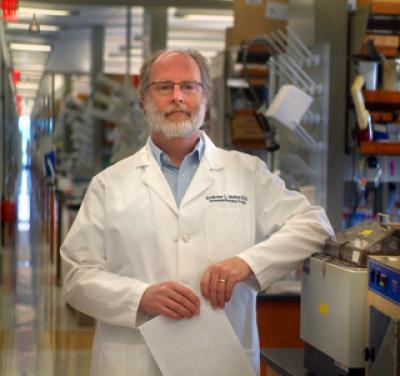
"This is an alternative way of avoiding the immune system brakes," said Dr. Andrew Mellor, Director of the GHSU Immunotherapy Center and the study's corresponding author. "These findings give us better insight into how cancer immunotherapy works so in the future we can better minimize the side effects and maximize the effect we want which is anti-tumor."

Mellor and Dr. David Munn, who leads the Cancer Immunotherapy Program in the GHSU Cancer Center and co-authored the study, led a research team that in 1998 identified IDO's role in preventing a mother's immune system from rejecting a fetus. They subsequently learned that tumors pirate the mechanism. The university has patented technologies to inhibit IDO, which are currently in clinical trials funded by the National Cancer Institute and corporate partners. "Tumors are really good at turning on IDO and after the cancer is found it becomes important to turn it off," Mellor said.

The study also provides new insight into cancer treatment vaccines that have worked well in the laboratory but are less successful in patients, Mellor said.

It suggests that the quantity of bacterial mimics, which get the attention of the immune system, is pivotal. Mellor and his colleagues showed in 2005 that the bacterial mimic CpG-ODNs can actually activate IDO. The new study confirmed that a lower dose avoided stimulating IDO while higher doses turned it on.

It also may help explain a common cancer vaccine side effect: the immune system's attack on healthy as well as cancerous tissue.

IDO, or indoleomine 2,3-dioxyegenase, locally suppresses immune system action by degrading tryptophan, an amino acid essential to survival of T-cells, orchestrators of immune response. Along with tumors, infectious agents, such as HIV, may use this mechanism to escape the immune system. In addition to pursuing the cancer treatment potential of IDO inhibitors, GHSU researchers have been looking at how invoking IDO can protect transplanted organs or treat autoimmune diseases such as rheumatoid arthritis and type 1 diabetes, respectively.


INFORMATION:


Collaborators include Dr. Babak Baban, Assistant Professor of Oral Biology in the GHSU College of Dental Medicine, who is first author on the study, as well as investigators at Harvard University and the University of Minnesota. Mellor is the Bradley-Turner Georgia Research Alliance Eminent Scholar in Molecular Immunogenetics. The research was funded by the National Institutes of Health.


[Attachments] See images for this press release:
 Newest cancer therapies multi-task to eliminate tumors

ELSE PRESS RELEASES FROM THIS DATE:

New threat closes in on iconic Galápagos wildlife

2011-09-19
Renewed vigilance over the biosecurity of the Galápagos Islands is needed, based on new research on the risk posed by West Nile virus. Scientists from the Zoological Society of London (ZSL), the University of Leeds and the New York State Department of Health, together with the Galápagos National Park Service and University of Guayaquil, have been studying the disease threat posed by Islands' mosquito populations. They have discovered that a species of these biting insects is capable of transmitting West Nile virus, a potentially dangerous disease for the archipelago's ...

Quantum behavior with a flash

Quantum behavior with a flash
2011-09-19
This press release is available in German. Just as a camera flash illuminates unseen objects hidden in darkness, a sequence of laser pulses can be used to study the elusive quantum behavior of a large "macroscopic" object. This method provides a novel tool of unprecedented performance for current experiments that push the boundaries of the quantum world to larger and larger scales. A collaboration of scientists led by researchers from the Vienna Center for Quantum Science and Technology (VCQ) at the University of Vienna report this new scheme in the forthcoming ...

CONRAD presents results of pivotal contraceptive study at Reproductive Health 2011

2011-09-19
Las Vegas, NV—CONRAD, a leading reproductive health research organization, will announce results of the SILCS Diaphragm contraceptive effectiveness study September 17th at the Reproductive Health 2011 Conference in Las Vegas, Nevada. The two-year study of 450 U.S. women implemented at six clinical sites in the U.S. showed that effectiveness rates of the new single size, contoured diaphragm are similar to traditional diaphragms. In addition, SILCS was shown to be easy to use and comfortable to wear. The single-size design eliminates the need for a fitting, which should ...

T cells making brain chemicals may lead to better treatments for inflammation, autoimmune diseases

2011-09-19
MANHASSET, NY -- Scientists have identified a surprising new role for a new type of T cell in the immune system: some of them can be activated by nerves to make a neurotransmitter (acetylcholine) that blocks inflammation. The discovery of these T cells is novel and suggests that it may be possible to treat inflammation and autoimmune diseases by targeting the nerves and the T cells. The study was published this week in Science. "The discovery that 2 percent of T cells can make acetylcholine under the control of nerves gives a new insight into how the nervous system regulates ...

Bold Earth Teen Adventures Adds Diversity With Teens From Over 50 Countries for Summer 2011

2011-09-19
Bold Earth Teen Adventures is seeing an increase in international interest for student travel as teens from outside the USA grew to represent 25% of their summer 2011 trips. International students are enrolling at a high rate, and this summer marks the first time that Bold Earth welcomed students from new countries including China, Japan, Korea, Iceland and Nigeria. "Summer 2011 opened up Bold Earth to a new level of diversity that we're so proud of," said Abbott Wallis, President of Bold Earth. "Teens from all over the world are craving these rich experiences. ...

A wild and woolly discovery: FSU scientist's Tibetan expedition ends with prehistoric find

A wild and woolly discovery: FSU scientists Tibetan expedition ends with prehistoric find
2011-09-19
Yang Wang is known for conducting complex research using highly sophisticated equipment. Yet the Florida State University geochemist also has spent days hiking through the remote outback of Tibet and camping in the foothills of the Himalayas — all in the name of scientific discovery. Because of that unique mix of skills, Wang was chosen to take part in a team of researchers that uncovered the oldest prehistoric woolly rhino ever found. A paper describing the team's discovery was just published in Science (http://www.sciencemag.org/), a prestigious journal established ...

Pitt team finds molecular evidence of brain changes in depressed females

2011-09-19
PITTSBURGH, Sept. 16 – Researchers at the University of Pittsburgh School of Medicine have discovered molecular-level changes in the brains of women with major depressive disorder that link two hypotheses of the biological mechanisms that lead to the illness. Their results, published online this week in Molecular Psychiatry, also allowed them to recreate the changes in a mouse model that could enhance future research on depression. Although women are twice as likely as men to develop depression and have more severe and frequent symptoms, very little research has focused ...

Sound Design by PopMark Media's Studio Unknown for "Lovely Molly" Receives Praise

Sound Design by PopMark Medias Studio Unknown for "Lovely Molly" Receives Praise
2011-09-19
The sound design of the feature film, "Lovely Molly" (Amber Entertainment, Haxan Films), which debuted at the Toronto Film Festival on Wednesday, September 14th, is receiving high praise from industry bloggers. PopMark Media's Sound Division, Studio Unknown, was responsible for the full sound design package of the film. Directed by Eduardo Sanchez, known for his 1999 horror, "The Blair Witch Project," "Lovely Molly" centers on a troubled young woman and the evil power that exists inside her. The film relies heavily on sound for story support. ...

Unknown ocean bacteria create entirely new theories

2011-09-19
The earth's most successful bacteria are found in the oceans and belong to the group SAR11. In a new study, researchers from Uppsala University provide an explanation for their success and at the same time call into question generally accepted theories about these bacteria. In their analysis they have also identified a rare and hitherto unknown relative of mitochondria, the power stations inside cells.The findings were published in two articles in the journals Molecular Biology and Evolution and PLoS One in the last week. "The huge amounts of DNA information now being ...

Genetics may explain why calcium increases risk for prostate cancer

2011-09-19
WINSTON-SALEM, N.C. – Sept. 16, 2011 – A study by epidemiologists at Wake Forest Baptist Medical Center and colleagues suggests that a high intake of calcium causes prostate cancer among African-American men who are genetically good absorbers of the mineral. "High dietary intake of calcium has long been linked to prostate cancer but the explanation for this observation has been elusive," said Gary G. Schwartz, Ph.D., associate professor of cancer biology, urology, and public health sciences at Wake Forest Baptist and co-author on the study. Schwartz and colleagues ...

LAST 30 PRESS RELEASES:

Making lighter work of calculating fluid and heat flow

Normalizing blood sugar can halve heart attack risk

Lowering blood sugar cuts heart attack risk in people with prediabetes

Study links genetic variants to risk of blinding eye disease in premature infants

Non-opioid ‘pain sponge’ therapy halts cartilage degeneration and relieves chronic pain

AI can pick up cultural values by mimicking how kids learn

China’s ecological redlines offer fast track to 30 x 30 global conservation goal

Invisible indoor threats: emerging household contaminants and their growing risks to human health

Adding antibody treatment to chemo boosts outcomes for children with rare cancer

Germline pathogenic variants among women without a history of breast cancer

Tanning beds triple melanoma risk, potentially causing broad DNA damage

Unique bond identified as key to viral infection speed

Indoor tanning makes youthful skin much older on a genetic level

Mouse model sheds new light on the causes and potential solutions to human GI problems linked to muscular dystrophy

The Journal of Nuclear Medicine ahead-of-print tip sheet: December 12, 2025

Smarter tools for peering into the microscopic world

Applications open for funding to conduct research in the Kinsey Institute archives

Global measure underestimates the severity of food insecurity

Child survivors of critical illness are missing out on timely follow up care

Risk-based vs annual breast cancer screening / the WISDOM randomized clinical trial

University of Toronto launches Electric Vehicle Innovation Ontario to accelerate advanced EV technologies and build Canada’s innovation advantage

Early relapse predicts poor outcomes in aggressive blood cancer

American College of Lifestyle Medicine applauds two CMS models aligned with lifestyle medicine practice and reimbursement

Clinical trial finds cannabis use not a barrier to quitting nicotine vaping

Supplemental nutrition assistance program policies and food insecurity

Switching immune cells to “night mode” could limit damage after a heart attack, study suggests

URI-based Global RIghts Project report spotlights continued troubling trends in worldwide inhumane treatment

Neutrophils are less aggressive at night, explaining why nighttime heart attacks cause less damage than daytime events

Menopausal hormone therapy may not pose breast cancer risk for women with BRCA mutations

Mobile health tool may improve quality of life for adolescent and young adult breast cancer survivors

[Press-News.org] Newest cancer therapies multi-task to eliminate tumors