“Live longer” is an outcome, not an explanation. The interesting part of a longevity experiment is the chain connecting an intervention to that outcome: what changed, what else changed with it, and which link was actually tested. A new paper gives that discussion a specific molecular starting point.
- Research published
- Nature · 23 September 2026
- Experimental system
- Drosophila fruit flies
- Source access
- Abstract; full methods not assessed
Original publication: 23 Sep 2026 · The date above refers to this brief.
The new result in brief
Wang and colleagues report that removing the Lsp2 gene extended fly lifespan while preserving measured reproduction. They link Lsp2 to mTORC1, a nutrient-sensing complex, and to translation of TOP-motif messenger RNAs through 4E-BP. The proposed mechanism differs from rapamycin’s effects. This is genetic work in flies; it does not establish a human longevity intervention.
Source 1 ↗A useful connection to an older fly experiment
Grandison, Piper and Partridge reported in 2009 that adding essential amino acids to a restricted fly diet increased reproduction and shortened lifespan. Methionine alone increased reproduction without that lifespan reduction. This challenged a simple picture in which reproduction and longevity always compete for the same limiting resources.
Our connection between the papers is conceptual: a broad label such as “nutrient response” can hide separable effects. The earlier dietary experiment is not an independent replication of the new genetic mechanism. Different interventions can help ask a related question without proving the same chain of causation.
Source 2 ↗What a genetic change does—and does not—stand in for
Removing a gene and giving a medicine are different experimental operations. A genetic change may affect development, several tissues or compensatory pathways. A future intervention might act later, incompletely or in different places. Similar-looking outcomes would not guarantee that the biological route was identical.
When reading a proposed mechanism, sketch three boxes: intervention, intermediate process and final outcome. Mark which connection was directly tested and which remains an interpretation. Restoring a missing function, changing the timing or altering another step in the proposed pathway are examples of informative tests to look for. We have not checked the full methods here and therefore do not claim which of those tests this paper completed.
Why a longevity headline needs a wider scorecard
For any survival experiment, our reading checklist starts with the comparison group, the number of independent experiments and how deaths and exclusions were handled. Next, examine the whole survival distribution. A shift in typical lifespan, a difference confined to early deaths and a few unusually long-lived animals can tell different stories.
Then ask about function. Longer survival is not a complete description of health, behaviour or reproductive performance. A persuasive programme would examine relevant trade-offs under more than one set of conditions. These are criteria for evaluating a research claim, not unreported results or criticisms of experiments whose detailed records we have not accessed.
What would move the idea forward
Our proposed next questions are whether the effect is robust across genetic backgrounds and environments, whether a later-life manipulation produces a comparable outcome, and which downstream change is necessary for the effect. Those questions distinguish a dependable mechanism from an observation that depends on a narrow setting.
If someone proposes a human application, an additional translation step is needed: identify the relevant human biology and test the intervention’s effects and unwanted consequences. The value of the current news is a more specific question for basic science. It is not a reason to start a medicine, change protein intake or buy an anti-ageing product.
Four questions hidden in “it extends life”
| Question | What to examine | Why it matters |
|---|---|---|
| Did survival change? | Curves, uncertainty, exclusions and replication | A headline percentage can conceal the pattern |
| Was function preserved? | Relevant functional measurements and trade-offs | Survival and healthy function are different outcomes |
| Why did it happen? | Perturbations testing the proposed pathway | An accompanying signal may not be the cause |
| Will it transfer? | Other backgrounds, settings and appropriate species | A result can depend on its experimental context |
Our reading framework. The abstract access available here does not support an audit of every item.
Your questions, answered
How much longer did the flies live?
We have not verified a numerical extension from the underlying survival curves, so we do not supply a percentage. A credible estimate needs the relevant comparison, outcome definition and uncertainty.
Is this evidence that people should take rapamycin?
No. Translating a basic genetic result into a drug decision requires direct evidence on the proposed drug, dose, population, benefits and harms. This article does not provide that assessment.
Does the older diet study prove the new mechanism?
No. It provides historical experimental context for separating biological effects. Replication of a mechanism requires an appropriately matched test, not simply another paper about nutrients and lifespan.
What is the most useful takeaway for a non-specialist?
Ask what was changed, what was measured, and which species and setting were studied. Then keep the observed result separate from a suggested explanation and from any proposed human application.
Limits of this interpretation
- Our access to the new paper was limited to its abstract, metadata and figure headings.
- We cannot independently assess the detailed controls, sample sizes or survival estimates from that access.
- Genetic experiments and human interventions are not interchangeable; suggested next steps are our commentary.
Sources & transparency
- Wang, Cai, Gu et al. (2026): Lsp2 links mTORC1 to TOP mRNA translation and lifespan in Drosophila
Publisher abstract, bibliographic information and figure headings checked. Full main text is behind an access barrier; detailed methods, survival curves and supplementary files were not assessed. No numerical lifespan-extension estimate is supplied. · Accessed 30 Sep 2026
DOI: 10.1038/s41586-026-11029-x - Grandison, Piper and Partridge (2009): Amino-acid imbalance explains extension of lifespan by dietary restriction in Drosophila
Publisher bibliographic record and indexed primary author-manuscript abstract checked. Historical experimental context only; complete methods and supplements not independently assessed. · Accessed 30 Sep 2026
DOI: 10.1038/nature08619
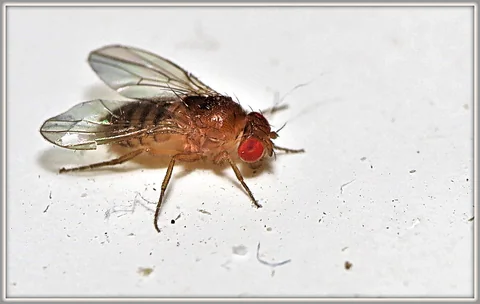
Prepared and source-checked with AI on 30 September 2026. Press-news Team is our collective publication byline, not a claim of medical credentials or human review. No human editorial or clinical review has taken place. We did not conduct these experiments or reanalyse their raw data. The short research reports are followed by our own explanations, comparisons and proposed next questions. Source-access limits are stated below. This is educational reporting on basic research, not a treatment recommendation. The photograph is illustrative.
Source check: AI source check — primary publications, dates and selected reported findings
Clinical review: Not applicable to this educational guide
Suggest a correction