UCLA biochemists build largest synthetic molecular 'cage' ever
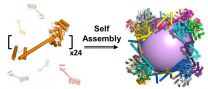
UCLA biochemists have created the largest-ever protein that self-assembles into a molecular "cage." The research could lead to synthetic vaccines that protect people from the flu, HIV and other diseases. At a size hundreds of times smaller than a human cell, it also could lead to new methods of delivering pharmaceuticals inside of cells, or to the creation of new nanoscale materials. The protein assembly, which is shaped like a cube, was constructed from 24 copies of a protein designed in the laboratory of Todd Yeates, a UCLA professor of chemistry and biochemistry. ...
Read the release