Medicine Technology 🌱 Environment Space Energy Physics Engineering Social Science Earth Science Science
Science 2014-09-15

Results of CLEAN-TAVI trial reported at TCT 2014

WASHINGTON, DC – September 13, 2014 – A first-of-its kind study found that using a cerebral protection device during transcatheter aortic valve replacement (TAVR) can significantly reduce the number and volume of cerebral lesions in high risk patients with severe aortic stenosis. Findings were reported today at the 26th annual Transcatheter Cardiovascular Therapeutics (TCT) scientific symposium. Sponsored by the Cardiovascular Research Foundation (CRF), TCT is the world's premier educational meeting specializing in interventional cardiovascular medicine. Stroke remains ...
Read more →
Science 2014-09-15

Two-year results of the CoreValve US Pivotal trial reported at TCT 2014

WASHINGTON, DC – September 13, 2014 – In extended follow-up from a clinical trial, a self-expanding transcatheter aortic valve was shown to have low rates of all-cause mortality and major stroke. Findings were reported today at the 26th annual Transcatheter Cardiovascular Therapeutics (TCT) scientific symposium. Sponsored by the Cardiovascular Research Foundation (CRF), TCT is the world's premier educational meeting specializing in interventional cardiovascular medicine. Degenerative aortic stenosis is a progressive disease with a poor prognosis in the absence of surgical ...
Read more →
Science 2014-09-15

Results of ISAR-CLOSURE trial reported at TCT 2014

WASHINGTON, DC – September 13, 2014 – A new clinical trial found that vascular closure devices (VCD) are non-inferior to manual compression in patients undergoing transfemoral coronary angiography. Findings were reported today at the 26th annual Transcatheter Cardiovascular Therapeutics (TCT) scientific symposium. Sponsored by the Cardiovascular Research Foundation (CRF), TCT is the world's premier educational meeting specializing in interventional cardiovascular medicine. Vascular closure devices help achieve more rapid hemostasis after coronary angiography, however ...
Read more →
Medicine 2014-09-15

International study identifies new genetic variants indicating risk for prostate cancer

An international study co-led by Keck School of Medicine of the University of Southern California (USC) scientists and researchers in the United Kingdom has revealed 23 new genetic susceptibility locations indicating risk for prostate cancer. The data study, analyzing more than 87,000 individuals of European, African, Japanese and Latino ancestry, is the largest of its kind and is the first that combines multiple studies across different ethnic populations. "The goal of this research is to identify regions of the genome that contribute susceptibility to prostate cancer ...
Read more →
Science 2014-09-15

Contaminated water in 2 states linked to faulty shale gas wells

DURHAM, N.C. -- Faulty well integrity, not hydraulic fracturing deep underground, is the primary cause of drinking water contamination from shale gas extraction in parts of Pennsylvania and Texas, according to a new study by researchers from five universities. The scientists from Duke, Ohio State, Stanford, Dartmouth and the University of Rochester published their peer-reviewed study Sept. 15 in the Proceedings of the National Academy of Sciences. Using noble gas and hydrocarbon tracers, they analyzed the gas content of more than 130 drinking water wells in the two ...
Read more →
Medicine 2014-09-15

Gut bacteria tire out T cells

Leaky intestines may cripple bacteria-fighting immune cells in patients with a rare hereditary disease, according to a study by researchers in Lausanne, Switzerland. The study, published in The Journal of Experimental Medicine on September 15, may explain why these patients suffer from recurrent bacterial infections. Patients with a disease called common variable immunodeficiency (CVID) suffer from recurrent bacterial infections as a result of faulty immune cells. But despite these immune defects, CVID patients rarely contract viral infections. New data from Matthieu ...
Read more →
Science 2014-09-15

T-bet tackles hepatitis

A single protein may tip the balance between ridding the body of a dangerous virus and enduring life-long chronic infection, according to a report appearing in The Journal of Experimental Medicine. Hepatitis B and C viruses cause chronic infections in roughly three-quarters of infected people, putting these individuals at risk for developing liver diseases including cirrhosis and cancer. A few patients successfully eliminate infection, thanks primarily to virus-fighting immune cells called CD8+ T cells. The protective effects of CD8+ T cells depend on a cellular protein ...
Read more →
Earth Science 2014-09-15

Gas leaks from faulty wells linked to contamination in some groundwater

COLUMBUS, Ohio—A study has pinpointed the likely source of most natural gas contamination in drinking-water wells associated with hydraulic fracturing, and it's not the source many people may have feared. What's more, the problem may be fixable: improved construction standards for cement well linings and casings at hydraulic fracturing sites. A team led by a researcher at The Ohio State University and composed of researchers at Duke, Stanford, Dartmouth, and the University of Rochester devised a new method of geochemical forensics to trace how methane migrates under ...
Read more →
Science 2014-09-15

Rice rolls 'neat' nanotube fibers

The very idea of fibers made of carbon nanotubes is neat, but Rice University scientists are making them neat -- literally. The single-walled carbon nanotubes in new fibers created at Rice line up like a fistful of uncooked spaghetti through a process designed by chemist Angel Martí and his colleagues. The tricky bit, according to Martí, whose lab reported its results this month in the journal ACS Nano, is keeping the densely packed nanotubes apart before they're drawn together into a fiber. Left to their own devices, carbon nanotubes form clumps that are perfectly ...
Read more →
Science 2014-09-15

1 in 5 men reports violence toward intimate partners

ANN ARBOR, Mich. —One in five men in the U.S. reports violence towards their spouse or significant other, says a new nationally-representative study by the University of Michigan. The analysis also found that male aggression toward a partner is associated with warning signs that could come up during routine health care visits, including irritable bowel syndrome (IBS) and insomnia, in addition to better known risks like substance abuse and a history of either experiencing or witnessing violence as a child. The findings appear in the Journal of the American Board of Family ...
Read more →
UChicago study finds young women involve parent in abortion when anticipating support
Science 2014-09-15

UChicago study finds young women involve parent in abortion when anticipating support

CHICAGO, IL—When an adolescent wants to terminate a pregnancy, how does she decide whether to talk to a parent? A recent study from the Section of Family Planning and Contraceptive Research at the University of Chicago found that pregnant teens will turn to parents and adults who are engaged in their lives and who will offer support, regardless of her pregnancy decision. Young women will avoid talking with parents who are less involved or may try to prevent them from seeking care. The study, published online ahead of print in the American Journal of Public Health, explored ...
Read more →
Medicine 2014-09-15

Genetics reveals patients susceptible to drug-induced pancreatitis

Doctors have discovered that patients with a particular genetic variation are four times more likely to develop pancreatitis if they are prescribed a widely used group of drugs. Clinicians at the Royal Devon and Exeter NHS Foundation Trust and the University of Exeter Medical School have discovered that 17 per cent of patients who have two copies of a particular genetic marker are likely to go on to develop pancreatitis if they are prescribed thiopurine drugs. The drugs, which include azathioprine and mercaptopurine, are some of the most effective and most commonly used ...
Read more →
Scientists come closer to the industrial synthesis of a material harder than diamond
Engineering 2014-09-15

Scientists come closer to the industrial synthesis of a material harder than diamond

Researchers from Moscow Institute of Physics and Technology, Technological Institute for Superhard and Novel Carbon Materials in Troitsk, MISiS, and MSU have developed anew method for the synthesis of an ultrahard material that exceeds diamond in hardness. An article recently published in the journal Carbon describes in detail a method that allows for the synthesis of ultrahard fullerite, a polymer composed of fullerenes, or spherical molecules made of carbon atoms. In their work, the scientists note that diamond hasn't been the hardest material for some time now. Natural ...
Read more →
Medicine 2014-09-15

Nurses need education on advance health care directives, reports Journal of Christian Nursing

September 15, 2014 – An educational program for nurses can help address knowledge gaps related to advance health care directives (AHCDs)—thus helping to ensure that patients' wishes for care at the end of life are known and respected, reports a paper in the October/December Journal of Christian Nursing, official journal of the Nurses Christian Fellowship. The journal is published by Lippincott Williams & Wilkins, a part of Wolters Kluwer Health. Maureen Kroning, EdD, RN, of Nyack (N.Y.) College and Good Samaritan Hospital presents her hospital's experience with developing ...
Read more →
Medicine 2014-09-15

Skin cancer risks higher for soldiers serving abroad

Soldiers deployed to tropical and sunny climates are coming home with increased risk factors for a threat far from the battlefield: skin cancer. In a retrospective study of about 200 veterans seen at the post-deployment clinic of the Tennessee Valley Healthcare System of the U.S. Department of Veterans Affairs, researchers from Vanderbilt University Medical Center and the Tennessee Valley Healthcare System found that 62 percent of military personnel reported getting sunburned while deployed abroad, including cases of skin blistering. In addition, 29 percent noted a change ...
Read more →
Science 2014-09-15

The science behind swimming

At nearly 100 feet long and weighing as much as 170 tons, the blue whale is the largest creature on the planet, and by far the heaviest living thing ever seen on Earth. So there's no way it could have anything in common with the tiniest fish larvae, which measure millimeters in length and tip the scales at a fraction of a gram, right? Not so fast, says L. Mahadevan, the Lola England de Valpine Professor of Applied Mathematics, of Organismic and Evolutionary Biology, and of Physics. Using simple hydrodynamics, a team of researchers led by Mahadevan was able to show ...
Read more →
Medicine 2014-09-15

Brain Development in Schizophrenia Strays from the Normal Path

Philadelphia, PA, September 15, 2014 – Schizophrenia is generally considered to be a disorder of brain development and it shares many risk factors, both genetic and environmental, with other neurodevelopmental disorders such as autism and intellectual disability. The normal path for brain development is determined by the combined effects of a complex network of genes and a wide range of environmental factors. However, longitudinal brain imaging studies in both healthy and patient populations are required in order to map the disturbances in brain structures as they emerge, ...
Read more →
Medicine 2014-09-15

Sleep disorders widely undiagnosed in individuals with multiple sclerosis

(SACRAMENTO, Calif.) —In what may be the largest study of sleep problems among individuals with multiple sclerosis (MS), researchers at UC Davis have found that widely undiagnosed sleep disorders may be at the root of the most common and disabling symptom of the disease: fatigue. Conducted in over 2,300 individuals in Northern California with multiple sclerosis, the large, population-based study found that, overall, more than 70 percent of participants screened positive for one or more sleep disorders. The research highlights the importance of diagnosing the root causes ...
Read more →
How evolutionary principles could help save our world
Science 2014-09-15

How evolutionary principles could help save our world

The age of the Anthropocene--the scientific name given to our current geologic age--is dominated by human impacts on our environment. A warming climate. Increased resistance of pathogens and pests. A swelling population. Coping with these modern global challenges requires application of what one might call a more-ancient principle: evolution. That's the recommendation of a diverse group of researchers, in a paper published today in the online version of the journal Science. A majority of the nine authors on the paper have received funding from the National Science Foundation ...
Read more →
Boosting armor for nuclear-waste eating microbes
Environment 2014-09-15

Boosting armor for nuclear-waste eating microbes

EAST LANSING, Mich. – A microbe developed to clean up nuclear waste and patented by a Michigan State University researcher has just been improved. In earlier research, Gemma Reguera, MSU microbiologist, identified that Geobacter bacteria's tiny conductive hair-like appendages, or pili, did the yeoman's share of remediation. By increasing the strength of the pili nanowires, she improved their ability to clean up uranium and other toxic wastes. In new research, published in the current issue of Applied and Environmental Microbiology, Reguera has added an additional layer ...
Read more →
Selway complex and Johnson Bar fires in Idaho
Science 2014-09-15

Selway complex and Johnson Bar fires in Idaho

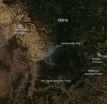
Two fires are seen burning in this satellite image taken by the Aqua satellite on September 11, 2014. The Selway complex of fires had been previously reported located 30 miles west of Darby, MT. It appears a new fire may have started again in this complex. Currently the size of the complex is 1,659 fires. The fire is mostly contained and there will be no additional reporting on this fire unless activity increases. It is, for the most part, contained. The Johnson Bar fire started with a lightning strike on August 03, 2014. To date, 8,867 acres have been affected. ...
Read more →
Science 2014-09-15

New glaucoma culprit is found

Glaucoma, a leading cause of irreversible blindness, is associated with elevated pressure in the eye. This elevated pressure essentially is due to a plumbing problem. Fluid builds up in the eye, increasing pressure and eventually damaging the optic nerve. For nearly 150 years, researchers have been trying to understand what causes the blockage that prevents the eye from draining properly. In a unique study of human ocular cells, a multi-institution research team led by a biomedical engineer at Northwestern University has found a new culprit. Glaucoma appears to be a consequence ...
Read more →
Getting hot and wet in Vermont
Science 2014-09-15

Getting hot and wet in Vermont

Here's your northern Vermont forecast for the rest of this century: annual precipitation will increase by between a third and half an inch per decade, while average temperatures will rise some five degrees Fahrenheit by midcentury. By late in the century, average temperatures will have spiked more than eight degrees. In July, by 2100, the City of Burlington will have at least ten additional days above ninety degrees. The growing season picks up 43 more days. Looking at ski conditions, expect annual snowfall at six major ski resorts to decline about fifty percent by century's ...
Read more →
Medicine 2014-09-15

Mayo finds many liver transplant patients can avoid costly stay in ICU after surgery

JACKSONVILLE, Fla., Sept. 12, 2014 — The liver transplant team at Mayo Clinic in Florida has found, based on 12 years of experience, that more than half of patients receiving a new liver can be "fast-tracked" to return to a surgical ward room following their transplant, bypassing a one- or two-day stay in the Intensive Care Unit (ICU). In the September issue of the American Journal of Transplantation, the physicians and researchers have turned their knowledge of who can be safely fast-tracked into a scoring system that other transplant centers can also use — thus sparing ...
Read more →
The shadow of a disease
Medicine 2014-09-15

The shadow of a disease

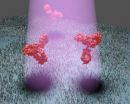
This news release is available in German. In future, some diseases might be diagnosed earlier and treated more effectively. Researchers at the Max Planck Institute for the Science of Light in Erlangen have developed an optical method that makes individual proteins, such as the proteins characteristic of some cancers, visible. Other methods that achieve this only work if the target biomolecules have first been labelled with fluorescent tags; In general, however, that approach is difficult or even impossible. By contrast, with their method, coined iSCAT, the researchers ...
Read more →