Medicine Technology 🌱 Environment Space Energy Physics Engineering Social Science Earth Science Science
Science 2014-09-16

EARTH Magazine: The Bay Area's next 'big one could strike as a series of quakes

Alexandria, Va. — Most people are familiar with the Great 1906 San Francisco Earthquake and are aware of the earthquake risk posed to the Bay Area — and much of California — by the San Andreas Fault. Most people are not aware, however, that a cluster of large earthquakes struck the San Andreas and quite a few nearby faults in the 17th and 18th centuries. That cluster, according to new research, released about the same amount of energy throughout the Bay Area as the 1906 quake. Thus, it appears that the accumulated stress on the region's faults could be released in a series ...
Read more →
New research decodes virus-host interactions in ocean dead zones
Medicine 2014-09-16

New research decodes virus-host interactions in ocean dead zones

A complex web of interaction between viruses, bacteria, and their environment is becoming ever more untangled by a growing international collaboration between Matthew Sullivan, associate professor in the University of Arizona's Department of Ecology and Evolutionary Biology and Steven Hallam from the University of British Columbia in Vancouver, Canada. "Bacteria are drivers of nutrient and energy cycles that power the earth," Sullivan said. "As the climate is changing, so are the environments these bacteria live in, and they in turn loop back to impact their environments. ...
Read more →
Medicine 2014-09-16

New research shows tornadoes occurring earlier in 'Tornado Alley'

BOZEMAN, Mont. -- Peak tornado activity in the central and southern Great Plains of the United States is occurring up to two weeks earlier than it did half a century ago, according to a new Montana State University study whose findings could help states in "Tornado Alley" better prepare for these violent storms. Tornado records from Nebraska, Kansas, Oklahoma, and northern Texas – an area of high tornado activity dubbed "Tornado Alley" -- show that peak tornado activity is starting and ending earlier than it did 60 years ago. Peak tornado activity, which occurs ...
Read more →
Medicine 2014-09-16

Long-term results of RTOG 0236 confirm good primary tumor control, positive 5-year survival rates

San Francisco, September 15, 2014—Patients with inoperable, early-stage lung cancer who receive stereotactic body radiation therapy (SBRT) have a five-year survival rate of 40 percent, according to research presented today at the American Society for Radiation Oncology's (ASTRO's) 56th Annual Meeting. Such a positive survival rate is encouraging considering that historically conventional RT resulted in poor tumor control for patients with inoperable lung cancer. This study is an update of RTOG 0236, originally published in 2010 , and also conducted by the original researchers ...
Read more →
Politics divide coastal residents' views of environment, UNH research finds
Environment 2014-09-16

Politics divide coastal residents' views of environment, UNH research finds

DURHAM, N.H. – From the salmon-rich waters of Southeast Alaska to the white sand beaches of Florida's Gulf Coast to Downeast Maine's lobster, lumber and tourist towns, coastal residents around the U.S. share a common characteristic: their views about coastal environments divide along political lines. That's a primary finding of a new study by University of New Hampshire sociologists published this month in the journal Society & Natural Resources. "We found a lot of environment-related differences from place to place to place. Each environment is different so that's just ...
Read more →
Science 2014-09-16

Artworks are people!

Not all things are created equally. We don't view a Picasso sculpture in the same way we look at a hammer, for example — no matter how fancy the hammer. The reason? We see the Picasso more as a person than an object, according to new research from the University of Chicago Booth School of Business. And in some cases, we make distinctions between artworks — say, an exact replica of a piece created by the artist, versus one created by a different artist. Art, in other words, is an extension of the creator, write Professor Daniel M. Bartels of Chicago Booth, and Professor ...
Read more →
For electronics beyond silicon, a new contender emerges
Technology 2014-09-16

For electronics beyond silicon, a new contender emerges

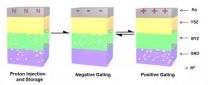
Cambridge, Mass. – September 16, 2014 – Silicon has few serious competitors as the material of choice in the electronics industry. Yet transistors, the switchable valves that control the flow of electrons in a circuit, cannot simply keep shrinking to meet the needs of powerful, compact devices; physical limitations like energy consumption and heat dissipation are too significant. Now, using a quantum material called a correlated oxide, Harvard researchers have achieved a reversible change in electrical resistance of eight orders of magnitude, a result the researchers ...
Read more →
NASA's Global Hawk and satellites investigating Hurricane Edouard today
Environment 2014-09-16

NASA's Global Hawk and satellites investigating Hurricane Edouard today

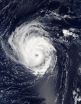
The unmanned Global Hawk aircraft that's part of NASA's airborne Hurricane and Severe Storm Sentinel, or HS3 mission was winging its way to Hurricane Edouard on September 16. In addition to the Global Hawk, various NASA satellites are continually providing data on the Atlantic hurricane. Scientific instruments aboard NASA's remotely piloted Global Hawk aircraft have been studying the hurricane over the last couple of days, and the Global Hawk returned to Edouard again today, September 16. Two of the instruments aboard the Global Hawk that will study Edouard are the S-HIS ...
Read more →
Medicine 2014-09-16

Cancer patients with malignant spinal cord compression have preserved mobility

San Francisco, September 15, 2014—Mobility is equally preserved in cancer patients suffering from malignant spinal cord compression (MSCC) who receive a single dose of 10 Gy of radiation therapy (RT), compared to patients who receive five daily doses of 4 Gy of RT each, according to research presented today at the American Society for Radiation Oncology's (ASTRO's) 56th Annual Meeting. Malignant spinal cord compression (MSCC) is a complication of metastatic cancer mostly with bone involvement that occurs when a tumor's secondary deposit presses on the spinal cord and ...
Read more →
And so they beat on, flagella against the cantilever
Science 2014-09-16

And so they beat on, flagella against the cantilever

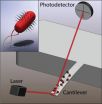
WASHINGTON D.C., September 16, 2014 – A team of researchers at Boston University and Stanford University School of Medicine has developed a new model to study the motion patterns of bacteria in real time and to determine how these motions relate to communication within a bacterial colony. The researchers chemically attached colonies of Escherichia coli bacteria to a microcantilever – a microscopic beam anchored at one end, similar to a diving board – thus coupling its motion to that of the bacteria. As the cantilever itself isn't doesn't generate any vibrations, or 'noise,' ...
Read more →
NASA sees Tropical Storm Odile knocking at US Southwest
Space 2014-09-16

NASA sees Tropical Storm Odile knocking at US Southwest

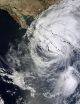
Tropical Storm Odile continues to drench western Mexico and has now entered into the U.S. Southwest. On September 15, NASA's Terra satellite saw Odile's northernmost edge crossing the Mexican border into southern California. NOAA's GOES-East satellite on September 16 showed Odile's outer bands were already bringing storms to southern Arizona. NASA Sees Odile Knocking on U.S. Border On Sept. 15 at 2:35 p.m. EDT, the Moderate Resolution Imaging Spectroradiometer instrument aboard NASA's Terra satellite saw the northern fringes of Hurricane Odile straddling the border ...
Read more →
Scientists twist radio beams to send data
Science 2014-09-16

Scientists twist radio beams to send data

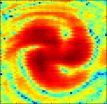
Building on previous research that twisted light to send data at unheard-of speeds, scientists at USC have developed a similar technique with radiowaves, reaching high speeds without some of the hassles that can go with optical systems. The researchers, led by electrical engineering professor Alan Willner of the USC Viterbi School of Engineering, reached data transmission rates of 32 gigabits per second across 2.5 meters of free space in a basement lab at USC. For reference, 32 gigabits per second is fast enough to transmit more than 10 hour-and-a-half-long HD movies ...
Read more →
Kessler Foundation scientists link slowed processing speed with executive deficits in MS
Science 2014-09-16

Kessler Foundation scientists link slowed processing speed with executive deficits in MS

West Orange, NJ. September 16, 2014. Kessler Foundation researchers have published a study supporting the role of slowed processing speed in the executive deficits found in individuals with multiple sclerosis (MS). "Does slowed processing speed account for executive deficits in multiple sclerosis? Evidence from neuropsychological performance and structural neuroimaging," was published online ahead of print on August 18 by Rehabilitation Psychology The authors are Victoria Leavitt, PhD, of the Manhattan Memory Center, formerly of Kessler Foundation. Co-authors are Foundation ...
Read more →
Tornadoes occurring earlier in 'Tornado Alley'
Medicine 2014-09-16

Tornadoes occurring earlier in 'Tornado Alley'

WASHINGTON, D.C. – Peak tornado activity in the central and southern Great Plains of the United States is occurring up to two weeks earlier than it did half a century ago, according to a new study whose findings could help states in "Tornado Alley" better prepare for these violent storms. Tornado records from Nebraska, Kansas, Oklahoma, and northern Texas – an area of high tornado activity dubbed "Tornado Alley" -- show that peak tornado activity is starting and ending earlier than it did 60 years ago. Peak tornado activity, which occurs in the region from early ...
Read more →
Water-based nuclear battery developed by MU can be used to generate electrical energy
Energy 2014-09-16

Water-based nuclear battery developed by MU can be used to generate electrical energy

COLUMBIA, Mo. – From cell phones to cars and flashlights, batteries play an important role in everyday life. Scientists and technology companies constantly are seeking ways to improve battery life and efficiency. Now, for the first time using a water-based solution, researchers at the University of Missouri have created a long-lasting and more efficient nuclear battery that could be used for many applications such as a reliable energy source in automobiles and also in complicated applications such as space flight. "Betavoltaics, a battery technology that generates power ...
Read more →
Medicine 2014-09-16

Patients waiting too long to see doctor? Try 'just-in-time' management methods, researchers urge

Using a pain clinic as a testing ground, researchers at Johns Hopkins have shown that a management process first popularized by Toyota in Japan can substantially reduce patient wait times and possibly improve the teaching of interns and residents. In a report on the pilot study, published online Sept. 9, in Pain Medicine, the researchers adopted the so-called "Just-in-Time" training and inventory process used now by many manufacturers and service industries to stem waste and keep complicated operations from bottlenecking. "We realized that a significant amount of time ...
Read more →
Study on global carbon cycle may require reappraisal of climate events in Earth's history
Environment 2014-09-16

Study on global carbon cycle may require reappraisal of climate events in Earth's history

MIAMI – A recent study of the global carbon cycle offers a new perspective of Earth's climate records through time. Scientists at the University of Miami (UM) Rosenstiel School of Marine and Atmospheric Science suggest that one of the current methods for interpreting ancient changes in the concentration of carbon dioxide in the atmosphere and oceans may need to be re-evaluated. The UM Rosenstiel School researchers measured the abundance of carbon-12 and carbon-13 isotopes in both the organic matter and carbonate sediments found in a nearly 700-meter marine sediment core ...
Read more →
Science 2014-09-16

UCI team is first to capture motion of single molecule in real time

Irvine, Calif., Sept. 16, 2014 – UC Irvine chemists have scored a scientific first: capturing moving images of a single molecule as it vibrates, or "breathes," and shifts from one quantum state to another. The groundbreaking achievement, led by Ara Apkarian, professor of chemistry, and Eric Potma, associate professor of chemistry, opens a window into the strange realm of quantum mechanics – where nanoscopic bits of matter seemingly defy the logic of classical physics. This could lead to a wide variety of important applications, including lightning-fast quantum computers ...
Read more →
Making quantum dots glow brighter
Technology 2014-09-16

Making quantum dots glow brighter

WASHINGTON, D.C., September 16, 2014 – Researchers from the University of Alabama in Huntsville and the University of Oklahoma have found a new way to control the properties of quantum dots, those tiny chunks of semiconductor material that glow different colors depending on their size. Quantum dots, which are so small they start to exhibit atom-like quantum properties, have a wide range of potential applications, from sensors, light-emitting diodes, and solar cells, to fluorescent tags for biomedical imaging and qubits in quantum computing. A key property of quantum ...
Read more →
Human faces are so variable because we evolved to look unique
Science 2014-09-16

Human faces are so variable because we evolved to look unique

The amazing variety of human faces – far greater than that of most other animals – is the result of evolutionary pressure to make each of us unique and easily recognizable, according to a new study by University of California, Berkeley, scientists. Our highly visual social interactions are almost certainly the driver of this evolutionary trend, said behavioral ecologist Michael J. Sheehan, a postdoctoral fellow in UC Berkeley's Museum of Vertebrate Zoology. Many animals use smell or vocalization to identify individuals, making distinctive facial features unimportant, ...
Read more →
Science 2014-09-16

Gene variant that dramatically reduces 'bad' lipids

Research using data collected from around 4,000 healthy people in the UK has enabled scientists to identify a rare genetic variant that dramatically reduces levels of certain types of lipids in the blood. The study is the first to emerge from the UK10K Project's cohort of samples from the general public and demonstrates the power of whole genome sequencing at scale. "Until now it has only been possible to look for common variants of small effect in large genome wide association studies," says Dr Nicholas Timpson, first author from the Medical Research Council (MRC) Integrative ...
Read more →
Social Science 2014-09-16

How learning to talk is in the genes

Researchers have found evidence that genetic factors may contribute to the development of language during infancy. Scientists from the Medical Research Council (MRC) Integrative Epidemiology Unit at the University of Bristol worked with colleagues around the world to discover a significant link between genetic changes near the ROBO2 gene and the number of words spoken by children in the early stages of language development. Children produce words at about 10 to 15 months of age and our range of vocabulary expands as we grow - from around 50 words at 15 to 18 months, ...
Read more →
The future face of molecular electronics
Physics 2014-09-16

The future face of molecular electronics

WASHINGTON, D.C., September 16, 2014 --The emerging field of molecular electronics could take our definition of portable to the next level, enabling the construction of tiny circuits from molecular components. In these highly efficient devices, individual molecules would take on the roles currently played by comparatively-bulky wires, resistors and transistors. A team of researchers from five Japanese and Taiwanese universities has identified a potential candidate for use in small-scale electronics: a molecule called picene. In a paper published September 16 in The Journal ...
Read more →
Medicine 2014-09-16

Chemotherapy and SABR consecutively may be promising treatment option for advanced pancreatic cancer

San Francisco, September 15, 2014— For patients with locally advanced pancreatic cancer, the combination of chemotherapy and stereotactic ablative radiation (SABR) may be a promising treatment option, ultimately allowing them to undergo surgery that may not otherwise be an option, according to research presented today at the American Society for Radiation Oncology's (ASTRO's) 56th Annual Meeting. Surgery is the only potentially curative therapy for individuals with pancreatic ductal adenocarcinoma (PDA), the most common type of pancreatic cancer. However, pancreatic cancer ...
Read more →
Science 2014-09-16

Job stress not the only cause of burnouts at work

This news release is available in French. Montreal, September 16, 2014 — Impossible deadlines, demanding bosses, abusive colleagues, unpaid overtime — all these factors can lead to a burnout. When it comes to mental health in the workplace, we often forget to consider the influence of home life. That's about to change, thanks to new research from Concordia University and the University of Montreal, which proves that having an understanding partner is just as important as having a supportive boss. The study, published in the journal Social Psychiatry and Psychiatric ...
Read more →