Medicine Technology 🌱 Environment Space Energy Physics Engineering Social Science Earth Science Science
Artificial lung the size of a sugar cube
Technology 2014-05-28

Artificial lung the size of a sugar cube

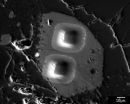
This news release is available in German. Lung cancer is a serious condition. Once patients are diagnosed with it, chemotherapy is often their only hope. But nobody can accurately predict whether or not this treatment will help. To start with, not all patients respond to a course of chemotherapy in exactly the same way. And then there's the fact that the systems drug companies use to test new medications leave a lot to be desired. "Animal models may be the best we have at the moment, but all the same, 75 percent of the drugs deemed beneficial when tested on animals ...
Read more →
Water in moon rocks provides clues and questions about lunar history
Space 2014-05-28

Water in moon rocks provides clues and questions about lunar history

A recent review of hundreds of chemical analyses of Moon rocks indicates that the amount of water in the Moon's interior varies regionally – revealing clues about how water originated and was redistributed in the Moon. These discoveries provide a new tool to unravel the processes involved in the formation of the Moon, how the lunar crust cooled, and its impact history. This is not liquid water, but water trapped in volcanic glasses or chemically bound in mineral grains inside lunar rocks. Rocks originating from some areas in the lunar interior contain much more water ...
Read more →
Medicine 2014-05-28

Ultraviolet cleaning reduces hospital superbugs by 20 percent: Study

Washington, DC, May 27, 2014 – Healthcare-associated vancomycin-resistant enterococcus (VRE), methicillin-resistant Staphylococcus aureus (MRSA), Clostridium difficile (CD), and other multidrug-resistant organisms (MDRO) were decreased among patients after adding ultraviolet environmental disinfection (UVD) to the cleaning regimen, according to a study published in the June issue of the American Journal of Infection Control, the official publication of the Association for Professionals in Infection Control and Epidemiology (APIC). In this retrospective study led by the ...
Read more →
What can plants reveal about gene flow? That it's an important evolutionary force
Science 2014-05-28

What can plants reveal about gene flow? That it's an important evolutionary force

A plant breeder discovers his experimental crops have been "contaminated" with genes from a neighboring field. New nasty weeds sometimes evolve directly from natural crosses between domesticated species and their wild relatives. A rare plant is threatened due to its small population size and restricted range. What do all these situations have in common? They illustrate the important role of gene flow among populations and its potential consequences. Although gene flow was recognized by a few scientists as a significant evolutionary force as early as the 1940s, its relative ...
Read more →
In Africa, STI testing could boost HIV prevention
Science 2014-05-28

In Africa, STI testing could boost HIV prevention

PROVIDENCE, R.I. [Brown University] — To maximize HIV prevention efforts in South Africa and perhaps the broader region, public health officials should consider testing for other sexually transmitted infections when they test for HIV, according to a new paper in the journal Sexually Transmitted Infections. STIs can make HIV easier to transmit even after antiretroviral therapy has begun, so rooting out STI co-infections in patients should improve HIV prevention. The new study led by Brown University public health researchers emphasizes that sooner is indeed better than ...
Read more →
Medicine 2014-05-28

Variety in diet can hamper microbial diversity in the gut

AUSTIN, Texas — Scientists from The University of Texas at Austin and five other institutions have discovered that the more diverse the diet of a fish, the less diverse are the microbes living in its gut. If the effect is confirmed in humans, it could mean that the combinations of foods people eat can influence the diversity of their gut microbes. The research could have implications for how probiotics and diet are used to treat diseases associated with the bacteria in human digestive systems. A large body of research has shown that the human microbiome, the collection ...
Read more →
Environment 2014-05-28

Melting Arctic opens new passages for invasive species

For the first time in roughly 2 million years, melting Arctic sea ice is connecting the north Pacific and north Atlantic oceans. The newly opened passages leave both coasts and Arctic waters vulnerable to a large wave of invasive species, biologists from the Smithsonian Environmental Research Center assert in a commentary published May 28 in Nature Climate Change. Two new shipping routes have opened in the Arctic: the Northwest Passage through Canada, and the Northern Sea Route, a 3000-mile stretch along the coasts of Russia and Norway connecting the Barents and Bering ...
Read more →
3,000 rice genome sequences made publicly available on World Hunger Day
Medicine 2014-05-28

3,000 rice genome sequences made publicly available on World Hunger Day

The open-access, open-data journal GigaScience (published by BGI and Biomed Central), announces today the publication of an article on the genome sequencing of 3000 rice strains along with the release of this entire dataset in a citable format in journal's affiliated open-access database, GigaDB. The publication and release of this enormous data set (which quadruples the current amount of publicly available rice sequence data) coincides with World Hunger Day to highlight one of the primary goals of this project— to develop resources that will aid in improving global food ...
Read more →
Science 2014-05-28

High-status co-eds use 'slut discourse' to assert class advantage

WASHINGTON, DC, May 27, 2014 — A new study suggests that high-status female college students employ "slut discourse" — defining their styles of femininity and approaches to sexuality as classy rather than trashy or slutty — to assert class advantage and put themselves in a position where they can enjoy sexual exploration with few social consequences. "Viewing women only as victims of men's sexual dominance fails to hold women accountable for the roles they play in reproducing social inequalities," said lead author Elizabeth A. Armstrong, an associate professor of sociology ...
Read more →
Prehistoric birds lacked in diversity
Science 2014-05-28

Prehistoric birds lacked in diversity

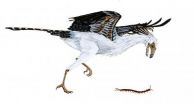
Birds come in astounding variety—from hummingbirds to emus—and behave in myriad ways: they soar the skies, swim the waters, and forage the forests. But this wasn't always the case, according to research by scientists at the University of Chicago and the Field Museum. The researchers found a striking lack of diversity in the earliest known fossil bird fauna (a set of species that lived at about the same time and in the same habitat). "There were no swans, no swallows, no herons, nothing like that. They were pretty much all between a sparrow and a crow," said Jonathan ...
Read more →
Science 2014-05-28

Cod bones reveal 13th century origin of global fish trade

London's international fish trade can be traced back 800 years to the medieval period, according to new research published today in the journal Antiquity. The research, led by archaeologists from UCL, Cambridge and UCLan, provides new insight into the medieval fish trade and the globalisation of London's food supply. Archaeologists analysed data from nearly 3,000 cod bones found in 95 different excavations in and around London. They identified a sudden change in the origin of the fish during the early 13th century, indicating the onset of a large-scale import trade. Lead ...
Read more →
Butterfly 'eyespots' add detail to the story of evolution
Science 2014-05-28

Butterfly 'eyespots' add detail to the story of evolution

CORVALLIS, Ore. – A new study of the colorful "eyespots" on the wings of some butterfly species is helping to address fundamental questions about evolution that are conceptually similar to the quandary Aristotle wrestled with about 330 B.C. – "which came first, the chicken or the egg?" After consideration, Aristotle decided that both the egg and the chicken had always existed. That was not the right answer. The new Oregon State University research is providing a little more detail. The study, published today in Proceedings of the Royal Society B, actually attempts to ...
Read more →
Medicine 2014-05-28

Should sugary drinks carry a health warning?

In a personal view published on bmj.com today, a professor of public health at a leading university thinks there should be health warning labels on sugary drinks. Professor Simon Capewell, professor at the University of Liverpool, highlights that the State of California is considering a new health bill. One which will see sugary drinks labelled with health warnings, vending machines to bear warning labels, and fines of between $50 and $500 per failed inspection". Professor Capewell thinks this is a good idea, and one that the UK public would support. He says that ...
Read more →
Medicine 2014-05-28

Higher NHS spending in deprived areas can reduce health inequalities

A policy of higher NHS spending in deprived areas compared with affluent areas is associated with a reduction in absolute health inequalities from causes amenable to healthcare in England, suggests a study published on bmj.com today. In 1999, the government introduced a new 'health inequalities' objective for the allocation of NHS resources in England, which resulted in greater NHS spending in deprived areas with the worst health outcomes. But it is not known whether this policy was successful in contributing to a reduction in health inequalities. So researchers based ...
Read more →
Medicine 2014-05-28

School scheme unable to boost healthy eating and activity among kids

A school-based scheme to encourage children to eat healthily and be active has had little effect, conclude researchers in a study published on bmj.com today. The findings have relevance for researchers, policy makers, public health practitioners, and doctors, and they suggest that more intense interventions may be required. Low levels of physical activity and of fruit and vegetable consumption in childhood are associated with adverse health outcomes. School based interventions have the potential to reach the vast majority of children, and evidence reviews have suggested ...
Read more →
Science 2014-05-28

Barriers to HIV testing in older children

Concerns about guardianship and privacy can discourage clinics from testing children for HIV, according to new research from Zimbabwe published this week in PLOS Medicine. The results of the study, by Rashida A. Ferrand of the London School of Hygiene & Tropical Medicine and colleagues, provide much-needed information on how to improve care of this vulnerable population. More than three million children globally are living with HIV (90% in sub-Saharan Africa) and in 2011 an estimated 1000 infant infections occurred every day. HIV acquired through mother-to-child transmission ...
Read more →
Medicine 2014-05-28

Making research findings freely available is an essential aid to medical progress

In a PLOS Medicine guest editorial, Paul Glasziou, Professor of Evidence-Based Medicine at Bond University in Australia, explores how open access publications could help moderate and reduce the vast waste of global medical research. Continuing on from his previous work, which highlighted how most of the world's expenditure on medical research was thrown away, Glasziou outlines how bad the situation is and suggests how it might be improved. Subscription-based academic journals make money by through copyrights assigned by authors to publishers who lock the articles behind ...
Read more →
Dealing with stress -- to cope or to quit?
Science 2014-05-28

Dealing with stress -- to cope or to quit?

Cold Spring Harbor, NY – We all deal with stress differently. For many of us, stress is a great motivator, spurring a renewed sense of vigor to solve life's problems. But for others, stress triggers depression. We become overwhelmed, paralyzed by hopelessness and defeat. Up to 20% of us will struggle with depression at some point in life, and researchers are actively working to understand how and why this debilitating mental disease develops. Today, a team of researchers at Cold Spring Harbor Laboratory (CSHL) led by Associate Professor Bo Li reveals a major insight ...
Read more →
Medicine 2014-05-28

Intertwined evolution of human brain and brawn

The cognitive differences between humans and our closest living cousins, the chimpanzees, are staggeringly obvious. Although we share strong superficial physical similarities, we have been able to use our incredible mental abilities to construct civilisations and manipulate our environment to our will, allowing us to take over our planet and walk on the moon while the chimps grub around in a few remaining African forests. But a new study suggests that human muscle may be just as unique. Scientists from Shanghai's CAS-MPG Partner Institute for Computational Biology, together ...
Read more →
Disturbance in blood flow leads to epigenetic changes and atherosclerosis
Medicine 2014-05-28

Disturbance in blood flow leads to epigenetic changes and atherosclerosis

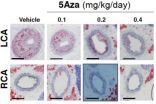
Disturbed patterns of blood flow induce lasting epigenetic changes to genes in the cells that line blood vessels, and those changes contribute to atherosclerosis, researchers have found. The findings suggest why the protective effects of good blood flow patterns, which aerobic exercise promotes, can persist over time. An epigenetic change to DNA is a chemical modification that alters whether nearby genes are likely to be turned on or off, but not the letter-by-letter sequence itself. The results are scheduled for publication in the Journal of Clinical Investigation. Atherosclerosis ...
Read more →
Science 2014-05-28

Keeping active pays off even in your 70s and 80s

Older people who undertake at least 25 minutes of moderate or vigorous exercise everyday need fewer prescriptions and are less likely to be admitted to hospital in an emergency, new research has revealed. The findings, published in the journal PLOS ONE, reinforce the need for exercise programmes to help older people stay active. It could also reduce reliance on NHS services and potentially lead to cost savings. In the first study of its kind looking at this age group, researchers from the University of Bristol looked at data from 213 people whose average age was 78. Those ...
Read more →
Science 2014-05-27

Endoscopic procedure does not reduce disability due to pain following gallbladder removal

In certain patients with abdominal pain after gallbladder removal (cholecystectomy), undergoing an endoscopic procedure involving the bile and pancreatic ducts did not result in fewer days with disability due to pain, compared to a placebo treatment, according to a study in the May 28 issue of JAMA. Post-cholecystectomy pain is a common clinical problem. More than 700,000 patients undergo cholecystectomy each year in the United States, and at least 10 percent are reported to have pain afterwards. Most of these patients have no significant abnormalities on imaging or ...
Read more →
Medicine 2014-05-27

Study examines variation in cardiology practice guidelines over time

An analysis of more than 600 class I (procedure/treatment should be performed/administered) American College of Cardiology/American Heart Association guideline recommendations published or revised since 1998 finds that about 80 percent were retained at the time of the next guideline revision, and that recommendations not supported by multiple randomized studies were more likely to be downgraded, reversed, or omitted, according to a study in the May 28 issue of JAMA. As adherence to recommended clinical practice guidelines increasingly is used to measure performance, ...
Read more →
Penn study: Longest-lasting cardiology guidelines built on findings of randomized controlled trials
Medicine 2014-05-27

Penn study: Longest-lasting cardiology guidelines built on findings of randomized controlled trials

PHILADELPHIA –Clinical practice guideline recommendations related to screening and treatment can change markedly over time as new evidence about best practices and clinical outcomes of various treatments emerges. In a first-of-its-kind study, Penn Medicine researchers examined high-level recommendations published by the American College of Cardiology (ACC) and the American Heart Association (AHA) between 1998 and 2007 and found that recommendations which were supported by multiple randomized controlled trials were the most "durable" and least likely to change over time. ...
Read more →
Citizens help researchers to challenge scientific theory
Science 2014-05-27

Citizens help researchers to challenge scientific theory

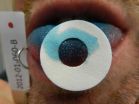
Science crowdsourcing was used to disprove a widely held theory that "supertasters" owe their special sensitivity to bitter tastes to an usually high density of taste buds on their tongue, according to a study published in the open-access journal Frontiers in Integrative Neuroscience. Supertasters are people who can detect and are extremely sensitive to phenylthiocarbamide and propylthiouracil, two compounds related to the bitter molecules in certain foods such as broccoli and kale. Supertasting has been used to explain why some people don't like spicy foods or "hoppy" ...
Read more →