Medicine Technology 🌱 Environment Space Energy Physics Engineering Social Science Earth Science Science
Medicine 2014-05-23

Study of 850,000 people shows women with diabetes 44 percent more likely to develop coronary heart disease than men with diabetes

A systematic review and meta-analysis of some 850,000 people published in Diabetologia (the journal of the European Association for the Study of Diabetes) shows that women with diabetes are 44% more likely to develop coronary heart disease (CHD) than men with diabetes independent of sex differences in the levels of other major cardiovascular risk factors. The research is by Professor Rachel Huxley, School of Population Health, University of Queensland, Australia; Dr Sanne Peters, University of Cambridge, UK, and University Medical Center Utrecht, the Netherlands, and ...
Read more →
Science 2014-05-23

The Lancet: Scientists invent kidney dialysis machine for babies and safely treat newborn with multiple organ failure

Italian scientists have developed a miniaturised kidney dialysis machine capable of treating the smallest babies, and have for the first time used it to safely treat a newborn baby with multiple organ failure. This technology has the potential to revolutionise the treatment of infants with acute kidney injury, according to new research published in The Lancet. The new continuous renal replacement therapy (CRRT) machine—named CARPEDIEM (Cardio-Renal Pediatric Dialysis Emergency Machine)—was created to overcome the problems of existing dialysis machines that are only designed ...
Read more →
Biofilm defense: Mechanisms and actions of a new class of broad-spectrum antimicrobials
Physics 2014-05-23

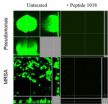
Biofilm defense: Mechanisms and actions of a new class of broad-spectrum antimicrobials

Last month WHO issued a report that warned of an increase of antimicrobial-resistance and the renewed threat of bacterial infections world-wide and called for a concerted effort to develop new and better antimicrobial drugs. A study published on May 22nd in PLOS Pathogens reveals how a new type of anti-microbial substance interferes with biofilms formed by several dangerous bacteria. When growing on surfaces (including human skin, lung, heart, or bladder) many bacteria form so-called biofilms that consist of structured communities of identical bacteria. 65% of human ...
Read more →
Medicine 2014-05-23

Patients with a certain form of kidney disease may have a reduced risk of cancer

Washington, DC (May 22, 2014) — Patients with a certain form of kidney disease may have a reduced risk of cancer compared with patients with other kidney diseases, according to a study appearing in an upcoming issue of the Journal of the American Society of Nephrology (JASN). Polycystic kidney disease (PKD) is a kidney disorder passed down through families in which many cysts form in the kidneys, causing them to become enlarged. It's thought to have cancer-like features, but cancer risk has never been compared between PKD patients and others with kidney disease. Cancer ...
Read more →
Medicine 2014-05-23

Kidney transplantation found superior to intensive home hemodialysis

Washington, DC (May 22, 2014) — Compared with long and frequent home hemodialysis, kidney transplantation may allow kidney failure patients to be successfully treated and to live longer, but it may also increase their risk of being hospitalized within the first year. Those are the findings of study appearing in an upcoming issue of the Journal of the American Society of Nephrology (JASN). The results support the need to encourage transplantation for potential candidates who are receiving home hemodialysis, but they also indicate that long and frequent home hemodialysis ...
Read more →
Kidney transplant patients live longer than those in intensive home hemodialysis
Medicine 2014-05-23

Kidney transplant patients live longer than those in intensive home hemodialysis

(TORONTO, Canada – May 22, 2014) – A first-ever study from a large Canadian centre found that kidney transplant recipients lived longer and had better treatment success than patients on intensive home hemodialysis, but also had an increased risk of being hospitalized within the first year. These findings were reported in a study entitled, "Survival and hospitalization for intensive home hemodialysis and kidney transplantation", by lead author Dr. Karthik Tennankore, nephrologist at Dalhousie University, and Drs. Chris Chan and Joseph Kim, nephrologists at Toronto General ...
Read more →
Medicine 2014-05-23

Promising discovery in the fight against antibiotic-resistant bacteria

Researchers at the University of British Columbia have identified a small molecule that prevents bacteria from forming into biofilms, a frequent cause of infections. The anti-biofilm peptide works on a range of bacteria including many that cannot be treated by antibiotics. "Currently there is a severe problem with antibiotic-resistant organisms," says Bob Hancock, a professor in UBC's Dept. of Microbiology and Immunology and lead author of the study published today in PLOS Pathogens. "Our entire arsenal of antibiotics is gradually losing effectiveness." Many bacteria ...
Read more →
Science 2014-05-22

Children with cochlear implants at risk for deficits in executive function

Children who receive cochlear implants (CI) to help alleviate severe to profound hearing loss are at greater risk of having deficiencies in executive functioning (EF), which are the skills to organize, control and process information in a goal-directed manner. Permanent hearing loss is a common condition of early childhood, occurring in about 1.5 of every 1,000 births. Cochlear implants help children to achieve spoken language because the devices help them perceive sound. Still, children with cochlear implants can struggle with reading and writing skills and other ...
Read more →
Social Science 2014-05-22

IU researchers identify pattern of cognitive risks in some children with cochlear implants

INDIANAPOLIS -- Children with profound deafness who receive a cochlear implant had as much as five times the risk of having delays in areas of working memory, controlled attention, planning and conceptual learning as children with normal hearing, according to Indiana University research published May 22 in the Journal of the American Medical Association Otolaryngology--Head and Neck Surgery. The authors evaluated 73 children implanted before age 7 and 78 children with normal hearing to determine the risk of deficits in executive functioning behaviors in everyday life. Executive ...
Read more →
One-third of all brain aneurysms rupture: the size is not a significant risk factor
Medicine 2014-05-22

One-third of all brain aneurysms rupture: the size is not a significant risk factor

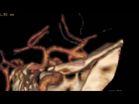
VIDEO: This video depicts microneurosurgical clipping of an unruptured intracranial aneurysm, which is arising from the bifurcation i.e. branching point of two right middle cerebral arteries. In brief, the aneurysm locates in this... Click here for more information. The lifetime risk for rupture of a brain aneurysm depends heavily on the patient's overall load of risk factors. However, a recent study by researchers from the University of Helsinki and Helsinki University ...
Read more →
Medicine 2014-05-22

Clinical trials designed to block autophagy in multiple cancers show promise

PHILADELPHIA— In the largest group of results to date, researchers from Penn Medicine's Abramson Cancer Center and other institutions have shown in clinical trials that the malaria drug hydroxychloroquine (HCQ) blocked autophagy in a host of aggressive cancers—glioblastoma, melanoma, lymphoma and myeloma, renal and colon cancers—and in some cases helped stabilize disease. Autophagy—an essential process cancer cells need to fuel their growth—is a key troublemaker spurring tumor growth. Block this pathway, many preclinical studies suggest, and anti-cancer agents such as chemotherapy ...
Read more →
Medicine 2014-05-22

Yale Cancer Center studies find lifestyle changes improve biomarkers for breast cancer recurrence and mortality

New Haven, CT – A pair of Yale Cancer Center interventional studies involving breast cancer survivors found that lifestyle changes in the form of healthy eating and regular exercise can decrease biomarkers related to breast cancer recurrence and mortality. The abstracts are scheduled to be presented at the 2014 annual meeting of the American Society of Clinical Oncology in Chicago May 30-June 3rd. "The findings of both studies support a growing body of research that suggests lifestyle interventions lower biomarkers associated with breast cancer recurrence and mortality, ...
Read more →
Repeated sexual assault victims report more psychological problems than previously thought
Medicine 2014-05-22

Repeated sexual assault victims report more psychological problems than previously thought

COLUMBIA, Mo. – According to recent studies, one in five adult women and one in 100 adult men have reported being raped. The prevalence increases to two in five among women and one in five among men who report experiencing other forms of sexual violence, such as repeated unwanted sexual contact and sexual coercion. Now, researchers at the University of Missouri have determined that those victims who are repeatedly assaulted, but not necessarily violently raped, show greater levels of psycho-behavioral consequences than earlier thought. The researchers suggest that understanding ...
Read more →
Medicine 2014-05-22

Male and female sex cell determination requires lifelong maintenance and protection

MINNEAPOLIS/ST. PAUL (May 22, 2014) – The way in which the sex of an organism is determined may require lifelong maintenance, finds new research from the University of Minnesota. According to the study published today in the journal Developmental Cell, sex-specific transcription factors perform lifelong work to maintain sexual determination and protect against reprogramming of cells from one sex to the other. Previous research at the University of Minnesota's Department of Genetics, Cell Biology, and Development showed sex determination is not permanent. Using a mouse ...
Read more →
Medicine 2014-05-22

Study shows how common obesity gene contributes to weight gain

NEW YORK, NY (May 22, 2014) — Researchers have discovered how a gene commonly linked to obesity—FTO—contributes to weight gain. The study shows that variations in FTO indirectly affect the function of the primary cilium, a little-understood hair-like appendage on brain and other cells. Specific abnormalities of cilium molecules, in turn, increase body weight, in some instances, by affecting the function of receptors for leptin, a hormone that suppresses appetite. The findings, made in mice, suggest that it might be possible to modify obesity through interventions that alter ...
Read more →
Scientific collections play vital role in conservation biology
Environment 2014-05-22

Scientific collections play vital role in conservation biology

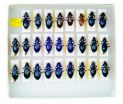
Scientists from the California Academy of Sciences and more than 60 other international research institutions spanning six continents have responded to a recent paper in Science, which questioned current methods of scientific collecting and advocated the use of non-lethal alternatives. The response, led by Luiz Rocha, Ph.D., the Academy's Assistant Curator and Follett Chair of Ichthyology, and co-authored by such science luminaries as Harvard's E. O. Wilson and the Academy's Chief of Science and Sustainability, Margaret (Meg) Lowman, describes in detail the value that scientific ...
Read more →
A glimpse into nature's looking glass -- to find the genetic code is reassigned
Science 2014-05-22

A glimpse into nature's looking glass -- to find the genetic code is reassigned

In the Lewis Carroll classic, Through the Looking Glass, Humpty Dumpty states, "When I use a word, it means just what I choose it to mean—neither more nor less." In turn, Alice (of Wonderland fame) says, "The question is, whether you can make words mean so many different things." All organisms on Earth use a genetic code, which is the language in which the building plans for proteins are specified in their DNA. It has long been assumed that there is only one such "canonical" code, so each word means the same thing to every organism. While a few examples of organisms ...
Read more →
RI Hospital researcher and colleagues discover protein that may lead to malaria vaccine
Medicine 2014-05-22

RI Hospital researcher and colleagues discover protein that may lead to malaria vaccine

VIDEO: Jonathan Kurtis, M.D., Ph.D., director of the Center for International Health Research at Rhode Island Hospital, talks about the latest findings in their research to find a vaccine for malaria,... Click here for more information. PROVIDENCE, R.I. – Rhode Island Hospital researchers have discovered a protein that is essential for malaria-causing parasites to escape from inside red blood cells. Antibodies to this protein trap the parasite inside these red blood cells. This ...
Read more →
Social Science 2014-05-22

Growing inequalities make science more of a 'winner takes all' field

ANN ARBOR—As new research documents growing inequalities in health and wealth, the gap between "haves" and "have-nots" is growing in the field of scientific research itself, says University of Michigan sociologist Yu Xie. "It's surprising that more attention has not been paid to the large, changing inequalities in the world of scientific research, given the preoccupation with rising social and economic inequality in many countries," said Xie, research professor at the U-M Institute for Social Research and professor of sociology, statistics and public policy. The forces ...
Read more →
Science 2014-05-22

Fruit flies show mark of intelligence in thinking before they act

Fruit flies 'think' before they act, a study by researchers from the University of Oxford's Centre for Neural Circuits and Behaviour suggests. The neuroscientists showed that fruit flies take longer to make more difficult decisions. In experiments asking fruit flies to distinguish between ever closer concentrations of an odour, the researchers found that the flies don't act instinctively or impulsively. Instead they appear to accumulate information before committing to a choice. Gathering information before making a decision has been considered a sign of higher intelligence, ...
Read more →
Environment 2014-05-22

Collecting biological specimens essential to science and conservation

ANN ARBOR—Collecting plant and animal specimens is essential for scientific studies and conservation and does not, as some critics of the practice have suggested, play a significant role in species extinctions. Those are the conclusions of more than 100 biologists and biodiversity researchers who signed a letter to the journal Science scheduled for online publication May 22. The letter is a response to an April 18 Perspectives article in Science arguing that alternative methods of documentation—such as high-resolution photography, audio recordings and nonlethal tissue ...
Read more →
Medicine 2014-05-22

Newborn health improves despite income gap

The U.S. economic inequality gap has been widening for decades, and research shows that maternal disadvantage may have health consequences for newborns. A review of recent economic research, however, finds that the health of newborns has actually improved nationally in recent years, despite data that would suggest otherwise. "That was really surprising to us," said Anna Aizer, associate professor of economics at Brown University. Aizer and Janet Currie of the National Bureau of Economic Research and Princeton University published the review in a special issue of Science ...
Read more →
Medicine 2014-05-22

Ancient DNA ends Aussie claim to kiwi origins

Australia can no longer lay claim to the origins of the iconic New Zealand kiwi following University of Adelaide research published in the journal Science today showing the kiwi's closest relative is not the emu as was previously thought. Instead, the diminutive kiwi is most closely related to the extinct Madagascan elephant bird – a 2-3 metre tall, 275 kg giant. And surprisingly, the study concluded, both of these flightless birds once flew. A new study by the University of Adelaide's Australian Centre for Ancient DNA (ACAD), has solved a 150-year-old evolutionary ...
Read more →
Medicine 2014-05-22

Scientists identify potential vaccine candidate for pediatric malaria

WHAT: Researchers have identified a substance, or antigen, that generates antibodies that can hinder the ability of malaria parasites to multiply, which may protect against severe malaria infection. The antigen, known as PfSEA-1, was associated with reduced parasite levels among children and adults in malaria-endemic areas. Mice exposed to PfSEA-1 in an investigational vaccine also experienced lower malaria parasite levels. The discovery of PfSEA-1 could be a critical addition to the limited pool of antigens currently used in candidate malaria vaccines. The findings, which ...
Read more →
Earth Science 2014-05-22

Lower mantle chemistry breakthrough

Washington, D.C.—Breaking research news from a team of scientists led by Carnegie's Ho-kwang "Dave" Mao reveals that the composition of the Earth's lower mantle may be significantly different than previously thought. These results are to be published by Science. The lower mantle comprises 55 percent of the planet by volume and extends from 670 and 2900 kilometers in depth, as defined by the so-called transition zone (top) and the core-mantle boundary (below). Pressures in the lower mantle start at 237,000 times atmospheric pressure (24 gigapascals) and reach 1.3 million ...
Read more →