Medicine Technology 🌱 Environment Space Energy Physics Engineering Social Science Earth Science Science
Medicine 2014-05-29

The Lancet: Most comprehensive global study to date shows obesity rates climbing worldwide

Worldwide, there has been a startling increase in rates of obesity and overweight in both adults (28% increase) and children (up by 47%) in the past 33 years, with the number of overweight and obese people rising from 857 million in 1980 to 2.1 billion in 2013, according to a major new analysis from the Global Burden of Disease Study 2013, published in The Lancet. However, the rates vary widely throughout the world with more than half of the world's 671 million obese individuals living in just ten countries—the USA (more than 13%), China and India (15% combined), Russia, ...
Read more →
Space 2014-05-29

Large muskies lured by the moon

The lunar cycle may synchronize with feeding activity, luring large muskies to take angler bait, according to results published May 28, 2014, in the open access journal PLOS ONE by Mark Vinson from U.S. Geological Survey and Ted Angradi from U.S. Environmental Protection Agency. Previous studies have suggested a relationship between the moon and fish behavior. To investigate this further, scientists analyzed angler catch records for evidence of an effect due to the lunar cycle and explored sources of its variation on fishermen's catch. They analyzed angling catch records ...
Read more →
Meek male and fighting female scorpions
Science 2014-05-29

Meek male and fighting female scorpions

Threatened female bark scorpions sting quicker than males, likely to compensate for reduced ability to flee the threat, according to results published May 28, 2014, in the open access journal PLOS ONE by Bradley Carlson from Pennsylvania State University and colleagues. Differences between male and female scorpion bodies and behavior may result from sexual or environmental pressures. For example, female bark scorpions are pregnant 80% of the year, and as a result, may deal with threats differently than males. To investigate this further, scientists tested the effects ...
Read more →
Medicine 2014-05-29

Most physicians would forgo aggressive treatment for themselves at the end of life

STANFORD, Calif. — Most physicians would choose a do-not-resuscitate or "no code" status for themselves when they are terminally ill, yet they tend to pursue aggressive, life-prolonging treatment for patients facing the same prognosis, according to a study from the Stanford University School of Medicine to be published May 28 in PLOS ONE. It's a disconnect that needs to be better understood, said VJ Periyakoil, MD, clinical associate professor of medicine and lead author of the study. "Why do we physicians choose to pursue such aggressive treatment for our patients ...
Read more →
Science 2014-05-29

Vocal fry hurts women in the labor market

A form of speech known as vocal fry that is low in pitch and creaky sounding is increasingly common among young American women. Although previous research has suggested that this manner of speaking is associated with education and upward mobility, a new study indicates that vocal fry is actually perceived negatively, particularly in a labor market context. The study, published online in the open-access journal PLOS ONE (The Public Library of Science ONE), indicates that women who speak in vocal fry are perceived as less attractive, less competent, less educated, less ...
Read more →
Medicine 2014-05-29

Tiny mutation triggers drug resistance for patients with one type of leukemia

A multi-institutional team of researchers has pinpointed exactly what goes wrong when chronic lymphocytic leukemia (CLL) patients develop resistance to ibrutinib, a highly effective, precisely targeted anti-cancer drug. In a correspondence published online May 28 in the New England Journal of Medicine, they show how the mutation triggers resistance. Their finding could guide development of new agents to treat drug-resistant disease. Ibrutinib received accelerated approval from the Food and Drug Administration for use in chronic lymphocytic leukemia in February. It has ...
Read more →
Medicine 2014-05-28

Cynical? You may be hurting your brain health

MINNEAPOLIS – People with high levels of cynical distrust may be more likely to develop dementia, according to a study published in the May 28, 2014, online issue of Neurology®, the medical journal of the American Academy of Neurology. Cynical distrust, which is defined as the belief that others are mainly motivated by selfish concerns, has been associated with other health problems, such as heart disease. This is the first study to look at the relationship between cynicism and dementia. "These results add to the evidence that people's view on life and personality ...
Read more →
Science 2014-05-28

The scarier the better -- screening results that make smokers stop smoking

Screening for lung cancer leads to early detection and treatment, but can it also make people stop smoking before they get cancer? The answer is that it depends on the seriousness of the results, according to a study published May 28 in the JNCI: Journal of the National Cancer Institute. To determine if there is an association between type of screening result and smoking cessation, Martin C. Tammemagi of the Department of Health Sciences, Brock University in St. Catharines, Ontario, Canada, and colleagues used data from the Lung Screening Study component of the US ...
Read more →
Science 2014-05-28

Indoor tanning, even without burning, increases the risk of melanoma

People sometimes use indoor tanning in the belief that this will prevent burns when they tan outdoors. However, indoor tanning raises the risk of developing melanoma even if a person has never had burns from either indoor or outdoor tanning, according to a study published May 29 in the JNCI: Journal of the National Cancer Institute. To test the hypothesis that indoor tanning without burns prevents sunburn and subsequent skin cancer, researchers at the Masonic Cancer Center, Department of Dermatology, and Division of Epidemiology and Community Health, University of ...
Read more →
Medicine 2014-05-28

Taking prescribed anti-clotting drug may help save stent patients' lives

If you've just received a coronary artery stent to prop open a blood vessel, your life may depend on filling your prescription and taking an anti-clotting drug within days of leaving the hospital, according to a large study in the Journal of the American Heart Association. The risk of heart attack and death is highest within the first 30 days for those who delay taking their medication than during long-term follow-up out to two years. Taking the drug clopidogrel plus aspirin is advised for a month in people who have a bare metal stent implanted, and six to 12 months ...
Read more →
Medicine 2014-05-28

Black trauma patients 65 and older more likely to survive than white counterparts

In a finding that runs counter to most health disparities research, Johns Hopkins researchers say that while younger black trauma patients are significantly more likely than whites to die from their injuries, black trauma patients over the age of 65 are 20 percent less likely to do so. A report on the research appears online May 28 in JAMA Surgery. "We have long found it vexing that minority patients consistently do worse, even in treatment for trauma that seems to leave little room for bias," says study leader Adil Haider, M.D., M.P.H., an associate professor of surgery ...
Read more →
Social Science 2014-05-28

Demographic of heroin users change in past 50 years

Bottom Line: Heroin users nowadays are predominantly white men and women in their late 20s living outside large urban areas who were first introduced to opioids through prescription drugs compared to the 1960s when heroin users tended to be young urban men whose opioid abuse started with heroin. Authors: Theodore J. Cicero, Ph.D., of Washington University, St. Louis, and colleagues. Background: Few studies on the demographics of present day heroin users have compared them to heroin users 40 to 50 years ago who were primarily young men from minority groups living ...
Read more →
Science 2014-05-28

Study examines risk factors for sagging eyelids

Bottom Line: Other than aging, risk factors for sagging eyelids include being a man, having lighter skin color and having a higher body mass index (BMI). Author: Leonie C. Jacobs, M.D., Erasmus Medical Center, Rotterdam, the Netherlands, and colleagues. Background: Sagging eyelids because of excess skin (dermatochalasis) is typically seen in middle-age or older adults. Typically a cosmetic concern, sagging eyelids also can cause visual field loss, irritation and headaches because patients force themselves to elevate their brow in order to see better. How ...
Read more →
Science 2014-05-28

Survival after trauma related to race, age

Bottom Line: Race and age affect trauma outcomes in older and younger patients. Author: Caitlin W. Hicks, M.D., M.S., of the Johns Hopkins School of Medicine, Baltimore. Background: Disparities in survival after traumatic injury among minority and uninsured patients has been well described for younger patients. But information is lacking on the effect of race on trauma outcomes for older patients. How the Study Was Conducted: The authors examined in-hospital mortality after trauma for black and white patients between the ages of 16 and 64 years and 65 ...
Read more →
Drug users switch to heroin because it's cheap, easy to get
Medicine 2014-05-28

Drug users switch to heroin because it's cheap, easy to get

A nationwide survey indicates that heroin users are attracted to the drug not only for the "high" but because it is less expensive and easier to get than prescription painkillers. Researchers at Washington University School of Medicine in St. Louis published the survey's results May 28 in the journal JAMA Psychiatry. "In the past, heroin was a drug that introduced people to narcotics," said principal investigator Theodore J. Cicero, PhD. "But what we're seeing now is that most people using heroin begin with prescription painkillers such as OxyContin, Percocet or Vicodin, ...
Read more →
Medicine 2014-05-28

The brain's reaction to male odor shifts at puberty in children with gender dysphoria

The brains of children with gender dysphoria react to androstadienone, a musky-smelling steroid produced by men, in a way typical of their biological sex, but after puberty according to their experienced gender, finds a study for the first time in the open-access journal Frontiers in Endocrinology. Around puberty, the testes of men start to produce androstadienone, a breakdown product of testosterone. Men release it in their sweat, especially from the armpits. Its only known function is to work like a pheromone: when women smell androstadienone, their mood tends to improve, ...
Read more →
Medicine 2014-05-28

Mount Sinai researchers lead committee to define the clinical course of multiple sclerosis

(NEW YORK – May 28) Accurate clinical course descriptions (phenotypes) of multiple sclerosis (MS) are important for communication, prognostication, design and recruitment for clinical trials, and treatment decision-making. Researchers at Icahn School of Medicine at Mount Sinai, part of the International Committee on Clinical Trials of MS, collaborated to re-examine the standardized MS clinical course descriptions originally published in 1996 and recommend refined phenotype descriptions that include improved clinical descriptive terminology, MRI and other imaging techniques, ...
Read more →
NASA IceBridge concludes Arctic field campaign
Environment 2014-05-28

NASA IceBridge concludes Arctic field campaign

Researchers with NASA's Operation IceBridge have completed another successful Arctic field campaign. On May 23, NASA's P-3 research aircraft left Thule Air Base, Greenland, and returned to Wallops Flight Facility in Virginia marking the end of 11 weeks of polar research. During this campaign, researchers collected data on Arctic sea and land ice – both repeating measurements on rapidly changing areas and expanding coverage into new, unsurveyed regions. The mission also released two sea ice data products and provided a professional development opportunity for three science ...
Read more →
International collaboration highlights new mechanism explaining how cancer cells spread
Medicine 2014-05-28

International collaboration highlights new mechanism explaining how cancer cells spread

DALLAS – May 28, 2014 – UT Southwestern Medical Center cancer researchers have identified a protein critical to the spread of deadly cancer cells and determined how it works, paving the way for potential use in diagnosis and eventually possible therapeutic drugs to halt or slow the spread of cancer. The protein, Aiolos, is produced by normal blood cells but commits a kind of "identity theft" of blood cells when expressed by cancer cells, allowing the latter to metastasize, or spread, to other parts of the body. Metastatic cancer cells have the ability to break free from ...
Read more →
Suspect strep throat? Re-check negative rapid test results with lab culture
Social Science 2014-05-28

Suspect strep throat? Re-check negative rapid test results with lab culture

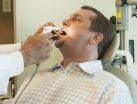
Clinical guidelines conflict on testing teens and adults whose symptoms point to a possible strep throat. A chief contention is whether negative tests results from a rapid analysis of a throat swab, done in a doctor's office, should be confirmed through a follow-up laboratory culture. The rapid test detects certain antigens, one of the body's efforts to fight off strep bacteria. Attempting to grow bacteria from a throat specimen double checks for the presence or absence of Group A Streptococcus bacteria, as well as a few other bacterial infections. A study published ...
Read more →
Social Science 2014-05-28

Negative social interactions increase hypertension risk in older adults

PITTSBURGH—Keeping your friends close and your enemies closer may not be the best advice if you are 50 or older. New research from Carnegie Mellon University's Rodlescia Sneed and Sheldon Cohen shows that unpleasant or demanding interpersonal encounters increase hypertension risk among older adults. Published in the American Psychological Association's journal Health Psychology, the study provides some of the first concrete evidence that negative social interactions not only influence psychological well-being but also physical health – in this case, blood pressure ...
Read more →
Medicine 2014-05-28

T cell repertoire changes predictive of anti-CTLA-4 cancer immunotherapy outcome revealed

Sequenta, Inc. today announced publication of a study done in collaboration with researchers from UCSF and UCLA that used the company's proprietary LymphoSIGHT™ immune repertoire sequencing platform to investigate the effects of anti-CTLA-4 antibody on the number and types of T cells present in a patient's blood. The results, which appear in the May 28 issue of Science Translational Medicine, shed light on the mechanism of action of this type of cancer immunotherapy and suggest that immune repertoire sequencing could be used to predict which patients will have improved ...
Read more →
Science 2014-05-28

Study: Amphetamines can delay exhaustion during exercise in the heat -- at a cost

Indiana University researchers put male rats to the test to determine the role amphetamines play when used in conjunction with exercise. When people or animals exercise in the heat, exhaustion is a safety gauge telling the body it is time to stop. Exhaustion occurs when the body's core temperature reaches a potentially dangerous point. The use of amphetamines is banned in many sports because they increase time to exhaustion. What they found: Amphetamines can delay exhaustion during exercise in the heat by increasing the temperature at which it occurs. This potentially ...
Read more →
Researchers use light to coax stem cells to repair teeth
Medicine 2014-05-28

Researchers use light to coax stem cells to repair teeth

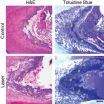
A Harvard-led team is the first to demonstrate the ability to use low-power light to trigger stem cells inside the body to regenerate tissue, an advance they reported in Science Translational Medicine. The research, led by Wyss Institute Core Faculty member David Mooney, Ph.D., lays the foundation for a host of clinical applications in restorative dentistry and regenerative medicine more broadly, such as wound healing, bone regeneration, and more. The team used a low-power laser to trigger human dental stem cells to form dentin, the hard tissue that is similar to bone ...
Read more →
Science 2014-05-28

EARTH magazine: The history, science and poetry of New England's stone walls

Alexandria, Va. — When author John-Manuel Andriote returned to his hometown in New England after years away, he noticed something that had been invisible to him while growing up there — the old stone walls tumbling off into the forests. The realization that the crumbling and overgrown walls meant those forests had once been cleared farm lands set Andriote on a years-long journey of discovery that highlights the intersections of geologic and human history. The story of New England's stone walls begins with the glaciers of the last ice age, meanders through the Colonial ...
Read more →