Medicine Technology 🌱 Environment Space Energy Physics Engineering Social Science Earth Science Science
Clinical trial shows drug combination may be effective in recurrent ovarian cancer
Medicine 2014-06-02

Clinical trial shows drug combination may be effective in recurrent ovarian cancer

VIDEO: Dr. Joyce Liu talks about her clinical trial showing drug combination may be effective in recurrent ovarian cancer. Click here for more information. CHICAGO –– Significant improvement with the use of a combination drug therapy for recurrent ovarian cancer was reported at the annual meeting of the American Society of Clinical Oncology (ASCO) meeting in Chicago today. This is the first ovarian cancer study to use a combination of drugs that could be taken orally. The ...
Read more →
Medicine 2014-06-02

New data shows ProMark accurately predicts aggressive prostate cancer, pathology outcomes

CAMBRIDGE, Massachusetts, June 2, 2014 – Today, for the first time, Metamark presents results from the clinical validation study that showed ProMark™, the first and only proteomic-based imaging biopsy test, achieved its primary endpoint by accurately differentiating between aggressive and non-aggressive forms of prostate cancer at early stages of disease. ProMark™ was shown to predict which patients have low-risk disease with a sensitivity of 90 percent or better, confidently identifying patients who are appropriate for active surveillance or need aggressive therapy. The ...
Read more →
Medicine 2014-06-02

Study shows tale of 2 prognoses in pediatric brain tumor, pilocytic astrocytoma

Pilocytic astrocytoma (PA) is a primarily pediatric brain tumor caused mainly by mutations in the BRAF gene. In fact, there are two specific mechanisms for activation of BRAF implicated in PA formation: by fusion of the gene with nearby gene KIAA1549 (K:B fusion) or by point mutations of the BRAF gene itself. Research presented at the American Society for Clinical Oncology (ASCO) Annual Meeting 2014 used a newly designed test for K:B fusion to show that point mutations lead to a more dangerous form of the disease than does K:B fusion. "Overall, the prognosis for Pilocytic ...
Read more →
Medicine 2014-06-02

DREAM project crowdsources answer to cancer cell drug sensitivities

A study published June 1 in the journal Nature Biotechnology describes the results of an open challenge to predict which breast cancer cell lines will respond to which drugs, based only on the sum of cells' genomic data. The winning entry, from the Helsinki Institute for Information Technology, was 78 percent accurate in identifying sensitive versus resistant cell lines, and was one of 44 algorithms submitted by groups from around the world. "The idea is simple – we have this question and anybody can participate in searching for the answer. The question is, do we have ...
Read more →
A master of disguise: A new stick insect species from China
Environment 2014-06-02

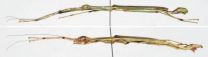
A master of disguise: A new stick insect species from China

Many representatives of the fauna possess unique masking abilities but stick insects are among the masters of disguise within the animal world. During a field trip in Guangxi, China Mr. Ho Wai-chun George from the Hong Kong Entomological Society discovers a new species from this enigmatic insect group, which he describes in a recent research paper published in the open access journal Deutsche Entomologische Zeitschrift. Like the name suggests the new stick insect Sinophasma damingshanensis is distinguished by peculiarly elongated body and green-brownish coloration, which ...
Read more →
New species from the past
Environment 2014-06-02

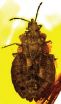
New species from the past

A piece of Eocene Baltic Amber of about 45 million years age contains a well preserved extinct flat bug, which turned out to be a new species to science. This exciting discovery is one of the many secrets that deposits of Baltic amber have revealed in the last years and are yet to come in the future. The study describing the new species was published in the open access journal Deutsche Entomologische Zeitschrift. The new species Aradus macrosomus is a rather large representative of the genus, differing by its size and particular structures from its congeners. The name ...
Read more →
Science 2014-06-02

Same face, many first impressions

Slight variations in how an individual face is viewed can lead people to develop significantly different first impressions of that individual, according to research published in Psychological Science, a journal of the Association for Psychological Science. "Our findings suggest that impressions from still photos of individuals could be deeply misleading," says psychological scientist and study author Alexander Todorov of Princeton University. Previous research has shown that people form first impressions about someone's personality after viewing their face only briefly. ...
Read more →
Science 2014-06-02

What finding out a child's sex before birth says about a mother

COLUMBUS, Ohio – An expectant mother who chooses to find out her child's sex before birth may be giving subtle clues about her views on proper gender roles, new research suggests. The study found that women who choose not to learn their child's sex may be more open to new experiences, and combine egalitarian views about the roles of men and women in society with conscientiousness. On the other hand, expectant mothers who scored high on a test of parenting perfectionism were more likely than others to learn their baby's sex. "These results suggest women who choose ...
Read more →
Stronger than steel
Engineering 2014-06-02

Stronger than steel

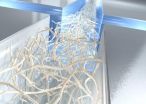
A Swedish-German research team has successfully tested a new method for the production of ultra-strong cellulose fibres at DESY's research light source PETRA III. The novel procedure spins extremely tough filaments from tiny cellulose fibrils by aligning them all in parallel during the production process. The new method is reported in the scientific journal Nature Communications. "Our filaments are stronger than both aluminium and steel per weight," emphasizes lead author Prof. Fredrik Lundell from the Wallenberg Wood Science Center at the Royal Swedish Institute of Technology ...
Read more →
Science 2014-06-02

New analysis contradicts findings published in Science

(Washington, DC) – New research published in the June 2014 issue of Language presents evidence that the methods employed by the authors of articles published in prestigious international science journals are not supported by a more rigorous linguistic analysis. The Language article, "A statistical comparison of written language and non-linguistic symbol systems," was authored by Richard Sproat, a Research Scientist at Google, based on work he previously did at the Oregon Health & Science University. A pre-print version of the article is available for review at: http://www.linguisticsociety.org/document/language-vol-90-issue-2-june-2014-sproat. ...
Read more →
Medicine 2014-06-02

Speaking 2 languages benefits the aging brain

New research reveals that bilingualism has a positive effect on cognition later in life. Findings published in Annals of Neurology, a journal of the American Neurological Association and Child Neurology Society, show that individuals who speak two or more languages, even those who acquired the second language in adulthood, may slow down cognitive decline from aging. Bilingualism is thought to improve cognition and delay dementia in older adults. While prior research has investigated the impact of learning more than one language, ruling out "reverse causality" has proven ...
Read more →
Medicine 2014-06-02

Myriad myPath melanoma test improves the reliability of melanoma diagnosis

SALT LAKE CITY, Utah, June 2, 2014 – Myriad Genetics, Inc. (Nasdaq: MYGN) today presented results from a pivotal clinical validation study of the Myriad myPath™ Melanoma test at the 2014 American Society of Clinical Oncology (ASCO) annual meeting in Chicago, Ill. The Myriad myPath Melanoma test is a novel molecular test that accurately differentiates malignant melanoma from benign skin lesions with a high level of accuracy and helps physicians deliver a more objective and confident diagnosis for patients. "Unfortunately, some melanomas mimic benign skin lesions, making ...
Read more →
Medicine 2014-06-02

Myriad presents clinical data on Myriad myRisk Hereditary Cancer Test at ASCO

SALT LAKE CITY, Utah, June 2, 2014 – Myriad Genetics, Inc. (Nasdaq: MYGN) today presented several clinical studies on the Myriad myRisk™ Hereditary Cancer test at the 2014 American Society of Clinical Oncology (ASCO) annual meeting in Chicago, Illinois. Among the important new findings is that the myRisk test detects significantly more deleterious mutations than single cancer tests and helps solve the overlap dilemma that exists among hereditary cancer syndromes. "There is robust evidence that hereditary cancers are caused by mutations in many genes and testing for only ...
Read more →
Physics 2014-06-02

Physics in Brazil takes center stage as World Cup comes to town

As Brazil gets set to host the 2014 FIFA World Cup this month amid concerns about the amount of public money being used to stage the world's largest sporting event, Physics World's editorial team reveals in a new special report how physicists are taking full advantage of the four-fold increase in science funding that the government has invested over the past 10 years. Negotiations are currently under way to make Brazil an associate member of the CERN particle-physics lab in Geneva, while the country is also taking a leading role in the Pierre Auger Observatory – an international ...
Read more →
Medicine 2014-06-02

Deletions and duplications in the exome can help pinpoint cause of unexplained genetic diseases

Analysis of genetic variation in the exome, the DNA sequence of genes that are translated into protein, can aid in uncovering the cause of conditions for which no genetic cause could previously be found, and this can directly impact clinical management, the annual conference of the European Society of Human Genetics will hear today. Dr Jayne Hehir-Kwa, Assistant Professor of Bioinformatics in the Translational Research group, Department of Human Genetics, Radboud UMC, Nijmegen, The Netherlands, will describe results from her group's study that set out to determine whether ...
Read more →
Medicine 2014-06-02

New genes involved in food preferences will revolutionize diets and improve health

New understanding of the genes involved in taste perception and food preferences could lead to personalised nutrition plans effective not just in weight loss but in avoiding diseases such as cancer, depression, and hypertension, Italian researchers will tell the annual conference of the European Society of Human Genetics (ESHG) today (Monday). Knowing why individuals prefer certain food tastes and being able to personalise health interventions based on them will help people age in a healthier way and greatly improve their quality of life, as well as engender considerable ...
Read more →
Science 2014-06-02

New research shows parental presence improves the quality of child anesthesia

New research presented at this year's Euroanaesthesia meeting in Stockholm shows that having parents present during the induction of their child's anaesthesia improves the quality of that anaesthesia. The study is by Dr Alicia Sánchez, Department of Anaesthesiology, Hospital de Sagunto, Spain, and colleagues. Induction of anaesthesia can be distressing for parents and children. The effect of parental presence at anaesthesia induction on children anxiety and children anaesthesia compliance has been previously investigated but the few studies to date have produced contradictory ...
Read more →
Medicine 2014-06-02

Improving bystander resuscitation following cardiac arrest outside hospital could save 100,000 lives across Europe each year

A session at this year's Euroanaesthesia meeting will discuss how improving the skills of members of the public, including schoolchildren, in resuscitation following cardiac arrest could save up to 100,000 lives per year. The presentation will be given by Professor Bernd Böttiger, Director of Science and Research at the European Resuscitation Council (ERC), and also Head of the Department of Anaesthesiology and Intensive Care Medicine at University Hospital Cologne, Germany. The best estimates currently available suggest that 350,000 deaths in each year in Europe are ...
Read more →
Science 2014-06-02

Children exposed to secondhand tobacco or cooking smoke have very high rates of pain and complications after tonsillectomy

New research presented at this year's Euroanaesthesia meeting in Stockholm shows that children exposed to indoor coal-burning stoves and/or second-hand tobacco smoke are much more likely to suffer postoperative complications and excessive pain after tonsillectomies. The research is by Professor Daniel Sessler, Cleveland Clinic, Cleveland, Ohio, USA and Dr Onur Koyuncu, Mustafa Kemal University, Hatay, Turkey, and colleagues. Almost half of the world's population uses solid fuel including biomass (wood, crop residues, and animal dung) or coal for heating and cooking. ...
Read more →
Medicine 2014-06-01

A single DNA tweak leads to blond hair

A single-letter change in the genetic code is enough to generate blond hair in humans, in dramatic contrast to our dark-haired ancestors. A new analysis by Howard Hughes Medical Institute (HHMI) scientists has pinpointed that change, which is common in the genomes of Northern Europeans, and shown how it fine-tunes the regulation of an essential gene. "This particular genetic variation in humans is associated with blond hair, but it isn't associated with eye color or other pigmentation traits," says David Kingsley, an HHMI investigator at Stanford University who led the ...
Read more →
Science 2014-06-01

How to erase a memory -- and restore it

Researchers at the University of California, San Diego School of Medicine have erased and reactivated memories in rats, profoundly altering the animals' reaction to past events. The study, published in the June 1 advanced online issue of the journal Nature, is the first to show the ability to selectively remove a memory and predictably reactivate it by stimulating nerves in the brain at frequencies that are known to weaken and strengthen the connections between nerve cells, called synapses. "We can form a memory, erase that memory and we can reactivate it, at will, ...
Read more →
Medicine 2014-06-01

Newly identified brain cancer mutation will aid drug development

DURHAM, N.C. – A collaborative effort between Duke Medicine researchers and neurosurgeons and scientists in China has produced new genetic insights into a rare and deadly form of childhood and young adult brain cancer called brainstem glioma. The researchers identified a genetic mutation in the tumor cells that plays a role in both the growth and the death of a cell. Additionally, the mutation to the newly identified gene may also contribute to the tumor's resistance to radiation. The findings, published online in the journal Nature Genetics on June 1, 2014, provide ...
Read more →
Space 2014-06-01

Lasers create table-top supernova

Laser beams 60,000 billion times more powerful than a laser pointer have been used to recreate scaled supernova explosions in the laboratory as a way of investigating one of the most energetic events in the Universe. Supernova explosions, triggered when the fuel within a star reignites or its core collapses, launch a detonation shock wave that sweeps through a few light years of space from the exploding star in just a few hundred years. But not all such explosions are alike and some, such as Cassiopeia A, show puzzling irregular shapes made of knots and twists. To investigate ...
Read more →
Medicine 2014-06-01

Smokers with gene defect have 1 in 4 chance of developing lung cancer

Around a quarter of smokers who carry a defect in the BRCA2 gene will develop lung cancer at some point in their lifetime, a large-scale, international study reveals. Scientists announce a previously unknown link between lung cancer and a particular BRCA2 defect, occurring in around 2 per cent of the population, in research published in Nature Genetics today (Sunday). The defect in BRCA2 - best known for its role in breast cancer - increases the risk of developing lung cancer by about 1.8 times. Smokers as a group have a high lifetime risk of around 13 per cent (16 ...
Read more →
Shining a light on memory
Science 2014-06-01

Shining a light on memory

Using a flash of light, scientists have inactivated and then reactivated a memory in genetically engineered rats. The study, supported by the National Institutes of Health, is the first cause-and-effect evidence that strengthened connections between neurons are the stuff of memory. "Our results add to mounting evidence that the brain represents a memory by forming assemblies of neurons with strengthened connections, or synapses, explained Roberto Malinow, M.D., Ph.D., of the University of California, San Diego (UCSD), a grantee of the NIH's National Institute of Mental ...
Read more →