Medicine Technology 🌱 Environment Space Energy Physics Engineering Social Science Earth Science Science
Medicine 2012-10-25

Stanford researchers develop efficient, protein-based method for creating iPS cells

STANFORD, Calif. — Coaxing a humble skin cell to become a jack-of-all-trades pluripotent stem cell is feat so remarkable it was honored earlier this month with the Nobel Prize in Physiology or Medicine. Stem cell pioneer Shinya Yamanaka, MD, PhD, showed that using a virus to add just four genes to the skin cell allowed it to become pluripotent, or able to achieve many different developmental fates. But researchers and clinicians have been cautious about promoting potential therapeutic uses for these cells because the insertion of the genes could render the cells cancerous. Now ...
Read more →
Science 2012-10-25

Genetic tradeoff: Harmful genes are widespread in yeast but hold hidden benefits

ANN ARBOR— The genes responsible for inherited diseases are clearly bad for us, so why hasn't evolution, over time, weeded them out and eliminated them from the human genome altogether? Part of the reason seems to be that genes that can harm us at one stage of our lives are necessary and beneficial to us at other points in our development. The idea that the same gene can be both beneficial and harmful, depending on the situation, is called antagonistic pleiotropy. The theory has been around since the 1950s and has been used to explain aging, cancer and genetic diseases. But ...
Read more →
Steroid injection linked to increased risk of bone fractures
Science 2012-10-25

Steroid injection linked to increased risk of bone fractures

DETROIT – Patients treated with an epidural steroid injection for back pain relief are at increased risk of bone fractures in the spine, according to a Henry Ford Hospital study. Researchers say the risk of fracture increased 29 percent with each steroid injection, a finding they believe raises patient safety concerns. "For a patient population already at risk for bone fractures, steroid injections carry a greater risk that previously thought and actually pose a hazard to the bone," says Shlomo Mandel, M.D., a Henry Ford orthopedic physician and the study's lead author. Dr. ...
Read more →
Male competition over females
Science 2012-10-25

Male competition over females

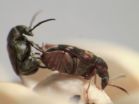
When a female mates with several males, these will compete over the fertilization her eggs. This is an important evolutionary force that has led to the evolution of a diversity of male sexual organ morphologies. This is revealed in a study of seed beetles published today in the leading scientific journal Current Biology. In higher plants, the influential classification system developed by Carl von Linnaeus relied on the fact that the reproductive parts of plants are evolutionarily stable. This is in sharp contrast to the reproductive organs of animals with internal fertilization, ...
Read more →
Medicine 2012-10-25

Temple-Penn team identifies gatekeeper protein, new details on cell's power source

(Philadelphia, PA) – Researchers at Temple University's Center for Translational Medicine and the University of Pennsylvania have identified a protein that serves as a gatekeeper for controlling the rush of calcium into the cell's power source, the mitochondria. Without this calcium spigot under control, calcium levels can run amok, contributing to cardiovascular disease, diabetes and neurodegeneration. The findings, reported online October 25, 2012, in the journal Cell, add important new insights into the inner workings of the mitochondria and may eventually help scientists ...
Read more →
Medicine 2012-10-25

An animal model of typhoid fever could lead to better vaccines

The first mouse model of the common bacterial disease typhoid fever is reported in a study published by Cell Press October 25 in the journal Cell. Because the animals show human-like symptoms and respond positively to immunization, they could be used to develop more effective vaccines against the deadly pathogen. "Prior to our work, there was no small animal model for studying immune responses to the bacteria that cause typhoid fever," says study author Matthew Hayden of Columbia University. "We hope that the model we have developed will promote rapid progress in developing ...
Read more →
Structure discovered for promising tuberculosis drug target
Medicine 2012-10-25

Structure discovered for promising tuberculosis drug target

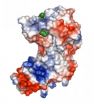
Researchers at Johns Hopkins have figured out the three-dimensional shape of the protein responsible for creating unique bonds within the cell wall of the bacteria that cause tuberculosis. The bonds make the bacteria resistant to currently available drug therapies, contributing to the alarming rise of these super-bacteria throughout the world. With the protein structure in hand, the scientists say, drug designers have a clear way forward for weakening the cell wall and killing these deadly bacteria. Their results are reported in a paper published online Oct. 25 in Structure. "We've ...
Read more →
Science 2012-10-25

Scientists create first mouse model of typhoid fever

New York, NY (October 25, 2012) — Columbia University Medical Center (CUMC) researchers have created the first true mouse model of typhoid infection. The development promises to advance the study of typhoid and the creation of new vaccines against the infection, which remains a major health threat in developing countries. The paper was published today in the online edition of the journal Cell. "Vaccines are the most practical solution for preventing typhoid in the Third World. Unfortunately, existing typhoid vaccines are only modestly effective, leaving millions of people ...
Read more →
Resveratrol falls short in health benefits
Medicine 2012-10-25

Resveratrol falls short in health benefits

Resveratrol, an ingredient in red wine thought to improve insulin sensitivity, reduce risk of heart disease and increase longevity, does not appear to offer these benefits in healthy women, new research at Washington University School of Medicine in St. Louis indicates. The study, reported online Oct. 25 in Cell Metabolism, involved 29 post-menopausal women who did not have type 2 diabetes and who were reasonably healthy. For 12 weeks, half took an over-the-counter resveratrol supplement, and the rest got a placebo, or sugar pill. "Resveratrol supplements have become ...
Read more →
Medicine 2012-10-25

Antibiotics that only partly block protein machinery allow germs to poison themselves

Powerful antibiotics that scientists and physicians thought stop the growth of harmful bacteria by completely blocking their ability to make proteins actually allow the germs to continue producing certain proteins -- which may help do them in. The finding, by a team at the University of Illinois at Chicago College of Pharmacy, clarifies how antibiotics work and may aid in the discovery of new drugs or improve clinical therapy with existing ones. The study is published in the Oct. 26 issue of the journal Cell. Among the most complex molecular machines in the cell are ...
Read more →
Science 2012-10-25

Study reveals rate at which key genetic deletions contribute to male infertility

CAMBRIDGE, Mass. (October 25, 2012) — A large-scale analysis of Y chromosomes from more than 20,000 men finds that two spontaneously recurring deletions along a complex region of the Y chromosome are responsible for approximately 8% of cases of failed sperm production. Although previous research had identified deletions in the region of the Y known as AZFc (for azoospermia factor c) as causing severe spermatogenic failure (SSF), this latest analysis, conducted by Whitehead Institute Director David Page and colleagues, is the first to determine how prevalent these deletions ...
Read more →
Science 2012-10-25

The Biggest Loser a big turnoff

(Edmonton) The Biggest Loser might be a TV ratings winner, but its extreme depiction of exercise is more likely to turn people off than get them off the couch, according to new research from the University of Alberta. Researchers in the Faculty of Physical Education and Recreation found that watching a short video clip of the Biggest Loser fuelled negative attitudes toward exercise, raising further questions about how physical activity is shown in the popular media. "The depictions of exercise on shows like The Biggest Loser are really negative," said lead author Tanya ...
Read more →
Protein regulation linked to intellectual disability
Medicine 2012-10-25

Protein regulation linked to intellectual disability

Genetics researchers at the University of Adelaide have solved a 40-year mystery for a family beset by a rare intellectual disability – and they've discovered something new about the causes of intellectual disability in the process. While many intellectual disabilities are caused directly by a genetic mutation in the so-called "protein coding" part of our genes, the researchers found that in their case the answer laid outside the gene and in the regulation of proteins. Protein regulation involves the switching on or off of a protein by specific genes. As a consequence ...
Read more →
Science 2012-10-25

BMJ and Daily Telegraph's fake hip exposes failing European device regulation

A joint investigation by the BMJ and Daily Telegraph has exposed the major flaws in the current EU system used for regulating medical devices, such as hip replacements and breast implants. It reveals that some "notified bodies" (the agencies charged with assessing how safe medical devices are before they are sold) are more interested in attracting business than safeguarding patients. Undercover reports created a fake large diameter metal on metal total hip—called the Changi TMH (Total Metal Hip)—that was based on a device which has been recalled globally for safety ...
Read more →
Science 2012-10-25

Traumatic consequences long after fall of the Berlin Wall

Previously, there had been a lack of reliable data in Germany on the long-term psychological consequences of political imprisonment in the GDR. Professor Andreas Maercker, Head of the Department of Psychopathology and Clinical Intervention at the University of Zurich, and private lecturer Dr. Matthias Schützwohl, Group Leader at the Clinic and Polyclinic of Psychiatry and Psychotherapy at Dresden University of Technology, interviewed 146 former political prisoners in the mid-1990s. 15 years later, they studied the majority of those concerned (78 men and 15 women) again. ...
Read more →
Science 2012-10-25

Genes, depression and life satisfaction

Vulnerability to major depression is linked with how satisfied we are with our lives. This association is largely due to genes. This is the main finding of a new twin study from the Norwegian Institute of Public Health in collaboration with the University of Oslo. The researchers compared longitudinal information from identical and fraternal twins to determine how vulnerability to major depression is associated with dispositional (overall) lifetime satisfaction. Previous studies have systematically shown that life satisfaction is considerably stable over time. People ...
Read more →
Medicine 2012-10-25

New opportunity for rapid treatment of malaria

Researchers have identified a new means to eradicate malaria infections by rapidly killing the blood-borne Plasmodium parasites that cause the disease. Malaria causes up to 3 million deaths each year, predominantly afflicting vulnerable people such as children under five and pregnant women, in tropical regions of Africa, Asia, and Latin America. Treatments are available for this disease, but the Plasmodium parasite is fast becoming resistant to the most common drugs, and health authorities say they desperately need new strategies to tackle the disease. This new potential ...
Read more →
Environment 2012-10-25

Did the changing climate shrink Europe's ancient hippos?

Giant German hippopotamuses wallowing on the banks of the Elbe are not a common sight. Yet 1.8 million years ago hippos were a prominent part of European wildlife, when mega-fauna such as woolly mammoths and giant cave bears bestrode the continent. Now palaeontologists writing in Boreas, believe that the changing climate during the Pleistocene Era may have forced Europe's hippos to shrink to pygmy sizes before driving them to warmer climes. "Species of hippo ranged across pre-historic Europe, including the giant Hippopotamus antiquus a huge animal which often weighed ...
Read more →
Medicine 2012-10-25

DNA's double stranded stretch

Theoretical physicists like to play with very unconventional toys. Manoel Manghi from Toulouse University in France and his colleagues have adopted a seemingly playful approach to examining what happens to a double stranded molecule of DNA when it is stretched to the breaking point, in a study about to be published in EPJ E. Instead of using optical tweezers to stretch DNA as previously done in experimental settings, the authors focused on using a theoretical model to account for the structural deformations of DNA and determine how its mechanical characteristics could explain ...
Read more →
Environment 2012-10-25

Peer review option proposed for biodiversity data

Copenhagen, Denmark – Data publishers should have the option of submitting their biodiversity datasets for peer review, according to a discussion paper commissioned by the Global Biodiversity Information Facility (GBIF). The proposal is among a set of recommendations made by Mark Costello and co-authors in the paper Quality assurance and Intellectual Property Rights in advancing biodiversity data publication, freely available for download through the GBIF Online Resource Centre. The paper argues that concerns over data quality impede the use of large biodiversity databases ...
Read more →
Medicine 2012-10-25

Lonely older adults face more health risks

Montreal, October 25, 2012 – Always look on the bright side of life. Thanks to a new study from Concordia University, this catchy refrain offers a prescription for staying healthy during one's golden years. Research has shown that lonely older adults are at greater risk of developing health problems but a new study by Carsten Wrosch, a professor in Concordia's Department of Psychology and member of the Centre for Research in Human Development, offers hope. In a forthcoming article in Psychosomatic Medicine, Wrosch proves that older adults who approach life with a positive ...
Read more →
Science 2012-10-25

After-effects of Saturn's super storm shine on

VIDEO: This animation shows the evolution of Saturn's 'Great Springtime Storm' in the planet's stratosphere. It is based on observations performed at mid-infrared wavelengths. As clouds broke out in Saturn's stormy troposphere,... Click here for more information. The heat-seeking capabilities of the international Cassini spacecraft and two ground-based telescopes have provided the first look at the aftermath of Saturn's 'Great Springtime Storm'. Concealed from the naked ...
Read more →
Science 2012-10-25

Gene that's usually bad news loses its punch if you live to your 90s, Mayo study finds

ROCHESTER, Minn. -- A gene linked to the risk of developing Alzheimer's, heart disease and diabetes becomes less important to quality of life once people hit their 90s, a Mayo Clinic study shows. At that point, good friends and a positive attitude have a bigger impact, the researchers say. The findings are published this month in the Journal of American Medical Directors Association. Researchers used the National Institutes of Health-supported Rochester Epidemiology Project, a database of patient records in Olmsted County, Minn., to find people ages 90 to 99 living on ...
Read more →
Medicine 2012-10-25

Highlights of the 25th Congress of the European College of Neuropsychopharmacology 2012

In the course of the 25th ECNP Congress leading experts and five and a half thousand psychiatrists, neurologists, neuroscience researchers and public health professionals from over 90 different countries met from 13 to 17 October 2012 in Vienna, Austria, to celebrate ECNP´s 25-year anniversary and engage in groundbreaking debate. Against the background of the increasing burden of disorders of the brain and restrained drug development in this area, the ECNP Congress once again highlighted the key importance of neuroscience for better treatment and prevention. "Crucially, ...
Read more →
Earth Science 2012-10-25

US NAS and Royal Society Issue Statement on Earthquake Case in Italy

The case of six Italian scientists sentenced to be jailed for failing to warn of the L'Aquila earthquake in Italy in 2009 highlights the difficult task facing scientists in dealing with risk communication and uncertainty. We deal with risks and uncertainty all the time in our daily lives. Weather forecasts do not come with guarantees and despite the death tolls on our roads we continue to use bikes, cars, and buses. We have also long built our homes and workplaces in areas known to have a history of earthquakes, floods, or volcanic activity. Much as society and governments ...
Read more →