Medicine Technology 🌱 Environment Space Energy Physics Engineering Social Science Earth Science Science
Medicine 2011-01-07

Scripps Research scientists develop groundbreaking technology to detect Alzheimer's disease

JUPITER, FL, January 5, 2011 – Scientists from the Florida campus of The Scripps Research Institute, have developed a novel technology that is able to detect the presence of immune molecules specific to Alzheimer's disease in patients' blood samples. While still preliminary, the findings offer clear proof that this breakthrough technology could be used in the development of biomarkers for a range of human diseases. The study, led by Scripps Research Professor Thomas Kodadek, Ph.D., was published in the January 7, 2011 edition of the journal Cell. Traditionally, antigens—a ...
Read more →
Medicine 2011-01-07

Genetic abnormalities identified in pluripotent stem cell lines

A multinational team of researchers led by stem cell scientists at the University of California, San Diego School of Medicine and Scripps Research Institute has documented specific genetic abnormalities that occur in human embryonic (hESC) and induced pluripotent stem cell (iPSC) lines. Their study, "Dynamic changes in the copy number of pluripotency and cell proliferation genes in human ESCs and iPSCs during reprogramming and time in culture" will be published in the January 7 issue of the journal Cell Stem Cell. The published findings highlight the need for frequent ...
Read more →
Medicine 2011-01-07

Neural stem cells maintain high levels of reactive oxygen species, UCLA study finds

For years, the majority of research on reactive oxygen species (ROS) – ions or very small molecules that include free radicals – has focused on how they damage cell structure and their potential link to stroke, cardiovascular disease and other illnesses. However, researchers at the Eli and Edythe Broad Center of Regenerative Medicine and Stem Cell Research have shown for the first time that neural stem cells, the cells that give rise to neurons, maintain high levels of ROS to help regulate normal self-renewal and differentiation. The findings, published in the Jan. ...
Read more →
Science 2011-01-07

Weizmann Institute scientists discover: A chemical signal in human tears

Emotional crying is a universal, uniquely human behavior. When we cry, we clearly send all sorts of emotional signals. In a paper published online today in Science Express, scientists at the Weizmann Institute have demonstrated that some of these signals are chemically encoded in the tears themselves. Specifically, they found that merely sniffing a woman's tears – even when the crying woman is not present -- reduces sexual arousal in men. Humans, like most animals, expel various compounds in body fluids that give off subtle messages to other members of the species. ...
Read more →
Medicine 2011-01-07

Weight-loss surgery improved female urinary problems but male erection issues got worse

Women who underwent gastric band surgery to lose weight reported significant improvements in urinary function and quality of life after the operation, according to research published in the January issue of the urology journal BJUI. However, men undergoing the procedure did not enjoy the same significant urinary function improvements as the women. They also reported that erectile function was slightly worse after surgery, unlike studies following non-surgical weight loss where sexual function actually improved. Researchers surveyed 176 patients - 142 women and 34 ...
Read more →
Medicine 2011-01-07

Tomatoes found to contain nutrient which prevents vascular diseases

They are the most widely produced fruit in the world and now scientists in Japan have discovered that tomatoes contain a nutrient which could tackle the onset of vascular diseases. The research, published in the journal Molecular Nutrition & Food Research, reveals that an extracted compound, 9-oxo-octadecadienoic, has anti-dyslipidemic affects. The team led by Dr Teruo Kawada, from Kyoto University and supported by the Research and Development Program for New Bio-industry Initiatives, Japan, focused their research on extracts which tackle dyslipidemia, a condition which ...
Read more →
Environment 2011-01-07

Carbon swap bank to beat climate change

Australian researchers have suggested that nations should abandon the concept of carbon emissions trading in favor of a carbon swap bank that might lead to genuine reductions in the amount of carbon dioxide greenhouse gas entering the atmosphere and so provide a mechanism for reducing climate change. Details of the carbon swap bank are outlined in the journal Interdisciplinary Environmental Review. Carbon emissions trading was to be the economic environmental solution to climate change. The original impetus of the Copenhagen Treaty in 2010 was to mitigate rising global ...
Read more →
Medicine 2011-01-07

Metabolic syndrome found in 52 percent of patients after liver transplantation

Researchers from Israel have determined that more than half of liver transplant recipients develop post-transplantation metabolic syndrome (PTMS), placing them at greater risk for cardiovascular disease. Prior to transplantation only 5% of the patients were diagnosed with metabolic syndrome, but rates of obesity, hypertriglyceridemia, hypertension, and diabetes were significantly higher post transplantation. Full details of this retrospective-prevalence study are available in the January 2011 issue of Liver Transplantation, a journal published by Wiley-Blackwell on behalf ...
Read more →
Medicine 2011-01-07

Less invasive techniques help manage complications of severe pancreatic disease

The use of combined treatments for severe acute pancreatitis is safe and effective in managing the disease, resulting in shorter hospitalizations and fewer radiological procedures than standard therapy, according to a study in Clinical Gastroenterology and Hepatology, the official journal of the American Gastroenterological Association (AGA) Institute. In a related study, doctors found that patients with infected pancreatic necrosis were able to avoid surgery through primary conservative treatment, which is in-patient medical treatment. Pancreatitis refers to the inflammation ...
Read more →
Medicine 2011-01-07

Loss of gene promotes brain-tumor development, reduces survival, study finds

COLUMBUS, Ohio – New research shows that loss of a gene called NFKBIA promotes the growth of glioblastoma multiforme, the most common and deadly form of brain cancer, and suggests that therapies that stabilize this gene may improve survival for certain glioblastoma patients. The study was published recently in the New England Journal of Medicine. "We show that NFKBIA status may be an independent predictor of survival in certain patients with glioblastoma," says senior coauthor Dr. Arnab Chakravarti, chair and professor of Radiation Oncology and co-director of the Brain ...
Read more →
Science 2011-01-07

Secondhand television exposure linked to eating disorders

Boston, MA (January 5, 2010) — For parents wanting to reduce the negative influence of TV on their children, the first step is normally to switch off the television set. But a new study suggests that might not be enough. It turns out indirect media exposure, i.e., having friends who watch a lot of TV, might be even more damaging to a teenager's body image. Researchers from Harvard Medical School's Department of Global Health and Social Medicine examined the link between media consumption and eating disorders among adolescent girls in Fiji. What they found was surprising. ...
Read more →
Routine blood test may identify people with pre-diabetes, cutting later treatment costs
Medicine 2011-01-07

Routine blood test may identify people with pre-diabetes, cutting later treatment costs

INDIANAPOLIS – A simpler form of testing individuals with risk factors for diabetes could improve diabetes prevention efforts by substantially increasing the number of individuals who complete testing and learn whether or not they are likely to develop diabetes. Approximately 60 million Americans, one-third of the adult population, are pre-diabetic. Thirty percent of these individuals will develop Type 2 diabetes in less than a decade, yet most don't know they are at high risk for the disease. A study published in the January 2011 issue of the American Journal of Preventive ...
Read more →
Medicine 2011-01-07

Study of 'sarcoid-like' granulomatous pulmonary disease finds elevated rates in WTC responders

Mount Sinai researchers coordinating the largest clinical study to date of "Sarcoid Like" Granulomatous Pulmonary Disease in World Trade Center (WTC) responders have found that the rate of the condition was increased in this group as compared to the records of pre-9/11 FDNY personnel. The study is published online in the American Journal of Industrial Medicine. The Mount Sinai researchers studied almost 20,000 responders who had an initial exam in the Mount Sinai World Trade Center Medical Monitoring and Treatment Program between July 2002 and September 2007. Overall ...
Read more →
Science 2011-01-07

Border collie comprehends over 1,000 object names

Spartanburg, S.C., USA, 6 January, 2010 – Researchers at Wofford College discovered that a Border Collie comprehends the names of over 1000 objects, differentiating between names of objects and orders to fetch them. This research deepens the findings of researchers in Germany, who had discovered a dog that knew the names of a couple of hundred objects. Important questions were left open as to how far a dog could go, and whether the dog really understood that the object names were nouns and not commands to retrieve the object. John Pilley and Alliston Reid answered two ...
Read more →
The hunt for the lunar core
Space 2011-01-07

The hunt for the lunar core

The Moon, Earth's closest neighbor, has long been studied to help us better understand our own planet. Of particular interest is the lunar interior, which could hold clues to its ancient origins. In an attempt to extract information on the very deep interior of the Moon, a team of NASA-led researchers applied new technology to old data. Apollo seismic data was reanalyzed using modern methodologies and detected what many scientists have predicted: the Moon has a core. According to the team's findings, published Jan. 6 in the online edition of Science, the Moon possesses ...
Read more →
Science 2011-01-07

Standing tall is key for success in 2011

Show enthusiasm, ask questions and bring copies of a resume. These are just a handful of the most common interview tips for job seekers, but a person's posture may also be a deciding factor for whether they land a coveted position – even when the person on the other side of the desk is in a more powerful role. According to new research from the Kellogg School of Management at Northwestern University, posture plays an important role in determining whether people act as though they are really in charge. The research finds that "posture expansiveness," or positioning oneself ...
Read more →
Science 2011-01-07

The 'mad' Egyptian scholar who proved Aristotle wrong

Ibn al-Haytham's 11th-century Book of Optics, which was published exactly 1000 years ago, is often cited alongside Newton's Principia as one of the most influential books in physics. Yet very little is known about the writer, considered by many to be the father of modern optics. January's Physics World features a fanciful re-imagining of the 10-year period in the life of the medieval Muslim polymath, written by Los Angeles-based science writer Jennifer Ouellette. The feature covers the time when al-Haytham -- banished from society and deprived of books -- came up with ...
Read more →
Science 2011-01-07

Young people say sex, paychecks come in second to self-esteem

COLUMBUS, Ohio – Young people may crave boosts to their self-esteem a little too much, new research suggests. Researchers found that college students valued boosts to their self-esteem more than any other pleasant activity they were asked about, including sex, favorite foods, drinking alcohol, seeing a best friend or receiving a paycheck. "It is somewhat surprising how this desire to feel worthy and valuable trumps almost any other pleasant activity you can imagine," said Brad Bushman, lead author of the research and professor of communication and psychology at The ...
Read more →
Iowa State, Ames Lab researcher developing bio-based polymers that heal cracks
Engineering 2011-01-07

Iowa State, Ames Lab researcher developing bio-based polymers that heal cracks

AMES, Iowa – Michael Kessler has worked with polymers that repair themselves when they crack. And he's worked with polymers made from vegetable oils. Now he's working to combine the two technologies. Kessler, an Iowa State University associate professor of materials science and engineering and an associate of the U.S. Department of Energy's Ames Laboratory, is researching and developing biorenewable polymers capable of healing themselves as they degrade and crack. "If successful, the results of this research will provide biorenewable alternatives to petroleum-based ...
Read more →
Medicine 2011-01-07

Extracting cellular 'engines' may aid in understanding mitochondrial diseases

VIDEO: Extracting mitochondria from a human cell (larger object on bottom right) is a tricky process. NIST researchers recently developed techniques that can surgically remove these tiny cellular engines, potentially enabling... Click here for more information. Medical researchers who crave a means of exploring the genetic culprits behind a host of neuromuscular disorders may have just had their wish granted by a team working at the National Institute of Standards and Technology ...
Read more →
Faulty 'off-switch' stops children with ADHD from concentrating
Science 2011-01-07

Faulty 'off-switch' stops children with ADHD from concentrating

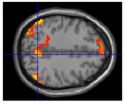
Brain scans of children with attention-deficit/hyperactivity disorder (ADHD) have shown for the first time why people affected by the condition sometimes have difficulty in concentrating. The study, by experts at The University of Nottingham, may explain why parents often say that their child can maintain concentration when they are doing something that interests them, but struggles with boring tasks. Using a 'Whac-a-Mole' style game, researchers from the Motivation, Inhibition and Development in ADHD Study (MIDAS) group found evidence that children with ADHD require ...
Read more →
NIST telescope calibration may help explain mystery of universe's expansion
Space 2011-01-07

NIST telescope calibration may help explain mystery of universe's expansion

Is the expansion of the universe accelerating for some unknown reason? This is one of the mysteries plaguing astrophysics, and somewhere in distant galaxies are yet-unseen supernovae that may hold the key. Now, thanks to a telescope calibrated by scientists from the National Institute of Standards and Technology (NIST), Harvard University and the University of Hawaii, astrophysicists can be more certain of one day obtaining an accurate answer. The NIST scientists traveled to the summit of Haleakala volcano in Hawaii to fine-tune the operation of billions of light-collecting ...
Read more →
Science 2011-01-07

IPv6 guide provides path to secure deployment of next-generation Internet protocol

As the day draws nearer for the world to run out of the unique addresses that allow us to use the Internet—now predicted to happen by the end of 2012—researchers at the National Institute of Standards and Technology (NIST) have issued a guide for managers, network engineers, transition teams and others to help them deploy the next generation Internet Protocol (IPv6) securely. Guidelines for the Secure Deployment of IPv6 (NIST Special Publication 800-119), describes the features of IPv6 and the possible related security impacts, provides a comprehensive survey of mechanisms ...
Read more →
Science 2011-01-07

2 publications recommend organization-wide IT security risk management

Two new draft publications from the National Institute of Standards and Technology (NIST) provide the groundwork for a three-tiered risk-management approach that encompasses computer security risk planning from the highest levels of management to the level of individual systems. The draft documents have been released for public comment. Both publications are a part of NIST's risk management guidelines, which have been developed in support of the Federal Information Security Management Act (FISMA), and adopted government wide to improve the security of government systems ...
Read more →
Medicine 2011-01-07

Princeton scientists construct synthetic proteins that sustain life

In a groundbreaking achievement that could help scientists "build" new biological systems, Princeton University scientists have constructed for the first time artificial proteins that enable the growth of living cells. The team of researchers created genetic sequences never before seen in nature, and the scientists showed that they can produce substances that sustain life in cells almost as readily as proteins produced by nature's own toolkit. "What we have here are molecular machines that function quite well within a living organism even though they were designed ...
Read more →