Brain tumor study reveals surprising gene deletion and method to overcome drug resistance
Inhibiting the enzyme SCD and blocking the function of the transcription factor FOSB, blunts acquired resistance and extends survival in mouse models of glioblastoma; these findings may also apply to others cancers such as melanoma, say experts
Published 2021-02-10 · Original archive entry · Explore research explainers
In far too many cases over the years, scientists have discovered promising new cancer treatments, only to report later that the tumor cells found ways to become resistant. These disappointing results have made overcoming drug resistance a major goal in cancer research.
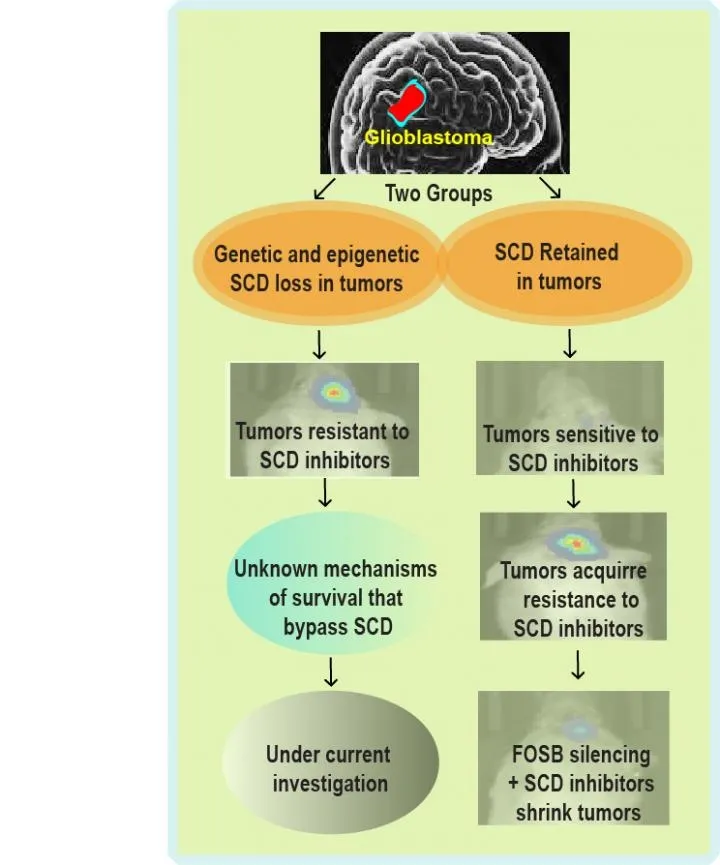
Now, experts at Cincinnati Children's report success at averting drug resistance in a subtype of brain tumors called glioblastomas. Importantly, the research indicates that the approach may also work in other cancers, such as melanoma, that exhibit a similar pathway of drug resistance.
The method involves inhibiting a protein called SCD and reducing the expression of the transcription factor FOSB (which regulates SCD), so that the tumor cells cannot acquire resistance to the SCD inhibitor. Results were published online Feb. 10, 2021, in the journal END
Now, experts at Cincinnati Children's report success at averting drug resistance in a subtype of brain tumors called glioblastomas. Importantly, the research indicates that the approach may also work in other cancers, such as melanoma, that exhibit a similar pathway of drug resistance.
The method involves inhibiting a protein called SCD and reducing the expression of the transcription factor FOSB (which regulates SCD), so that the tumor cells cannot acquire resistance to the SCD inhibitor. Results were published online Feb. 10, 2021, in the journal END