Heat’s effects on police and judges
Published 2024-05-14 · Original archive entry · Explore research explainers
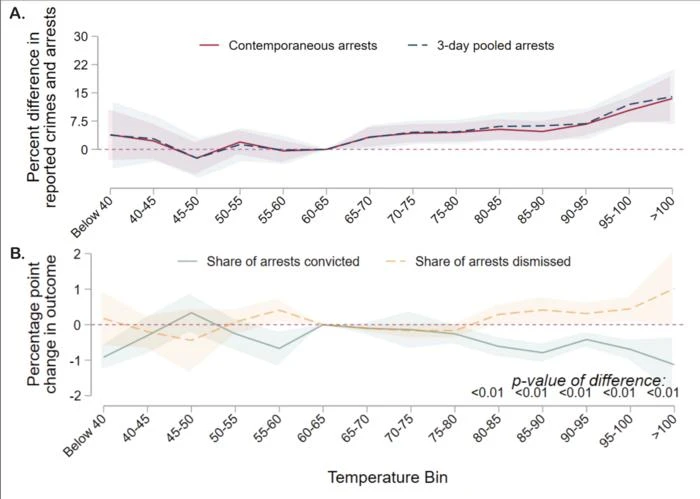
High temperatures affect the decision-making of police officers and judges. Previous research has shown that heat can increase criminal activity, with the leading theory proposing that heat reduces emotional control and increases aggression. A. Patrick Behrer and Valentin Bolotnyy investigate the effects of heat on the behavior of those who respond to criminal activity. The authors analyzed records of 10 million arrests across the state of Texas from 2010 through 2017, along with the legal outcomes that followed each arrest. These data were merged with daily temperature data. Police made fewer arrests per reported crime on the hottest days in the sample, and these arrests were more likely to be dismissed in court, suggesting that more of the hot-day arrests were difficult to justify legally. Judges dismissed fewer cases, issued longer prison sentences, and levied higher fines when ruling on hotter-than-average days. Heat did not exert a meaningful influence on the decisions of prosecutors. According to the authors, unless measures like air-conditioning and increased staffing and teamwork are used, climate change is likely to worsen police and judicial decision-making in places like Texas through an increased frequency of hot days.
END
END
Attachments