Inequality destroys the benefits of positive economic growth for the poor
Published 2025-03-11 · Original archive entry · Explore research explainers
A unique analysis of district-level data reveals why inequality is so destructive to the home consumption welfare of people living below the poverty line, especially during times of significant economic decline, such as the COVID-19 pandemic. During negative economic growth, the welfare of the poor should be the main focus area.
Research from the University of Johannesburg shows how inequality can demolish most of the benefits of positive economic growth and social grants for people living in poverty, especially during economic downturns.
The study by Prof Nicholas Ngepah analyses district-level data matched to household surveys from one of the most unequal countries in the world, which also has high levels of unemployment.
The results present a stark picture to economies experiencing an uptick in inequality in a negative economic growth environment.
However, when poor people gain skills to access gainful employment, their fortunes can improve in real terms.
The research article was published in a supplement to the Journal of African Economies.
Prof Ngepah is a Professor at the School of Economics, in the College of Business and Economics, at the University of Johannesburg in South Africa.
Unique district-level impact analysis
The study is a first of its kind for South Africa. “The study uses existing datasets, matches individuals in survey datasets to their immediate district-level environment facing specific conditions within that municipality or district”, says Ngepah.
“This includes what kind of economic growth and inequality people are facing - and how that affects that person as an individual. This means that poverty is measured at household or individual level, rather than aggregate level”, he says.
GDP no cure-all
GDP growth has many benefits, but cannot be relied on to reduce deep poverty in the presence of high inequality without other interventions. South Africa’s economy has shown more than once that a steep rise in GDP does not result in a comparable decrease in poverty. This is particularly evident in data from 2006 and 2011 as shown in a graph in the research article. Worse, the 2006 increase in GDP was outstripped by a significant increase in poverty.
Inequality cancels benefits of growth
“Inequality is bad for economic growth and bad for poverty reduction. In the past economists were not able to exactly quantify the effect of inequality in the context of economic shocks.
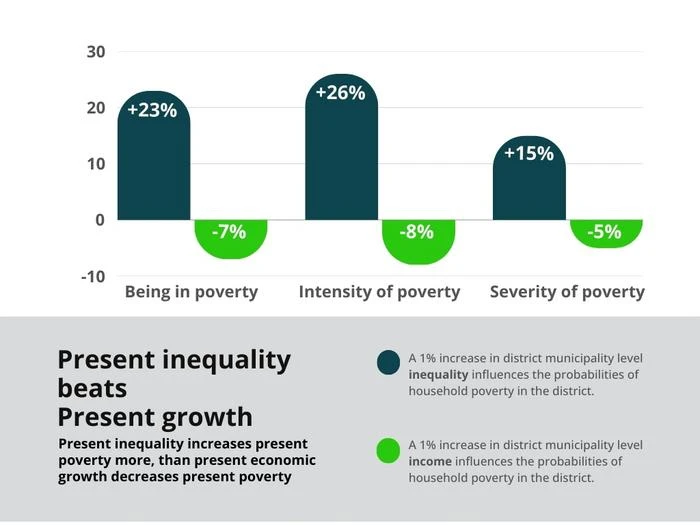
“The graph ‘Inequality cancels benefits of growth’ presents how inequality cancels out the influence of positive economic growth in terms of poverty reduction - in the context of economic shocks and low growth,” says Ngepah.
The graph shows that inequality significantly increases the probability of being in poverty; and that inequality significantly increases poverty intensity. Poverty intensity is the gap between a poor person's welfare and the lower poverty line.
Inequality also significantly increases poverty severity, which is a poverty gap definition to identify the poorest of poor.
“Very clearly, we see how present inequality beats present growth in terms of the effect on poverty,” he adds.
Inequality and negative growth hit poor households much harder
It is important to analyse inequality in times of negative economic growth or recession, says Ngepah, because poorer people suffer more in terms of their consumption welfare.
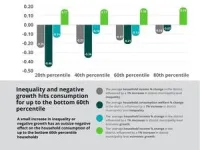
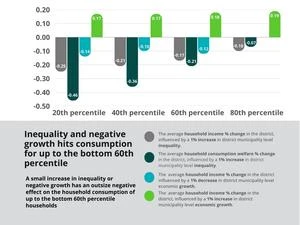
Inequality combined with negative growth hit the consumption of the lower percentiles of the population very hard, from zero up to the 60th percentile in South Africa. Up to the 55th to 60th percentile of households by income or consumption live below the poverty line in the country, as shown in the graph 'Inequality and negative growth hit poor households much harder'.
The graph also shows what happens to poor households during positive economic growth.
“When we look at inequality and a negative economic growth rate combined, the effects are much stronger on the consumptions of the poor on the left side of the graph.
“But as we move to the topmost side of the distribution above the 60th percentile and particularly the 80th percentile and to the end, we see that the effects become small, insignificant and then fades away,” says Ngepah.
“This graph shows what happens in times of negative economic growth like we experienced during COVID and up to now. Some countries are still struggling to get out of negative economic growth.
“The policy implication is that in times of economic shocks, attention should be given more to the welfare of the poor. This goes to underscore social safety nets that have been put in place.
“We advocate that these should be enhanced in preparation for times of economic shocks, in particular during times when the economy is growing negatively or shrinking,” he adds.
Positive growth benefits the poor the most
In the analysis, Ngepah also compares negative economic growth with positive economic growth and their impact on the poor or poverty reduction.
“When the economy is growing positively, the poor experience more poverty reduction, than they experience harm when the economy is shrinking. This means that when we grow the economy, we benefit the poor more in absolute terms, compared to negative or no growth.
“So if the economy grows consistently with fewer episodes of negative economic growth, there will be more sustained poverty reduction over the long run”, he adds.
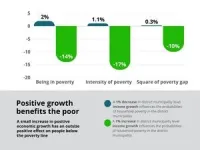
From the graph ‘Positive growth benefits the poor the most’ it can be seen that when the economy grows positively, there is up to 14% reduction in the probability of being poor; 17% reduction in poverty intensity; and up to 10% reduction in the square of poverty gap.
When the economy is growing negatively or shrinking, there is a 2% increase in the probability of being poor; a 1.1% increase in poverty intensity and 0.3% increase in the square of poverty gap.
“We think that these differences are the result of the social safety nets that are often put in place during times of economic shocks or negative economic growth. Again, when the economy is shrinking, attention should be focused on the welfare of the poor,” concludes Ngepah.
###
Graphs
The graphs are available as the multimedia files for this news release.
Interviews
For more information, or to interview the researcher via email / phone / video please contact:
Ms Therese van Wyk, Research Media Liaison, University of Johannesburg at theresevw@uj.ac.za.
END
Research from the University of Johannesburg shows how inequality can demolish most of the benefits of positive economic growth and social grants for people living in poverty, especially during economic downturns.
The study by Prof Nicholas Ngepah analyses district-level data matched to household surveys from one of the most unequal countries in the world, which also has high levels of unemployment.
The results present a stark picture to economies experiencing an uptick in inequality in a negative economic growth environment.
However, when poor people gain skills to access gainful employment, their fortunes can improve in real terms.
The research article was published in a supplement to the Journal of African Economies.
Prof Ngepah is a Professor at the School of Economics, in the College of Business and Economics, at the University of Johannesburg in South Africa.
Unique district-level impact analysis
The study is a first of its kind for South Africa. “The study uses existing datasets, matches individuals in survey datasets to their immediate district-level environment facing specific conditions within that municipality or district”, says Ngepah.
“This includes what kind of economic growth and inequality people are facing - and how that affects that person as an individual. This means that poverty is measured at household or individual level, rather than aggregate level”, he says.
GDP no cure-all
GDP growth has many benefits, but cannot be relied on to reduce deep poverty in the presence of high inequality without other interventions. South Africa’s economy has shown more than once that a steep rise in GDP does not result in a comparable decrease in poverty. This is particularly evident in data from 2006 and 2011 as shown in a graph in the research article. Worse, the 2006 increase in GDP was outstripped by a significant increase in poverty.
Inequality cancels benefits of growth
“Inequality is bad for economic growth and bad for poverty reduction. In the past economists were not able to exactly quantify the effect of inequality in the context of economic shocks.
“The graph ‘Inequality cancels benefits of growth’ presents how inequality cancels out the influence of positive economic growth in terms of poverty reduction - in the context of economic shocks and low growth,” says Ngepah.
The graph shows that inequality significantly increases the probability of being in poverty; and that inequality significantly increases poverty intensity. Poverty intensity is the gap between a poor person's welfare and the lower poverty line.
Inequality also significantly increases poverty severity, which is a poverty gap definition to identify the poorest of poor.
“Very clearly, we see how present inequality beats present growth in terms of the effect on poverty,” he adds.
Inequality and negative growth hit poor households much harder
It is important to analyse inequality in times of negative economic growth or recession, says Ngepah, because poorer people suffer more in terms of their consumption welfare.
Inequality combined with negative growth hit the consumption of the lower percentiles of the population very hard, from zero up to the 60th percentile in South Africa. Up to the 55th to 60th percentile of households by income or consumption live below the poverty line in the country, as shown in the graph 'Inequality and negative growth hit poor households much harder'.
The graph also shows what happens to poor households during positive economic growth.
“When we look at inequality and a negative economic growth rate combined, the effects are much stronger on the consumptions of the poor on the left side of the graph.
“But as we move to the topmost side of the distribution above the 60th percentile and particularly the 80th percentile and to the end, we see that the effects become small, insignificant and then fades away,” says Ngepah.
“This graph shows what happens in times of negative economic growth like we experienced during COVID and up to now. Some countries are still struggling to get out of negative economic growth.
“The policy implication is that in times of economic shocks, attention should be given more to the welfare of the poor. This goes to underscore social safety nets that have been put in place.
“We advocate that these should be enhanced in preparation for times of economic shocks, in particular during times when the economy is growing negatively or shrinking,” he adds.
Positive growth benefits the poor the most
In the analysis, Ngepah also compares negative economic growth with positive economic growth and their impact on the poor or poverty reduction.
“When the economy is growing positively, the poor experience more poverty reduction, than they experience harm when the economy is shrinking. This means that when we grow the economy, we benefit the poor more in absolute terms, compared to negative or no growth.
“So if the economy grows consistently with fewer episodes of negative economic growth, there will be more sustained poverty reduction over the long run”, he adds.
From the graph ‘Positive growth benefits the poor the most’ it can be seen that when the economy grows positively, there is up to 14% reduction in the probability of being poor; 17% reduction in poverty intensity; and up to 10% reduction in the square of poverty gap.
When the economy is growing negatively or shrinking, there is a 2% increase in the probability of being poor; a 1.1% increase in poverty intensity and 0.3% increase in the square of poverty gap.
“We think that these differences are the result of the social safety nets that are often put in place during times of economic shocks or negative economic growth. Again, when the economy is shrinking, attention should be focused on the welfare of the poor,” concludes Ngepah.
###
Graphs
The graphs are available as the multimedia files for this news release.
Interviews
For more information, or to interview the researcher via email / phone / video please contact:
Ms Therese van Wyk, Research Media Liaison, University of Johannesburg at theresevw@uj.ac.za.
END
Attachments