PRESS-NEWS.org - Press Release Distribution
PRESS RELEASES DISTRIBUTION

Twisting atomically thin materials could advance quantum computers

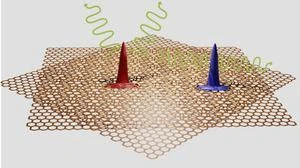
Placing two layers of special 2D materials together and turning them at large angles creates artificial atoms with intriguing optical properties

Twisting atomically thin materials could advance quantum computers
2025-03-17
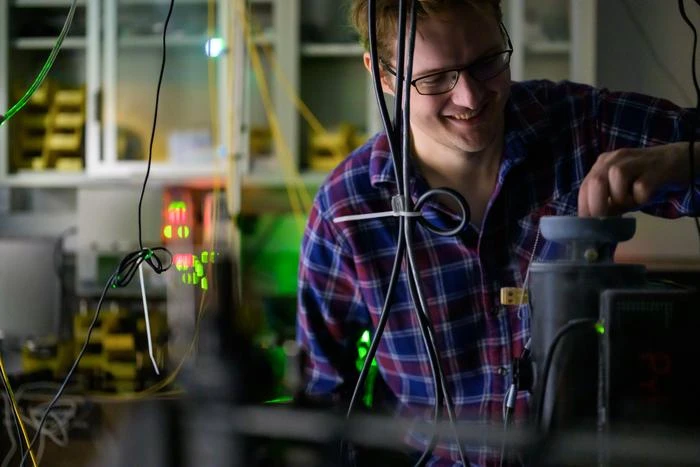
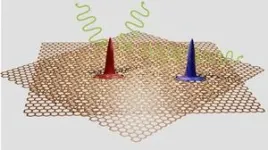
(Press-News.org) By taking two flakes of special materials that are just one atom thick and twisting them at high angles, researchers at the University of Rochester have unlocked unique optical properties that could be used in quantum computers and other quantum technologies. In a new study published in Nano Letters, the researchers show that precisely layering nano-thin materials creates excitons—essentially, artificial atoms—that can act as quantum information bits, or qubits.

“If we had just a single layer of this material we’re using, these dark excitons wouldn’t interact with light,” says Nickolas Vamivakas, the Marie C. Wilson and Joseph C. Wilson Professor of Optical Physics. “By doing the big twist, it turns on artificial atoms within the material that we can control optically, but they are still protected from the environment.”

Moiré is less The work builds on the 2010 Nobel Prize–winning discovery that peeling carbon apart until it reaches a single layer of atoms creates a new two-dimensional (2D) material called graphene with special quantum characteristics.

Scientists have since explored how optical and electrical properties of graphene and other 2D materials change when layered on top of one another and twisted at very small angles—called moiré superlattices. For example, when graphene is twisted at the “magic” angle of 1.1 degrees, it creates special patterns that produce properties such as superconductivity.

But scientists from Rochester’s Institute of Optics and Department of Physics and Astronomy took a different approach. They used molybdenum diselenide, a 2D material that is more fickle than graphene, and twisted it at much higher angles of up to 40 degrees. Still, the researchers found the twisted monolayers produced excitons that were able to retain information when activated by light.

“This was very surprising for us,” says Arnab Barman Ray, an optics PhD candidate. “Molybdenum diselenide is notorious because other materials in the family of moiré materials show better information-retaining capacity. We think that if we use some of those other materials at these large angles, they will probably work even better.”

The team views this as an important early step toward new types of quantum devices.

“Down the line, we hope these artificial atoms can be used like memory or nodes in a quantum network, or put into optical cavities to create quantum materials,” says Vamivakas. “These could be the backbone for devices like the next generation of lasers or even tools to simulate quantum physics.”

The research was supported through the Air Force Office of Scientific Research and conducted at the URnano facilities.

END

[Attachments] See images for this press release:
Twisting atomically thin materials could advance quantum computers Twisting atomically thin materials could advance quantum computers 2 Twisting atomically thin materials could advance quantum computers 3

ELSE PRESS RELEASES FROM THIS DATE:

Impaired gastric myoelectrical rhythms associated with altered autonomic functions in patients with severe ischemic stroke

2025-03-17
Backgrounds and objectives Gastrointestinal complications are common in patients after ischemic stroke. Gastric motility is regulated by gastric pace-making activity (also called gastric myoelectrical activity (GMA)) and autonomic function. The aim of this study was to evaluate GMA, assessed by noninvasive electrogastrography (EGG), and autonomic function, measured via spectral analysis of heart rate variability derived from the electrocardiogram in patients with ischemic stroke. Methods EGG and electrocardiogram were simultaneously recorded in both fasting and postprandial states in 14 patients with ischemic stroke and 11 healthy controls. ...

American College of Cardiology issues concise clinical guidance on evaluation and management of cardiogenic shock

2025-03-17
The American College of Cardiology (ACC) has issued its first Concise Clinical Guidance (CCG) to create more streamlined and efficient processes to implement best practices in patient care. This CCG focuses on evaluating and managing cardiogenic shock (CS), addressing important questions around clinical decision-making and providing actionable guidance for health care providers. “ACC has a long history of developing clinical policy to complement clinical practice guidelines and to inform clinicians about areas where evidence is new and evolving or where randomized data is more limited. Despite this, ...

Psychological prehabilitation improves surgical recovery, study finds

2025-03-17
A new analysis led by surgeons at UCLA Health finds that psychological prehabilitation can significantly enhance recovery after surgery. The research, led by Anne E. Hall in the lab of Dr. Justine Lee analyzed data from 20 randomized controlled trials (RCTs) conducted between 2004 and 2024, involving a total of 2,376 patients. It is published in the Annals of Surgery What is Psychological Prehabilitation? Prehabilitation is a proactive approach aimed at improving surgical outcomes through preventive measures. Traditionally, ...

Neighborhood dispute among cells: Whichever successfully exerts force wins

Neighborhood dispute among cells: Whichever successfully exerts force wins
2025-03-17
Trial of strength at the cellular level: cells are in constant competition with each other and so eliminate diseased or unwanted cells. Cell competition is therefore a central principle for maintaining the health of tissues and organs. Researchers have investigated the success factors of superior cells and discovered a previously unknown winning strategy in mechanical cell competition. They identified a variety in the ability of cells to exert mechanical forces onto other cells as the decisive regulator. With their results ...

Deadline extended for the fifth edition of the SWIM Award for Science Journalism

2025-03-17
Milan, Italy – March 2025 – The Italian Association of Science Writers, SWIM, has announced an extension of the application deadline for the 2025 SWIM Award. Candidates now have until March 31, 2025, at 23:59 CET to submit their applications for the prestigious award, which has been recognizing excellence and innovation in science journalism in Italy since 2021. The SWIM Award highlights the critical role of science journalists in fostering public understanding and dialogue on scientific issues. The competition also serves as the Italian selection process for the European ...

Unique dove species is the dodo of the Caribbean and in similar danger of dying out

Unique dove species is the dodo of the Caribbean and in similar danger of dying out
2025-03-17
On first inspection, the Cuban blue-headed quail dove doesn’t look like much: drab brown feathers, a slender beak, a pronounced strut in their walk typical of most other doves. You’d be forgiven for overlooking it in favor of Cuba’s prismatic parrots. But looks aren’t everything. For decades, this unassuming bird has perplexed biologists, who have no idea where it came from, how it got to the island or what it’s related to. Now, for the first time, scientists have sequenced DNA from the blue-headed quail dove with the goal of finally getting to the bottom of things. Instead, they’re even more perplexed now than when they started. “This ...

Free University Brussels (VUB) opens its doors to censored American researchers

2025-03-17
The Vrije Universiteit Brussel (VUB) is opening 12 postdoctoral positions for international researchers, with a specific focus on American scholars working in socially significant fields. These prestigious fellowships come with substantial funding (€2.5 million) as part of the European Marie Skłodowska-Curie (MSCA) program. Additionally, as part of the Brains for Brussels initiative, VUB aims to actively attract American professors looking to relocate. In collaboration with its Francophone sister university ULB, VUB is also providing 18 apartments for international ...

Neuroanatomy that sets humans apart from other primates

Neuroanatomy that sets humans apart from other primates
2025-03-17
Researchers have widely accepted that what sets humans apart from nonhuman primates are prefrontal cortex–driven behaviors such as decision-making, reasoning, planning, and attention. In a new JNeurosci paper, research led by Rogier Mars, at University of Oxford, and Katherine Bryant, at Aix-Marseille University, provides a better picture of the cortical evolution that distinguishes human brains from other primates.   The researchers compared cortical organization not only between humans and macaques, which is a standard for human and nonhuman primate ...

Stress and sex influence traumatic brain injury outcomes

2025-03-17
How stress impacts behavioral outcomes of traumatic brain injury (TBI) represents a major gap in knowledge. This oversight is especially felt by those in the military due to the high prevalence of TBI and the abundance of stress that they endure. In a study funded by the US Department of Defense, researchers led by Pamela VandeVord at Virginia Tech discovered that prior stress exposure influences TBI outcomes in a sex-dependent manner.   In their eNeuro paper, VandeVord and colleagues used an unpredictable stress paradigm ...

Study: suppressing key protein may unlock immunotherapy for Glioblastoma

Study: suppressing key protein may unlock immunotherapy for Glioblastoma
2025-03-17
MIAMI, FLORIDA (EMBARGOED UNTIL MARCH 17, 2025, AT NOON EDT) – Glioblastoma has remained one of the toughest cancers to treat, resisting even the latest advances in immunotherapy. But new research from Sylvester Comprehensive Cancer Center, part of the University of Miami Miller School of Medicine, suggests a way forward: suppressing a protein called ZNF638 triggers an antiviral immune response, making immune checkpoint inhibitors more effective. The discovery not only offers a potential new treatment strategy but also identifies ...

LAST 30 PRESS RELEASES:

Making lighter work of calculating fluid and heat flow

Normalizing blood sugar can halve heart attack risk

Lowering blood sugar cuts heart attack risk in people with prediabetes

Study links genetic variants to risk of blinding eye disease in premature infants

Non-opioid ‘pain sponge’ therapy halts cartilage degeneration and relieves chronic pain

AI can pick up cultural values by mimicking how kids learn

China’s ecological redlines offer fast track to 30 x 30 global conservation goal

Invisible indoor threats: emerging household contaminants and their growing risks to human health

Adding antibody treatment to chemo boosts outcomes for children with rare cancer

Germline pathogenic variants among women without a history of breast cancer

Tanning beds triple melanoma risk, potentially causing broad DNA damage

Unique bond identified as key to viral infection speed

Indoor tanning makes youthful skin much older on a genetic level

Mouse model sheds new light on the causes and potential solutions to human GI problems linked to muscular dystrophy

The Journal of Nuclear Medicine ahead-of-print tip sheet: December 12, 2025

Smarter tools for peering into the microscopic world

Applications open for funding to conduct research in the Kinsey Institute archives

Global measure underestimates the severity of food insecurity

Child survivors of critical illness are missing out on timely follow up care

Risk-based vs annual breast cancer screening / the WISDOM randomized clinical trial

University of Toronto launches Electric Vehicle Innovation Ontario to accelerate advanced EV technologies and build Canada’s innovation advantage

Early relapse predicts poor outcomes in aggressive blood cancer

American College of Lifestyle Medicine applauds two CMS models aligned with lifestyle medicine practice and reimbursement

Clinical trial finds cannabis use not a barrier to quitting nicotine vaping

Supplemental nutrition assistance program policies and food insecurity

Switching immune cells to “night mode” could limit damage after a heart attack, study suggests

URI-based Global RIghts Project report spotlights continued troubling trends in worldwide inhumane treatment

Neutrophils are less aggressive at night, explaining why nighttime heart attacks cause less damage than daytime events

Menopausal hormone therapy may not pose breast cancer risk for women with BRCA mutations

Mobile health tool may improve quality of life for adolescent and young adult breast cancer survivors

[Press-News.org] Twisting atomically thin materials could advance quantum computers
Placing two layers of special 2D materials together and turning them at large angles creates artificial atoms with intriguing optical properties