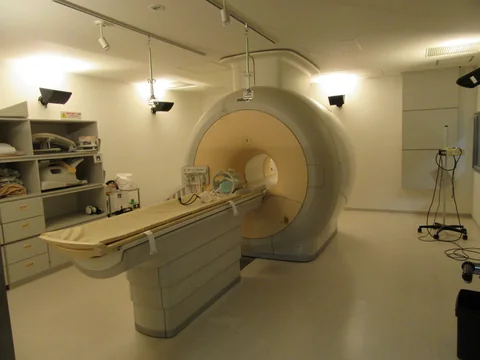
What happens between a local signal and a coordinated response? Comparing different nervous systems can reveal patterns that are difficult to see in a single dataset. The challenge is to preserve the differences between organisms, instruments and experiments while looking for common structure.
- A common statistical pattern is a starting point for a mechanism.
- Recording methods and species are distinct comparisons, not interchangeable participants.
- Responsiveness, a neural measurement and subjective experience are different concepts.
- Publication
- Nature Neuroscience · 29 September 2026
- Scope
- Humans and five other species
- Approach
- Neural time-series features and modeling
- Clinical question
- Not an anesthetic-selection trial
Original publication: 29 Sep 2026 · The date above refers to this brief.
The common pattern reported
Luppi and colleagues compared wakefulness and anesthesia in humans, macaques, marmosets, mice, zebrafish and nematodes. They examined more than 6,000 time-series features and described shorter intrinsic timescales and reduced coordination between regions. Thalamic stimulation in a macaque dataset reversed the profile alongside restored behavioral responsiveness.
The comparison combines different recordings and experimental settings. Its contribution is a cross-species dynamical account, not a single standardized clinical trial or proof that every organism has the same subjective experience.
Source 1 ↗What it means for activity to have a timescale
A timescale describes how a pattern persists or changes, given a particular measurement. A longer-lasting pattern and a rapidly changing one may carry different information about a system. The meaning depends on the instrument and the frequency range being examined.
Before interpreting a statement that a brain becomes faster or slower, ask what signal is measured. A vascular imaging signal, a calcium signal and an electrical recording are different windows on activity. Avoid turning one timescale measure into a universal claim about every process in the nervous system.
Look for a shared pattern without erasing differences
Imagine comparing traffic flow in several cities. A common tendency during a disruption might be real, even though the street plans and sensors differ. But a shared tendency does not make the cities identical or explain every disruption through one cause. This is our analogy for reading a multi-system comparison.
A useful sensitivity check asks whether the pattern survives alternative preprocessing choices, different subsets and a clearly specified comparison. It should also describe exceptions. Exceptions can reveal the boundary of an explanation instead of merely weakening an attractive story.
Why perturbing a system adds a different kind of evidence
An observed pattern says what changes together. A targeted perturbation asks what happens when a specified part of the system is changed. That can strengthen a causal account, but the scope remains tied to the organism, intervention and conditions actually tested.
The cell-polarity story in this package uses another version of this logic: predictions about a dynamic pattern become more informative when an experiment changes the proposed control point. These are connections in research method, not claims that a cell membrane and a brain share an identical mechanism.
The hope: better questions about coordination
A useful next step would predict an unseen transition in a new dataset, with the rule fixed in advance. We would also want a clear account of what the prediction misses and whether several mechanisms can produce a similar signal. These are proposed tests, not additional findings from the paper.
For readers, the practical value is a richer view of what a brain-state headline means. The study invites questions about local persistence and coordination across regions. It does not settle the definition of consciousness or provide advice about an anesthetic for an individual procedure.
Keep the levels of explanation separate
| What you see | What it can tell you | What to ask next |
|---|---|---|
| Local signal dynamics | How one measured signal changes over time | Which instrument and timescale? |
| Between-region coordination | Whether signals vary together | Could preprocessing alter the pattern? |
| Behavioral responsiveness | An observable response to a task or stimulus | Which behavior was defined? |
| Mechanistic explanation | A proposed route connecting levels | Can it predict a targeted perturbation? |
Our original reading framework. Questions and proposed checks are not reported experimental results.
Your questions, answered
Is this a test for consciousness?
This report studies activity dynamics and responsiveness. A proposed clinical assessment of consciousness would require its own clearly defined validation.
Are the six species one combined sample?
No. They provide distinct datasets and measurement contexts. Their observations should not be counted as one uniform clinical cohort.
Does a shared pattern prove one molecular cause?
No. Different mechanisms can sometimes produce similar system-level behavior. Predictions and targeted tests help distinguish explanations.
How does this connect to imagined speech?
Both stories distinguish the recorded signal from the larger human function a reader might infer. Neither a pattern nor a task score answers every question about experience.
Limits of this interpretation
- Cross-species consistency does not establish identical subjective states or a patient-level diagnostic test.
- Acquisition methods, anesthetics and datasets differ.
- No recordings, transcriptional data or modeling results were independently reanalysed here.
Sources & transparency
- Luppi, Uhrig, Tasserie et al. (2026): Comprehensive profiling of brain dynamics during anesthesia across phylogeny
Publisher HTML abstract, selected discussion, acquisition-method examples and data-availability statement checked. No reanalysis of recordings, gene-expression data or biophysical simulations; no assessment of clinical anesthetic choice. · Accessed 30 Sep 2026
DOI: 10.1038/s41593-026-02460-4
Prepared and source-checked with AI; source access recorded on 2026-09-30 (UTC). Press-news Team is our collective publication byline, not a medical reviewer. No human editorial or clinical review has taken place. We did not conduct these experiments or reanalyse their raw data. Reported findings, our explanations and proposed follow-up tests are distinguished. Access limits appear with each source. This is an educational account of basic research and research methods, not an individual diagnosis or treatment recommendation. Photographs are illustrative.
Source check: AI source check — primary publications, selected results and access limits
Clinical review: Not applicable to this educational guide
Suggest a correction