Medicine Technology 🌱 Environment Space Energy Physics Engineering Social Science Earth Science Science
Medicine 2015-04-08

Brain scans reveal how people 'justify' killing

A new study has thrown light on how people can become killers in certain situations, showing how brain activity varies according to whether or not killing is seen as justified. The study, led by Monash researcher Dr Pascal Molenberghs, School of Psychological Sciences, is published today in the journal Social Cognitive and Affective Neuroscience. Participants in the study played video games in which they imagined themselves to be shooting innocent civilians (unjustified violence) or enemy soldiers (justified violence). Their brain activity was recorded via functional ...
Read more →
Science 2015-04-08

Plotting the elimination of dengue

Dengue is a viral infection spread between humans by Aedes aegypti mosquitoes. Dengue causes flu-like symptoms, including intense headaches and joint pains. Published in the journal Science Translational Medicine, Professor Cameron Simmons, from the Department of Microbiology and Immunology at the University of Melbourne and the Peter Doherty Institute for Infection and Immunity, said that the discovery could lead to improved strategies to reduce the incidence of dengue. "We did a 'real world' experiment and allowed mosquitoes infected with Wolbachia and uninfected mosquitoes ...
Read more →
Science 2015-04-08

Ironing out oxidative stress

This news release is available in German. You're up in the mountains, the snow is blindingly white, and the sun is blazing down from the sky: ideal skiing conditions - but any skiers carrying the herpes virus might also have to reckon with the onset of cold sores after their day out. Increased exposure to UV radiation releases free radicals in the body. These put the body under oxidative stress, which weakens the immune system. And that in turn allows the herpes virus to prosper. Oxidative stress has become a major topic; not only is it implicated in many diseases, ...
Read more →
Science 2015-04-08

Gay and lesbian job seekers face discrimination

A new study shows that discrimination of gay and lesbian job seekers is commonplace within both private firms and the public sector in the UK. The research, carried out by Dr Nick Drydakis of Anglia Ruskin University and published by SAGE in the journal Human Relations, involved 144 young people - all first-time job seekers - making 11,098 applications. The study, the first of its kind ever conducted in the UK, found that gay applicants of both sexes are 5% less likely to be offered a job interview than heterosexual applicants with comparable skills and experience. The ...
Read more →
Science 2015-04-08

Rates of ADHD appear to decrease at higher altitudes

(SALT LAKE CITY)--Recent research has linked the thin air of higher elevations to increased rates of depression and suicide. But a new study shows there's also good news from up in the aspens and pines: The prevalence of attention deficit hyperactivity disorder (ADHD) decreases substantially as altitude increases. In Utah, for example, an analysis of information from two national health surveys correlated with the average state elevation of 6,100 feet showed that the rate of diagnosed ADHD cases is about 50 percent of states at sea level. In Salt Lake City, whose elevation ...
Read more →
Nearly 1 in 10 adults have impulsive anger issues and access to guns
Science 2015-04-08

Nearly 1 in 10 adults have impulsive anger issues and access to guns

DURHAM, N.C. - An estimated 9 percent of adults in the U.S. have a history of impulsive, angry behavior and have access to guns, according to a study published this month in Behavioral Sciences and the Law. The study also found that an estimated 1.5 percent of adults report impulsive anger and carry firearms outside their homes. Angry people with ready access to guns are typically young or middle-aged men, who at times lose their temper, smash and break things, or get into physical fights, according to the study co-authored by scientists at Duke, Harvard, and Columbia ...
Read more →
New study indicates that exercise improves non-alcoholic fatty liver disease
Medicine 2015-04-08

New study indicates that exercise improves non-alcoholic fatty liver disease

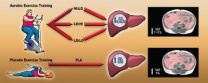
Amsterdam, The Netherlands, April 8, 2015 -- Non-alcoholic fatty liver disease (NAFLD) is the most common cause of chronic liver disease in the western world. A new study published in the Journal of Hepatology shows that exercise, regardless of frequency or intensity, benefits obese and overweight adults with NAFLD. NAFLD is considered the hepatic manifestation of metabolic syndrome and is commonly associated with obesity and diabetes. There are no approved drug treatments for NAFLD, but lifestyle interventions such as diet, exercise, and the resulting weight loss have ...
Read more →
Medicine 2015-04-08

8 reasons the US Surgeon General should announce that UV tanning causes skin cancer

A July, 2014 Call to Action to Prevent Skin Cancer by acting Surgeon General Dr. Boris Lushniak points out that indoor tanning is "strongly associated with increased skin cancer risk," but stops short of reporting that tanning causes cancer. A University of Colorado Cancer Center opinion published today in the American Journal of Preventive Medicine points out that UV tanning meets the same criteria as smoking as a cause of cancer and argues that announcing the causality could save lives. "In 1964 when the Surgeon General finally reported that smoking causes lung cancer, ...
Read more →
Science 2015-04-08

The hoo's hoo of gibbon communication

The secret communication of gibbons has been interpreted for the first time in a study published in the open access journal BMC Evolutionary Biology. The research reveals the likely meaning of a number of distinct gibbon whispers, or 'hoo' calls, responding to particular events and types of predator, and could provide clues on the evolution of human speech. While lar gibbons (Hylobates lar) are mainly known for their loud and conspicuous songs, they can also produce a number of soft call types known as 'hoo's. These subtle calls have been alluded to in studies dating ...
Read more →
Technology 2015-04-08

Into thin air and back

Life has adapted to all sorts of extreme environments on Earth, among them, animals like the deer mouse, shimmying and shivering about, and having to squeeze enough energy from the cold, thin air to fuel their bodies and survive. Now, in a new publication in the journal Molecular Biology and Evolution, Scott, Cheviron et al., have examined the underlying muscle physiology from a group of highland and lowland deer mice. Deer mice were chosen because they exhibit the most extreme altitude range of any North American mammal, occurring below sea levels in Death Valley to ...
Read more →
Discovery of communication link between brain areas implicated in schizophrenia
Medicine 2015-04-08

Discovery of communication link between brain areas implicated in schizophrenia

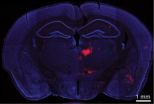
Cold Spring Harbor, NY - The prefrontal cortex (PFC) plays an important role in cognitive functions such as attention, memory and decision-making. Faulty wiring between PFC and other brain areas is thought to give rise to a variety of cognitive disorders. Disruptions to one particular brain circuit--between the PFC and another part of the brain called the thalamus--have been associated with schizophrenia, but the mechanistic details are unknown. Now, Cold Spring Harbor Laboratory scientists have discovered an inhibitory connection between these brain areas in mice that ...
Read more →
Science 2015-04-07

Newly discovered ancient arthropod lived hundreds of millions of years ago

The Burgess Shale Formation, in the Canadian Rockies of British Columbia, is one of the most famous fossil locations in the world. A recent Palaeontology study introduces a 508 million year old (middle Cambrian) arthropod--called Yawunik kootenayi--from exceptionally preserved specimens of the new Marble Canyon locality within the Burgess Shale Formation. Its frontal appendage--the "megacheiran great appendage"--is remarkably adorned with teeth, emphasizing an advanced predatory function. The appendage also had long hair-like flagella at the end that likely served a sensory ...
Read more →
The rest of the brain gets in the way
Medicine 2015-04-07

The rest of the brain gets in the way

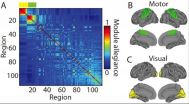
Why do some people learn a new skill right away, while others only gradually improve? Whatever else may be different about their lives, something must be happening in their brains that captures this variation. Researchers at the University of Pennsylvania, the University of California, Santa Barbara, and Johns Hopkins University have taken a network science approach to this question. In a new study, they measured the connections between different brain regions as participants learned to play a simple game. The differences in neural activity between the quickest and slowest ...
Read more →
A better biomarker to predict cetuximab response in CRC patients
Medicine 2015-04-07

A better biomarker to predict cetuximab response in CRC patients

The results appear in the 2015 2nd issue of the journal of Human Genome Variation. To see a video about the partnership between Champions and Insilico, visit: http://tinyurl.com/InsilicoChampions . Colorectal cancer (CRC) is the third most commonly diagnosed cancer and the second leading cause of cancer deaths in the United States. More than 50,000 people die of CRC each year due to tumor spreading to other organs and almost half of all newly diagnosed patients are in an advanced stage of cancer (metastatic CRC or mCRC) when they are first diagnosed. With the development ...
Read more →
Medicine 2015-04-07

Common drug is re-engineered to improve surgery outcomes

A Northwestern University research team potentially has found a safer way to keep blood vessels healthy during and after surgery. During open-heart procedures, physicians administer large doses of a blood-thinning drug called heparin to prevent clot formation. When given too much heparin, patients can develop complications from excessive bleeding. A common antidote is the compound protamine sulfate, which binds to heparin to reverse its effects. "Protamine is a natural compound that has been used in surgeries for many decades," said Guillermo Ameer, professor of biomedical ...
Read more →
Science 2015-04-07

Easing the pain

The combination of two well-known drugs will have unprecedented effects on pain management, says new research from Queen's. Combining morphine, a narcotic pain reliever, and nortriptyline, an antidepressant, has been found to successfully relieve chronic neuropathic pain - or a localized sensation of pain due to abnormal function of the nervous system - in 87 per cent of patients, and significantly better than with either drug alone. "Chronic pain is an increasingly common problem and can exert disastrous personal, societal, and socio-economic impacts on patients, their ...
Read more →
Medicine 2015-04-07

Stanford-led study finds limited mutations involved in transmission of drug-resistant HIV

In the largest study of its kind to date, researchers at Stanford University School of Medicine and their colleagues have found that worldwide only a limited number of mutations are responsible for most cases of transmission of drug-resistant HIV. HIV, the virus that causes AIDS, can mutate in the presence of antiviral drugs, and these mutations can be transmitted from one person to the next. In the new study of more than 50,000 patients in 111 countries, the researchers found a small group of mutations accounted for a majority of the cases of transmission-related resistance ...
Read more →
Medicine 2015-04-07

Leading cardiovascular societies release new guidance on use of heart pumps

Washington, DC (April 7, 2015) - Greater availability of percutaneous mechanical circulatory support (MCS) devices for treatment of heart failure is helping expand treatment options for a rapidly growing number of acutely and chronically ill cardiac patients who could benefit from the devices. An expert consensus statement released today by the Society for Cardiovascular Angiography and Interventions (SCAI), American College of Cardiology (ACC), Heart Failure Society of America (HFSA) and The Society of Thoracic Surgeons (STS) provides new guidance to help physicians match ...
Read more →
Medicine 2015-04-07

Epidemiology of HIV-1 transmitted drug resistance

Only a limited number of surveillance drug-resistance mutations (SDRMs) are responsible for most instances of non-nucleoside reverse transcriptase inhibitor (NNRTI)- and nucleoside reverse transcriptase inhibitor (NRTI)-associated resistance, and most strains of HIV-1 transmitted drug resistance (TDR) in sub-Saharan Africa (SSA) and south/southeast Asia (SSEA) arose independently, according to a study published this week in PLOS Medicine. The study, led by Soo-Yon Rhee of Stanford University, and colleagues, came to these conclusions after analyzing individual virus sequences ...
Read more →
Medicine 2015-04-07

Mortality and blood pressure directly linked to relationship quality

While other studies have shown that stress and negative marital quality can influence mortality and blood pressure, there has not been research that discussed how it might affect married couples over time. Using systolic blood pressure as a gauge, researchers assessed whether an individual's blood pressure is influenced by their own as well as their partner's reports of chronic stress and whether there are gender differences in these patterns. The Journals of Gerontology, Series B®: Psychological Sciences published these findings in the article titled, "Stress and ...
Read more →
Social Science 2015-04-07

Common birds bring economic vitality to cities, new study finds

Is it worth having birds in the city? If you live in Seattle or Berlin, the answer is yes, to the tune of $120 million and $70 million a year for each city, respectively. A new study published last month in the journal Urban Ecosystems tries to determine what economic value residents in two comparable cities place on having birds in their backyards and parks. Researchers at the University of Washington and Humboldt State University compared two types of common birds - finches and corvids - in both cities, asking residents how much they would pay to conserve the species ...
Read more →
Science 2015-04-07

Why daring to compare online prices pays off offline

This news release is available in French. The sudden closures of big-box stores like Future Shop and Target may make it seem like online shopping is killing real-world stores. But shoppers are actually engaging in "web-to-store" shopping -- buying offline after comparing prices online. New research from Concordia University's John Molson School of Business shows this consumer behaviour has important implications for retailers. When setting in-store prices or offering price-matching guarantees, offline retailers should focus more on online retailer ratings than on ...
Read more →
Science 2015-04-07

Subtle discrimination is easier to acknowledge when self-esteem is high

BUFFALO, N.Y. - Identifying discrimination is a necessary first step toward confronting and ultimately eliminating the stain of prejudice, yet victims may be unlikely to recognize some types of discrimination unless they have higher self-esteem, according to the results of a new study by two University at Buffalo psychologists. The study's results highlight the density of the discrimination target's burden, faced first with bigotry and then with the onus of pointing out that behavior. Attributing personal fate to another person's prejudice, however, is not easy and significant ...
Read more →
Defect found in pancreatic cells could lead to new diabetes treatment
Medicine 2015-04-07

Defect found in pancreatic cells could lead to new diabetes treatment

NEW YORK, NY (April 6, 2015) --A cellular defect that can impair the body's ability to handle high glucose levels and could point the way to a potential new treatment for diabetes has been identified by Columbia University Medical Center (CUMC) researchers. The CUMC team found that ryanodine receptor type 2 (RyR2) calcium channels in insulin-producing cells play an important and previously underappreciated role in glucose balance. RyR2 channels control intracellular calcium release. When leaky, they were found to reduce insulin release from the pancreas, resulting in ...
Read more →
Science 2015-04-07

Stroke classification system called TOAST is easy to use and effective

MAYWOOD, IL - In 1993, neurologists Harold P. Adams Jr., MD, and Jose Biller, MD, and colleagues proposed a new way to classify strokes. It became known as the TOAST classification. Twenty-two years later, the TOAST classification remains an effective and easy-to-use system that is routinely employed in stroke studies around the world, Drs. Adams and Biller report in the journal Stroke, published online ahead of print. Dr. Adams is a professor of neurology and director of Cerebrovascular Disease at the University of Iowa Carver College of Medicine. Dr. Biller is chair ...
Read more →