Medicine Technology 🌱 Environment Space Energy Physics Engineering Social Science Earth Science Science
Medicine 2012-12-12

Combination therapy may help decrease sleep apnea symptoms at higher altitudes

CHICAGO – For individuals with obstructive sleep apnea traveling to higher altitudes (which may exacerbate symptoms), use of a combination therapy resulted in improvement in symptoms including reduced insomnia and better control of sleep apnea, according to a preliminary study published in the December 12 issue of JAMA. As travel to the mountains for professional and recreational activities is increasingly popular, involving millions of persons worldwide, the estimated number of patients with obstructive sleep apnea (OSA) among mountain tourists is also high, and may ...
Read more →
Medicine 2012-12-12

Long-term public health support needed to tackle infectious disease outbreaks

Outbreaks of infectious diseases, such as swine flu (H1N1) threaten global health and should be considered by funding agencies and humanitarian organizations as development issues rather than emergency situations, requiring long-term support and investment, according to US experts writing in this week's PLOS Medicine. The authors from several US institutions, led by Tiffany Bogich from Princeton University, reached these conclusions by reviewing nearly 400 serious international public health events. They found that the disruption to, or lack of, public health infrastructure ...
Read more →
Medicine 2012-12-12

Industry sponsorship leads to bias in reported findings of clinical trials

Studies reporting the results of industry sponsored clinical trials present a more favourable picture of the effects of drugs and medical devices than those reporting on non-industry sponsored trials, according to a new Cochrane systematic review. The researchers call for a rethink of the way that industry bias is handled in medical guidelines and reviews. The outcomes of clinical trials influence the recommendations that doctors make about drugs and other medical interventions. Therefore, it is important that trials are designed, carried out and reported on without bias ...
Read more →
Science 2012-12-12

Just a spoonful: Sweet taste comforts babies during injections

The sweet taste of sugar may provide some comfort for babies during immunisations, according to a new Cochrane systematic review. Researchers found babies did not cry for as long if they were given drops of sugar solution before injections. Between birth and 18 months, babies may have as many as 15 injections. It is not certain whether babies feel pain in the same way as older children and adults, or whether they are simply unable to express it. Recent evidence has proven they do feel pain and efforts have been made to reduce pain caused by injections through the use ...
Read more →
Medicine 2012-12-12

Psychological therapies improve life for children with post-traumatic stress disorder

Children suffering post-traumatic stress disorder (PTSD) as a result of traumatic events, including child abuse, may benefit from psychological therapies, according to a review published in The Cochrane Library. In the first systematic review of PTSD in young people, researchers found that children and teenagers diagnosed with PTSD showed signs of improvement up to three months following treatment and called for more studies to assess long-term benefits. People who develop PTSD have usually experienced extreme traumatic events, such as abuse, war or natural disasters. ...
Read more →
Science 2012-12-12

Resurrection of extinct enzymes reveals evolutionary strategy for the invention of new functions

How does evolution innovate? We exist because our ancestors have had the ability to adapt successfully to changes in their environment; however, merely examining present-day organisms can limit our understanding of the actual evolutionary processes because the crucial events have been masked by the passage of aeons – what we need is a time machine. Scientists from VIB, KU Leuven, University of Ghent and Harvard have done the next-best thing; by reconstructing DNA and proteins from prehistoric yeast cells, they were able to directly examine the evolutionary forces that have ...
Read more →
Science 2012-12-12

Even moderate smoking associated with sudden death risk in women

Women who are even light-to-moderate cigarette smokers may be significantly more likely than nonsmokers to suffer sudden cardiac death, according to new research in Circulation: Arrhythmia & Electrophysiology, an American Heart Association journal. The findings indicate long-term smokers may be at even greater risk. But quitting smoking can reduce and eliminate the risk over time. "Cigarette smoking is a known risk factor for sudden cardiac death, but until now, we didn't know how the quantity and duration of smoking effected the risk among apparently healthy women, nor ...
Read more →
Medicine 2012-12-12

Concussions affect children's brains even after symptoms subside

Washington, DC — Brain changes in children who have sustained a mild traumatic brain injury, or concussion, persist for months following injury — even after the symptoms of the injury are gone, according to a study published in the December 12 issue of The Journal of Neuroscience. The findings highlight the potential benefit of using advanced imaging techniques to monitor recovery in children following concussions. Despite growing concerns over the risk of concussions in youth, the majority of research examining their effects on the brain has involved adults. These ...
Read more →
Medicine 2012-12-12

Manipulative therapies may be a beneficial treatment for infantile colic

A Cochrane review of studies into manipulative therapies for colic, by the University of Southampton, suggests that the treatment technique may be of some benefit. Infantile colic is a distressing problem, characterised by excessive crying of infants and it is the most common complaint seen by physicians in the first 16 weeks of a child's life. It is usually considered a benign disorder because the symptoms generally disappear by the age of five or six months. However, the degree of distress caused to parents and family life is such that physicians often feel the ...
Read more →
Discovery of tiny fossil new to science
Environment 2012-12-12

Discovery of tiny fossil new to science

'It is exciting to discover that a common group of fossils that we thought we knew a lot about may well have been hood-winking us as to their true identity, which we now realise because we have their beautifully fossilised soft-parts. A case of a 'wolf in sheep's clothing''- Professor David Siveter, University of Leicester An international team of researchers have made an extremely rare discovery of a species of animal - related to crabs, lobsters and shrimps – that is new to science. Scientists from the universities of Leicester, Oxford, Imperial and Yale have announced ...
Read more →
Earth Science 2012-12-12

Was the sauropod dinosaurs' large size due to plant food? Scientists argue old idea still has legs

The long necked sauropod dinosaurs were the largest land animals ever to walk the Earth – but why were they so large? A decade ago a team of plant ecologists from South Africa suggested that this was due to the nature of the plant food they ate, however these ideas have fallen out of favour with many dinosaur researchers. Now Liverpool John Moores University's (LJMU's) Dr David Wilkinson and Professor Graeme Ruxton of University of St Andrews, Scotland, argue that this idea still has legs. The results have been published in the journal Functional Ecology published by ...
Read more →
Medicine 2012-12-12

UAlberta medical researchers make key discovery in fight against Alzheimer's disease

Medical researchers at the University of Alberta have discovered a drug intended for diabetes appears to restore memory in Alzheimer's brain cells. Jack Jhamandas, a researcher with the Faculty of Medicine & Dentistry at the U of A, is the principal investigator with the team whose research results were recently published in the peer-reviewed publication The Journal of Neuroscience. He works in the Division of Neurology. The team took brain tissue from animal models with Alzheimer's disease and tested the tissue in the lab, looking specifically at the cells' memory ...
Read more →
Science 2012-12-12

Grains gang up to bear brunt of missile and meteorite impacts

DURHAM, N.C. -- High-speed video of projectiles slamming into a bed of disks has given scientists a new microscopic picture of the way a meteorite or missile transfers the energy of its impact to sand and dirt grains. The transfer is jerky, not smooth. "It was surprising just how unsmooth the slow-down of the intruding object was," Duke physicist Robert Behringer said. His team describes their new videos and impact analysis in the Dec. 7 Physical Review Letters. The research may change the way scientists model meteorite and missile impacts and their effects. Scientists ...
Read more →
Science 2012-12-12

New research helps predict susceptibility to Burkitt lymphoma

WASHINGTON (Dec. 11, 2012) – New research, presented this morning at the 54th Annual Meeting of the American Society of Hematology (ASH), has identified important associations between Plasmodium falciparum (Pf) malaria and endemic Burkitt Lymphoma (eBL) that may help researchers identify young children who are more susceptible to eBL. Unlike previous studies in which malaria infection alone was considered the important factor, this study approached the evolving complexity and heterogeneity of the humoral immune response to Pf as a key component for risk of developing ...
Read more →
Ancient red dye powers new 'green' battery
Environment 2012-12-12

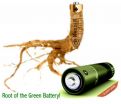
Ancient red dye powers new 'green' battery

Rose madder – a natural plant dye once prized throughout the Old World to make fiery red textiles – has found a second life as the basis for a new "green" battery. Chemists from The City College of New York teamed with researchers from Rice University and the U.S. Army Research Laboratory to develop a non-toxic and sustainable lithium-ion battery powered by purpurin, a dye extracted from the roots of the madder plant (Rubia species). More than 3500 years ago, civilizations in Asia and the Middle East first boiled madder roots to color fabrics in vivid oranges, reds ...
Read more →
Medicine 2012-12-12

Kentucky team inhibits Alzheimer's biomarkers in animal model by targeting astrocytes

LEXINGTON, Ky. (Dec. 10, 2012) — A research team composed of University of Kentucky researchers has published a paper which provides the first direct evidence that activated astrocytes could play a harmful role in Alzheimer's disease. The UK Sanders-Brown Center on Aging has also received significant new National Institutes of Health (NIH) funding to further this line of study. Chris Norris, an associate professor in the UK College of Medicine Department of Molecular and Biomedical Pharmacology, as well as a member of the faculty at the UK Sanders-Brown Center on Aging, ...
Read more →
What causes hot flushes during menopause?
Science 2012-12-12

What causes hot flushes during menopause?

Hot flushes affect millions of people, and not just women. Yet, it is still unclear what causes the episodes of temperature discomfort, often accompanied by profuse sweating. Now a team of researchers around Dr. Naomi Rance, a professor in the department of pathology at the UA College of Medicine, has come closer to understanding the mechanism of hot flushes, a necessary step for potential treatment options down the road. This research was published recently in the Proceedings of the National Academy of Sciences. The team identified a group of brain cells known as KNDy ...
Read more →
Rice cultivates green batteries from plant
Environment 2012-12-12

Rice cultivates green batteries from plant

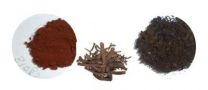
HOUSTON – (Dec. 11, 2012) – Here's a reason to be glad about madder: The climbing plant has the potential to make a greener rechargeable battery. Scientists at Rice University and the City College of New York have discovered that the madder plant, aka Rubia tinctorum, is a good source of purpurin, an organic dye that can be turned into a highly effective, natural cathode for lithium-ion batteries. The plant has been used since ancient times to create dye for fabrics. The discovery is the subject of a paper that appears today in Nature's online, open-access journal ...
Read more →
Science 2012-12-12

My, what big teeth you have! Threatening objects appear closer

When we're faced with things that seem threatening, whether it's a hairy spider or an angry mob, our goal is usually to get as far away as we can. Now, new research suggests that our visual perception may actually be biased to help motivate us to get out of harm's way. When we're faced with a threat our bodies respond in ways that engage our fight-or-flight response and enable us to act quickly: Our heart rate and blood pressure ramp up, and we produce more of the stress hormone cortisol. But research suggests that the body may also demonstrate its preparedness through ...
Read more →
Medicine 2012-12-12

Capturing circulating cancer cells could provide insights into how disease spreads

ANN ARBOR—A glass plate with a nanoscale roughness could be a simple way for scientists to capture and study the circulating tumor cells that carry cancer around the body through the bloodstream. Engineering and medical researchers at the University of Michigan have devised such a set-up, which they say takes advantage of cancer cells' stronger drive to settle and bind compared with normal blood cells. Circulating tumor cells are believed to contribute to cancer metastasis, the grim process of the disease spreading from its original site to distant tissues. Blood tests ...
Read more →
Science 2012-12-12

How our sense of touch is a lot like the way we hear

When you walk into a darkened room, your first instinct is to feel around for a light switch. You slide your hand along the wall, feeling the transition from the doorframe to the painted drywall, and then up and down until you find the metal or plastic plate of the switch. During the process you use your sense of touch to develop an image in your mind of the wall's surface and make a better guess for where the switch is. Sliman Bensmaia, PhD, assistant professor of organismal biology and anatomy at the University of Chicago, studies the neural basis of tactile perception, ...
Read more →
Medicine 2012-12-12

Mussel goo inspires blood vessel glue

A University of British Columbia researcher has helped create a gel – based on the mussel's knack for clinging to rocks, piers and boat hulls – that can be painted onto the walls of blood vessels and stay put, forming a protective barrier with potentially life-saving implications. Co-invented by Assistant Professor Christian Kastrup while a postdoctoral student at the Massachusetts Institute of Technology, the gel is similar to the amino acid that enables mussels to resist the power of churning water. The variant that Kastrup and his collaborators created, described in ...
Read more →
Space 2012-12-12

An older Vega: New insights about the star all others are measured by

ANN ARBOR—Vega, a star astronomers have used as a touchstone to measure other stars' brightness for thousands of years, may be more than 200 million years older than previously thought. That's according to new findings from the University of Michigan. The researchers estimated Vega's age by precisely measuring its spin speed with a tool called the Michigan Infrared Combiner, developed by John Monnier, associate professor of astronomy in U-M's College of Literature, Science, and the Arts. MIRC collects the light gathered by six telescopes to make it appear to be coming ...
Read more →
NASA's EUNIS mission: 6 minutes in the life of the sun
Space 2012-12-12

NASA's EUNIS mission: 6 minutes in the life of the sun

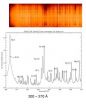
In December, a NASA mission to study the sun will make its third launch into space for a six-minute flight to gather information about the way material roils through the sun's atmosphere, sometimes causing eruptions and ejections that travel as far as Earth. The launch of the EUNIS mission, short for Extreme Ultraviolet Normal Incidence Spectrograph, is scheduled for Dec. 15, 2012, from White Sands, N.M. aboard a Black Brant IX rocket. During its journey, EUNIS will gather a new snapshot of data every 1.2 seconds to track the way material of different temperatures flows ...
Read more →
Social Science 2012-12-12

Fear of falling may cause social isolation in older adults with vision problems

Rockville, Md. — A new study published in Investigative Ophthalmology & Visual Science found that between 40 to 50 percent of older adults with visually impairing eye disease limit their activities due to a fear of falling. Vision scientists warn that this protective strategy puts seniors at risk for social isolation and disability. In the paper, "Activity Limitation Due to a Fear of Falling in Older Adults with Eye Disease," researchers report on their examination of patients with age-related macular degeneration (AMD), glaucoma and Fuchs corneal dystrophy, as compared ...
Read more →