Medicine Technology 🌱 Environment Space Energy Physics Engineering Social Science Earth Science Science
Science 2010-09-28

Diving deeper into the gene pool

About ten years ago, the discovery of microRNAs ― tiny cellular molecules that regulate our genetic code ― unlocked a world of scientific possibilities, including a deeper understanding of human disease. One new analytical technology is "deep sequencing," which gives scientists the ability to discover invaluable information about human diseases at a genetic level. Now, Tel Aviv University researchers have developed the cutting-edge technology to better analyze these results. The software, called miRNAkey, was developed by Roy Ronen as part of a team of researchers ...
Read more →
Earth Science 2010-09-28

Elevated nitrogen and phosphorus still widespread in much of the nation's streams and groundwater

Elevated concentrations of nitrogen and phosphorus, nutrients that can negatively impact aquatic ecosystems and human health, have remained the same or increased in many streams and aquifers across the Nation since the early 1990's, according to a new national study by the U.S. Geological Survey. "This USGS report provides the most comprehensive national-scale assessment to date of nitrogen and phosphorus in our streams and groundwater," said Marcia McNutt, USGS Director. "For years we have known that these same nutrients in high concentrations have resulted in 'dead ...
Read more →
Tile drainage directly related to nitrate loss
Science 2010-09-28

Tile drainage directly related to nitrate loss

URBANA – Tile drainage in the Mississippi Basin is one of the great advances of the 19th and 20th centuries, allowing highly productive agriculture in what was once land too wet to farm. In fact, installation of new tile systems continues every year, because it leads to increased crop yields. But a recent study shows that the most heavily tile-drained areas of North America are also the largest contributing source of nitrate to the Gulf of Mexico, leading to seasonal hypoxia. In the summer of 2010 this dead zone in the Gulf spanned over 7,000 square miles. Scientists ...
Read more →
Urban gardeners beware: There may be lead in your soil and food
Social Science 2010-09-28

Urban gardeners beware: There may be lead in your soil and food

INDIANAPOLIS – Not since victory gardens helped World War II era Americans on the home front survive food shortages have urban gardens been as necessary and popular as they are today. With more food production in cities, the safety of the produce grown there becomes increasingly important. As city dwellers across the country are harvesting fruits and vegetables for family consumption and planning ahead for the next planting season, geochemist Gabriel Filippelli, Ph.D., professor of earth sciences at the School of Science at Indiana University-Purdue University Indianapolis, ...
Read more →
A shot to the heart: Nanoneedle delivers quantum dots to cell nucleus
Medicine 2010-09-28

A shot to the heart: Nanoneedle delivers quantum dots to cell nucleus

CHAMPAIGN, Ill. — Getting an inside look at the center of a cell can be as easy as a needle prick, thanks to University of Illinois researchers who have developed a tiny needle to deliver a shot right to a cell's nucleus. Understanding the processes inside the nucleus of a cell, which houses DNA and is the site for transcribing genes, could lead to greater comprehension of genetics and the factors that regulate expression. Scientists have used proteins or dyes to track activity in the nucleus, but those can be large and tend to be sensitive to light, making them hard ...
Read more →
Environment 2010-09-28

Study: Electric cars hold greater promise for reducing emissions and lowering US oil imports

Electric cars hold greater promise for reducing emissions and lowering U.S. oil imports than a national renewable portfolio standard, according to research conducted by Rice University's Baker Institute for Public Policy. This assessment is among several contained in a new major policy study the Baker Institute Energy Forum will release at a Sept. 27-28 conference titled "Energy Market Consequences of an Emerging U.S. Carbon Management Policy." The study comprises several academic working papers on a variety of topics, such as carbon pricing, the wind industry, global ...
Read more →
Science 2010-09-28

How injured nerves grow themselves back

Unlike nerves of the spinal cord, the peripheral nerves that connect our limbs and organs to the central nervous system have an astonishing ability to regenerate themselves after injury. Now, a new report in the October 1st issue of Cell, a Cell Press publication, offers new insight into how that healing process works. "We know a lot about how various cell types differentiate during development, but after a serious injury like an amputation, nerves must re-grow," said Allison Lloyd of University College London. "They need a new mechanism to do that because the developmental ...
Read more →
Energy 2010-09-28

Rain or shine, Sandia researchers find new ways to forecast large photovoltaic power plant output

ALBUQUERQUE, N.M. – Sandia National Laboratories researchers have developed a new system to monitor how clouds affect large-scale solar photovoltaic (PV) power plants. By observing cloud shape, size and movement, the system provides a way for utility companies to predict and prepare for fluctuations in power output due to changes in weather. The resulting models will provide utility companies with valuable data to assess potential power plant locations, ramp rates and power output. Sandia researchers' work is currently focused at the 1.2-megawatt La Ola Solar Farm on ...
Read more →
Science 2010-09-28

New guideline finds no evidence for a popular back procedure

Rosemont, Ill. – As a patient safety best practice and endorsement of evidence-based medicine, the American Academy of Orthopaedic Surgeons (AAOS) Board of Directors approved and released a clinical practice guideline, which found a strong recommendation against a popular procedure called vertebroplasty as a way to treat fractures in the spine. Clinical practice guidelines are one avenue the Academy uses to ensure that patients receive high quality care. Vertebroplasty is a surgical procedure developed to reduce or eliminate the pain associated with compression fractures ...
Read more →
Medicine 2010-09-28

Sugary sports drinks mistakenly associated with being healthy, say UTHealth researchers

HOUSTON (Sept. 27, 2010) – Children who practice healthy lifestyle habits such as eating fruits and vegetables and engaging in physical activity may be negatively impacting their health because they tend to consume large amounts of flavored and sports beverages containing sugar, according to research at The Michael & Susan Dell Center for Healthy Living at The University of Texas Health Science Center at Houston (UTHealth). "Children and parents associate these drinks with a healthy lifestyle despite their increased amount of sugar and lack of nutritional value," said ...
Read more →
Science 2010-09-28

Onconova Therapeutics presents new data demonstrating radioprotection by Ex-RAD at RRS annual meeting

Newtown, PA, September 27, 2010 – Onconova Therapeutics, Inc. is presenting new data in five posters and an oral presentation this week summarizing several studies with the company's radioprotectant Ex-RAD® at the 56th Annual Meeting of the Radiation Research Society (RRS), September 25-29 in Maui, Hawaii. In vivo studies show that Ex-RAD®, upon oral administration, produced a significant increase in survival versus placebo-treated groups in mice exposed to lethal whole body irradiation (WBI), for both prophylactic pre-treatment and mitigation post-treatment. ...
Read more →
Medicine 2010-09-28

'Gold' fish thrive, cancers die

Rice University physicist Dmitri Lapotko has demonstrated that plasmonic nanobubbles, generated around gold nanoparticles with a laser pulse, can detect and destroy cancer cells in vivo by creating tiny, shiny vapor bubbles that reveal the cells and selectively explode them. A paper in the October print edition of the journal Biomaterials details the effect of plasmonic nanobubble theranostics on zebra fish implanted with live human prostate cancer cells, demonstrating the guided ablation of cancer cells in a living organism without damaging the host. Lapotko and his ...
Read more →
Social Science 2010-09-28

Family, culture affect whether intelligence leads to education

Intelligence isn't the only thing that predicts how much education people get; family, culture, and other factors are important, too. A new study published in Psychological Science, a journal of the Association for Psychological Science, compares identical and fraternal twins in Minnesota and Sweden to explore how genetic and environmental factors involved in educational differ in countries with different educational systems. Family background can get an education even for people of low intelligence, the authors conclude—but helps much more in Minnesota, than in Sweden. The ...
Read more →
Medicine 2010-09-28

Right or left? Brain stimulation can change which hand you favor

BERKELEY — Each time we perform a simple task, like pushing an elevator button or reaching for a cup of coffee, the brain races to decide whether the left or right hand will do the job. But the left hand is more likely to win if a certain region of the brain receives magnetic stimulation, according to new research from the University of California, Berkeley. UC Berkeley researchers applied transcranial magnetic stimulation (TMS) to the posterior parietal cortex region of the brain in 33 right-handed volunteers and found that stimulating the left side spurred an increase ...
Read more →
Pan-STARRS discovers its first potentially hazardous asteroid
Space 2010-09-28

Pan-STARRS discovers its first potentially hazardous asteroid

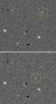
The Panoramic Survey Telescope & Rapid Response System (Pan-STARRS) PS1 telescope has discovered an asteroid that will come within 4 million miles of Earth in mid-October. The object is about 150 feet in diameter and was discovered in images acquired on September 16, when it was about 20 million miles away. It is the first "potentially hazardous object" (PHO) to be discovered by the Pan-STARRS survey and has been given the designation "2010 ST3." "Although this particular object won't hit Earth in the immediate future, its discovery shows that Pan-STARRS is now the ...
Read more →
Science 2010-09-28

Wider statin use could be cost-effective preventive measure, Stanford study finds

STANFORD, Calif. - A new analysis suggests that broader statin use among adult patients may be a cost-effective way to prevent heart attack and stroke. The Stanford University School of Medicine study also found that using a popular test - a screening for high sensitivity C-reactive protein, or CRP - to identify patients who may benefit from statin therapy would be cost-effective, but only under certain scenarios. "If statins are really as safe and effective as they appear to be, broadening the indications for statin therapy would be an effective and cost-effective strategy," ...
Read more →
Medicine 2010-09-28

Mayo collaboration finds source of breast drug side effect

ROCHESTER, Minn. -- Mayo Clinic researchers and their international colleagues have discovered genetic variants that lead to severe arthritis for a subset of women when taking aromatase inhibitors to treat their breast cancer. This serious side effect is so painful that many women halt their lifesaving medication. The findings appear today in the online issue of Journal of Clinical Oncology. "Many women stop taking aromatase inhibitors due to the accompanying joint pain," says James Ingle, M.D., Mayo Clinic oncologist and senior author of the study. "We used the latest ...
Read more →
Science 2010-09-28

No link between genetic ancestry, asthma response in African-Americans

DETROIT ¬¬– Genetic ancestry has no discernible influence on how African American patients with asthma respond to medication, according to a Henry Ford Hospital study. Researchers found that improved lung function in patients after taking inhaled steroids was related to a series of baseline breathing function measures, not genetic ancestry. The study is published online at the Journal of Allergy & Clinical Immunology, http://www.aaaai.org/media/jaci/ Advances in genetics have led to the development of ancestry markers spread across the human genome, which allow genetic ...
Read more →
Technology 2010-09-28

Semiconductor could turn heat into computing power

COLUMBUS, Ohio – Computers might one day recycle part of their own waste heat, using a material being studied by researchers at Ohio State University. The material is a semiconductor called gallium manganese arsenide. In the early online edition of Nature Materials, researchers describe the detection of an effect that converts heat into a quantum mechanical phenomenon – known as spin – in a semiconductor. Once developed, the effect could enable integrated circuits that run on heat, rather than electricity. This research merges two cutting-edge technologies: thermo-electricity ...
Read more →
Science 2010-09-28

Television drove viewers to the Web to explore Obama-Muslim rumors

COLUMBUS, Ohio – A study examining Americans' interest in the rumor that Barack Obama is a Muslim shows that the mainstream media – particularly television – still influences the topics that engage the public. Researchers found that online searches about the Obama-Muslim rumor spiked on days that the topic was heavily covered on national television networks, and that searches declined on days when there was less coverage. "With all the attention given to blogs and online news, some people have suggested that the mainstream media's role has diminished in our society," ...
Read more →
Medicine 2010-09-28

Friends, family detect early Alzheimer's signs better than traditional tests

Family members and close friends are more sensitive to early signs of Alzheimer's dementia than traditional screening tests, according to researchers at Washington University School of Medicine in St. Louis. Doctors often evaluate a person who is having memory problems by testing them with a variety of cognitive tasks, such as recalling a list of words or comparing shapes of objects. Washington University researchers developed a different approach. The two-minute Ascertain Dementia 8 (AD8) questionnaire relies on a friend or family member who knows the person well, known ...
Read more →
Medicine 2010-09-28

Researchers use CT to predict heart disease

OAK BROOK, Ill. – Using incidental findings from routine diagnostic CT, radiologists may be better able to identify people at high risk for cardiovascular disease, according to a new study appearing online and in the November issue of Radiology. "The results of this study show that radiologists can predict cardiovascular disease fairly well using incidental findings of calcifications of the aortic wall on CT, along with minimal patient information, such as age, gender and the reason for the CT," said the study's lead author, Martijn J. A. Gondrie, M.D., from the Julius ...
Read more →
Science 2010-09-28

First study of its kind finds children with food allergies are often victims of bullying

In the first-ever study to assess the social impact of food allergies in children, Mount Sinai researchers have found that approximately 35 percent of children with food allergies, who are over the age of five, were reported to have experienced bullying, teasing, or harassment as a result of their allergies. Of those experiencing teasing or harassment, 86 percent were reported to have experienced repeated episodes. Classmates were the most common perpetrators, but surprisingly more than 20 percent reported harassment or teasing from teachers and other school staff. ...
Read more →
Physics 2010-09-28

Striding towards a new dawn for electronics

Conductive polymers are plastic materials with high electrical conductivity that promise to revolutionize a wide range of products including TV displays, solar cells, and biomedical sensors. A team of McGill University researchers have now reported how to visualize and study the process of energy transport along one single conductive polymer molecule at a time, a key step towards bringing these exciting new applications to market. "We may easily study energy transport in a cable as thick as a hair, but imagine studying this process in a single polymer molecule, whose thickness ...
Read more →
Science 2010-09-28

Dog Royaltees Makes It Easier To Do Business

Dog Royaltees made several new postings to their website this week concerning improvements. The improvements are all pointed at making it easier to do business with their company. The first improvement is the release of new business literature. Dog Royaltees now has a full business brochure in .pdf format on their business webpage. "We had been receiving several queries about our capabilities and production processes, so we thought it was imperative to make an informational piece available electronically," said Stephanie Frieze, the owner of Dog Royaltees. The business ...
Read more →