Medicine Technology 🌱 Environment Space Energy Physics Engineering Social Science Earth Science Science
NASA's watches Tropical Cyclone Bakung over open ocean
Environment 2014-12-15

NASA's watches Tropical Cyclone Bakung over open ocean

Tropical Cyclone Bakung is moving in a westerly direction over the open waters of the Southern Indian Ocean and NASA's Aqua satellite captured an image of the sea storm. Aqua passed over Bakung on Dec. 12 at 07:35 UTC (2:35 a.m. EST) and the MODIS instrument aboard took a visible image of the storm. The image showed that deeper convection (stronger currents of rising air that form the thunderstorms that make up the tropical cyclone) was occurring around the low-level center of circulation, so the center was not apparent in the MODIS imagery. The bulk of the clouds associated ...
Read more →
Medicine 2014-12-15

Stanford professor discusses techniques for minimizing environmental impacts of fracking

Natural gas from hydraulic fracturing generates income and, done well, can reduce greenhouse gas emissions, air pollution and water use compared to coal and even nuclear energy. However, widespread use of natural gas from fracking could slow the adoption of wind, solar and other renewables and, done poorly, release toxic chemicals into the environment. Robert Jackson, the Kevin and Michelle Douglas Professor of Environment and Energy at the Stanford School of Earth Sciences, will discuss how to minimize the water and air impacts of fracking and other unconventional energy-extraction ...
Read more →
Environment 2014-12-15

Stanford professor discusses benefits and costs of forest carbon projects

Recent international climate talks have focused on the potential of reforestation and afforestation - planting trees in an area where there was no forest previously - to slow global warming. Increasingly, though, science is showing that planting more trees and increasing forest conservation can provide benefits beyond carbon storage, and that carbon-centric accounting is, in many cases, insufficient for climate mitigation policies. Robert Jackson, the Kevin and Michelle Douglas Professor of Environment and Energy at the Stanford School of Earth Sciences, will discuss ...
Read more →
Science 2014-12-15

Stanford scientist examines ways to put stormwater to use in big cities

Runoff from rainstorms in big cities can represent both threats and opportunities. Too much runoff in the wrong places causes flooding. Too little rainwater in the right places leads to dried-up creeks and rivers. Water that washes up pollution from city streets can dirty downstream watersheds. Figuring out the best solutions to these problems requires lots of data - data that are easy to get in highly developed countries, but much scarcer in others. On Dec. 15 at the American Geophysical Union Fall Meeting in San Francisco, Perrine Hamel, a postdoctoral scholar with ...
Read more →
Earth Science 2014-12-15

Stanford scientists identify mechanism that accelerated the 2011 Japan earthquake

Stanford scientists have found evidence that sections of the fault responsible for the 9.0 magnitude Tohoku earthquake that devastated northern Japan in 2011 were relieving seismic stress at a gradually accelerating rate for years before the quake. This "decoupling" process, in which the edges of two tectonic plates that are frictionally locked together slowly became unstuck, transferred stress to adjacent sections that were still locked. As a result, the quake, which was the most powerful ever recorded to hit Japan, may have occurred earlier than it might have otherwise, ...
Read more →
Fraud-proof credit cards possible with quantum physics
Technology 2014-12-15

Fraud-proof credit cards possible with quantum physics

WASHINGTON, Dec. 15, 2014--Credit card fraud and identify theft are serious problems for consumers and industries. Though corporations and individuals work to improve safeguards, it has become increasingly difficult to protect financial data and personal information from criminal activity. Fortunately, new insights into quantum physics may soon offer a solution. As reported in The Optical Society's (OSA) new high-impact journal Optica, a team of researchers from the Netherlands has harnessed the power of quantum mechanics to create a fraud-proof method for authenticating ...
Read more →
New research is a rare study of fake pot use among college students
Social Science 2014-12-15

New research is a rare study of fake pot use among college students

A survey of more than 300 college students reveals that college students who use "fake weed" or synthetic THC are most likely to have tried the drug because they were curious. Rebecca Vidourek, a University of Cincinnati assistant professor of health promotion and assistant director of the Center for Prevention Science; Keith King, a UC professor of health promotion and director of the Center for Prevention Science; and Michelle Burbage, a graduate student and graduate assistant for UC's Health Promotion and Education Program, published their findings in the current issue ...
Read more →
Science 2014-12-15

Current practices in reporting on behavioural genetics can mislead the public

This news release is available in French. "Media reports about behavioural genetics unintentionally induce unfounded beliefs, therefore going against the educational purpose of scientific reporting," writes the University of Montreal's Alexandre Morin-Chassé, following his study of 1,500 Americans. "Among other things, we wanted to know if the public understood (or misunderstood) popular science articles about a new research field, genopolitics, and whether this popularization indeed helped people have an informed opinion on human genetics," Morin-Chassé explained. The ...
Read more →
Show us how you play and it may tell us who you are
Science 2014-12-15

Show us how you play and it may tell us who you are

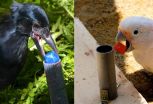
This news release is available in German. The ways animals play with inedible objects may be precursors of functional behaviors such as tool use and goal directed object manipulation. For these reasons, species of high technical intelligence are also expected to play intensely with inanimate objects when no obvious goal is pursued. Within object play, combinatory actions are considered a particularly informative trait in animals as well as human infants: Children start bashing two objects together when they are about 8 months old, at 10 months, they combine toys with ...
Read more →
Science 2014-12-15

A 2-minute delay in cutting the umbilical cord leads to a better development of newborns

A study conducted by University of Granada scientists (from the Physiology, Obstetrics and Gynaecology Departments) and from the San Cecilio Clinical Hospital (Granada) has demonstrated that delaying the cutting of the umbilical cord in newborns by two minutes leads to a better development of the baby during the first days of life. This multidisciplinary work, published in the prestigious journal Pediatrics reveals that the time in cutting the umbilical cord (also called umbilical cord clampling) influences the resistance to oxidative stress in newborns. For this research, ...
Read more →
Live images from inside materials
Engineering 2014-12-15

Live images from inside materials

In medicine, X-rays provide high-resolution images of our insides to help doctors make a definitive diagnosis. Industry uses X-rays, too - as a reliable, non-destructive way of seeing what's hidden on inside materials and components and to check for cracks or irregularities. However industry additionally draws upon different technologies that are not used in the medical field. Whereas medical X-ray machines have been specifically designed for human test subjects, industrial X-ray machines are used to analyze objects that vary much more in their size and material composition. ...
Read more →
Medicine 2014-12-15

Study: Novel agent decreases neuropathic pain in patients with type 2 diabetes

MANHASSET, NY -- Molecular Medicine, a peer-reviewed biomedical journal published by the Feinstein Institute Press, published the results of a new study reporting clinically significant pain reduction in type 2 diabetic patients. In an exploratory study conducted by Araim Pharmaceuticals, a biotech company developing novel treatments for chronic diseases, investigators also observed improvements in metabolic control in patients administered ARA 290. ARA 290 is a peptide engineered to activate the innate repair receptor, a receptor discovered by Araim scientists, which is ...
Read more →
Medicine 2014-12-15

Neurons listen to glia cells

Scientists at Johannes Gutenberg University Mainz (JGU) in Germany have discovered a new signal pathway in the brain that plays an important role in learning and the processing of sensory input. It was already known that distinct glial cells receive information from neurons. However, it was unknown that these same glial cells also transmit information to neurons. The glia release a specific protein fragment that influences neuronal cross-talk, most likely by binding to the synaptic contacts that neurons use for communication. Disruption of this information flow from the ...
Read more →
Environment 2014-12-15

Attitudes to climate change depend on people's sense of belonging to the planet

New research led by the University of Exeter has found that people who have a stronger sense of place at the global than the national level are more likely to accept that climate change is caused by human activities. This is the first time that acceptance of human causes of climate change has been shown to be linked to people's sense of place at the global level. The findings have significant implications both for climate change communications and for our understanding of place and identities. The study 'My country or my planet? Exploring the influence of multiple place ...
Read more →
'Genome editing' could correct genetic mutations for future generations
Medicine 2014-12-15

'Genome editing' could correct genetic mutations for future generations

BLOOMINGTON, Ind. -- Scientists at Indiana University and colleagues at Stanford and the University of Texas have demonstrated a technique for "editing" the genome in sperm-producing adult stem cells, a result with powerful potential for basic research and for gene therapy. The researchers completed a "proof of concept" experiment in which they created a break in the DNA strands of a mutant gene in mouse cells, then repaired the DNA through a process called homologous recombination, replacing flawed segments with correct ones. The study involved spermatogonial stem ...
Read more →
Medicine 2014-12-15

Parkinson's patients identify balance and anxiety among top 10 research priorities

Patients with Parkinson's, medics and carers have identified the top ten priorities for research into the management of the condition in a study by the University of East Anglia and Parkinson's UK. Commissioned by Parkinson's UK, people with direct and indirect personal experience of the condition worked together to identify crucial gaps in the existing evidence to address everyday practicalities in the management of the complexities of Parkinson's. Patients stated that the overarching research aspiration was an effective cure for Parkinson's but whilst waiting for this ...
Read more →
Medicine 2014-12-15

Signaling mechanism could be target for survival, growth of tumor cells in brain cancer

DALLAS - Dec. 15, 2014 - UT Southwestern Medical Center neurology researchers have identified an important cell signaling mechanism that plays an important role in brain cancer and may provide a new therapeutic target. Researchers found that this mechanism -- a type of signaling termed constitutive or non-canonical epidermal growth factor receptor (EGFR) signaling -- is highly active in glioblastomas, the most common type of adult brain cancer and a devastating disease with a poor prognosis. When activated in cancer cells, it protects the tumor cells, making them more ...
Read more →
Technology 2014-12-15

Control on shape of light particles opens the way to 'quantum internet'

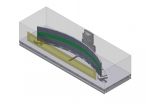
In the same way as we now connect computers in networks through optical signals, it could also be possible to connect future quantum computers in a 'quantum internet'. The optical signals would then consist of individual light particles or photons. One prerequisite for a working quantum internet is control of the shape of these photons. Researchers at Eindhoven University of Technology (TU/e) and the FOM foundation have now succeeded for the first time in getting this control within the required short time. These findings are published today in Nature Communications. Quantum ...
Read more →
Stanford team combines logic, memory to build a 'high-rise' chip
Technology 2014-12-15

Stanford team combines logic, memory to build a 'high-rise' chip

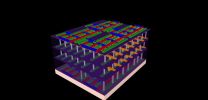
For decades, the mantra of electronics has been smaller, faster, cheaper. Today, Stanford engineers add a fourth word - taller. At a conference in San Francisco, a Stanford team will reveal how to build high-rise chips that could leapfrog the performance of the single-story logic and memory chips on today's circuit cards. Those circuit cards are like busy cities in which logic chips compute and memory chips store data. But when the computer gets busy, the wires connecting logic and memory can get jammed. The Stanford approach would end these jams by building layers ...
Read more →
Medicine 2014-12-15

People with low numeracy feel negative about taking part in bowel cancer screening

PEOPLE who have problems with numbers may be more likely to feel negative about bowel cancer screening, including fearing an abnormal result, while some think the test is disgusting or embarrassing, according to a Cancer Research UK supported study* published today (Monday) in the Journal of Health Psychology. The researchers** sent information about bowel cancer screening to patients aged from 45 to 59 along with a questionnaire which assessed their numerical skills and attitudes to the screening test, which looks for blood in stool samples. Almost 965 people - registered ...
Read more →
Teen use of e-cigarettes growing; Hawaii use rates higher than in mainland
Science 2014-12-15

Teen use of e-cigarettes growing; Hawaii use rates higher than in mainland

E-cigarette use among teenagers is growing in the U.S., and Hawaii teens take up e-cigarette use at higher rates than their mainland counterparts, a new study by University of Hawaii Cancer Center researchers has found. The findings come as e-cigarettes grow in popularity and the Food and Drug Administration is considering how to regulate their sale. Some public health officials are concerned that e-cigarettes may be recruiting a new generation of young cigarette smokers who otherwise might not take up smoking at all, and the study's results bolster this position. Data ...
Read more →
Science 2014-12-15

Simple steps can safeguard against Ebola transmission through organ donation

While serious infections can be transmitted from donated organs, the risk of passing Ebola virus disease from an organ donor to a recipient is extremely small. In a new editorial published in the American Journal of Transplantation, experts explain how simple assessments of donors can help ensure that the organ supply is safe, while having little impact on the donor pool. Despite screening all organ donors for infection, on rare occasions an organ donor will transmit an unexpected infection to a recipient. Because cases of Ebola virus disease have occurred in the United ...
Read more →
Social Science 2014-12-15

Are you genetically predisposed to antisocial behavior?

Both positive and negative experiences influence how genetic variants affect the brain and thereby behaviour, according to a new study. "Evidence is accumulating to show that the effects of variants of many genes that are common in the population depend on environmental factors. Further, these genetic variants affect each other," explained Sheilagh Hodgins of the University of Montreal and its affiliated Institut Universitaire en Santé Mentale de Montréal. "We conducted a study to determine whether juvenile offending was associated with interactions between three ...
Read more →
Baby cells learn to communicate using the lsd1 gene
Medicine 2014-12-15

Baby cells learn to communicate using the lsd1 gene

Baltimore MD-- We would not expect a baby to join a team or participate in social situations that require sophisticated communication. Yet, most developmental biologists have assumed that young cells, only recently born from stem cells and known as "progenitors," are already competent at inter-communication with other cells. New research from Carnegie's Allan Spradling and postdoctoral fellow Ming-Chia Lee shows that infant cells have to go through a developmental process that involves specific genes before they can take part in the group interactions that underlie ...
Read more →
University of Toronto cell biologists discover on-off switch for key stem cell gene
Medicine 2014-12-15

University of Toronto cell biologists discover on-off switch for key stem cell gene

TORONTO, ON - Consider the relationship between an air traffic controller and a pilot. The pilot gets the passengers to their destination, but the air traffic controller decides when the plane can take off and when it must wait. The same relationship plays out at the cellular level in animals, including humans. A region of an animal's genome - the controller - directs when a particular gene - the pilot - can perform its prescribed function. A new study by cell and systems biologists at the University of Toronto (U of T) investigating stem cells in mice shows, for the ...
Read more →