Medicine Technology 🌱 Environment Space Energy Physics Engineering Social Science Earth Science Science
Season's eatings
Science 2014-12-16

Season's eatings

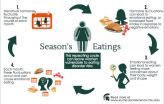
EAST LANSING, Mich. - 'Tis the season of plenty of food and drink. While celebrating should be joyful, for some women, it's not. All the holiday temptations can add another layer to an already complicated biological process. It's well known that women undergo hormonal changes every month due to the menstrual cycle. These changes can cause women to eat more, which is a natural, biological occurrence. However, Michigan State University Foundation Professor Kelly Klump has found that the increased food intake causes some women to become much more preoccupied with their ...
Read more →
Environment 2014-12-16

Carbon-trapping 'sponges' can cut greenhouse gases

ITHACA, N.Y. - In the fight against global warming, carbon capture - chemically trapping carbon dioxide before it releases into the atmosphere - is gaining momentum, but standard methods are plagued by toxicity, corrosiveness and inefficiency. Using a bag of chemistry tricks, Cornell materials scientists have invented low-toxicity, highly effective carbon-trapping "sponges" that could lead to increased use of the technology. A research team led by Emmanuel Giannelis, the Walter R. Read Professor of Engineering in the Department of Materials Science and Engineering, has ...
Read more →
Scientists trace nanoparticles from plants to caterpillars
Physics 2014-12-16

Scientists trace nanoparticles from plants to caterpillars

HOUSTON -- (Dec. 16, 2014) -- In one of the most comprehensive laboratory studies of its kind, Rice University scientists traced the uptake and accumulation of quantum dot nanoparticles from water to plant roots, plant leaves and leaf-eating caterpillars. The study, one of the first to examine how nanoparticles move through human-relevant food chains, found that nanoparticle accumulation in both plants and animals varied significantly depending upon the type of surface coating applied to the particles. The research is available online in the American Chemical Society's ...
Read more →
First steps for Hector the robot stick insect
Technology 2014-12-16

First steps for Hector the robot stick insect

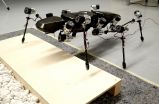
This news release is available in German. A research team at Bielefeld University has succeeded in teaching the only robot of its kind in the world how to walk. Its first steps have been recorded in a video. You can watch them in Bielefeld University's latest posting on 'research_tv'. The robot is called Hector, and its construction is modelled on a stick insect. Inspired by the insect, Hector has passive elastic joints and an ultralight exoskeleton. What makes it unique is that it is also equipped with a great number of sensors and it functions according to a biologically ...
Read more →
Energy 2014-12-16

New tracers can identify coal ash contamination in water

DURHAM, N.C. - Duke University scientists have developed new forensic tracers to identify coal ash contamination in water and distinguish it from contamination coming from other sources. "These new tools can be used by federal and state regulatory agencies to monitor the environmental effects of coal ash and determine whether it has or hasn't impacted the environment," said Avner Vengosh, professor of geochemistry and water quality at Duke's Nicholas School of the Environment. "They can be used to trace the coal ash effluents to their source, even in watersheds where ...
Read more →
The simplest element: Turning hydrogen into 'graphene'
Energy 2014-12-16

The simplest element: Turning hydrogen into 'graphene'

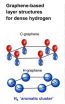
Washington, D.C.--New work from Carnegie's Ivan Naumov and Russell Hemley delves into the chemistry underlying some surprising recent observations about hydrogen, and reveals remarkable parallels between hydrogen and graphene under extreme pressures. Their work is the cover story in the December issue of Accounts of Chemical Research. Hydrogen is the most-abundant element in the cosmos. With only a single electron per atom, it is deceptively simple. As a result, hydrogen has been a testing ground for theories of the chemical bond since the birth of quantum mechanics ...
Read more →
People may inherit 'gut' bacteria that cause Crohn's disease and ulcerative colitis
Medicine 2014-12-16

People may inherit 'gut' bacteria that cause Crohn's disease and ulcerative colitis

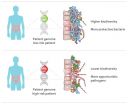
MINNEAPOLIS/ST. PAUL (12/16/2014)--A new study by an international team of researchers shows for the first time that people may inherit some of the intestinal bacteria that cause Crohn's disease and ulcerative colitis, collectively know as inflammatory bowel disease (IBD). The study, recently published in Genome Medicine, also confirmed that antibiotics could worsen the imbalance in the gut microbes. About 1.6 million Americans suffer from Crohn's disease or ulcerative colitis, according to the Crohn's and Colitis Foundation of America. Understanding the causes of these ...
Read more →
Naming people and objects in baby's first year  may offer learning benefits years later
Social Science 2014-12-16

Naming people and objects in baby's first year may offer learning benefits years later

AMHERST, Mass. - In a follow-up to her earlier studies of learning in infancy, developmental psychologist Lisa Scott and colleagues at the University of Massachusetts Amherst are reporting that talking to babies in their first year, in particular naming things in their world, can help them make connections between what they see and hear, and these learning benefits can be seen as much as five years later. "Learning in infancy between the ages of six to nine months lays a foundation for learning later in childhood," Scott says. "Infants learn labels for people and things ...
Read more →
Medicine 2014-12-16

Commensal bacteria were critical shapers of early human populations

WASHINGTON, DC--December 16, 2014--Using mathematical modeling, researchers at New York and Vanderbilt universities have shown that commensal bacteria that cause problems later in life most likely played a key role in stabilizing early human populations. The finding, published in mBio®, the online open-access journal of the American Society for Microbiology, offers an explanation as to why humans co-evolved with microbes that can cause or contribute to cancer, inflammation, and degenerative diseases of aging. The work sprung from a fundamental question in biology ...
Read more →
First real-world trial of impact of patient-controlled access to electronic medical records
Medicine 2014-12-16

First real-world trial of impact of patient-controlled access to electronic medical records

INDIANAPOLIS -- In the first real-world trial of the impact of patient-controlled access to electronic medical records, almost half of the patients who participated withheld clinically sensitive information in their medical record from some or all of their health care providers. Should patients control who can see specific information in their electronic medical records? How much control should they have? Can doctors and other clinicians provide safe, high-quality care when a patient's preference may deny members of the medical team from seeing portions of the electronic ...
Read more →
Medicine 2014-12-16

Cracking the code of brain development

BALTIMORE, MD (Dec. 16, 2014)--With a unique, multi-faceted approach, researchers at the Lieber Institute for Brain Development (LIBD) have quantified the effect of previously unidentified anomalies in genetic expression that determine how the human brain develops from its earliest stages. Their work, published online December 15th in Nature Neuroscience, offers a novel technique for identifying biological markers in brain development that associate with risk for neurodevelopmental disorders such as schizophrenia and autism spectrum disorder (ASD). Using state-of-the-art ...
Read more →
Ocean acidification a culprit in commercial shellfish hatcheries' failures
Environment 2014-12-16

Ocean acidification a culprit in commercial shellfish hatcheries' failures

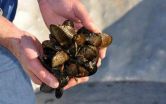
The mortality of larval Pacific oysters in Northwest hatcheries has been linked to ocean acidification. Yet the rate of increase in carbon dioxide in the atmosphere and the decrease of pH in near-shore waters have been questioned as being severe enough to cause the die-offs. Now, a new study of Pacific oyster and Mediterranean mussel larvae found that the earliest larval stages are sensitive to saturation state, rather than carbon dioxide (CO2) or pH (acidity) per se. Saturation state is a measure of how corrosive seawater is to the calcium carbonate shells made by ...
Read more →
Science 2014-12-16

People trust typical-looking faces most

Being "average" is often considered a bad thing, but new research suggests that averageness wins when people assess the trustworthiness of a face. The research indicates that, while typical-looking faces aren't seen as the most attractive, they are considered to be the most trustworthy. The new findings are published in Psychological Science, a journal of the Association for Psychological Science. "Face typicality likely indicates familiarity and cultural affiliation - as such, these findings have important implications for understanding social perception, including cross-cultural ...
Read more →
Virus causing mass duck die-offs on Cape Cod identified
Medicine 2014-12-16

Virus causing mass duck die-offs on Cape Cod identified

ITHACA, N.Y. - Since 1998, hundreds and sometimes thousands of dead eider ducks have been washing up every year on Cape Cod's beaches in late summer or early fall, but the reasons behind these cyclic die-offs have remained a mystery. A team of scientists from Cornell, Tufts University, University of Georgia, the U.S. Geological Survey and the U.S. Fish and Wildlife Service have pinned down one of the agents responsible: a pathogen they're calling Wellfleet Bay virus (WFBV). Their findings shed light on why eider ducks (also called common eiders) die on Cape Cod every ...
Read more →
New technology advances eye tracking as biomarker for brain function and brain injury
Medicine 2014-12-16

New technology advances eye tracking as biomarker for brain function and brain injury

NEW YORK, NY -- Researchers at NYU Langone Medical Center have developed new technology that can assess the location and impact of a brain injury merely by tracking the eye movements of patients as they watch music videos for less than four minutes, according to a study published Friday on-line in the Journal of Neurosurgery. The study suggests that the use of eye tracking technology may be a potential biological marker for assessing brain function and monitoring recovery for patients with brain injuries. Led by Uzma Samadani, MD, PhD, chief of neurosurgery at New ...
Read more →
UTMB study finds that Hispanic women less likely to survive endometrial uterine cancer
Medicine 2014-12-16

UTMB study finds that Hispanic women less likely to survive endometrial uterine cancer

GALVESTON, Texas -- In the largest study to date evaluating outcomes of Hispanic women with endometrial uterine cancer, researchers at the University of Texas Medical Branch at Galveston have found that Hispanic women in the United States were significantly less likely to survive the cancer than non-Hispanic white women. A total of 69,764 women diagnosed with endometrial cancer between 2000 and 2010 were included in this study of public-use data from the National Cancer Institute's Surveillance, Epidemiology, and End Results Program. The study is available online in the ...
Read more →
Researchers generate tunable photon-pair spectrum using room-temperature quantum optics silicon chip
Technology 2014-12-16

Researchers generate tunable photon-pair spectrum using room-temperature quantum optics silicon chip

A team of researchers from the University of California, San Diego have demonstrated a way to emit and control quantum light generated using a chip made from silicon--one of the most widely used materials for modern electronics. The UC San Diego researchers recently described their new device's performance online in the journal Nature Communications, available via Open Access . The researchers say practical applications of quantum optics will seem more feasible if devices for generating and controlling these photons can be manufactured using conventional materials ...
Read more →
'Radiogenetics' seeks to remotely control cells and genes
Medicine 2014-12-16

'Radiogenetics' seeks to remotely control cells and genes

It's the most basic of ways to find out what something does, whether it's an unmarked circuit breaker or an unidentified gene -- flip its switch and see what happens. New remote-control technology may offer biologists a powerful way to do this with cells and genes. A team at Rockefeller University and Rensselaer Polytechnic Institute is developing a system that would make it possible to remotely control biological targets in living animals -- rapidly, without wires, implants or drugs. Today (December 15) in the journal Nature Medicine, the team describes successfully ...
Read more →
Science 2014-12-16

Extra vitamin E protected older mice from getting common type of pneumonia

BOSTON (Dec. 16, 2014) -- Extra vitamin E protected older mice from a bacterial infection that commonly causes pneumonia. Microbiologists and nutrition researchers from Tufts University report that the extra vitamin E helped regulate the mice's immune system. The findings, published online in advance of print in the The Journal of Immunology, show promise for studies investigating the effects of vitamin E and infection in humans. Older adults over age 65 are at high risk for developing pneumonia, an inflammation of the lungs typically caused by infection. The most common ...
Read more →
UBC scientist finds genetic wrinkle to block sun-induced skin aging
Science 2014-12-16

UBC scientist finds genetic wrinkle to block sun-induced skin aging

A scientific team at UBC and Providence Health Care have genetically engineered mice with less wrinkled skin, despite repeated exposure to wrinkle-inducing ultraviolet (UV) light. The youthful-looking mice were bred without the gene that produces Granzyme B, an enzyme that immune cells use to destroy harmful pathogens. The UBC-Providence team, led by Professor David Granville and postdoctoral fellow Leigh Parkinson, found that Granzyme B also does harm: When produced and released by skin cells in response to UV light, it triggers the breakdown of collagen, a structural ...
Read more →
Environment 2014-12-16

Hurricane-forecast satellites will keep close eyes on the tropics

ANN ARBOR--A set of eight hurricane-forecast satellites being developed at the University of Michigan is expected to give deep insights into how and where storms suddenly intensify--a little-understood process that's becoming more crucial to figure out as the climate changes, U-M researchers say. The Cyclone Global Navigation Satellite System is scheduled to launch in fall 2016. At the American Geophysical Union Meeting in San Francisco this week, U-M researchers released estimates of how significantly CYGNSS could improve wind speed and storm intensity forecasts. CYGNSS--said ...
Read more →
Social Science 2014-12-16

Social connections keep workers on board

Contrary to popular belief, new research suggests that some employees adapt well to pressures caused by changes in the workplace. Pay cuts, reduced working hours, fewer training and promotion opportunities are just a few of the measures organisations employ to combat economic downturn and industry competition. Where previous research has suggested cut backs result in a demotivated and unhappy workforce, experts from Monash University and The University of Iowa say this might not necessarily be the case. A new study published in the Journal of Occupational and Organizational ...
Read more →
Engineering 2014-12-16

Composite plane life cycle assessment shows lighter planes are the future

A global fleet of composite planes could reduce carbon emissions by up to 15 percent, but the lighter planes alone will not enable the aviation industry to meet its emissions targets, according to new research. The study, by the Universities of Sheffield, Cambridge and UCL (University College London), is the first to carry out a comprehensive life cycle assessment (LCA) of a composite plane, such as the Boeing Dreamliner 787 or Airbus 350, and extrapolate the results to the global fleet. The LCA covers manufacture, use and disposal, using publicly available information ...
Read more →
A beetle named Marco Polo
Science 2014-12-16

A beetle named Marco Polo

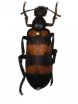
A team of Chinese and Italian scientists has joined efforts to provide a key to the understudied phaleratus group of blister beetles. During their research the scientists have also discovered a new species from the genus Hycleus, which they named after Marco Polo, as a tribute to their collaboration during the Ph.D. studies. The study was published in the open access journal ZooKeys. The phaleratus group to which the new species Hycleus marcipoli belongs, is part of the Meloidae family commonly known as the blister beetle family. The representatives of this group get ...
Read more →
How the brain can distinguish good from bad smells
Medicine 2014-12-16

How the brain can distinguish good from bad smells

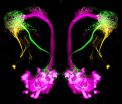
This news release is available in German. Whether an odor is pleasant or disgusting to an organism is not just a matter of taste. Often, an organism's survival depends on its ability to make just such a discrimination, because odors can provide important information about food sources, oviposition sites or suitable mates. However, odor sources can also be signs of lethal hazards. Scientists from the BMBF Research Group Olfactory Coding at the Max Planck Institute for Chemical Ecology in Jena, Germany, have now found that in fruit flies, the quality and intensity of ...
Read more →