Medicine Technology 🌱 Environment Space Energy Physics Engineering Social Science Earth Science Science
Science 2014-10-22

Aphthous ulcers: Causes of mucosal inflammation are unclear

A painful inflamed lesion on the oral mucosa, which often seems to be burning at the periphery: every third individual has at one point had such a lesion—an aphthous ulcer. Often they resolve after a brief period of time. In 2% to 10% of patients these lesions are recurrent and require medical treatment. Unfortunately, as Andreas Altenberg and co-authors point out in a current review on the therapy of aphthous ulcers (Dtsch Arztebl Int 2014; 111: 665–73), the etiology of these lesions is unclear. Thus aphthous ulcers can only be treated symptomatically. Even ...
Read more →
Medicine 2014-10-22

Sopping up proteins with thermosponges

Boston, MA – A research team led by Brigham and Women's Hospital (BWH) has developed and tested a novel nanoparticle platform that efficiently delivers clinically important proteins in vivo in initial proof-of-concept tests. Nanoparticles, which are particles measuring nanometers in size, hold promise for a range of applications, including human therapeutics. The key advantage of the new platform, known as a thermosponge nanoparticle, is that it eliminates the need for harsh solvents, which can damage the very molecules the particles are designed to carry. The study ...
Read more →
Science 2014-10-22

BJOG releases MPT special supplement

(Sacramento, CA): Broad-spectrum prevention that can simultaneously prevent unintended pregnancy along with STIs, including HIV, is on the horizon say experts in a special supplement of the BJOG: An International Journal of Obstetrics and Gynaecology. The issue features an international assemblage of researchers, funders, developers and advocates who identify the pressing global health rationale for MPTs and present new research and strategies for making the go/no-go funding and research decisions that shape the field. The invited guest editor for the supplement is Dr. ...
Read more →
Technology 2014-10-22

The 2011 English summer riots: Courts accused of 'collective hysteria'

A review of sentencing following the 2011 English riots has shown that sentences were much harsher than realised at first. And just as people got caught up in the riots and acted out of character the study, carried out by The University of Manchester and Liverpool John Moores University, found that the courts themselves got caught up in a similar kind of collective hysteria. Dr Hannah Quirk, a Senior Lecturer in Criminal Law and Justice from The University of Manchester, was the co-author of the research which has just been published in The British Journal of Criminology. ...
Read more →
Protecting us from our cells
Medicine 2014-10-22

Protecting us from our cells

Our immune system defends us from harmful bacteria and viruses, but, if left unchecked, the cells that destroy those invaders can turn on the body itself, causing auto-immune diseases like type-1 diabetes or multiple sclerosis. A molecule called insulin-like growth factor-1 (IGF-1) boosts the body's natural defence against this 'friendly fire', scientists at the European Molecular Biology Laboratory (EMBL) in Monterotondo, Italy, have found. The findings, published today in EMBO Molecular Medicine, are especially exciting because IGF-1 is already approved for use in patients, ...
Read more →
New window on the early universe
Space 2014-10-22

New window on the early universe

Using two world-class supercomputers, the researchers were able to demonstrate the effectiveness of their approach by simulating the formation of a massive galaxy at the dawn of cosmic time. The ALMA radio telescope – which stands at an elevation of 5,000 meters in the Atacama Desert of Chile, one of the driest places on earth – was then used to forge observations of the galaxy, showing how their method improves upon previous efforts. It is extremely difficult to gather information about galaxies at the edge of the Universe: the signals from these heavenly ...
Read more →
Medicine 2014-10-22

Proper dental care linked to reduced risk of respiratory infections in ICU patients

CHICAGO (October 22, 2014) – New research shows vulnerable patients in the Intensive Care Unit (ICU) who received enhanced oral care from a dentist were at significantly less risk for developing a lower respiratory tract infection (LRTI), like ventilator-associated pneumonia, during their stay. The study was published in the November issue of Infection Control and Hospital Epidemiology, the journal of the Society for Healthcare Epidemiology of America (SHEA). "Bacteria causing healthcare-associated infections often start in the oral cavity," said Fernando Bellissimo-Rodrigues, ...
Read more →
Medicine 2014-10-22

Automated tracking increases compliance of flu vaccination for health-care personnel

CHICAGO (October 22, 2014) – New research found tracking influenza vaccination of healthcare personnel through an automated system increased vaccination compliance and reduced workload burden on human resources and occupational health staff. The study is published in the November issue of Infection Control and Hospital Epidemiology, the journal of the Society for Healthcare Epidemiology of America (SHEA). "Mandatory vaccination programs help protect vulnerable patients, but can be tremendously time and resource dependent," said Susan Huang, MD, MPH, an author of ...
Read more →
Medicine 2014-10-22

Olive oil more stable and healthful than seed oils for frying food

Frying is one of the world's most popular ways to prepare food — think fried chicken and french fries. Even candy bars and whole turkeys have joined the list. But before dunking your favorite food in a vat of just any old oil, consider using olive. Scientists report in ACS' Journal of Agricultural and Food Chemistry that olive oil withstands the heat of the fryer or pan better than several seed oils to yield more healthful food. Mohamed Bouaziz and colleagues note that different oils have a range of physical, chemical and nutritional properties that can degrade ...
Read more →
Medicine 2014-10-22

Skin patch could replace the syringe for disease diagnosis

Drawing blood and testing it is standard practice for many medical diagnostics. As a less painful alternative, scientists are developing skin patches that could one day replace the syringe. In the ACS journal Analytical Chemistry, one team reports they have designed and successfully tested, for the first time, a small skin patch that detected malaria proteins in live mice. It could someday be adapted for use in humans to diagnose other diseases, too. Simon R. Corrie and colleagues note that while blood is rich with molecular clues that tell a story about a person's health, ...
Read more →
A 'Star Wars' laser bullet -- this is what it really looks like
Space 2014-10-22

A 'Star Wars' laser bullet -- this is what it really looks like

Action-packed science-fiction movies often feature colourful laser bolts. But what would a real laser missile look like during flight, if we could only make it out? How would it illuminate its surroundings? The answers lie in a film made at the Laser Centre of the Institute of Physical Chemistry of the Polish Academy of Sciences in cooperation with the Faculty of Physics at the University of Warsaw. Tests of a new compact high-power laser have given researchers at the Laser Centre of the Institute of Physical Chemistry of the Polish Academy of Sciences and the Faculty ...
Read more →
Producing solar power with impure silicon
Technology 2014-10-22

Producing solar power with impure silicon

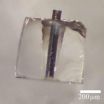
"We're using less expensive raw materials in smaller amounts, we have fewer production steps, and have potentially lower total energy consumption," PhD candidate Fredrik Martinsen and Professor Ursula Gibson of the Department of Physics at NTNU explain. They recently published their technique in Scientific Reports. Their processing technique allows them to make solar cells from silicon that is 1000 times less pure, and thus less expensive, than the current industry standard. Glass fibers with a silicon core The researchers' solar cells are composed of silicon fibers ...
Read more →
Secret wing colours attract female fruit flies
Science 2014-10-22

Secret wing colours attract female fruit flies

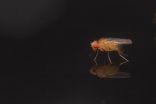
Bright colours appear on a fruit fly's transparent wings against a dark background as a result of light refraction. Researchers from Lund University in Sweden have now demonstrated that females choose a mate based on the males' hidden wing colours. "Our experiment shows that this newly-discovered trait is important in female choice in fruit flies, and is the first evidence that wing interference patterns have a biological signalling function between the sexes during sexual selection", said Jessica Abbott, a biologist at Lund University. The extremely thin wings of the ...
Read more →
Medicine 2014-10-22

Early palliative care can cut hospital readmissions for cancer patients

DURHAM, N.C. -- Doctors at Duke University Hospital have developed a new collaborative model in cancer care that reduced the rates at which patients were sent to intensive care or readmitted to the hospital after discharge. The Duke researchers shared their findings today at the Palliative Care in Oncology Symposium sponsored by the American Society of Clinical Oncology. In the new treatment model, medical oncologists and palliative care physicians partnered in a "co-rounding" format to deliver cancer care for patients admitted to Duke University Hospital's solid tumor ...
Read more →
Criminologists try to solve murder mystery: Who will become a killer?
Science 2014-10-22

Criminologists try to solve murder mystery: Who will become a killer?

Predicting which people will commit murder is extremely difficult, according to a new study by criminologists at The University of Texas at Dallas. Dr. Alex Piquero, Ashbel Smith Professor of criminology and co-author of the paper, said he and his fellow researchers were motivated by the lack of scientific literature on distinguishing people who will commit homicide from those who will not. According to the study, the similarities outweigh the differences between the two groups. "Based on a whole slew of characteristics that we know predict and differentiate criminal ...
Read more →
Medicine 2014-10-22

Researchers record sight neurons in jumping spider brain

ITHACA, N.Y. – For the first time, a team of interdisciplinary researchers have made recordings of neurons associated with visual perception inside the poppy seed-sized brain of a jumping spider (Phidippus audax). Video: http://www.cornell.edu/video/vision-in-jumping-spiders/s252/e552 Though neurobiologists have tried for half a century to better understand the brains of jumping spiders, no one has succeeded. The liquid in spiders' bodies is pressurized, as they move with hydraulic pressure and muscles, so they don't tolerate previous research techniques. As ...
Read more →
Science 2014-10-22

Research suggests team-based care is most effective way to control hypertension

Patients diagnosed with high blood pressure are given better control of their condition from a physician-pharmacist collaborative intervention than physician management alone, according to new research. Pharmacists can play a key role in communicating with physicians to address suboptimal therapy, helping physicians to provide counselling on lifestyle change and performing patient follow-up. The research was carried out to evaluate the individual care processes of the physician-pharmacist collaborative intervention in treating hypertension, a major cause of heart disease, ...
Read more →
UNC scientists discover hidden subpopulation of melanoma cells
Medicine 2014-10-22

UNC scientists discover hidden subpopulation of melanoma cells

CHAPEL HILL, NC – UNC School of Medicine researchers have pinpointed a set of intriguing characteristics in a previously unknown subpopulation of melanoma cancer cells in blood vessels of tumors. These cells, which mimic non-cancerous endothelial cells that normally populate blood vessels in tumors, could provide researchers with another target for cancer therapies. The research, published today in the journal Nature Communications, provides evidence for how these particular melanoma cells help tumors resist drugs designed to block blood vessel formation. "For ...
Read more →
Science 2014-10-22

Teenage self-harm linked to problems in later life

Those who self-harm as teenagers are more at risk of developing mental health and substance misuse problems as adults, new research from the biggest study of its kind in the UK has revealed. Researchers at the University of Bristol, working together with colleagues from the University of Oxford and University College London, collected data from 4,799 adolescents as part of Children of the 90s - one of the world's largest population studies - to examine the outcomes of self-harm for the first time. The research paper, funded by the Medical Research Council and published ...
Read more →
Science 2014-10-22

Unsteady on your feet? Little touches could make all the difference

When a toddler takes their first steps we observe an uncertain sway in their walking. Being unsteady on our feet is something we can experience throughout life – and a new study has shown how even the lightest fingertip touch can help people to maintain their balance. The research, led by the University of Birmingham, explains how neural and mechanical mechanisms synchronize our sway with another person. Dr Raymond Reynolds explained, "There's something very human, very instinctive, that makes us reach out and grab something or someone when we're unsure of our ...
Read more →
Promising blood biomarkers identified for colorectal cancer: Is a screening blood test within reach?
Medicine 2014-10-22

Promising blood biomarkers identified for colorectal cancer: Is a screening blood test within reach?

The search for blood-borne biomarkers that could be used to screen for colorectal cancer (CRC) has uncovered two promising candidates that may one day lead to the development of a simple blood test. Scientists have been piecing together the molecular events involved in the development of CRC and have identified abnormal DNA methylation patterns and the presence of microRNAs as major players in the carcinogenic process. Speaking to journalists today at the 22nd United European Gastroenterology Week (UEG Week 2014) in Vienna, Austria, Dr Antoni Castells from the Institute ...
Read more →
Medicine 2014-10-22

Studies must be carried out to determine whether exercise slows the onset of type 1 diabetes in children and adults

Rates of type 1 diabetes—the autoimmune form of the condition that often begins in childhood and eventually results in lifelong dependency on insulin—are increasing in almost all nations worldwide. However, while it appears possible from research in other forms of diabetes that physical exercise could slow the progression of this disease, there have been no studies to date that explore this in patients with type 1 diabetes. In a paper published in Diabetologia (the journal of the European Association for the Study of Diabetes) researchers argue that such trials ...
Read more →
Technology 2014-10-22

Clot dissolver tPA's tardy twin could aid in stroke recovery

Researchers at Emory University School of Medicine have identified a protein released by neurons while the brain is recovering from a stroke. The results are scheduled for publication Oct. 21 in Journal of Neuroscience. The protein, called urokinase-type plasminogen activator or uPA, has been approved by the FDA to dissolve blood clots in the lungs. It has been tested in clinical trials in some countries as a treatment for acute stroke. The Emory team's findings suggest that in stroke, uPA's benefits may extend beyond the time when doctors' principal goal is dissolving ...
Read more →
NASA Webb's heart survives deep freeze test
Medicine 2014-10-22

NASA Webb's heart survives deep freeze test

After 116 days of being subjected to extremely frigid temperatures like that in space, the heart of the James Webb Space Telescope, the Integrated Science Instrument Module (ISIM) and its sensitive instruments, emerged unscathed from the thermal vacuum chamber at NASA's Goddard Space Flight Center in Greenbelt, Maryland. Teams of engineers and technicians have been on heart-monitoring duty around the clock since this complicated assembly was lowered into the chamber for its summer-long test. Engineer Mike Drury, the ISIM Lead Integration and Test Engineer, is one ...
Read more →
Technology 2014-10-22

UMD researchers formulate cyber protection for supply chains

College Park, Md. - The supply chain is ground zero for several recent cyber breaches. Hackers, for example, prey on vendors that have remote access to a larger company's global IT systems, software and networks. In the 2013 Target breach, the attacker infiltrated a vulnerable link: a refrigeration system supplier connected to the retailer's IT system. A counter-measure, via a user-ready online portal, has been developed by researchers in the Supply Chain Management Center at the University of Maryland's Robert H. Smith School of Business. The portal is based on ...
Read more →