Medicine Technology 🌱 Environment Space Energy Physics Engineering Social Science Earth Science Science
Environment 2013-02-07

Profiting from climate change

The climate is getting warmer, and sea levels are rising – a threat to island nations. As a group of researchers lead by colleagues from the University of Bonn found out, at the same time, tiny single-cell organisms are spreading rapidly through the world's oceans, where they might be able to mitigate the consequences of climate change. Foraminifera of the variety Amphistegina are stabilizing coastlines and reefs with their calcareous shells. The study's results have now appeared in the international online journal "PLOS ONE." Countless billions of tiny, microscopic ...
Read more →
Space 2013-02-07

Forecasting a supernova explosion

Pasadena, CA—Type II supernovae are formed when massive stars collapse, initiating giant explosions. It is thought that stars emit a burst of mass as a precursor to the supernova explosion. If this process were better understood, it could be used to predict and study supernova events in their earliest stages. New observations from a team of astronomers including Carnegie's Mansi Kasliwal show a remarkable mass-loss event about a month before the explosion of a type IIn supernova. Their work is published on February 7 in Nature. Several models for the supernova-creation ...
Read more →
Medicine 2013-02-07

Frequently prescribed drug used in concerning ways with harmful side effects

TORONTO, Feb. 6, 2013—A popular class of drugs commonly used to treat sleep and mood symptoms continues to be frequently prescribed despite being known to have potentially life-threatening side effects. Previous studies have linked benzodiazepines – a medication class that may be used in chronic obstructive pulmonary disease (COPD) to treat symptoms of insomnia, depression, anxiety and shortness of breath – with adverse outcomes, but until now there has been little information on how frequently it's prescribed or who is using it. COPD, also known as emphysema or chronic ...
Read more →
Science 2013-02-07

11,000 elephants slaughtered in national park

LIBREVILLE, GABON (February 6, 2013): The Wildlife Conservation Society (WCS) announced today that a national park, once home to Africa's largest forest elephant population, has lost a staggering 11,100 individuals due to poaching for the ivory trade. The shocking figures come from Gabon's Minkebe Park, where recent surveys of areas within the park revealed that two thirds of its elephants have vanished since 2004. The majority of these losses have probably taken place in the last five years. Gabon contains over half of Africa's forest elephants, with a population estimated ...
Read more →
Medicine 2013-02-07

Children with ACL injuries require special treatment

Until a child's bones have fully matured (in girls, typically by age 14; in boys, age 16), an injury to the anterior cruciate ligament (ACL)—the primary, stabilizing ligament of the knee joint—requires special consideration, treatment and care to ensure appropriate healing and to prevent long-term complications. According to a review article in the February 2013 issue of the Journal of the American Academy of Orthopaedic Surgeons (JAAOS), ACL injuries once were considered rare in children and adolescents. However, the number of ACL injuries in young athletes is on the ...
Read more →
Study: Buying luxury -- hedonistic or just French?
Science 2013-02-07

Study: Buying luxury -- hedonistic or just French?

A young woman in Tokyo pays 243,000 Yen for a Louis Vuitton suitcase emblazoned with the company's iconic monogram. A continent away, another woman purchases the same suitcase at the company's store on New York's 5th Avenue for the equivalent price in dollars, $3000. Why? What motivates their purchases? And, do those motivations hinge on their location? That is precisely what Professor Jaehee Jung and her collaborators at universities in 9 other countries sought to answer. Their findings published recently in the journal, Psychology & Marketing, compared consumers' ...
Read more →
Smartphones, tablets help scientists improve storm forecasts
Science 2013-02-07

Smartphones, tablets help scientists improve storm forecasts

The next advance in weather forecasting may not come from a new satellite or supercomputer, but from a device in your pocket. University of Washington atmospheric scientists are using pressure sensors included in the newest smartphones to develop better weather forecasting techniques. "With this approach we could potentially have tens or hundreds of thousands of additional surface pressure observations, which could significantly improve short-term weather forecasts," said Cliff Mass, a UW professor of atmospheric sciences. Owners of certain new Android smartphones and ...
Read more →
Science 2013-02-07

Happiness increases with age, across generations

Psychological well-being has been linked to many important life outcomes, including career success, relationship satisfaction, and even health. But it's not clear how feelings of well-being change as we age, as different studies have provided evidence for various trends over time. A new report published in Psychological Science, a journal of the Association for Psychological Science, reveals that self-reported feelings of well-being tend to increase with age, but that a person's overall level of well-being depends on when he or she was born. Psychological scientist ...
Read more →
Medicine 2013-02-07

Tiny capsule effectively kills cancer cells

A tiny capsule invented at a UCLA lab could go a long way toward improving cancer treatment. Devising a method for more precise and less invasive treatment of cancer tumors, a team led by researchers from the UCLA Henry Samueli School of Engineering and Applied Science has developed a degradable nanoscale shell to carry proteins to cancer cells and stunt the growth of tumors without damaging healthy cells. In a new study, published online Feb. 1 in the peer-reviewed journal Nano Today, a group led by Yi Tang, a professor of chemical and biomolecular engineering and ...
Read more →
Medicine 2013-02-07

Personalized health care will revolutionize 21st century medicine, says NJIT professor

A closer look at personalized or point-of-care healthcare was the focus of a recent international conference in India organized and chaired by NJIT Distinguished Professor Atam Dhawan. The IEEE Engineering in Medicine and Biology Society (EMBS) International Special Topic Conference in point-of-care healthcare technologies, broadcast around the world, focused on topics ranging from 21st century medicine with new smart cross-and trans-disciplinary technologies to how wireless communications will change how physicians care for patients. "The last century witnessed a ...
Read more →
Stanford researcher sheds new light on the mysteries of spider silk
Science 2013-02-07

Stanford researcher sheds new light on the mysteries of spider silk

As fibers go, there's never been anything quite like spider silk. Stretch it. Bend it. Soak it. Dry it out. Spider silk holds up. It is five times stronger than steel and can expand nearly a third greater than its original length and snap right back like new. Ounce-for-ounce spider silk is even stronger than Kevlar, the man-made fiber used in bulletproof vests. It would be understandable to think that science knows all there is to know about the remarkable physics of spider silk, but the truth is far from that. Now, using a long-known-but-underutilized spectroscopy technique, ...
Read more →
Hydrothermal liquefaction -- the most promising path to a sustainable bio-oil production
Environment 2013-02-07

Hydrothermal liquefaction -- the most promising path to a sustainable bio-oil production

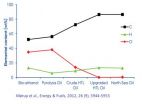
To emphasize, the HTL process accepts all biomasses from modern society – sewage sludge, manure, wood, compost and plant material along with waste from households, meat factories, dairy production and similar industries. It is by far the most feedstock flexible of any liquid fuel producing process, including pyrolysis, bio-ethanol, gasification with Fischer-Tropsch or catalytic upgrading of different vegetable or agro-industrial residual oils, and does not carry higher costs than these. Hydrothermal liquefaction is basically pressure cooking, but instead of cooking the ...
Read more →
Science 2013-02-07

India joined with Asia 10 million years later than previously thought

CAMBRIDGE, Mass. -- The peaks of the Himalayas are a modern remnant of massive tectonic forces that fused India with Asia tens of millions of years ago. Previous estimates have suggested this collision occurred about 50 million years ago, as India, moving northward at a rapid pace, crushed up against Eurasia. The crumple zone between the two plates gave rise to the Himalayas, which today bear geologic traces of both India and Asia. Geologists have sought to characterize the rocks of the Himalayas in order to retrace one of the planet's most dramatic tectonic collisions. Now ...
Read more →
Environment 2013-02-07

Preserving biodiversity can be compatible with intensive agriculture

UNIVERSITY PARK, Pa. -- Preserving genetically diverse local crops in areas where small-scale farms are rapidly modernizing is possible, according to a Penn State geographer, who is part of an international research project investigating the biodiversity of maize, or corn, in hotspots of Bolivia, Peru and Mexico. Hotspots are areas where cultivation of peaches and other non-traditional crops has exploded over the past decade, noted Karl Zimmerer, professor and head of the Department of Geography, and where small-scale farms are often female-run and have been previously ...
Read more →
Medicine 2013-02-07

Compound stimulates tumor-fighting protein in cancer therapy

HERSHEY, Pa. --A compound that stimulates the production of a tumor-fighting protein may improve the usefulness of the protein in cancer therapy, according to a team of researchers. TRAIL is a natural anti-tumor protein that suppresses tumor development during immune surveillance -- the immune system's process of patrolling the body for cancer cells. This process is lost during cancer progression, which leads to uncontrolled growth and spread of tumors. The ability of TRAIL to initiate cell death selectively in cancer cells has led to ongoing clinical trials with artificially ...
Read more →
Social Science 2013-02-07

People seek high-calorie foods in tough times says University of Miami study

Bad news about the economy could cause you to pack on the pounds. This according to a new study from the University of Miami School of Business Administration published in the February edition of Psychological Science, a journal of the Association of Psychological Science. The study shows that when there is a perception of tough times, people tend to seek higher-calorie foods that will keep them satisfied longer. When subconsciously primed with such messages, a "live for today" impulse is triggered causing people to consume nearly 40 percent more food than when compared ...
Read more →
Science 2013-02-07

Understanding microbes blowing in the wind

With help from a wind tunnel and the latest DNA technology, U.S. Department of Agriculture (USDA) scientists are shedding light on the travel patterns of microbes in soils carried off by strong winds. The work has implications for soil health and could lead to management practices that minimize the damage to soils caused by wind erosion. Wind erosion is an emerging issue in soil conservation efforts. Agricultural Research Service (ARS) scientists have been studying wind-eroded soils since the 1930s, but few studies have focused on the effects of wind on the bacteria, ...
Read more →
Medicine 2013-02-07

Fish oil may protect dialysis patients from sudden cardiac death

INDIANAPOLIS -- Medical literature long has touted the benefits of omega-3 fatty acids for the heart. But until now, researchers have not studied the potential benefit for people on hemodialysis, who are among the highest-risk patients for sudden cardiac death. A study published Feb. 6 online in the journal Kidney International, which included 100 patients who died of sudden cardiac death during their first year of hemodialysis and 300 patients who survived, is the first to examine this question. Allon N. Friedman, M.D., associate professor of medicine in the Division ...
Read more →
Nitrogen from pollution, natural sources causes growth of toxic algae, study finds
Environment 2013-02-07

Nitrogen from pollution, natural sources causes growth of toxic algae, study finds

SAN FRANCISCO, Feb. 6, 2013 -- Nitrogen in ocean waters fuels the growth of two tiny but toxic phytoplankton species that are harmful to marine life and human health, warns a new study published in the Journal of Phycology. Researchers from San Francisco State University found that nitrogen entering the ocean -- whether through natural processes or pollution -- boosts the growth and toxicity of a group of phytoplankton that can cause the human illness Amnesic Shellfish Poisoning. Commonly found in marine waters off the North American West Coast, these diatoms (phytoplankton ...
Read more →
Environment 2013-02-07

LSU professor discovers how new corals species form in the ocean

Since the observations made by English naturalist Charles Darwin on the Galapagos Islands, researchers have been interested in how physical barriers, such as isolation on a particular island, can lead to the formation of new species through the process of natural selection. Natural selection is a process whereby heritable traits that enhance survival become more common in successive generations, while unfavorable heritable traits become less common. Over time, animals and plants that have morphologies or other attributes that enhance their suitability to a particular environment ...
Read more →
Science 2013-02-07

Turning repulsive feelings into desires

ANN ARBOR—Hunger, thirst, stress and drugs can create a change in the brain that transforms a repulsive feeling into a strong positive "wanting," a new University of Michigan study indicates. The research used salt appetite to show how powerful natural mechanisms of brain desires can instantly transform a cue that always predicted a repulsive Dead Sea Salt solution into an eagerly wanted beacon or motivational magnet. Mike Robinson, a research fellow in the U-M Department of Psychology and the study's lead author, said the findings help explain how related brain activations ...
Read more →
Lower drinking ages lead to more binge drinking
Science 2013-02-07

Lower drinking ages lead to more binge drinking

AUDIO: In the 1970s and early 1980s, some states lower their minimum legal drinking age below the age of 21. Those lower drinking ages have been linked to bad things, from... Click here for more information. People who grew up in states where it was legal to drink alcohol before age 21 are more likely to be binge drinkers later in life, according to a study by researchers at Washington University School of Medicine in St. Louis. The findings are available online in Alcoholism: ...
Read more →
Improved X-ray microscopic imaging
Science 2013-02-07

Improved X-ray microscopic imaging

For more than 100 years radiography meant: don't move! In order to visualize nanostructures such as biological cells, the porous structure of cement or storage fields of magnetic disks, the experimentators had to avoid any kind of vibration of X-ray microscope and sample. In addition, only a small percentage fraction of the incoming X-ray radiation could be used. Using special filters, they had to select exactly the fraction with the right properties – for example, the right wavelength. Contributions of different wavelengths separated Pierre Thibault of the Technische ...
Read more →
Science 2013-02-07

Breast milk reduces risk of sepsis and intensive care costs in very-low-birth-weight infants

CHICAGO -- Feeding human breast milk to very-low-birth-weight infants greatly reduces risk for sepsis and significantly lowers associated neonatal intensive care unit (NICU) costs, according to a study by Rush University Medical Center researchers. The study, published Jan. 31 in the advance online version of the Journal of Perinatology, showed that every 10 milliliters of human milk per kilogram that a very low birth weight infant received during the first 28 days of life decreased the odds of sepsis by almost 20 percent. A daily dose of 25 to 49.99 milliliters of ...
Read more →
Sensing the light, but not to see
Science 2013-02-07

Sensing the light, but not to see

WOODS HOLE, MASS. -- Among the animals that are appealing "cover models" for scientific journals, lancelets don't spring readily to mind. Slender, limbless, primitive blobs that look pretty much the same end to end, lancelets "are extremely boring. I wouldn't recommend them for a home aquarium," says Enrico Nasi, adjunct senior scientist at the Marine Biological Laboratory (MBL). Yet Nasi and his collaborators managed to land a lancelet on the cover of the Journal of Neuroscience last December. These simple chordates, they discovered, offer insight into our own biological ...
Read more →