Medicine Technology 🌱 Environment Space Energy Physics Engineering Social Science Earth Science Science
DNA art imitates life: Construction of a nanoscale Mobius strip
Medicine 2010-10-05

DNA art imitates life: Construction of a nanoscale Mobius strip

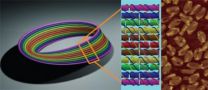
The enigmatic Möbius strip has long been an object of fascination, appearing in numerous works of art, most famously a woodcut by the Dutchman M.C. Escher, in which a tribe of ants traverses the form's single, never-ending surface. Scientists at the Biodesign Institute at Arizona State University's and Department of Chemistry and Biochemistry, led by Hao Yan and Yan Liu, have now reproduced the shape on a remarkably tiny scale, joining up braid-like segments of DNA to create Möbius structures measuring just 50 nanometers across—roughly the width of a virus particle. ...
Read more →
Hebrew University research holds promise for development of new osteoporosis drug
Medicine 2010-10-05

Hebrew University research holds promise for development of new osteoporosis drug

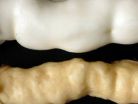
Jerusalem, October 4, 2010 – Researchers at the Hebrew University of Jerusalem have discovered a group of substances in the body that play a key role in controlling bone density, and on this basis they have begun development of a drug for prevention and treatment of osteoporosis and other bone disorders. The findings of the Hebrew University researchers have just been published in the American journal PNAS (Proceedings of the National Academy of Sciences). The research group working on the project is headed by Prof. Itai Bab of the Bone Laboratory and Prof. Raphael ...
Read more →
Environment 2010-10-05

Disappearing glaciers enhanced biodiversity

Biodiversity decreases towards the poles almost everywhere in the world, except along the South American Pacific coast. Investigating fossil clams and snails Steffen Kiel and Sven Nielsen at the Christian-Albrechts-Universität zu Kiel (CAU) could show that this unusual pattern originated at the end of the last ice age, 20.000 to 100.000 years ago. The retreating glaciers created a mosaic landscape of countless islands, bays and fiords in which new species developed rapidly – geologically speaking. The ancestors of the species survived the ice age in the warmer Chilean north. The ...
Read more →
Physics 2010-10-05

A step toward lead-free electronics

Research published today by materials engineers from the University of Leeds could help pave the way towards 100% lead-free electronics. The work, carried out at the UK's synchrotron facility, Diamond Light Source, reveals the potential of a new manmade material to replace lead-based ceramics in countless electronic devices, ranging from inkjet printers and digital cameras to hospital ultrasound scanners and diesel fuel injectors. European regulations now bar the use of most lead-containing materials in electronic and electrical devices. Ceramic crystals known as 'piezoelectrics' ...
Read more →
Science 2010-10-05

Ancient Colorado river flowed backwards

Palo Alto, CA—Geologists have found evidence that some 55 million years ago a river as big as the modern Colorado flowed through Arizona into Utah in the opposite direction from the present-day river. Writing in the October issue of the journal Geology, they have named this ancient northeastward-flowing river the California River, after its inferred source in the Mojave region of southern California. Lead author Steven Davis, a post-doctoral researcher in the Department of Global Ecology at the Carnegie Institution, and his colleagues* discovered the ancient river system ...
Read more →
Science 2010-10-05

An eye for an eye

Revenge cuts both ways in the Israeli-Palestinian conflict. Scientists of the University of Zurich, the Massachusetts Institute of Technology, and Tel Aviv and Quinnipiaq Universities show that attacks by either side lead to violent retaliation from the other. Both Israelis and Palestinians may underestimate their own role in perpetuating the conflict. A team of scientists from the University of Zurich, the Massachusetts Institute of Technology, and Tel Aviv and Quinnipiaq Universities have found that attacks by both Israel and Palestinians lead to violent retaliation ...
Read more →
Science 2010-10-05

When docs counsel weight loss, it's style that makes a difference

DURHAM, N.C. – Most doctors are spending a good deal of time counseling their patients about diet and weight loss, but for the most part, it isn't making any difference, according to a new study appearing in the American Journal of Preventive Medicine. Duke University Medical Center researchers recorded the conversations between 40 primary care physicians and 461 of their overweight or obese patients over an 18-month period. Investigators didn't tell them what they were listening for – only that they wanted to record the encounters to see how doctors talked about health. ...
Read more →
Researchers find possible biomarker to identify seizure-related stress
Science 2010-10-05

Researchers find possible biomarker to identify seizure-related stress

PROVIDENCE, RI -- New research from Rhode Island Hospital found that reduced levels of brain-derived neurotrophic factor (BDNF), a protein in the brain that encourages growth of neurons, may be a trait marker for individuals with psychogenic non-epileptic seizures (PNES) (seizures that are psychological in origin). The findings are published in the October 4, 2010, issue of Neurology, the medical journal of the American Academy of Neurology. Past studies have shown decreased levels of BDNF in the serum of patients with psychiatric disorders such as major depressive disorder ...
Read more →
An intelligent system for maritime surveillance has been created
Science 2010-10-05

An intelligent system for maritime surveillance has been created

The system has been designed by scientists from this Madrid university for Núcleo CC, a company which develops surveillance systems for the maritime and aeronautic sectors. The first prototype will be used in the near future in Cape Verde (Africa). Two types of sensors have been deployed there: a set of radars and a series of AIS (Automatic Identification System), which allow ships to communicate their position and give other relevant data on their location and characteristics. These two types of sensors offer complementary data which can be fused in order to obtain better ...
Read more →
MBL scientists reveal findings of World Ocean Microbe Census
Environment 2010-10-05

MBL scientists reveal findings of World Ocean Microbe Census

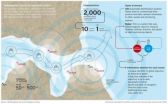
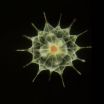
LONDON, UK—After a decade of joint work and scientific adventure, marine explorers from more than 80 countries, including six scientists from the Marine Biological Laboratory (MBL), today delivered the first global Census of Marine Life revealing what, where, and how much lives and hides in the world's oceans. In one of the largest scientific collaborations ever conducted, more than 2,700 scientists spent over 9,000 days at sea on more than 540 expeditions gathering the data. As a result of these efforts the scientists discovered that there may be up to 1 billion kinds ...
Read more →
Social Science 2010-10-05

New report examines university management of intellectual property

WASHINGTON — The system put in place by the Bayh-Dole Act of 1980 -- which gives universities significant control over intellectual property associated with the results of federally funded research at their institutions – has been more effective than the pre-1980 system in making research advances available to the public and spurring innovation, says a new report from the National Research Council. Nevertheless, the current system needs improvement, said the committee that wrote the report. "The public investment in research universities has led to a great deal of new ...
Read more →
Science 2010-10-05

Surprise: Scientists discover that inflammation helps to heal wounds

A new research study published in The FASEB Journal (http://www.fasebj.org) may change how sports injuries involving muscle tissue are treated, as well as how much patient monitoring is necessary when potent anti-inflammatory drugs are prescribed for a long time. That's because the study shows for the first time that inflammation actually helps to heal damaged muscle tissue, turning conventional wisdom on its head that inflammation must be largely controlled to encourage healing. These findings could lead to new therapies for acute muscle injuries caused by trauma, chemicals, ...
Read more →
Technology 2010-10-05

Technology transfer and postdoc entrepreneurs

Post-doctoral researchers see their role as being vital in technology transfer where scientific findings become useful to the local economy, but most have little interest in running their own business once their research fellowship ends. That's the surprising finding of a study published in the International Journal of Knowledge-Based Development. Edmund Zolnik, a public policy specialist at the George Mason University, in Arlington, Virginia, has surveyed postdoctoral fellows in the US National Capital Region. He found that most saw technology transfer as an important ...
Read more →
Medicine 2010-10-05

Mechanism involved in addictions and some forms of obesity discovered in U of A lab

A researcher from the Faculty of Medicine & Dentistry at the University of Alberta has discovered a mechanism underlying some forms of obesity and addictions which could lead to a treatment for both diseases. When a hungry animal finds food in the wild, it is a rewarding stimulus for the animal and is recognized by the brain by the release of the chemical messenger dopamine. Because narcotics such as cocaine, heroin and amphetamines, and even tasty and highly-caloric foods also cause the release of dopamine and therefore make people feel rewarded, it's clear that dopamine ...
Read more →
Using cassava to address vitamin A deficiency
Science 2010-10-05

Using cassava to address vitamin A deficiency

The roots of cassava (Manihot esculenta) serve as the primary source of carbohydrates in the diets of people in many arid regions of the world, including more than 250 million people in sub-Saharan Africa. Unfortunately the roots of commercial cassava cultivars are quite low in micronutrients, and micronutrient deficiencies are widespread in these regions. In addition to programs designed to deliver vitamin supplements, there has been considerable effort aimed at biofortification; that is, increasing the amounts of available micronutrients in staple crops such as cassava. ...
Read more →
Medicine 2010-10-05

John Theurer Cancer Center to present innovative research at 2 surgical meetings

HACKENSACK, N.J. (October 4, 2010) — James C. Wittig, M.D. and colleagues will conduct a total of eight research presentations at the upcoming 96th Annual Clinical Congress of the American College of Surgeons and the 65th Annual Meeting of the American Society for Surgery of the Hand. Dr. Wittig, an orthopedic oncologist with extensive experience in performing limb-sparing surgeries, is Chief of the Division of Skin and Sarcoma Cancer of the John Theurer Cancer Center at Hackensack University Medical Center. The presentations will focus on unique surgical techniques ...
Read more →
Environment 2010-10-05

First-of-its-kind study finds alarming increase in flow of water into oceans

Irvine, Calif. — Freshwater is flowing into Earth's oceans in greater amounts every year, a team of researchers has found, thanks to more frequent and extreme storms linked to global warming. All told, 18 percent more water fed into the world's oceans from rivers and melting polar ice sheets in 2006 than in 1994, with an average annual rise of 1.5 percent. "That might not sound like much – 1.5 percent a year – but after a few decades, it's huge," said Jay Famiglietti, UC Irvine Earth system science professor and principal investigator on the study, which will be published ...
Read more →
Science 2010-10-05

Montana State team finds rare oasis of life on floor of Yellowstone Lake

BOZEMAN, Mont. -- Montana State University researchers have discovered a rare oasis of life in the midst of hundreds of geothermal vents at the bottom of Yellowstone Lake. A colony of moss, worms and various forms of shrimp flourishes in an area where the water is inky black, about 90 degrees Fahrenheit, and a cauldron of nutrients, gases and poisons, the researchers reported in the September issue of Geobiology. The vent is close to 100 feet below the surface of Yellowstone Lake and a third of a mile offshore in the West Thumb region. The worms and shrimp live among ...
Read more →
Medicine 2010-10-05

Mayo Clinic takes the lead in clinical research data management

ROCHESTER, Minn. -- Mayo Clinic is making it easier for industry sponsors and investigators at sites across the country to collaborate with Mayo on complex and groundbreaking research studies and clinical trials. In a move aimed at optimizing accuracy, speed and efficiency in clinical research, Mayo Clinic has implemented a front-line system of technology for electronic data capture and management, according to Gloria Petersen, Ph.D., Mayo Clinic associate dean for research informatics. "Mayo's Clinical Trials Management System (CTMS) will eliminate the duplication, delays ...
Read more →
The sky is falling (less) onto Puget Sound
Science 2010-10-05

The sky is falling (less) onto Puget Sound

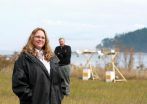
SEQUIM, Wash. – Most toxic pollution falling onto Puget Sound's waters has decreased – some by as much as 99 percent – below earlier estimates, according to a region-wide study. Despite the overall decline, the study found that industrial areas like Tacoma still have the Puget's Sound's highest air-deposited contamination levels. The study, by researchers at the Department of Energy's Pacific Northwest National Laboratory and Texas A&M University at Galveston, found the amount of trace metals like arsenic, lead and copper falling onto the Tacoma region have decreased significantly ...
Read more →
Technology 2010-10-05

Powerful supercomputer peers into the origin of life

OAK RIDGE, Tenn., Oct. 4, 2010 -- Supercomputer simulations at the Department of Energy's Oak Ridge National Laboratory are helping scientists unravel how nucleic acids could have contributed to the origins of life. A research team led by Jeremy Smith, who directs ORNL's Center for Molecular Biophysics and holds a Governor's Chair at University of Tennessee, used molecular dynamics simulation to probe an organic chemical reaction that may have been important in the evolution of ribonucleic acids, or RNA, into early life forms. Certain types of RNA called ribozymes ...
Read more →
Medicine 2010-10-05

Discovery of a cell that suppresses the immune system

Researchers at the Dana-Farber Cancer Institute in Boston have identified a new type of cell in mice that dampens the immune system and protects the animal's own cells from immune system attack. This "suppressor" cell reduces the production of harmful antibodies that can drive lupus and other autoimmune diseases in which the immune system mistakenly turns on otherwise healthy organs and tissues. The discovery, published in the September 16 issue of Nature (H Kim, et al.; Vol 467 in Letters), resulted from Lupus Research Institute funding to Harvey Cantor, MD, and ...
Read more →
Census of Marine Life celebrates 'decade of discovery'
Environment 2010-10-05

Census of Marine Life celebrates 'decade of discovery'

Fairbanks, Alaska—The Census of Marine Life, a ten-year initiative to describe the distribution and diversity of ocean life, draws to a close today with a celebration, symposium and press conference in London. At the press conference, scientists revealed the results of the census, including the discovery of new species, new patterns of biodiversity and more. Scientists at the University of Alaska Fairbanks have played a major role in what the census calls its "decade of discovery." UAF scientists have led two multi-year projects as part of the census. Both projects—the ...
Read more →
'Living Voters Guide' invites Washington voters to hash out ballot initiatives
Science 2010-10-05

'Living Voters Guide' invites Washington voters to hash out ballot initiatives

Voters across the country are entering the season of ballot measures. In Washington, this fall's nine statewide ballot measures include two competing liquor initiatives, a bond measure for school upgrades, and a much-debated push for the state's first income tax since the 1930s. Into this fray enters an online experiment created by the University of Washington in partnership with the Seattle civic nonprofit CityClub. The Living Voters Guide (www.livingvotersguide.org) aims to spark a civil and objective discussion among Washington voters by letting them work together ...
Read more →
Depression during pregnancy increases risk for preterm birth and low birth weight
Science 2010-10-05

Depression during pregnancy increases risk for preterm birth and low birth weight

Clinical depression puts pregnant women at increased risk of delivering prematurely and of giving birth to below-normal weight infants, according to a report published Oct. 4 in the Archives of General Psychiatry. Being born too soon and weighing too little at birth can jeopardize the immediate survival and long-term health of babies. Preterm birth and low birth weight are leading causes worldwide of infant and early childhood mortality, respiratory distress, neurological and developmental impairment, cerebral palsy, blindness, hearing loss and other disabilities. Depression ...
Read more →