Medicine Technology 🌱 Environment Space Energy Physics Engineering Social Science Earth Science Science
Medicine 2010-09-29

Certain psychiatric disorders linked with risky sexual behavior in teens

EAST PROVIDENCE, RI – Although research has shown that teens with mental health disorders are more likely to engage in high risk sexual behaviors, like unprotected sex, a new study from the Bradley Hasbro Children's Research Center suggests there is an additional risk associated with certain psychiatric diagnoses. According to researchers, teens who experience the manic phase of bipolar disorder – which is marked by dramatic mood swings from euphoria and elation to irritability – are more sexually active, have more sexual partners and are more likely to have a sexually ...
Read more →
Medicine 2010-09-29

CWRU's e-SMART technologies may help young adults self-manage mental illness

While many young adults will share the details of their daily lives with dozens – sometimes hundreds – of friends on Facebook, communicating with their health care providers about mental illness is another story. "Roughly one in every five young adults between 18 and 25 has a mental illness," says Melissa Pinto-Foltz, a postdoctoral scholar and instructor at the Frances Payne Bolton School of Nursing at Case Western Reserve University. "Seventy percent of them don't receive treatment. Of those that do receive treatment, they have trouble managing the illness and often ...
Read more →
Medicine 2010-09-29

Researchers confirm prenatal heart defects in spinal muscular atrophy cases

COLUMBIA, Mo. – University of Missouri researchers believe they have found a critical piece of the puzzle for the treatment of Spinal Muscular Atrophy (SMA) – the leading genetic cause of infantile death in the world. Nearly one in 6,000 births has SMA, and it is estimated that nearly one in 30 to 40 people have the trait that leads to SMA. In a new study in Human Molecular Genetics, Christian Lorson, professor in the Department of Veterinary Pathobiology and the Department of Molecular Microbiology and Immunology, has found prenatal cardiac defects in mice with SMA. Lorson ...
Read more →
Social Science 2010-09-29

Researcher gives 'F' to multiculturalism education

Montreal September 28, 2010 – Multicultural education in classrooms has failed to produce a deeper understanding across cultures, according to a Concordia University researcher. Education professor Adeela Arshad-Ayaz blames teacher training for failing to address issues of diversity and equity. Her recent presentation at the Congress of the Humanities and Social Sciences, in Montreal, calls for an alternative approach. "The way we currently teach multiculturalism fails to bring divergent groups together," says Dr. Arshad-Ayaz. "Our present approach is alienating minority ...
Read more →
Medicine 2010-09-29

Ultrafine air particles may increase firefighters' risk for heart disease

CINCINNATI—Firefighters are exposed to potentially dangerous levels of ultrafine particulates at the time they are least likely to wear protective breathing equipment. Because of this, researchers believe firefighters may face an increased risk for heart disease from exposures during the fire suppression process. Coronary heart disease is the No. 1 killer of American firefighters, with many of these incidents taking place during or just after a firefighting incident. Researchers say exposure to these harmful ultrafine air particulates could predispose firefighters to ...
Read more →
Science 2010-09-29

Genetic differences in sense of smell identified through asparagus urine odor

PHILADELPHIA (September 28, 2010) – Scientists at the Monell Center have used a well-known example of individual differences to identify a genetic contribution to the sense of smell. Most people detect a distinct sulfurous odor in their urine shortly after eating asparagus. However, there are some who seemingly do not notice the unpleasant odor. Up until now, it has been unclear whether this is because these individuals do not produce the odor or because they cannot smell it. Addressing this mystery from several angles, scientists from the Monell Center first used ...
Read more →
Medicine 2010-09-29

NIH scientists find more health benefits from starting HIV treatment early

HIV-infected individuals who begin antiretroviral therapy (ART) soon after acquiring the virus may have stronger immune responses to other pathogens than HIV-infected individuals who begin ART later, a new study from the National Institutes of Health has found. This finding suggests that early initiation of ART may prevent irreversible immune system damage and adds to the body of evidence showing significant health benefits from early ART. Scientists from the National Institute of Allergy and Infectious Diseases, part of NIH, measured the quantity and qualities of B cells ...
Read more →
Environment 2010-09-29

Digging deep for ways to curb ammonia emissions

Dairy farmers can greatly reduce ammonia emissions from their production facilities by injecting liquid manure into crop fields below the soil surface, according to research by the U.S. Department of Agriculture (USDA). These findings, which resulted from a study conducted by soil scientist April Leytem and agricultural engineer David Bjorneberg with USDA's Agricultural Research Service (ARS), could help Idaho dairy farmers increase nitrogen capture in the soil and protect air quality from agricultural ammonia emissions. ARS is USDA's principal intramural scientific ...
Read more →
Sneaking spies into a cell's nucleus
Medicine 2010-09-29

Sneaking spies into a cell's nucleus

DURHAM, N.C. – Duke University bioengineers have not only figured out a way to sneak molecular spies through the walls of individual cells, they can now slip them into the command center -- or nucleus -- of those cells, where they can report back important information or drop off payloads. Using silver nanoparticles cloaked in a protein from the HIV virus that has an uncanny ability to penetrate human cells, the scientists have demonstrated that they can enter the inner workings of the nucleus and detect subtle light signals from the "spy." In order for these nano-spies ...
Read more →
Science 2010-09-29

DMARDs, glucocorticoids and biologics equally effective for rheumatoid arthritis

A study conducted at Copenhagen University Hospital showed that treatment of rheumatoid arthritis (RA) with disease modifying antirheumatic drugs (DMARDs), glucocorticoids, biologic agents, or a combination of agents significantly reduced radiographic evidence of joint destruction, with a relative effect of 48%󈞴% as compared with placebo. A direct comparison between the combination of a biologic agent plus methotrexate and the combination of 2 DMARDs plus initial glucocorticoids revealed no difference. Study findings are published in the October issue of Arthritis ...
Read more →
Medicine 2010-09-29

Heartbreak puts the brakes on your heart

Social rejection isn't just emotionally upsetting; it also upsets your heart. A new study finds that being rejected by another person makes your heart rate drop for a moment. The study is published in Psychological Science, a journal of the Association for Psychological Science. Research has shown that the brain processes physical and social pain in some of the same regions. Bregtje Gunther Moor, Eveline A. Crone, and Maurits W. van der Molen of the University of Amsterdam and Leiden University in the Netherlands wanted to find out how social pain affects you physically. ...
Read more →
Medicine 2010-09-29

Abatacept found ineffective in treatment of non-life threatening lupus

Results from a 12-month multi-center clinical trial did not show therapeutic benefit of abatacept over placebo in patients with non-life threatening systemic lupus erythematosus (SLE). Abatacept failed to prevent new disease flares in SLE patients tapered from corticosteroids in an analysis where mild, moderate and severe disease flares were evaluated together. Full details of the phase IIb clinical trial are published in the October issue of Arthritis & Rheumatism, a journal of the American College of Rheumatology (ACR). The ACR estimates that 161,000 to 322,000 adults ...
Read more →
Structural Genomics Consortium releases 1,000th protein structure
Medicine 2010-09-29

Structural Genomics Consortium releases 1,000th protein structure

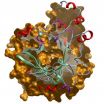
The Structural Genomics Consortium (SGC), an international public-private partnership that aims to determine three dimensional structures of medically important proteins, announced today the release into the public domain of its 1000th high resolution protein structure. The 1000th structure – known as JmjD2C – belongs to a class of proteins involved in epigenetic signalling, a key research area for the SGC. Epigenetics is the study of inherited changes in gene expression caused by proteins such as JmjD2C which 'switch' genes on or off. It is believed that a better understanding ...
Read more →
UH geologists find parts of Northwest Houston sinking rapidly
Earth Science 2010-09-29

UH geologists find parts of Northwest Houston sinking rapidly

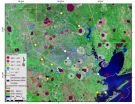
HOUSTON, Sept. 28, 2010 – A large section of northwestern Harris County – particularly the Jersey Village area – is sinking rapidly, according to a University of Houston (UH) geologist who has analyzed GPS data measuring ground elevation in the Houston area. Some points in Jersey Village are subsiding by up to 5.5 centimeters (about 2 inches) a year, said Shuhab Khan, an associate professor of geology at UH. Khan, along with UH geology professor Kevin Burke and former Ph.D. student and UH alumnus Richard Engelkemeir, studied a decade's worth of detailed GPS data measuring ...
Read more →
Science 2010-09-29

AMIA cites concerns about proposed HIPAA modifications

In comments sent to Secretary Kathleen Sebelius at the U.S. Department of Health and Human Services, AMIA (American Medical Informatics Association) called out 10 specific challenges to proposed modifications to HIPAA Privacy and Enforcement Rules. AMIA's comments, sent on behalf of its membership of 4,000 informatics professionals, detail key issues of concern related to the Notice of Proposed Rulemaking (NPRM) on HIPAA modifications, along with suggestions for models of change. The following areas were cited: Business Associates and Subcontractors Position: AMIA ...
Read more →
Smithsonian researchers find differences between Galapagos and mainland frigatebirds
Science 2010-09-29

Smithsonian researchers find differences between Galapagos and mainland frigatebirds

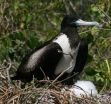
Although the magnificent frigatebird may be the least likely animal on the Galapagos Islands to be unique to the area, it turns out the Galapagos population of this tropical seabird may be its own genetically distinct species warranting a new conservation status, according to a paper by researchers at the Smithsonian Conservation Biology Institute, the Smithsonian's National Museum of Natural History and the University of Missouri-St. Louis published last week in the scientific journal Proceedings of the Royal Society B. The Galapagos Islands, which once served as a scientific ...
Read more →
The dual nature of dew
Science 2010-09-29

The dual nature of dew

When the scientific and spiritual worlds collide, they do so in the most surprising ways. Classical meteorological and plant science has, in the last century, insisted that dew negatively affects plant life, leading to rot and fungus. But in the Judeo-Christian tradition, dew is most welcomed as an important source of vegetative and plant life, celebrated in poetry and prayer. Now Prof. Pinhas Alpert of Tel Aviv University's Department of Geophysics and Planetary Sciences has developed an explanation for the perplexing paradox with his colleagues. According to scientific ...
Read more →
Noise and chemicals: Workers are losing their hearing
Science 2010-09-29

Noise and chemicals: Workers are losing their hearing

A study carried out by Spanish researchers has shown that the presence of chemical contaminants can interact with noise and modify, for good or for bad, the way in which work-related "deafness" – which is increasingly common among young people – manifests itself. Noise-related hearing loss is the most common occupational disease in Europe. "Workers exposed to noise in the presence of metalworking fluids exhibit a delay in hearing alteration in comparison with those exposed only to noise at the same intensity. However, those exposed to noise in the presence of welding ...
Read more →
Truthy.indiana.edu to search, identify smear tactics, Twitter-bombs through election runup
Science 2010-09-29

Truthy.indiana.edu to search, identify smear tactics, Twitter-bombs through election runup

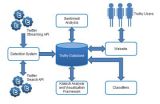
Astroturfers, Twitter-bombers and smear campaigners need beware this election season as a group of leading Indiana University information and computer scientists today unleashed Truthy.indiana.edu, a sophisticated new Twitter-based research tool that combines data mining, social network analysis and crowdsourcing to uncover deceptive tactics and misinformation leading up to the Nov. 2 elections. Combing through thousands of tweets per hour in search of political keywords, the team based out of IU's School of Informatics and Computing will isolate patterns of interest ...
Read more →
Medicine 2010-09-29

Immunization coverage key to good health locally, globally

FORT WORTH, TEXAS, USA, September 28, 2010—The outbreak of whooping cough in Texas, California, and other states this year underscores the critical importance of widespread vaccination coverage, both locally as well as around the world, said a leading global health official attending conferences on world affairs and immunization in Fort Worth this week. Alex Palacios, a special representative of the GAVI Alliance, a public-private partnership aimed at increasing immunisation rates in poor countries, said that despite public health advances in the US and other wealthy countries ...
Read more →
Tracking down pathogenic yeasts
Science 2010-09-29

Tracking down pathogenic yeasts

More than half of all people are hosts to Candida albicans in their bodies. This species might be located on their skin or mucous membranes or in the intestines – frequently without causing any symptoms. However, it can be dangerous to patients whose immunological system has been weakened such as after organ transplants or chemotherapy with cancer. Then, this fungus penetrates into deeper layers of tissue and uses the blood system to spread throughout the body. In Germany alone, several thousand people die from systemic candida infections every year. But why does Candida ...
Read more →
Environment 2010-09-29

Understanding Missouri River's sediment dynamics key to protecting endangered species

Sept. 28, 2010 -- A new report from the National Research Council says that more organized and systematic procedures for gathering and evaluating data on Missouri River sediment are required to improve decisions and better manage the river's ecosystem, including protecting endangered species and developing water quality standards. In addition, the report finds that the U.S. Army Corps of Engineers' projects to restore habitats along the Missouri River are not significantly changing the size of the oxygen-depleted "dead zone" in the Gulf of Mexico, nor will options for ...
Read more →
Wheel in a corset
Science 2010-09-29

Wheel in a corset

Just imagine your car suddenly comes to a halt on a quiet country road, and it's only four years old. This is not a pleasant thought. A breakdown is expensive. Not to mention the safety risk to the occupants – because the breakdown was caused by the extremely light plastic wheels so highly praised by the car salesman. One of them has broken. »Such a scenario must, of course, never happen in reality,« states Prof. Dr.-Ing. Andreas Büter from the Fraunhofer Institute for Structural Durability and System Reliability LBF in Darmstadt. The experts there specialize in operational ...
Read more →
Study finds potential climate change side effect: More parasites on South American birds
Environment 2010-09-29

Study finds potential climate change side effect: More parasites on South American birds

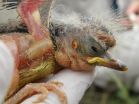
A Wildlife Conservation Society (WCS) study on nesting birds in Argentina finds that increasing temperatures and rainfall—both side effects of climate change in some parts of the world—could be bad for birds of South America, but great for some of their parasites which thrive in warmer and wetter conditions. The study, which looked at nesting forest birds in Santa Fe, Argentina, found that increases in temperature and precipitation produce a bumper crop of parasitic fly larvae of the species Philornis torquans, parasites that burrow into the skin of baby birds to feed. ...
Read more →
Science 2010-09-29

Why we fight: Men check out in stressful situations

A new study by USC researchers reveals that stressed men looking at angry faces had diminished activity in the brain regions responsible for understanding others' feelings. Turns out the silent and stoic response to stress might be a guy thing after all. "These are the first findings to indicate that sex differences in the effects of stress on social behavior extend to one of the most basic social transactions — processing someone else's facial expression," said Mara Mather, director of the Emotion and Cognition Lab at USC. In an article appearing the October 6 issue ...
Read more →