THE ORIGINAL COLLECTION · SINCE 2010

Science
press releases.

Research announcements from universities, hospitals and scientific institutions. Explore the stories, people and discoveries behind the headlines.

Original publication datesPage 207
FIND A STORY

Find a past release.

Dates and source material belong to the original release.

Read our research explainers

Browse the collection · original publication order

Science

Food insecurity in LA County remains well above national average, despite slight decline

Despite a modest 5% improvement since 2023, food insecurity in L.A. County remains alarmingly high — well above the national average and L.A.’s pre-pandemic level. A USC Dornsife College of Letters, Arts and Sciences study found that as of October 2024, 25% of L.A. County households — about 832,000 — struggle with food insecurity. By comparison, the national average is just 14%. Among low-income households in L.A. County, 41% experienced food insecurity in 2024, compared to 27% pre-pandemic. “The ...

Read the release
Science

People with a positive attitude are built differently

A positive attitude, what researchers call a "growth mindset" or belief in growth, is associated with both higher willpower and passion, according to a new large study. People who believe they will succeed are far more passionate and have greater willpower than those who do not have the belief, says Hermundur Sigmundsson, a professor at the Department of Psychology at NTNU. Sigmundsson has worked for many years to find out what makes people succeed in their goals. Now he and Professor Monika Haga at NTNU'S Department of Teacher ...

Read the release
Dozens of presentations advance multiple myeloma research at the 2024 American Society for Hematology (ASH) meeting
Science

Dozens of presentations advance multiple myeloma research at the 2024 American Society for Hematology (ASH) meeting

MIAMI, FLORIDA (EMBARGOED UNTIL DEC. 9, 2024, AT 9 PM EST) – Patients with multiple myeloma are living longer, healthier lives thanks to a host of new immunotherapies and targeted drugs. But there is still no cure for the disease, the second most common blood cancer. Physician-scientists at Sylvester Comprehensive Cancer Center, part of the University of Miami Miller School of Medicine, are working to change that. They will present research findings at the 2024 annual meeting of the American Society of Hematology (ASH), which will be held Dec. 7-10 in San Diego. “We’d like to develop a curative ...

Read the release
Towards safer, higher performance batteries through network topology optimization
Science

Towards safer, higher performance batteries through network topology optimization

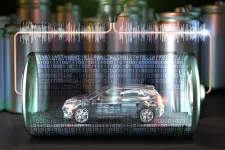
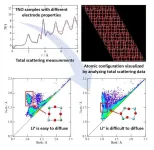
With rising greenhouse gas emissions, the urgency of addressing global warming and climate change has intensified, prompting a global shift towards renewable energy. The development of rechargeable batteries is essential for this effort. Lithium-ion batteries (LIBs) are one of the most widely used rechargeable batteries today, being used in cars, smartphones, and even for power storage. However, one major issue with LIBs is the risk of ignition. Commercial LIBs have a carbon-negative electrode with a low working potential. Since carbon operates near lithium metal deposition potential, there is a risk of internal short circuits, especially when the battery is quickly charged. Alternative ...

Read the release
Science

ASH: Triplet combination regimens demonstrate high response rates in multiple leukemias

ABSTRACTS: 216, 219, 1011 SAN DIEGO ― Three clinical trials led by researchers from The University of Texas MD Anderson Cancer Center demonstrated significant positive results from novel triplet therapies in the treatment of relapsed or refractory and newly diagnosed leukemias. The results were presented at the 66th American Society of Hematology (ASH) Annual Meeting and Exposition. More information on all ASH Annual Meeting content from MD Anderson can be found at MDAnderson.org/ASH. Study demonstrates strong ...

Read the release
Science

US e-scooter/e-bike injuries have tripled since 2019, fuelled by alcohol/substance use

The numbers of e-scooter and e-bike injuries have tripled in the US since 2019, fuelled by alcohol and substance use, finds a nationwide analysis of emergency department visits, published online in the journal Injury Prevention. And the odds of alcohol and substance use were much higher among 10-17 year old riders with these injuries than they were among older age groups, the findings show. E-scooters and e-bikes, collectively known as micromobility devices, have become increasingly popular, thanks to their zero emissions, amid higher fuel prices and better biking infrastructure, note the researchers. Emerging evidence points to increasing numbers of injuries associated ...

Read the release
Science

Cost stops 1 in 6 US adults with asthma from taking meds as prescribed, study suggests

Despite a fall in the number of people with asthma over the past decade who say that cost has stopped them taking their meds as prescribed, financial hardship still remains a deterrent for 1 in 6 with the condition, suggests research published online in the respiratory medicine journal Thorax. Failure to stick to their drug treatment was associated with a near doubling in the risk of an asthma attack and a more than 60% heightened risk of an emergency department visit, the findings indicate. The findings reinforce the importance of healthcare policy in promoting equitable access to drug treatment, concludes a linked editorial. In 2021, the Centers for Disease Control ...

Read the release
American Meteorological Society announces Alan Sealls as 2025 President-Elect
Science

American Meteorological Society announces Alan Sealls as 2025 President-Elect

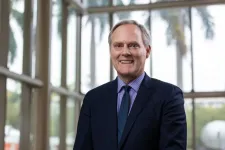
Members of the American Meteorological Society (AMS) have elected Alan Sealls to the position of AMS president-elect for 2025. Sealls is an AMS Fellow and Certified Broadcast Meteorologist who retired this year from a 37-year broadcast career, which included serving as chief meteorologist at WPMI-TV in Mobile, Alabama. He will be inducted as president-elect on Sunday, 12 January, 2025, during the 105th AMS Annual Meeting in New Orleans, Louisiana. At the meeting, the AMS—the professional society for weather, water, and climate sciences ...

Read the release
Science

Dogs use two-word button combos to communicate

A new study from UC San Diego’s Comparative Cognition Lab shows that dogs trained to use soundboards to “talk” are capable of making two-word button combinations that go beyond random behavior or simple imitation of their owners. Published in the journal Scientific Reports from Springer Nature, the study analyzed data from 152 dogs over 21 months, capturing more than 260,000 button presses – 195,000 of which were made by the dogs themselves. “This is the first scientific study to analyze how dogs actually use soundboards,” said lead researcher Federico Rossano, associate professor of cognitive science at UC San Diego and director ...

Read the release
Researchers use a powerful imaging technique to illuminate the colorful plumage of birds
Science

Researchers use a powerful imaging technique to illuminate the colorful plumage of birds

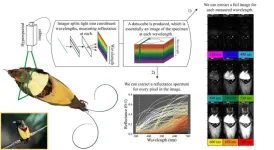
Animals showcase a remarkable diversity of colors and patterns, from the shimmery appearance of a peacock’s tail to the distinctive rosettes on a jaguar’s fur. Quantifying animal color has been a longtime goal of evolutionary biologists, who aim to understand how color evolved over time—and the physical and genetic mechanisms involved. Ultimately, studying animal color is important because it can reveal how evolutionary forces, such as natural and sexual selection, favor certain traits over others. However, fully capturing animal color is challenging because researchers must choose between high spatial resolution (as in traditional ...

Read the release
How ‘Conan the Bacterium’ withstands extreme radiation
Science

How ‘Conan the Bacterium’ withstands extreme radiation

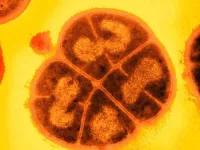
Dubbed “Conan the Bacterium” for its extraordinary ability to tolerate the harshest of conditions, Deinococcus radiodurans can withstand radiation doses thousands of times higher than what would kill a human — and every other organism for that matter. The secret behind this impressive resistance is the presence of a collection of simple metabolites, which combine with manganese to form a powerful antioxidant. Now, chemists at Northwestern University and the Uniformed Services University (USU) have discovered how this antioxidant works. In ...

Read the release
Earliest deep-cave ritual compound in Southwest Asia discovered
Science

Earliest deep-cave ritual compound in Southwest Asia discovered

CLEVELAND (Dec. 9)—A cave in Galilee, Israel, has yielded evidence for ritualistic gathering 35,000 years ago, the earliest on the Asian continent. Three Israeli researchers led the team that published its results today in the journal Proceedings of the National Academy of Sciences. And researchers from the Case Western Reserve University (CWRU) School of Dental Medicine helped unearth the cave’s secrets over more than a decade of excavation. Manot Cave was used for thousands of years as a living space for both Neanderthals ...

Read the release
Traces of 10,000-year-old ancient rice beer discovered in Neolithic site in Eastern China
Science

Traces of 10,000-year-old ancient rice beer discovered in Neolithic site in Eastern China

A collaborative study has uncovered evidence of rice beer dating back approximately 10,000 years at the Shangshan site in Zhejiang Province, China, providing new insights into the origins of alcoholic beverage brewing in East Asia. This discovery highlights the connection between rice fermentation at Shangshan and the region’s cultural and environmental context as well as the broader development of early rice agriculture and social structures. The study was jointly conducted by researchers from Stanford University, the Institute of Geology and Geophysics (IGG) of the Chinese Academy of Sciences, and the Zhejiang Provincial Institute ...

Read the release
CT radiomics and body composition for predicting hepatic decompensation
Science

CT radiomics and body composition for predicting hepatic decompensation

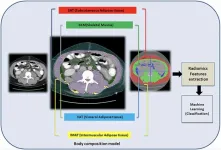
“This study reveals the potential for prognostic features in predicting hepatic decompensation in patients with PSC.” BUFFALO, NY – December 9, 2024 – A new research paper was published in Oncotarget’s Volume 15 on November 22, 2024, entitled “Computed tomography-based radiomics and body composition model for predicting hepatic decompensation.” Mayo Clinic researchers Yashbir Singh, John E. Eaton, Sudhakar K. Venkatesh, and Bradley J. Erickson have developed an innovative AI tool to predict hepatic decompensation in individuals with primary sclerosing cholangitis (PSC). PSC is a chronic disease that damages ...

Read the release
Science

Stress-related disorders among young individuals with surgical removal of tonsils or adenoids

About The Study: The findings of this cohort study suggest that early-life surgical removal of tonsils or adenoids is associated with a higher future risk of stress-related disorders and highlight a need to understand the role of adenotonsillar diseases or associated health conditions in the development of stress-related psychiatric disorders. Corresponding Author: To contact the corresponding author, Zhe Zhang, MD, PhD, email zhangzhe@gxmu.edu.cn. To access the embargoed study: Visit our For ...

Read the release
Science

Giving a gift? Better late than never, study finds

COLUMBUS, Ohio – If you feel terrible about giving a late gift to a friend for Christmas or their birthday, a new study has good news for you. Researchers found that recipients aren’t nearly as upset about getting a late gift as givers assume they will be. “Go ahead and send that late gift, because it doesn’t seem to bother most people as much as givers fear,” said Cory Haltman, lead author of the study and doctoral student in marketing at The Ohio State University’s Fisher College of Business. In a series of six studies, Haltman and his colleagues explored the mismatch between givers’ ...

Read the release
Judging knots throws people for a loop
Science

Judging knots throws people for a loop

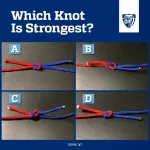
We tie our shoes, we put on neckties, we wrestle with power cords. Yet despite deep familiarity with knots, most people cannot tell a weak knot from a strong one by looking at them, new Johns Hopkins University research finds. Researchers showed people pictures of two knots and asked them to point to the strongest one. They couldn’t. They showed people videos of each knot, where the knots spin slowly so they could get a good long look. They still failed. People couldn’t even manage it ...

Read the release
Finding the weak points: New method to prevent train delay cascades
Science

Finding the weak points: New method to prevent train delay cascades

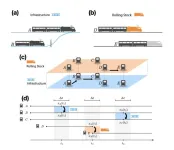
[Vienna, 09.12.2024] —Train delays are not only a common frustration for passengers but can also lead to significant economic losses, especially when they cascade through the railway network. When a train is delayed, it often triggers a chain reaction, turning minor issues into widespread delays across the system. This can be costly. A report from the Association of American Railroads (AAR) indicates that a nationwide rail disruption in the US could cost the economy over $2 billion per day. Therefore, the pressing question for railway operators is: How to manage the cascading effect of delays efficiently ...

Read the release
Existing EV batteries may last up to 40% longer than expected
Science

Existing EV batteries may last up to 40% longer than expected

The batteries of electric vehicles subject to the normal use of real­ world drivers - like heavy traffic, long highway trips, short city trips, and mostly being parked - could last about a third longer than researchers have generally forecast, according to a new study by scientists working in the SLAC-Stanford Battery. Center, a joint center between Stanford University's Precourt Institute for Energy and SLAC National Accelerator Laboratory, This suggests that the owner of a typical EV may not need to replace the expensive battery pack or buy a new car for several additional years. Almost always, battery scientists and engineers have tested ...

Read the release
Three-quarters of Earth’s land became permanently drier in last three decades: UN
Science

Three-quarters of Earth’s land became permanently drier in last three decades: UN

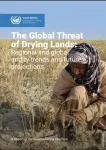
Even as dramatic water-related disasters such as floods and storms intensified in some parts of the world, more than three-quarters of Earth’s land became permanently drier in recent decades, UN scientists warned today in a stark new analysis. Some 77.6% of Earth’s land experienced drier conditions during the three decades leading up to 2020 compared to the previous 30-year period, according to the landmark report from the UN Convention to Combat Desertification (UNCCD). Over the same period, drylands expanded by about 4.3 million km2 – an area nearly a third larger than India, the world’s ...

Read the release
Science

Study compares soft tissue sarcoma rates among U.S. military servicemen and men in the general population

A recent analysis reveals that the incidence rates of soft tissue sarcomas—cancers in muscle, fat, blood vessels, nerves, and tendons—are lower in young U.S. active-duty military servicemen compared with those in the general population, but higher in middle-aged servicemen, perhaps due to greater cumulative exposure to toxins. The findings are published by Wiley online in CANCER, a peer-reviewed journal of the American Cancer Society. Soft tissue sarcomas are rare cancers arising all over the body, in various organs and tissues such as muscle, fat, and viscera. Most sarcomas arise sporadically, but a small subset arise from exposure to ...

Read the release
Science

What motivates Americans to eat less red meat?

AUSTIN, TX, Dec 9, 2024 – Limiting red meat consumption is key to a sustainable and healthy diet, yet Americans are among the world’s largest consumers of red meat. A new study reveals the demographics of American adults who choose not to eat red meat and finds that environmental concerns may matter more to them than health risks. Researchers at Baruch College and the University of Southern California (USC) surveyed more than 7,500 adults as part of the Understanding America Study – a probability-based Internet panel of individuals 18 and older. They will present ...

Read the release
Falsifying anthropics
Science

Falsifying anthropics

In short: “We exist, therefore the universe is made to host us”: the anthropic principle has sparked intense debate in cosmology since its first formulation. A new paper published in JCAP proposes a way to test it. To falsify it, all three of the following conditions must be confirmed by observations: • Cosmic inflation occurred • Axions exist • Dark matter is not made of axions If all these conditions are proven true, the anthropic principle would lose its validity, and our universe would appear ...

Read the release
Science

ASH 2024: Antibody shows encouraging results for treating high-risk follicular lymphoma and marginal zone lymphoma

MIAMI, FLORIDA (STRICTLY EMBARGOED UNTIL DEC. 8, 2024, AT 12 NOON EST) – Two clinical trials testing the antibody loncastuximab tesirine (Zynlonta) showed encouraging results in patients with high-risk forms of two blood cancers – follicular lymphoma and marginal zone lymphoma. The findings, led by physician-scientists at Sylvester Comprehensive Cancer Center, part of the University of Miami Miller School of Medicine, will be presented at the American Society of Hematology’s 2024 meeting in San Diego. One study, a phase 2 clinical trial led by Juan Alderuccio, M.D., ...

Read the release
Hybrid theory offers new way to model disturbed complex systems
Science

Hybrid theory offers new way to model disturbed complex systems

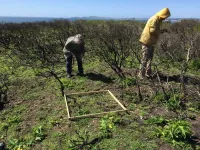
In fields ranging from immunology and ecology to economics and thermodynamics, multi-scale complex systems are ubiquitous. They are also notoriously difficult to model. Conventional approaches take either a bottom-up or top-down approach. But in disturbed systems, such as a post-fire forest ecosystem or a society in a pandemic, these unidirectional models can’t capture the interactions between the small-scale behaviors and the system-level properties. SFI External Professor John Harte (UC Berkeley) and his collaborators have worked to resolve this challenge by building a hybrid method that links bottom-up behaviors and top-down causation in a single theory. Harte et ...

Read the release
From the original Press-News collection. Issuers of news releases are responsible for the accuracy of their content.