THE ORIGINAL COLLECTION · SINCE 2010

Technology
press releases.

Research announcements from universities, hospitals and scientific institutions. Explore the stories, people and discoveries behind the headlines.

Original publication datesPage 108
FIND A STORY

Find a past release.

Dates and source material belong to the original release.

Read our research explainers

Browse the collection · original publication order

Scientists closer to solving mysteries of universe after measuring gravity in quantum world
Technology

Scientists closer to solving mysteries of universe after measuring gravity in quantum world

Scientists are a step closer to unravelling the mysterious forces of the universe after working out how to measure gravity on a microscopic level. Experts have never fully understood how the force which was discovered by Isaac Newton works in the tiny quantum world. Even Einstein was baffled by quantum gravity and, in his theory of general relativity, said there is no realistic experiment which could show a quantum version of gravity. But now physicists at the University of Southampton, working with scientists in Europe, have ...

Read the release
Sir Peter Rigby appointed as honorary chair of Aston University’s new Digital Futures Institute
Technology

Sir Peter Rigby appointed as honorary chair of Aston University’s new Digital Futures Institute

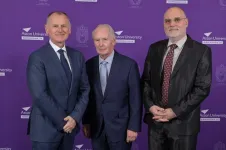
Sir Peter was knighted for his contribution to IT and businesses in the Midlands in 2002 He will provide guidance, support, advocacy and strong links to industry in his role The Institute will drive digital innovation and ensure digital inclusion. Aston University is delighted to announce that it has appointed one of the UK’s most respected and successful business leaders, Sir Peter Rigby, as honorary chair of its new Digital Futures Institute. The announcement of Sir Peter’s appointment was made in front of guests at the inaugural lecture given by Professor Abdul Sadka, director of the Digital ...

Read the release
Encoding computers of the future
Technology

Encoding computers of the future

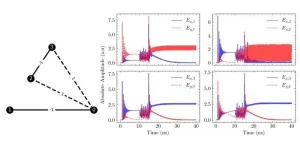
In our data-driven era, solving complex problems efficiently is crucial. However, traditional computers often struggle with this task when dealing with a large number of interacting variables, leading to inefficiencies such as the von Neumann bottleneck. A new type of collective state computing has emerged to address this issue by mapping these optimization problems onto something called the Ising problem in magnetism. Here's how it works: Imagine representing a problem as a graph, where nodes are connected by edges. Each node has two states, either +1 ...

Read the release
Twin, the new robotic exoskeleton for lower limbs
Technology

Twin, the new robotic exoskeleton for lower limbs

Milan (Italy), 23 February 2024 – TWIN is the name of the new robotic exoskeleton for lower limbs, designed and developed by Rehab Technologies IIT – INAIL, the joint laboratory between the Istituto Italiano di Tecnologia (IIT-Italian Institute of Technology) and the Prosthetic Center of INAIL (the prosthetic unit of the National Institute for Insurance against Accidents at Work), which will allow patients to wear it more easily. Presented today in Milan during a press conference held at the Museum of Science and Technology, TWIN was demonstrated ...

Read the release
Gene regulatory network inference based on causal discovery integrating with graph neural network
Technology

Gene regulatory network inference based on causal discovery integrating with graph neural network

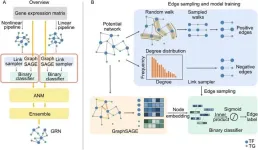
Gene regulatory networks (GRNs) depict the regulatory mechanisms of genes within cellular systems as a network, offering vital insights for understanding cell processes and molecular interactions that determine cellular phenotypes. Transcriptional regulation, a prevalent type for regulating gene expression, involves the control of target genes (TGs) by transcription factors (TFs). One of the major challenges in inferring GRNs is to establish causal relationships, rather than just correlation, among the various components ...

Read the release
A novel deep learning modeling approach guided by mesoscience—MGDL
Technology

A novel deep learning modeling approach guided by mesoscience—MGDL

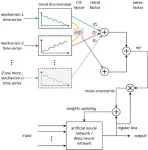
Deep learning modeling that incorporates physical knowledge is currently a hot topic, and a number of excellent techniques have emerged. The most well-known one is the physics-informed neural networks (PINNs). PINN integrates the residuals of the system’s governing partial differential equations (PDEs) and the initial value/boundary conditions into the loss function, thus the resulting model satisfies the constraints of the physical laws represented by the PDEs. However, PINN cannot work if equations among the key physical quantities of the system have not been established. To ...

Read the release
How to build your own robot friend: Making AI education more accessible
Technology

How to build your own robot friend: Making AI education more accessible

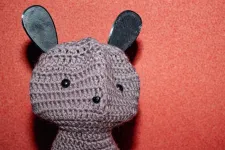
From smart virtual assistants and self-driving cars to digital health and fraud prevention systems, AI technology is transforming almost every aspect of our daily lives—and education is no different. For all its promise, the rise of AI, like any new technology, raises some pressing ethical and equity questions. How can we ensure that such a powerful tool can be accessed by all students regardless of background? Inspired by this call to action, USC researchers have created a low-cost, accessible learning kit to help college and high school students build their own “robot friend.” Students can personalize the robot’s ...

Read the release
Advances and future development of automated insulin delivery systems
Technology

Advances and future development of automated insulin delivery systems

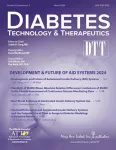
A special 13-article supplement to the peer-reviewed journal Diabetes Technology & Therapeutics (DTT) examines the “Development and Future of Automated Insulin Delivery (AID) Systems. Click here to read the supplement now. Included in the supplement is the article titled “A Peek Under the Hood: Explaining the MiniMed™ 780G Algorithm with Meal Detection™ Technology", by Benyamin Grosman, PhD and his Medtronic algorithm team with co-authors Ohad Cohen, MD, and Robert Vigersky, MD, Chief Medical Officer at Medtronic. James Thrasher, MD “Early ...

Read the release
U.S. Department of Energy awards Argonne National Laboratory $4 million for energy-efficient microchip research
Technology

U.S. Department of Energy awards Argonne National Laboratory $4 million for energy-efficient microchip research

While the microchips inside electronic devices like cell phones and computers are incredibly small, transistors — the tiny electrical switches inside of microchips — are approaching the atomic level. Today’s microchips pack over 100 million transistors in an area the size of a pin head. Despite their almost unimaginable size, the total number of such microelectronic devices consume an enormous amount of energy, which is growing exponentially. Predictions indicate that 20% of the world’s energy could be consumed ...

Read the release
Technology

New Cedars-Sinai study pinpoints why some injured kidneys do not heal

Cedars-Sinai investigators have discovered why some injured kidneys heal while others develop scarring that can lead to kidney failure. Their findings, detailed in a paper published in the peer-reviewed journal Science, could lead to the development of noninvasive tests to detect kidney scarring and, eventually, new therapies to reverse the condition. “The key to this discovery was our ability to directly compare injured kidney cells that successfully regenerated with those that did not,” said Sanjeev Kumar, MD, PhD, a nephrologist-scientist in the Board of Governors Regenerative Medicine Institute and the Department of Medicine at Cedars-Sinai and senior author ...

Read the release
Researchers harness 2D magnetic materials for energy-efficient computing
Technology

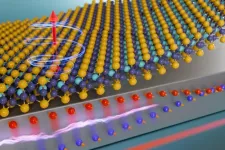
Researchers harness 2D magnetic materials for energy-efficient computing

CAMBRIDGE, MA — Experimental computer memories and processors built from magnetic materials use far less energy than traditional silicon-based devices. Two-dimensional magnetic materials, composed of layers that are only a few atoms thick, have incredible properties that could allow magnetic-based devices to achieve unprecedented speed, efficiency, and scalability. While many hurdles must be overcome until these so-called van der Waals magnetic materials can be integrated into functioning computers, MIT researchers took an important step in this direction by demonstrating precise control of a van der ...

Read the release
Technology

Artificial intelligence matches or outperforms human specialists in retina and glaucoma management, Mount Sinai study finds

A large language model (LLM) artificial intelligence (AI) system can match, or in some cases outperform, human ophthalmologists in the diagnosis and treatment of patients with glaucoma and retina disease, according to research from New York Eye and Ear Infirmary of Mount Sinai (NYEE). The provocative study, published February 22, in JAMA Ophthalmology, suggests that advanced AI tools, which are trained on vast amounts of data, text, and images, could play an important role in providing decision-making support to ophthalmologists in the diagnosis and management of cases involving glaucoma and retina ...

Read the release
Technology

Silicon microresonators for artificial neural networks

Researchers have made significant progress in the development of artificial neural networks using tiny silicon devices called microresonators, paving the way for faster and more energy-efficient artificial intelligence systems. These networks mimic the computing capabilities of the human brain, breaking away from traditional digital computer architectures and leveraging the speed, low power dissipation and multi-wavelength capabilities of photonics. A review article describing the implementations of neural networks using silicon microresonators was published Jan. 16 in Intelligent Computing, a Science Partner Journal. Silicon microresonators ...

Read the release
World’s first real-time wearable human emotion recognition technology developed!
Technology

World’s first real-time wearable human emotion recognition technology developed!

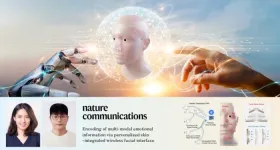
A groundbreaking technology that can recognize human emotions in real time has been developed by Professor Jiyun Kim and his research team in the Department of Material Science and Engineering at UNIST. This innovative technology is poised to revolutionize various industries, including next-generation wearable systems that provide services based on emotions. Understanding and accurately extracting emotional information has long been a challenge due to the abstract and ambiguous nature of human affects such as emotions, ...

Read the release
New realistic computer model will help robots collect Moon dust
Technology

New realistic computer model will help robots collect Moon dust

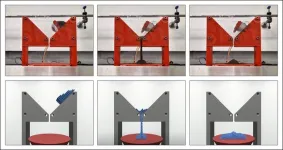
A new computer model mimics Moon dust so well that it could lead to smoother and safer Lunar robot teleoperations. The tool, developed by researchers at the University of Bristol and based at the Bristol Robotics Laboratory, could be used to train astronauts ahead of Lunar missions. Working with their industry partner, Thales Alenia Space in the UK, who has specific interest in creating working robotic systems for space applications, the team investigated a virtual version of regolith, another name for Moon dust. Lunar regolith is ...

Read the release
Method identified to double computer processing speeds
Technology

Method identified to double computer processing speeds

Imagine doubling the processing power of your smartphone, tablet, personal computer, or server using the existing hardware already in these devices. Hung-Wei Tseng, a UC Riverside associate professor of electrical and computer engineering, has laid out a paradigm shift in computer architecture to do just that in a recent paper titled, “Simultaneous and Heterogeneous Multithreading.” Tseng explained that today’s computer devices increasingly have graphics processing units (GPUs), hardware accelerators for artificial intelligence (AI) and machine learning (ML), or digital signal processing units as essential components. These components ...

Read the release
Technology

New detection method aims to warn of landslide tsunamis

University of Alaska Fairbanks researchers have devised a way to remotely detect large landslides within minutes of occurrence and to quickly determine whether they are close to open water and present a tsunami hazard. They write in a new paper that their method of determining a landslide’s location, volume and potential impact is rapid enough to support the National Oceanic and Atmospheric Administration’s goal of issuing a tsunami warning within 5 minutes of a landslide. “The warming climate is causing glaciers to retreat, leaving behind valleys whose mountainsides and hillsides have lost their ...

Read the release
Human-AI coworking
Technology

Human-AI coworking

Though artificial intelligence decreases human error in experimentation, human experts outperform AI when identifying causation or working with small data sets. To capitalize on AI and researcher strengths, ORNL scientists, in collaboration with colleagues at National Cheng Kung University, Taiwan, and the University of Tennessee, Knoxville, developed a human-AI collaboration recommender system for improved experimentation performance. During experiments, the system’s machine learning algorithms, described in npj Computational Materials, display preliminary ...

Read the release
Engineers use AI to wrangle fusion power for the grid
Technology

Engineers use AI to wrangle fusion power for the grid

In the blink of an eye, the unruly, superheated plasma that drives a fusion reaction can lose its stability and escape the strong magnetic fields confining it within the donut-shaped fusion reactor. These getaways frequently spell the end of the reaction, posing a core challenge to developing fusion as a non-polluting, virtually limitless energy source. But a Princeton-led team composed of engineers, physicists, and data scientists from the University and the Princeton Plasma Physics Laboratory (PPPL) have harnessed ...

Read the release
NIH grant to aid Rumbaugh’s biofilm dispersal research
Technology

NIH grant to aid Rumbaugh’s biofilm dispersal research

Most chronic wound infections share one thing in common: the presence of biofilms, which are composed of many different microorganisms that congregate as a mass, usually on some type of surface such as a wound bed. Biofilms are thought to be associated with up to 80% of infections, and their ability to stick together makes the biofilm and infection exceptionally difficult to kill. To combat this health care challenge, researchers such as Kendra Rumbaugh, Ph.D., a professor in the Texas Tech University Health Sciences Center (TTUHSC) School of Medicine’s Department of Surgery, are pursuing biofilm dispersal agents such as ...

Read the release
Technology

Highways through historically redlined areas likely cause air pollution disparities today

As part of the New Deal, several governmental programs were created to expand homeownership through mortgages and loans. However, neighborhoods with primarily Black or immigrant communities often were rated “hazardous” for repayment under the discriminatory, “redlining” practice that restricted lending. Today, those same areas are exposed to more air pollution than other urban neighborhoods, and according to research published in ACS’ Environmental Science & Technology, the cause could ...

Read the release
Technology

Communities of color breathe Denver’s worst air

History determines who gets to breathe fresh air, according to a new study published today in Environmental Science and Technology. The CIRES led-study found that historic, discriminatory lending practices known as redlining in the city are linked to inequities in air quality today. Alex Bradley, a fourth-year chemistry Ph.D. student in CIRES’ de Gouw group at the University of Colorado Boulder, used his background in chemistry coupled with an environmental justice lens to understand how pollution impacts communities of color in Denver. What he discovered wasn’t ...

Read the release
Technology

SFU researchers develop AI that can understand light in photographs

Despite significant progress in developing AI systems that can understand the physical world like humans do, researchers have struggled with modelling a certain aspect of our visual system: the perception of light. “Determining the influence of light in a given photograph is a bit like trying to separate the ingredients out of an already baked cake.” explains Chris Careaga, a PhD student in the Computational Photography Lab at SFU. The task requires undoing the complicated interactions between light and surfaces in a scene. This problem is referred to as intrinsic decomposition, and has been ...

Read the release
Technology

Plasma scientists develop computer programs that could reduce the cost of microchips and stimulate American manufacturing

Fashioned from the same element found in sand and covered by intricate patterns, microchips power smartphones, augment appliances and aid the operation of cars and airplanes. Now, scientists at the U.S. Department of Energy’s (DOE) Princeton Plasma Physics Laboratory (PPPL) are developing computer simulation codes that will outperform current simulation techniques and aid the production of microchips using plasma, the electrically charged state of matter also used in fusion research. These codes could help increase the efficiency of the manufacturing process and potentially stimulate ...

Read the release
Rutgers professor of computer science is named Sloan Fellow
Technology

Rutgers professor of computer science is named Sloan Fellow

A Rutgers professor who studies and improves the design of algorithms – human-made instructions computers follow to solve problems and perform computations – has been selected to receive a 2024 Sloan Research Fellowship. Aaron Bernstein, an assistant professor in the Department of Computer Science in the School of Arts and Sciences at Rutgers University-New Brunswick, was named one of 126 researchers drawn from a select group of 53 institutions in the U.S. and Canada. The award honors extraordinary creativity, innovation and the potential to become a scientific ...

Read the release
From the original Press-News collection. Issuers of news releases are responsible for the accuracy of their content.