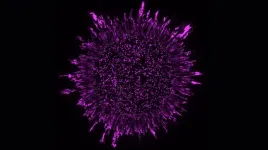
New research shows that the arrangement of bacteria in biofilms affects their sensitivity to antibiotics
Bacteria are traditionally imagined as single-cell organisms, spread out sparsely over surfaces or suspended in liquids, but in many environments the true bacterial mode of growth is in sticky clusters called biofilms. Biofilm formation can be useful to humans—it is integral, for example, to the production of kombucha tea. But it is more often problematic, because it makes it more difficult to control bacterial growth: When bacterial cells produce a biofilm, it acts as a shield against outside invaders, making the bacteria more ...
Read the release