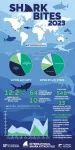
Number of shark bites consistent with recent trends, with small spike in fatalities
There was an increase in the number of unprovoked shark attacks worldwide and an uptick in fatalities in 2023 compared to the previous year. The University of Florida’s International Shark Attack File (ISAF), a scientific database of global shark attacks, confirmed 69 unprovoked bites in 2023. Although this is higher than the most recent five-year average of 63 attacks, the data remain consistent with long-term trends. Ten of the past year’s unprovoked attacks were fatal, up from five the year before, with a disproportionate number occurring in Australia. Although the country accounted for 22% of all attacks, ...
Read the release