Medicine Technology 🌱 Environment Space Energy Physics Engineering Social Science Earth Science Science
Environment 2014-06-25

Study highlights carbon monoxide hazards on houseboats

FALLS CHURCH, Va. (June 25, 2014) — Boaters and marina workers should exercise caution this summer before taking to the seas. A study published online in the Journal of Occupational and Environmental Hygiene (JOEH) outlines hazards posed by carbon monoxide levels on houseboats that use gasoline-powered generators without emission controls, along with controls that are available to reduce exposure to carbon monoxide from the generators. The study, conducted by researchers at the National Institute for Occupational Safety and Health (NIOSH), found that uncontrolled generators ...
Read more →
New treatment option in development for individuals with food allergy
Medicine 2014-06-25

New treatment option in development for individuals with food allergy

New Rochelle, NY, June 25, 2014—For some children an allergic reaction to common foods such as milk, eggs, or peanuts can cause an anaphylactic reaction. At present no effective treatment for food allergy exists, and strict dietary avoidance of known food triggers is the only preventive option available. Ongoing trials are exploring options for oral immunotherapy (OIT) for desensitization in the treatment of Immunoglobulin E (IgE)-mediated food allergy, as described in a Review article in Pediatric Allergy, Immunology, and Pulmonology, a peer-reviewed journal from Mary ...
Read more →
Medicine 2014-06-25

Deploying midwives in poorest nations could avert millions of maternal and newborn deaths

A modest increase in the number of skilled midwives in the world's poorest nations could save the lives of a substantial number of women and their babies, according to new analyses by researchers from the Johns Hopkins Bloomberg School of Public Health. Maternal mortality is a leading cause of death for women in many developing countries and public health efforts to avert it have only made headway in a few countries. Elsewhere, progress has either never started or has stalled in recent years. Poor nations also have troubling rates of infant and fetal deaths. Midwives ...
Read more →
Mathematical models explain how a wrinkle becomes a crease
Science 2014-06-25

Mathematical models explain how a wrinkle becomes a crease

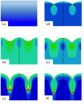
PROVIDENCE, R.I. [Brown University] — Wrinkles, creases and folds are everywhere in nature, from the surface of human skin to the buckled crust of the Earth. They can also be useful structures for engineers. Wrinkles in thin films, for example, can help make durable circuit boards for flexible electronics. A new mathematical model developed by researchers from Brown University could help engineers control the formation of wrinkle, crease, and fold structures in a wide variety of materials. It may also help scientists understand how these structures form in nature. The ...
Read more →
Nanoscale ruler reveals organization of the cell membrane
Medicine 2014-06-25

Nanoscale ruler reveals organization of the cell membrane

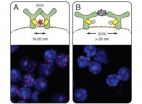
This news release is available in German. After a ten-year effort, Prof. Dr. Michael Reth from the Institute of Biology III of the University of Freiburg and the Max Planck Institute of Immunobiology and Epigenetics has developed a method to investigate the cell surface's organization on a nanometer scale. This allows him to monitor how the antigen receptor, which B cells of the immune system use to recognize foreign substances, changes after activation. This study shows that the receptor components dissociate from each other– rather than assemble, as previously ...
Read more →
Environment 2014-06-25

New study quantifies the effects of climate change in Europe

If no further action is taken and global temperature increases by 3.5°C, climate damages in the EU could amount to at least €190 billion, a net welfare loss of 1.8% of its current GDP. Several weather-related extremes could roughly double their average frequency. As a consequence, heat-related deaths could reach about 200 000, the cost of river flood damages could exceed €10 billion and 8000 km2 of forest could burn in southern Europe. The number of people affected by droughts could increase by a factor of seven and coastal damage, due to sea-level rise, could more than ...
Read more →
Using math to analyze movement of cells, organisms, and disease
Medicine 2014-06-25

Using math to analyze movement of cells, organisms, and disease

Traveling waves model tumor invasion Cell migration, which is involved in wound healing, cancer and tumor growth, and embryonic growth and development, has been a topic of interest to mathematicians and biologists for decades. In a paper published recently in the SIAM Journal on Applied Dynamical Systems, authors Kristen Harley, Peter van Heijster, Robert Marangell, Graeme Pettet, and Martin Wechselberger study a model describing cell invasion through directional outgrowth or movement in the context of malignant tumors, in particular, melanoma or skin cancer. Tumor ...
Read more →
Science 2014-06-25

Freedom of choice: When rejection and discrimination hinder minority entrepreneurs

When it comes to The American Dream, freedom of choice is a central value for entrepreneurs. According to a new study in the Journal of Consumer Research, when a person's choices are limited due to rejection and discrimination, they are more likely to fail at business and in their personal lives. "Not only does restricting a person's choices threaten the success of a new business, it also has swift and damaging effects on the individual's self-esteem and their personal sense of control and power in the world," write authors Sterling A. Bone (Utah State University), Glenn ...
Read more →
Science 2014-06-25

Money in the bank: Why does feeling powerful help people save more?

In a materialistic culture, saving money is a challenge many of us face long before our retirement years. While many people think education, upbringing, and self-control are major contributors to a person's savings habits, a new study in the Journal of Consumer Research reveals that people save more when they feel powerful. "We were interested in knowing whether the decision to save or not save money was affected by how someone was feeling during the time they were making a savings decision," write authors Emily N. Garbinsky (Stanford University), Anne-Kathrin Klesse ...
Read more →
Medicine 2014-06-25

Army leads collaborative effort to establish standards for sequencing viral genomes

Scientists at the U.S. Army Medical Research Institute of Infectious Diseases (USAMRIID) have proposed a set of standards aimed at developing a common "language" among investigators working to sequence viral genomes and characterize viral stocks. According to USAMRIID senior author Gustavo Palacios, Ph.D., the proposed system, published last week as an editorial in the journal mBio, is the result of a collaborative effort involving scientists from many of the world's leading institutions. Contributors include the Broad Institute, the J. Craig Venter Institute, Los Alamos ...
Read more →
Science 2014-06-25

Achieving Your Goals: Does removing yourself from the big picture help?

Consider the case of the adult student attending night school to earn a degree that will result in a better job with higher pay. From sacrificing time with friends and family to missing a relaxing evening watching TV, this type of long-term gain often comes with short-term pain. According to a new study in the Journal of Consumer Research, people are more likely to achieve their goals and avoid temptations when they are able to remove themselves from the big picture. "Past research on personal achievement has focused on whether someone sets nearsighted or farsighted ...
Read more →
Science 2014-06-25

Distorting the past: Why do impulsive consumers forget their past indulgences?

Activities like dieting, saving money, and studying require goal setting and self-control. But even the most disciplined person falls prey to temptation every once in a while. According to a new study in the Journal of Consumer Research, people who distort past memories of their indulgences are more likely to indulge in the future. "We investigated the possibility that individuals may distort memories of past behavior in order to allow for indulgence in the present. In other words, people may trick themselves into thinking something like, 'I've been good on my diet lately, ...
Read more →
Science 2014-06-25

Downside to disaster relief: Why do photos of attractive children backfire?

When it comes to asking a stranger for help, being young, pretty, and the opposite sex greatly improve your odds. But when it comes to children suffering from the likes of natural disaster, poverty, or homelessness, a new study in the Journal of Consumer Research reveals that less attractive children receive more help than their cuter counterparts. "Many charitable organizations use children in advertising and promotional materials. Our research examines how the facial attractiveness of the children in these campaigns affects the empathy and help received from adults," ...
Read more →
Science 2014-06-25

Double standard? The use of performance-enhancing products

When professional athletes are found to be using performance-enhancing drugs, many people consider this an unfair advantage and say they are cheating. But when another person uses the same drug to overcome a disease or behavioral issue, society is more forgiving. A new study in the Journal of Consumer Research shows that people are more forgiving when the benefit is personal. "Our research shows that when people see others using ability-boosting products, they are more likely to see this behavior as morally unacceptable than if they were using the products themselves," ...
Read more →
Medicine 2014-06-25

Marriage and healthy hearts

PITTSBURGH—The affairs of the heart may actually affect the affairs of the heart in ways previously not understood. "Growing evidence suggests that the quality and patterns of one's social relationships may be linked with a variety of health outcomes, including heart disease," says Thomas Kamarck, professor of psychology and Biological and Health Program Chair in the University of Pittsburgh Kenneth P. Dietrich School of Arts and Sciences. He is an author of a new study that correlates unhappy marital interaction with thicker carotid arteries and a higher risk of cardiovascular ...
Read more →
Science 2014-06-25

When does rude service at luxury stores make consumers go back for more?

For many people, the idea of purchasing a luxury product in a high-end boutique comes with the stigma of snobbery and rude salesclerks. But when they are rejected in real life, a new study in the Journal of Consumer Research reveals that a person's desire for brand affiliation and willingness to purchase and display the item actually increases. "Our research highlights the fact that we are profoundly attuned to social threats and are driven to buy, wear, and use products from the very people who are disrespectful to us," write authors Morgan K. Ward (Southern Methodist ...
Read more →
Science 2014-06-25

Home sweet messy home: How do consumers cope with disorder at home?

From hanging up our coats to organizing our bookshelves and kitchen cupboards, some people keep their homes tidy and others seem to live in complete chaos. According to a new study in the Journal of Consumer Research, understanding how we organize our homes can help us cope with contradictions and disruptions occurring in our daily lives. "Tidying a home is an activity that goes beyond moving objects from one place to another or putting them in specific places. Rather, it is a process of building a meaningful domestic environment. Through their tidying activities, people ...
Read more →
USC scientists create new battery that's cheap, clean, rechargeable… and organic
Energy 2014-06-25

USC scientists create new battery that's cheap, clean, rechargeable… and organic

Scientists at USC have developed a water-based organic battery that is long lasting, built from cheap, eco-friendly components. The new battery – which uses no metals or toxic materials – is intended for use in power plants, where it can make the energy grid more resilient and efficient by creating a large-scale means to store energy for use as needed. "The batteries last for about 5,000 recharge cycles, giving them an estimated 15-year lifespan," said Sri Narayan, professor of chemistry at the USC Dornsife College of Letters, Arts and Sciences and corresponding author ...
Read more →
Science 2014-06-25

Using multiple pictures in an ad? Different perspectives can confuse consumers

Have you ever wondered what it would be like to see the ocean from a private balcony at a luxury resort? Self-imagery is a powerful marketing tactic and many ads use pictures that help you see yourself using a product or service. According to a new study in the Journal of Consumer Research, showing photos from multiple perspectives can have a negative effect on how a person processes the information in an ad. "The use of photos showing the advertised product or service from multiple perspectives is very common in ads. However, we show that these multiple perspective ads ...
Read more →
Medicine 2014-06-25

MM-398 added to standard treatment shows survival benefit in mets pancreatic cancer

Adding the novel MM-398 to standard treatment for metastatic pancreatic cancer patients who have already received gemcitabine improves survival, researchers said at the ESMO 16th World Congress on Gastrointestinal Cancer in Barcelona. "Patients with metastatic pancreatic cancer or pancreatic cancer in general have very limited options," said study author Andrea Wang-Gillam, assistant professor in the Division of Oncology at Washington University in St. Louis, USA. "These patients just simply don't do well. This was a positive trial and will provide a new treatment option ...
Read more →
Curiosity travels through ancient glaciers on Mars
Environment 2014-06-25

Curiosity travels through ancient glaciers on Mars

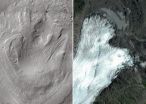
3,500 million years ago the Martian crater Gale, through which the NASA rover Curiosity is currently traversing, was covered with glaciers, mainly over its central mound. Very cold liquid water also flowed through its rivers and lakes on the lower-lying areas, forming landscapes similar to those which can be found in Iceland or Alaska. This is reflected in an analysis of the images taken by the spacecraft orbiting the red planet. NASA’s Mars Curiosity Rover has completed a Martian year –687 Earth days– this week. The vehicle travels through an arid and reddish landscape ...
Read more →
Taking the 'random' out: New approach to medical studies could boost participation
Medicine 2014-06-25

Taking the 'random' out: New approach to medical studies could boost participation

ANN ARBOR, Mich. — It's a classic Catch-22: Medical researchers need to figure out if a promising new treatment is truly better than a current one, by randomly assigning half of a group of patients to get each treatment. But when they approach patients about taking part in the study, those 50-50 random odds don't sound good enough – and the study struggles to get enough volunteers. That slows down the effort to improve treatment for that condition. Now, new research shows the promise of an approach that takes some of the "random" out of the process, while preserving ...
Read more →
Science 2014-06-25

Women having babies later in life more likely to live longer

CLEVELAND, Ohio (June 25, 2014)—Women who had their children later in life will be happy to learn that a new study suggests an association between older maternal age at birth of the last child and greater odds for surviving to an unusually old age. That's according to a nested case-control study published online today in Menopause, the journal of The North American Menopause Society (NAMS). In this study which used Long Life Family Study data, 311 women who survived past the oldest fifth percentile of survival (according to birth cohort-matched life tables) were identified ...
Read more →
Technology 2014-06-25

Carnegie Mellon method automatically cuts boring parts from long videos

PITTSBURGH—Smartphones, GoPro cameras and Google Glass are making it easy for anyone to shoot video anywhere. But, they do not make it any easier to watch the tedious videos that can result. Carnegie Mellon University computer scientists, however, have invented a video highlighting technique that can automatically pick out the good parts. Called LiveLight, this method constantly evaluates action in the video, looking for visual novelty and ignoring repetitive or eventless sequences, to create a summary that enables a viewer to get the gist of what happened. What it produces ...
Read more →
Aging with HIV and AIDS: A growing social issue
Technology 2014-06-25

Aging with HIV and AIDS: A growing social issue

TORONTO, June 25, 2014–As the first people with HIV grow old, a new study from St. Michael's Hospital questions whether the health care system and other government policies are prepared to meet their complex medical and social needs. In high-income countries such as Canada, 30 per cent of people living with HIV are 50 or older, and many are living into their 60s and 70s. In San Francisco, more than half the people with HIV are over 50. "It's a positive thing that people are aging with HIV," said Dr. Sean B. Rourke, a neuropsychologist who heads the Neurobehavioural ...
Read more →