Medicine Technology 🌱 Environment Space Energy Physics Engineering Social Science Earth Science Science
Science 2014-04-24

Take notes by hand for better long-term comprehension

Dust off those Bic ballpoints and college-ruled notebooks — research shows that taking notes by hand is better than taking notes on a laptop for remembering conceptual information over the long term. The findings are published in Psychological Science, a journal of the Association for Psychological Science. Walk into any university lecture hall and you're likely to see row upon row of students sitting behind glowing laptop screens. Laptops in class have been controversial, due mostly to the many opportunities for distraction that they provide (online shopping, browsing ...
Read more →
Environment 2014-04-24

Amazon rainforest survey could improve carbon offset schemes

Carbon offsetting initiatives could be improved with new insights into the make-up of tropical forests, a study suggests. Scientists studying the Amazon Basin have revealed unprecedented detail of the size, age and species of trees across the region by comparing satellite maps with hundreds of field plots. The findings will enable researchers to assess more accurately the amount of carbon each tree can store. This is a key factor in carbon offset schemes, in which trees are given a cash value according to their carbon content, and credits can be traded in exchange ...
Read more →
Medicine 2014-04-24

The blood preserved in the pumpkin did not belong to Louis XVI

The work has been published in the Scientific Reports journal. CSIC researcher Carles Lalueza-Fox, from the Institute of Evolutionary Biology (a joint centre of CSIC and Pompeu Fabra University-UPF), explains: "When the Y chromosome of three living Bourbons was decoded and we saw that it did not match with the DNA recovered from the pumpkin in 2010, we decided to sequence the complete genome and to make a functional interpretation in order to see if the blood could actually belong to Louis XVI". The functional genome analysis was based on two main points, the genealogical ...
Read more →
Science 2014-04-24

Study supports safety of antimicrobial peptide-coated contact lenses

Philadelphia, Pa. (April 24, 2014) - Contact lenses coated with an antimicrobial peptide could help to lower the risk of contact lens-related infections, reports a study in Optometry and Vision Science, official journal of the American Academy of Optometry. The journal is published by Lippincott Williams & Wilkins, a part of Wolters Kluwer Health. Studies in animals and now humans support the biocompatibility and safety of lenses coated with the antimicrobial peptide melimine, according to the new research by Debarun Dutta, B.Optom, of The University of New South Wales, ...
Read more →
Science 2014-04-24

Take the bat, leave the candy

WINSTON-SALEM, N.C. – April 24, 2014 – 'Take me out to the ballgame' doesn't exactly conjure up images of apple slices and kale chips. The more likely culprits include French fries, soda and the occasional box of Crackerjacks. Unfortunately for children who play youth baseball, eating unhealthy food during practices and games may be contributing to weight problems, according to researchers at Wake Forest Baptist Medical Center. The study, published in the current online edition of Childhood Obesity, found that high-calorie snacks and sugar-sweetened drinks dominate the ...
Read more →
Medicine 2014-04-24

New approach for surgery patients cuts hospital stays and costs

DURHAM, N.C. – Changes in managing patients before, during and after colorectal surgery cut hospital stays by two days and reduced readmission rates, according to researchers who led a study of the approach at Duke University Hospital. The practice, called enhanced recovery, is easier on patients before surgery, doing away with the fasting period and bowel evacuation that are typically prescribed. After surgery, patients are encouraged to eat and move about as soon as possible, leading to faster recoveries. Among findings published in the May 2014 issue of the journal ...
Read more →
Science 2014-04-24

Paying closer attention to attention

Ellen's (not her real name) adoptive parents weren't surprised when the school counselor suggested that she might have attention deficit hyperactivity disorder (ADHD). Several professionals had made this suggestion over the years. Given that homework led to one explosion after another, and that at school Ellen, who is eleven, spent her days jiggling up and down in her seat, unable to concentrate for more than ten minutes, it seemed a reasonable assumption. Yet her parents always felt that ADHD didn't quite capture the extent of Ellen's issues over the years. Fortunately ...
Read more →
Science 2014-04-24

Small business owners not always worried about being treated fairly, researcher finds

COLUMBIA, Mo. – Fairness is not always the most important priority for small retailers. In an international study, University of Missouri researchers found that some small retailers are less concerned about whether they are treated fairly by business suppliers than other factors, such as cash flow and company survival. Lisa Scheer, the Emma S. Distinguished Professor of Marketing in the MU Trulaske College of Business, notes that what retailers consider to be fair business practices differ greatly across cultures and situations. "It is presumed that fairness, however ...
Read more →
Science 2014-04-24

Motor skill deficiencies linked to autism severity in new research

CORVALLIS, Ore. – An Oregon State University researcher has found a relationship between motor skill deficiencies and the severity of the symptoms of autism spectrum disorder in very young children. The findings, believed to the be the first to show a direct relationship between motor skills and autism severity, indicate that development of fine and gross motor skills should be included in treatment plans for young children with autism, said Megan MacDonald, an assistant professor in OSU's College of Public Health and Human Sciences. "Recognizing those deficits really ...
Read more →
Science 2014-04-24

Taking a walk may lead to more creativity than sitting, study finds

WASHINGTON -- When the task at hand requires some imagination, taking a walk may lead to more creative thinking than sitting, according to research published by the American Psychological Association. "Many people anecdotally claim they do their best thinking when walking," said Marily Oppezzo, PhD, of Santa Clara University. "With this study, we finally may be taking a step or two toward discovering why." While at Stanford University's Graduate School of Education, Oppezzo and colleague Daniel L. Schwartz, PhD, conducted studies involving 176 people, mostly college ...
Read more →
Medicine 2014-04-24

Novel therapeutic agent for Tamiflu-resistant pH1N1 influenza virus discovered

In 2009 the influenza pH1N1 virus caused the first flu pandemic in the 21st century. The virus reached Finland in May 2009 and killed more than 50 people in the country. Since 2011 the pH1N1 virus infects Finns mainly during flu epidemics (winter/spring seasons). Infections with influenza pH1N1 virus vary from asymptomatic to serious complicated illnesses. World Health Organization has recommended Tamiflu for treatment of patients with severe or progressive illness. The disadvantage of this drug is that it targets viral proteins which mutate quickly and the virus develops ...
Read more →
Droplet lens
Science 2014-04-24

Droplet lens

VIDEO: An Australian National University scientist has discovered a simple, cheap way of turning a smart phone into a high-resolution microscope, opening the door to a revolution in science and medicine... Click here for more information. Australian scientists have invented a simple and cheap way of making a high-powered lens that can transform a smart phone into a high-resolution microscope. Costing less than a cent, the lenses promise a revolution in science and medicine ...
Read more →
Energy 2014-04-24

Using antineutrinos to monitor nuclear reactors

This news release is available in German. In addition to neutrons, the fission reaction of nuclear fuels like plutonium or uranium releases antineutrinos. These are also electrically neutral, but can pass matter very easily, which is why they can be discerned only in huge detectors. Recently, however, detectors on the scale of only one cubic meter have been developed. They can measure antineutrinos from a reactor core, which has generated great interest at the IAEA. Prototypes of these detectors already exist and collect data at distances of around 10 meters from ...
Read more →
Medicine 2014-04-24

Boring cells could hold the key to heart disease

Fibroblasts, cells long thought to be boring and irrelevant, could offer an alternative to heart transplants for patients with heart disease. Researcher Dr Milena Furtado, and her team from the Australian Regenerative Medicine Institute (ARMI) at Monash University, found the heart cell fibroblast is a close relative to a cardiomyocyte, the cell responsible for a healthy beating heart. In research published today in Circulation Research, Dr Furtado has found that cardiac fibroblasts are unique cells due to their genetic program, and will aid in the development of cell ...
Read more →
Medicine 2014-04-24

Palliation is rarely a topic in studies on advanced cancer

End-of-life aspects, the corresponding terminology, and the relevance of palliation in advanced cancer are often not considered in publications on randomized controlled trials (RCTs). This is the result of an analysis by the German Institute for Quality and Efficiency in Health Care (IQWiG), which has now been published as final report. Together with external experts, IQWiG analysed studies on four solid tumours as examples: glioblastoma, lung cancer, malignant melanoma, and pancreatic cancer. For this purpose, the research team evaluated publications on RCTs investigating ...
Read more →
Science 2014-04-24

Children living with a lone parent are as happy as those with 2

Children living with a step-parent or a lone parent are as happy as those living with two biological parents, the British Sociological Association's annual conference in Leeds heard today [Thursday 24 April]. In a major UK study on wellbeing, researchers from NatCen Social Research analysed data from the Millennium Cohort Study on 12,877 children aged seven in 2008 and found no significant difference in happiness. Whether the children lived with two biological parents, a step-parent and biological parent, or in a single parent family, made no difference to how they ...
Read more →
Medicine 2014-04-24

Finnish team of researchers finds a mutation in a tumor of the jaw

A Finnish team of researchers was the first in the world to discover a gene mutation in ameloblastoma, which is a tumour of the jaw. Ameloblastoma is an odontogenic tumour with a high tendency to recur after treatment. Ameloblastoma is most often found in the posterior of the lower jaw. Ameoloblastomas are treated by surgery, often resulting in tissue deficiencies in the jaws as well as loss of several teeth. A suitable drug therapy could reduce the need for surgery and the recurrence of ameloblastoma, but finding such a treatment requires a better understanding of the ...
Read more →
Medicine 2014-04-24

Viral infections: Identifying the tell-tale patterns

Researchers at Ludwig-Maximilians-Universitaet (LMU) in Munich have identified the structural features that enable the innate immune system to discriminate between viral and endogenous RNAs in living cells. When viruses infect cells, they take control of cellular metabolism and hijack cellular resources for the production of viral proteins. This process is dependent on viral RNA molecules that are delivered directly to (in the case of RNA viruses) and/or newly synthesized in the host cell, and provide the blueprints for the fabrication of viral proteins by the cell's ...
Read more →
Science 2014-04-24

How productive are the ore factories in the deep sea?

About ten years after the first moon landing, scientists on earth made a discovery that proved that our home planet still holds a lot of surprises in store for us. Looking through the portholes of the submersible ALVIN near the bottom of the Pacific Ocean in 1979, American scientists saw for the first time chimneys, several meters tall, from which black water at about 300 degrees and saturated with minerals shot out. What we have found out since then: These "black smokers", also called hydrothermal vents, exist in all oceans. They occur along the boundaries of tectonic ...
Read more →
HHS leaders call for expanded use of medications to combat opioid overdose epidemic
Medicine 2014-04-24

HHS leaders call for expanded use of medications to combat opioid overdose epidemic

A national response to the epidemic of prescription opioid overdose deaths was outlined yesterday in the New England Journal of Medicine by leaders of agencies in the U.S. Department of Health and Human Services. The commentary calls upon health care providers to expand their use of medications to treat opioid addiction and reduce overdose deaths, and describes a number of misperceptions that have limited access to these potentially life-saving medications. The commentary also discusses how medications can be used in combination with behavior therapies to help drug users ...
Read more →
Medicine 2014-04-24

Treatment for deadly yeast disease reduced to 3 days

Initial treatment for a brain infection caused by fungus could now be treated in three days, rather than two weeks, due to study by University of Liverpool scientists. Cryptococcus – a form of yeast - infections are often fatal but are relatively neglected in medical research. They are found in many parts of the world, including Africa, Australasia and South East Asia and mainly affect people with weakened immune systems. This infection kills up to 700,000 people a year. The University research team has tested the effects of the most commonly used drug on Cryptococcus ...
Read more →
Animals with bigger brains, broader diets have better self control
Medicine 2014-04-24

Animals with bigger brains, broader diets have better self control

DURHAM, N.C. -- A new study representing the largest study of animal intelligence to-date finds that animals with bigger brains and broader diets have better self-control. Published this week in the journal Proceedings of the National Academy of Sciences, the study is part of a long history of research aimed at understanding the animal mind. Specifically, why are some species able to do things like make and use tools, read social cues, or even understand basic math, and others aren't? Until now, most studies of animal intelligence have focused on only one or a few ...
Read more →
New ultrasound device may add in detecting risk for heart attack, stroke
Medicine 2014-04-24

New ultrasound device may add in detecting risk for heart attack, stroke

Researchers from North Carolina State University and the University of North Carolina at Chapel Hill have developed a new ultrasound device that could help identify arterial plaque that is at high risk of breaking off and causing heart attack or stroke. At issue is the plaque that builds up in arteries as we age. Some types of plaque are deemed "vulnerable," meaning that they are more likely to detach from the artery wall and cause heart attack or stroke. "Existing state-of-the-art technologies are capable of determining if plaque is present in the arteries, but can't ...
Read more →
Medicine 2014-04-24

New study links inflammation in those with PTSD to changes in microRNA

With a new generation of military veterans returning home from Iraq and Afghanistan, post-traumatic stress disorder (PTSD) has become a prominent concern in American medical institutions and the culture at-large. Estimates indicate that as many as 35 percent of personnel deployed to Iraq and Afghanistan suffer from PTSD. New research from the University of South Carolina School of Medicine is shedding light on how PTSD is linked to other diseases in fundamental and surprising ways. The rise in PTSD has implications beyond the impact of the psychiatric disorder and its ...
Read more →
Your T-shirt's ringing: Telecommunications in the spaser age
Science 2014-04-24

Your T-shirt's ringing: Telecommunications in the spaser age

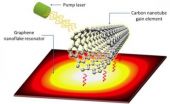
A new version of "spaser" technology being investigated could mean that mobile phones become so small, efficient, and flexible they could be printed on clothing. A team of researchers from Monash University's Department of Electrical and Computer Systems Engineering (ECSE) has modelled the world's first spaser (surface plasmon amplification by stimulated emission of radiation) to be made completely of carbon. A spaser is effectively a nanoscale laser or nanolaser. It emits a beam of light through the vibration of free electrons, rather than the space-consuming electromagnetic ...
Read more →