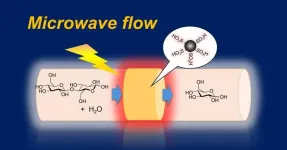
Harnessing microwave flow reaction to convert biomass into useful sugars
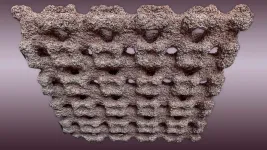
Fukuoka, Japan—Researchers at Kyushu University have developed a device that combines a catalyst and microwave flow reaction to efficiently convert complex polysaccharides into simple monosaccharides. The device utilizes a continuous-flow hydrolysis process, where cellobiose—a disaccharide made from two glucose molecules—is passed through a sulfonated carbon catalyst that is heated using microwaves. The subsequent chemical reaction breaks down cellobiose into glucose. Their results were published in the journal ACS Sustainable Chemistry & Engineering. Converting biomass into ...
Read the release