Medicine Technology 🌱 Environment Space Energy Physics Engineering Social Science Earth Science Science
Medicine 2010-10-27

New guideline from ASH and ASCO recommends caution regarding ESA use in cancer patients

(WASHINGTON, October 25, 2010) – An updated joint guideline by the American Society of Hematology (ASH) and the American Society of Clinical Oncology (ASCO) advises physicians about the appropriate use of erythropoiesis-stimulating agents (ESAs), a class of drugs that stimulate the bone marrow to produce more red blood cells, to treat cancer patients with chemotherapy-induced anemia. While the guideline cautions that ESAs are associated with shorter survival and increased risk of thromboembolism — blood clots — and tumor progression, it also recognizes their major benefit ...
Read more →
New class of biomolecules triggered in response to respiratory virus infection
Medicine 2010-10-27

New class of biomolecules triggered in response to respiratory virus infection

For the first time, scientists have discovered that a poorly understood class of RNA produced in a mammal's cells during a respiratory virus attack may affect the outcome of the infection. Their findings are reported today in mBio, a journal of the American Society for Microbiology. RNA (ribonucleic acid) contains information transcribed from the cell's instruction manual, its DNA. The best known of these RNAs translate sections of DNA code into building blocks for proteins. Most studies of how animals' cells respond to virus infection typically look at protein-coding ...
Read more →
Medicine 2010-10-27

Landmark study finds high resting heart associated with shorter life expectancy

Montreal −If you are a person who already has stable heart disease, how fast your heart beats at rest can predict your risk of dying, not only from heart disease but all other causes, Dr. Eva Lonn told the Canadian Cardiovascular Congress 2010, co-hosted by the Heart and Stroke Foundation and the Canadian Cardiovascular Society. "The higher the heart rate, the higher the risk of death from cardiovascular and all causes, even after adjusting for all risk factors that could confound our results," says Dr. Lonn, a cardiologist and professor at McMaster University. ...
Read more →
Medicine 2010-10-27

Severe sepsis associated with development of cognitive and functional disability in older patients

Older adults who survived severe sepsis were more likely to develop substantial cognitive impairment and functional disability, according to a study in the October 27 issue of JAMA. Hundreds of thousands of patients endure severe sepsis each year in the United States, according to background information in the article. "Although severe sepsis is the most common non-cardiac cause of critical illness, the long-term impact of severe sepsis on cognitive and physical functioning is unknown," the authors write. Theodore J. Iwashyna, M.D., Ph.D., of the University of Michigan ...
Read more →
Medicine 2010-10-27

Patients who survive sepsis are more than 3 times as likely to have cognitive problems

Ann Arbor, Mich. — Older adults who survive severe sepsis are at higher risk for long-term cognitive impairment and physical limitations than those hospitalized for other reasons, according to researchers from the University of Michigan Health System. Research to be published Oct. 27 in the Journal of the American Medical Association showed that 60 percent of hospitalizations for severe sepsis were associated with worsened cognitive and physical function among surviving older adults. The odds of acquiring moderate to severe cognitive impairment were 3.3 times higher ...
Read more →
Medicine 2010-10-27

Colorectal cancer patients with gene mutation show better response to cancer agent

Even though the cancer-treatment agent cetuximab is not considered effective treatment for KRAS (a gene)-mutated metastatic colorectal tumors, new research indicates that patients with colorectal cancer not responding to chemotherapy and a certain variation of this gene who were treated with cetuximab had longer overall and progression-free survival than patients with other KRAS-mutations, according to a study in the October 27 issue of JAMA. "Recent retrospective correlative analyses of metastatic colorectal cancer trials indicate that patients with KRAS-mutated tumors ...
Read more →
Medicine 2010-10-27

2 clinical trials demonstrate effective weight loss strategies for obese and overweight adults

Lifestyle interventions, including physical activity and structured weight loss programs, can result in significant weight loss for overweight, obese and severely obese adults, according to two reports that were posted online October 9 by JAMA. The studies and accompanying editorials were made available early online to coincide with the presentation of these papers at the 28th Annual Scientific Meeting of the Obesity Society. The articles appear in the October 27 print issue of JAMA. According to background information in the papers, obesity is among the most significant ...
Read more →
Medicine 2010-10-27

Genetic variations linked with worse outcomes with use of antiplatelet drug for cardiac procedures

An analysis of data from previously published studies indicates that use of the antiplatelet drug clopidogrel for patients who have common genetic variants of a certain gene and are undergoing a procedure such as coronary stent placement have an associated increased risk for major adverse cardiovascular events, particularly development of blood clots in stents, according to a study in the October 27 issue of JAMA. Clopidogrel, one of the most commonly prescribed medications, has been shown to reduce cardiovascular events in patients undergoing percutaneous coronary intervention ...
Read more →
Medicine 2010-10-27

Better transparency needed on medical journals' competing interests

Journals need to develop policies to handle the inevitable competing interests that arise when they publish papers that may bring them reprint revenue or increase their impact factors. This is the conclusion of a research article by Andreas Lundh and colleagues from the Nordic Cochrane Centre published in this weeks PLoS Medicine. An accompanying perspective by Harvey Marcovitch, ex-chair of the Committee on Publication Ethics (COPE), and an editorial from the PLoS Medicine Editors discusses this issue further, concluding that journals should apply the same degree of transparency ...
Read more →
Science 2010-10-27

WHO pesticide regulations should be based on toxicity in humans, not rats

Current WHO pesticide classifications are based on toxicity in rats but basing regulation on human toxicity will make pesticide poisoning less hazardous and prevent hundreds of thousands of deaths globally without compromising agricultural needs. These are the key findings from a study by Andrew Dawson (South Asian Clinical Toxicology Research Collaboration, University of Peradeniya, Sri Lanka) and colleagues published in this week's PLoS Medicine. The single most common means of suicide worldwide is agricultural pesticide poisoning. The authors examined the proportion ...
Read more →
Science 2010-10-27

Nature's backbone at risk

Nagoya, Japan, Wednesday 27 October 2010 (IUCN) – The most comprehensive assessment of the world's vertebrates confirms an extinction crisis with one-fifth of species threatened. However, the situation would be worse were it not for current global conservation efforts, according to a study launched today at the 10th Conference of the Parties to the Convention on Biological Diversity, CBD, in Nagoya, Japan. The study, to be published in the international journal Science, used data for 25,000 species from The IUCN Red List of Threatened Species™, to investigate the status ...
Read more →
World's vertebrates face increasing risk of extinction
Science 2010-10-27

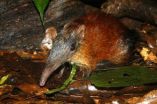
World's vertebrates face increasing risk of extinction

A new assessment conducted by 174 scientists from around the world underscores a growing concern about the health of the world's biodiversity, quantifying the rate of decline among vertebrate species on a global scale for the first time. The team's results support the idea that our planet is currently experiencing its sixth mass extinction—nearly one fifth of all known vertebrate species are currently classified as Threatened on the International Union for the Conservation of Nature (IUCN) Red List, and an average of 52 species of mammals, birds, and amphibians move one ...
Read more →
Science 2010-10-27

Mosquito monitoring saves lives and money, analysis finds

Cutting surveillance for mosquito-borne diseases would likely translate into an exponential increase in both the number of human cases and the health costs when a disease outbreak occurs, according to an analysis by Emory University. The Public Library of Science (PLoS) publishes the research, led by Emory disease ecologist Gonzalo Vazquez-Prokopec, Oct. 26. "Our analysis shows that halting mosquito surveillance can increase the management costs of epidemics by more than 300 times, in comparison with sustained surveillance and early case detection," Vazquez-Prokopec ...
Read more →
New snub-nosed monkey discovered in Northern Myanmar
Science 2010-10-27

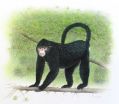
New snub-nosed monkey discovered in Northern Myanmar

An international team of primatologists have discovered a new species of monkey in Northern Myanmar (formerly Burma.) The research, published in the American Journal of Primatology, reveals how Rhinopithecus strykeri, a species of snub-nosed monkey, has an upturned nose which causes it to sneeze when it rains. Field biologists led by Ngwe Lwin from the Myanmar Biodiversity And Nature Conservation Association and supported by an international team of primatologists from Fauna & Flora International (FFI) and the People Resources and Biodiversity Foundation, discovered the ...
Read more →
Medicine 2010-10-27

Following lifestyle tips could prevent almost a quarter of bowel cancer cases

Almost a quarter of colorectal (bowel) cancer cases could be prevented if people followed healthy lifestyle advice in five areas including diet and exercise, says a new study published on bmj.com today. Researchers from Denmark found that following recommendations on physical activity, waist circumference, smoking, alcohol and diet could reduce the risk of developing bowel cancer considerably – by 23%. Bowel cancer is the third most common cancer in the UK where more than 38,600 people are diagnosed with the condition every year. It is the second most common cause of ...
Read more →
Medicine 2010-10-27

Year-long opiate substitution for drug misusers has 85 percent chance of cutting deaths

Giving people opiate substitution treatment to help with their drug addiction can lead to a 85% plus chance of reducing mortality, according to a new study published on bmj.com today. Researchers from Bristol and London found that the length of time people had opiate substitution treatment (OST) for had a large impact on its success and the likelihood of death. Opiate users have a high risk of death, often from overdose. OST, mostly methadone and buprenorphine, is central to prevention of drug related mortality and often delivered in primary care settings. Over the ...
Read more →
Continuing biodiversity loss predicted but could be slowed
Environment 2010-10-27

Continuing biodiversity loss predicted but could be slowed

A new analysis of several major global studies of future species shifts and losses foresees inevitable continuing decline of biodiversity during the 21st century but offers new hope that it could be slowed if emerging policy choices are pursued. Led by experts Henrique Miguel Pereira and Paul Leadley, the 23-member scientific team from nine countries, under the auspices of DIVERSITAS, UNEP-WCMC and the secretariat of the CBD compared results from five recent global environmental assessments and a wide range of peer-reviewed literature examining likely future changes in ...
Read more →
Science 2010-10-27

Extinction threat growing for vertebrates, researchers report in Science

Increasing numbers of birds, mammals and amphibians have moved closer to extinction in the last several decades—but not as far as they would have if no conservation measures at all had been enacted, researchers report. Their study is being published online by the journal Science, at the Science Express Web site, at 6:30 p.m., U.S. Eastern Time, Tuesday, 26 October. Science is the journal of AAAS, the nonprofit science society. To assess the status of the world's vertebrates, a large, international research team lead by Michael Hoffmann of the International Union for ...
Read more →
Science 2010-10-27

Scented consumer products shown to emit many unlisted chemicals

The sweet smell of fresh laundry may contain a sour note. Widely used fragranced products – including those that claim to be "green" – give off many chemicals that are not listed on the label, including some that are classified as toxic. A study led by the University of Washington discovered that 25 commonly used scented products emit an average of 17 chemicals each. Of the 133 different chemicals detected, nearly a quarter are classified as toxic or hazardous under at least one federal law. Only one emitted compound was listed on a product label, and only two were publicly ...
Read more →
Medicine 2010-10-27

New insight into links between obesity and activity in the brain

Scientists have revealed that an anti-obesity drug changes the way the brain responds to appetising, high-calorie foods in obese individuals. This insight may aid the development of new anti-obesity drugs which reduce the activity in the regions of the brain stimulated by the sight of tasty foods. Researchers at the University of Cambridge discovered that the anti-obesity drug sibutramine reduced brain responses in two regions of the brain, the hypothalamus and the amygdala, both of which are known to be important in appetite control and eating behaviour. Their findings ...
Read more →
Environment 2010-10-27

Scrambling for climate change solutions

The food industry generates a lot of waste products, but one of these, eggshells, could help combat climate change, according to research published in the International Journal of Global Warming this month. Basab Chaudhuri of the University of Calcutta and colleagues have demonstrated that the membrane that lines an eggshell can absorb almost seven times its own weight of the greenhouse gas carbon dioxide from the atmosphere. The carbon dioxide thus trapped could be stored in this form until energy-effective methods of using the gas could be found that would not compound ...
Read more →
Environment 2010-10-27

Study suggests a third of shark and ray species are threatened

Dr. Jack Musick, emeritus professor at the Virginia Institute of Marine Science, has overseen a global study suggesting that 33 percent of shark, skate, and ray species are threatened with extinction. The work is part of a major new study of vertebrates by the International Union for Conservation of Nature (IUCN), the world's oldest and largest environmental network. The IUCN study shows that conservation actions have benefitted a few species of vertebrates around the world during the last few decades, but are too few and far between to slow an overall rapid increase ...
Read more →
Physics 2010-10-27

Current loss tracked down by magnetic fingerprint

Scientists have been working on organic solar cells for about a decade. Their manufacture is environmentally friendly and they can be applied to all kinds of materials, such as plastic film, for instance. The trouble is, they only yield a fifth of the electrical energy that silicon solar cells do, with most of the electrical current trickling away into the material instead. Scientists at Helmholtz-Zentrum Berlin (HZB) have developed a method that uses the magnetic fingerprint of the charge-carrying particles to reveal exactly how electricity is being lost. They did so ...
Read more →
Research proves 'gender-bending' chemicals affect reproduction
Science 2010-10-27

Research proves 'gender-bending' chemicals affect reproduction

New research has provided the first evidence that 'gender bending' chemicals which find their way from human products into rivers and oceans can have a significant impact on the ability of fish to breed in UK Rivers. The findings from the four year study, led by the universities of Exeter and Brunel, has important implications for understanding the impacts of these chemicals on ecosystem health and possibly on humans. Endocrine disrupting chemicals (EDCs) disrupt the ways that hormones work in the bodies of vertebrates (animals with backbones), including humans. They ...
Read more →
Medicine 2010-10-27

Benefit of exercise in patients with hypertension has been insufficiently investigated

There are many good reasons to ensure sufficient exercise in everyday life. However, advising patients with increased blood pressure (hypertension) to exercise regularly is often regarded as a specific medical measure aiming to reduce the increased risk of late complications. But whether more exercise actually helps to avoid illnesses related to hypertension or at least delay their onset has been insufficiently investigated. In order to provide better advice to patients with hypertension, informative clinical studies are therefore needed. This is the result of a report ...
Read more →