Medicine Technology 🌱 Environment Space Energy Physics Engineering Social Science Earth Science Science
Cheek swab may detect lung cancer
Medicine 2010-10-08

Cheek swab may detect lung cancer

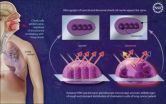
Early detection is critical for improving cancer survival rates. Yet, one of the deadliest cancers in the United States, lung cancer, is notoriously difficult to detect in its early stages. Now, researchers have developed a method to detect lung cancer by merely shining diffuse light on cells swabbed from patients' cheeks. In a new clinical study, the analysis technique--called partial wave spectroscopic (PWS) microscopy--was able to differentiate individuals with lung cancer from those without, even if the non-cancerous patients had been lifetime smokers or suffered ...
Read more →
Water discovered on second asteroid, may be even more common
Space 2010-10-08

Water discovered on second asteroid, may be even more common

Water ice on asteroids may be more common than expected, according to a new study that will be presented today at the world's largest gathering of planetary scientists. Two teams of researchers who made national headlines in April for showing the first evidence of water ice and organic molecules on an asteroid have now discovered that asteroid 65 Cybele contains the same material. "This discovery suggests that this region of our solar system contains more water ice than anticipated," said University of Central Florida Professor Humberto Campins. "And it supports the ...
Read more →
Medicine 2010-10-08

Childhood adversity may lead to unhealthy stress response in adult life

PROVIDENCE, R.I. [Brown University] — Seemingly healthy adults, if they were abused or neglected during childhood, may suffer physiological consequences decades later. In research published online last week by the journal Neuropsychopharmacology, a team led by psychiatrists at Brown University and Butler Hospital found that healthy adults who reported being mistreated as kids appear to have an elevated inflammatory response to stress compared to adults who had happier childhoods. Lead author Linda Carpenter, associate professor of psychiatry and human behavior, said that ...
Read more →
Science 2010-10-08

New study shows benefits of Bt corn to farmers

A group of agricultural scientists reported in today's issue of the journal Science that corn that has been genetically engineered to produce insect-killing proteins isolated from the soil bacterium Bacillus thuringiensis (Bt) provides significant economic benefits even to neighboring farmers who grow non-transgenic varieties of corn. "Modern agricultural science is playing a critical role in addressing many of the toughest issues facing American agriculture today, including pest management and productivity," said Agriculture Secretary Tom Vilsack. "This study provides ...
Read more →
Medicine 2010-10-08

Stem cells shape up to their surroundings

London, UK (October, 07, 2010) –Many scientists aspire to take control over the stem cell differentiation process, so that we can grow organs and implants perfectly matched to each patient in the future. Now research in the Journal of Tissue Engineering, published by SAGE-Hindawi, explains how engineering the topography on which stem cells grow, and the mechanical forces working on them, can be as powerful an agent for change as their chemical environment. Stem cells respond to the stiffness, chemistry and topography of the environments they find themselves in – and scientists ...
Read more →
Science 2010-10-08

Election forecasts favor Republican gains in midterm

WASHINGTON, DC-In the weeks leading up to the 2010 midterm elections, five forecasters or teams of forecasters offer models and predictions for the House in the most recent issue (October 2010) of PS: Political Science and Politics, a journal of the American Political Science Association. The models offer a broad consensus that the Republicans will make substantial gains in the House, although there is not a consensus over how large those gains will be. A 30-seat spread between the low and high end of the seat change forecast range exists, with two forecasters giving an ...
Read more →
Medicine 2010-10-08

Structure of plastic solar cells impedes their efficiency

A team of researchers from North Carolina State University and the U.K. has found that the low rate of energy conversion in all-polymer solar-cell technology is caused by the structure of the solar cells themselves. They hope that their findings will lead to the creation of more efficient solar cells. Polymeric solar cells are made of thin layers of interpenetrating structures from two different conducting plastics and are increasingly popular because they are both potentially cheaper to make than those currently in use and can be "painted" or printed onto a variety ...
Read more →
Medicine 2010-10-08

Stanford-led study disproves link between genetic variant, risk of coronary artery disease

STANFORD, Calif. — A genetic marker touted as a predictor of coronary artery disease is no such thing, according to a study led by researchers at the Stanford University School of Medicine. The massive international study, published online Oct. 7 in the Journal of the American College of Cardiology, assessed the predictive value of a leading genetic assay for risk of atherosclerosis. The study analyzed the data from more than 17,000 patients with cardiovascular disease and 40,000 others to assess whether carrying a particular variant of the KIF6 gene indicated a greater ...
Read more →
New tool in the fight against tuberculosis
Science 2010-10-08

New tool in the fight against tuberculosis

Researchers at the Institute for Genomic Biology at the University of Illinois have developed a way to harness the prodigious quantities of both genomic and metabolic data being generated with high-throughput genomics and other techniques. They have developed an algorithm that automatically integrates both data sets. The model, called probabilistic regulation of metabolism (PROM), enables researchers to perturb a given regulatory gene or metabolic process and see how that affects the entire network. "PROM provides a platform for studying the behavior of networks in a ...
Read more →
Social Science 2010-10-08

Thoughts about time inspire people to socialize

Does thinking about time or money make you happier? A new study published in Psychological Science, a journal of the Association for Psychological Science, finds that people who are made to think about time plan to spend more of their time with the people in their lives while people who think about money fill their schedules with work, work, and—you guessed it—more work. To find out how thinking about time or money makes people feel, Cassie Mogilner of the University of Pennsylvania designed an experiment, carried out online with adults from all over the United States, ...
Read more →
Brown University chemists simplify biodiesel conversion
Social Science 2010-10-08

Brown University chemists simplify biodiesel conversion

PROVIDENCE, R.I. [Brown University] — As the United States seeks to lessen its reliance on foreign oil, biodiesel is expected to play a role. According to the National Renewable Energy Laboratory, a branch of the Department of Energy, biodiesel "represents a significant energy resource and could someday supply 3 percent to 5 percent of the distillate fuel market." One major obstacle to achieving that goal is figuring how to efficiently convert the abundant stocks of waste vegetable oil (oil used after cooking French fries, for example) into biodiesel fuel. Current techniques ...
Read more →
Medicine 2010-10-08

Melanoma uses body's immune system to spread to lungs

The way melanoma cells use the immune system to spread and develop into lung tumors may lead to a therapy to decrease development of these tumors, according to Penn State researchers. "Melanoma is the most aggressive and metastatic form of skin cancer," said Gavin Robertson, professor of pharmacology, pathology, dermatology and surgery in the Penn State College of Medicine. "Therefore, identifying proteins and molecular mechanisms that regulate metastasis is important for developing drugs to treat this disease." Metastasis is a complex process in which cancer cells ...
Read more →
Medicine 2010-10-08

MIT researchers develop a better way to see molecules at work in living brain cells

CAMBRIDGE, Mass. -- By creating a better way to see molecules at work in living brain cells, researchers affiliated with MIT's Picower Institute for Learning and Memory and the MIT Department of Chemistry are helping elucidate molecular mechanisms of synapse formation. These studies could also help further understanding of how synapses go awry in developmental diseases such as autism and Fragile X syndrome. The study will appear in the Oct. 7 issue of Cell. Using the new technique, which is more accurate and sensitive than existing methods, the researchers found that ...
Read more →
Medicine 2010-10-08

US invested $139 billion in health research in 2009

WASHINGTON—October 7, 2010—The U.S. invested $139 billion last year in health research from all public and private sources, according to Research!America's latest annual estimate. That amount represents only 5.6% of the $2.47 trillion overall U.S. health spending in 2009—or 5.6¢ of every health dollar—which varies no more than 0.2% from 2005 levels. The estimate is available here: http://www.researchamerica.org/uploads/healthdollar09.pdf. The 2009 investment grew by only 0.1% over 2008. This small increase can be attributed largely to the federal stimulus funding ...
Read more →
NASA satellites see Otto become a tropical storm
Space 2010-10-08

NASA satellites see Otto become a tropical storm

NASA satellites have collected data as the Atlantic Ocean's Tropical Depression 17 has undergone two changes in less than 24 hours. Since Oct. 6, the depression has strengthened and has tropical storm-force winds and has morphed from a sub-tropical storm into a tropical storm. After a United States Air Force Reserve reconnaissance flight subtropical depression seventeen was upgraded by the National Hurricane Center (NHC) to subtropical storm Otto on Oct. 6 at 5 p.m. EDT (2100 UTC). On Oct. 6 and 7, NASA's TRMM and Aqua satellites were flying overhead measuring very cold, ...
Read more →
Environment 2010-10-08

Saturn's icy moon may keep oceans liquid with wobble

Saturn's icy moon Enceladus should not be one of the most promising places in our solar system to look for extraterrestrial life. Instead, it should have frozen solid billions of years ago. Located in the frigid outer solar system, it's too far from the sun to have oceans of liquid water -- a necessary ingredient for known forms of life -- on its surface. Some worlds, like Mars or Jupiter's moon Europa, give hints that they might harbor liquid water beneath their surfaces. Mars is about 4,200 miles across and Europa almost 2,000 miles across. However, with a diameter ...
Read more →
3-way control of fetal heart-cell proliferation could help regenerate cardiac cells
Medicine 2010-10-08

3-way control of fetal heart-cell proliferation could help regenerate cardiac cells

PHILADELPHIA - Heart muscle cells do not normally replicate in adult tissue, but multiply with abandoned during development. This is why the loss of heart muscle after a heart attack is so dire—you can't grow enough new heart muscle to make up for the loss. A team of researchers at the University of Pennsylvania School of Medicine describe the interconnections between three-molecules that control fetal, heart-muscle-cell proliferation in a mouse model that will help cardiologists better understand the natural repair process after heart attacks and help scientists learn ...
Read more →
Can you analyze me now? Cell phones bring spectroscopy to the classroom
Medicine 2010-10-08

Can you analyze me now? Cell phones bring spectroscopy to the classroom

CHAMPAIGN, Ill. — University of Illinois chemistry professor Alexander Scheeline wants to see high school students using their cell phones in class. Not for texting or surfing the Web, but as an analytical chemistry instrument. Scheeline developed a method using a few basic, inexpensive supplies and a digital camera to build a spectrometer, an important basic chemistry instrument. Spectrophotometry is one of the most widely used means for identifying and quantifying materials in both physical and biological sciences. "If we want to measure the amount of protein in ...
Read more →
Physics 2010-10-08

Technique allows researchers to examine how materials bond at the atomic level

An approach pioneered by researchers at North Carolina State University gives scientists new insight into the way silicon bonds with other materials at the atomic level. This technique could lead to improved understanding of and control over bond formation at the atomic level, and opportunities for the creation of new devices and more efficient microchips. Manufacturers build silicon-based devices from layers of different materials. Bonds – the chemical interaction between adjacent atoms – are what give materials their distinctive characteristics. "Essentially, a bond ...
Read more →
Medicine 2010-10-08

Scientists trick bacteria with small molecules

New Haven, Conn.—A team of Yale University scientists has engineered the cell wall of the Staphylococcus aureus bacteria, tricking it into incorporating foreign small molecules and embedding them within the cell wall. The finding, described online in the journal ACS Chemical Biology this week, represents the first time scientists have engineered the cell wall of a pathogenic "Gram-positive" bacteria—organisms responsible not only for Staph infections but also pneumonia, strep throat and many others. The discovery could pave the way for new methods of combating the bacteria ...
Read more →
Brain changes found in football players thought to be concussion-free
Medicine 2010-10-08

Brain changes found in football players thought to be concussion-free

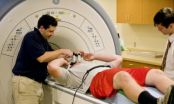
WEST LAFAYETTE, Ind. - A study by researchers at Purdue University suggests that some high school football players suffer undiagnosed changes in brain function and continue playing even though they are impaired. "Our key finding is a previously undiscovered category of cognitive impairment," said Thomas Talavage, an expert in functional neuroimaging who is an associate professor of biomedical engineering and electrical and computer engineering and co-director of the Purdue MRI Facility. The findings represent a dilemma because they suggest athletes may suffer a form ...
Read more →
Science 2010-10-08

Author who revealed unethical Guatemala syphilis study writes for Bioethics Forum

(Garrison, NY) The researcher whose revelations about unethical U.S. studies on syphilis in Guatemala in the 1940's led to apologies from the Obama administration last week has written a commentary for Bioethics Forum, the Hastings Center's online publication. She calls for the need to learn from history to better protect human subjects in the developing world. Susan M. Reverby, a professor at Wellesley College, describes how she unearthed documents about the study by accident while doing research for a book on the Tuskegee syphilis study. The documents, hidden in the ...
Read more →
Medicine 2010-10-08

Notre Dame researcher helps discover 'walking' properties of bacteria

Talk about a walk on the wild side: University of Notre Dame researcher Joshua Shrout is co-author of a new paper that shows that bacteria are capable of "standing up" and moving while vertical. Shrout, assistant professor of civil engineering and geological sciences and a member of the Eck Institute for Global Health, has been studying the surface motility of bacteria since 2004. In 2008, UCLA researcher Gerard Wong suggested that an undergraduate bioengineering senior design group that he was advising track the bacterium Shrout was studying. After some interesting patterns ...
Read more →
MRI zooms in on microscopic flow
Science 2010-10-08

MRI zooms in on microscopic flow

"Better and faster results!" is the clarion call for scientists and engineers to continually strive to improve their research tools. Of the tools used to study material structures at the atomic and molecular scales, there is none finer than Nuclear Magnetic Resonance (NMR) spectroscopy and its daughter technology Magnetic Resonance Imaging (MRI). Now, the latest development from the research group of one of the word's foremost authorities on NMR/MRI technology promises NMR/MRI results that are better and faster than ever before – a million times faster! Through a combination ...
Read more →
Medicine 2010-10-08

In Parkinson's disease, brain cells abandon mitochondria, researchers report

In a study that sheds new light on the causes of Parkinson's disease, researchers report that brain cells in Parkinson's patients abandon their energy-producing machinery, the mitochondria. A shutdown in fuel can have devastating effects on brain cells, which consume roughly 20 percent of the body's energy despite making up only 2 percent of body weight. The findings indicate that boosting the mitochondria with FDA approved drugs early on may prevent or delay the onset of Parkinson's. The study will be published in the one-year anniversary issue of the journal Science ...
Read more →