Medicine Technology 🌱 Environment Space Energy Physics Engineering Social Science Earth Science Science
Cell survival protein discovery rewrites immune system story
Medicine 2010-10-08

Cell survival protein discovery rewrites immune system story

A discovery by Walter and Eliza Hall Institute researchers in Melbourne, Australia, reported in today's edition of Science, is set to rewrite a long-held belief about how the body's immune system establishes its memory. The findings of Dr Ingela Vikstrom and Associate Professor David Tarlinton, from the institute's Immunology division, centre on immune cells called B cells that produce the antibodies which fight infection. "B cells and antibody production are the key to the success of all currently used vaccines for immunity in humans," said Associate Professor Tarlinton. ...
Read more →
Medicine 2010-10-08

Bacteria to blame in asthma attacks in children

"We found a significant relationship between bacterial infections and acute asthma attacks - above and beyond the expected relationship between viral infections and attacks," says Hans Bisgaard, a professor of paediatrics at the DPAC. The study examined 361 children between the ages of four weeks and three years to determine the presence of viral and bacterial infections during severe asthma attacks. The results conclude that the number of attacks was just as high in children with bacterial respiratory infections as in those with viral infections. Using antibiotics ...
Read more →
Medicine 2010-10-08

Killer disease decimates UK frog populations

Common frog (Rana temporaria) populations across the UK are suffering dramatic population crashes due to infection from the emerging disease Ranavirus, reveals research published in the Zoological Society of London's (ZSL) journal Animal Conservation. Using data collected from the public by the Frog Mortality Project and Froglife, scientists from ZSL found that, on average, infected frog populations experienced an 81 per cent decline in adult frogs over a 12 year period. "Our findings show that Ranavirus not only causes one-off mass-mortality events, but is also responsible ...
Read more →
Environment 2010-10-08

Crop failures set to increase under climate change

Large-scale crop failures like the one that caused the recent Russian wheat crisis are likely to become more common under climate change due to an increased frequency of extreme weather events, a new study shows. However, the worst effects of these events on agriculture could be mitigated by improved farming and the development of new crops, according to the research by the University of Leeds, the Met Office Hadley Centre and University of Exeter. The unpredictability of the weather is one of the biggest challenges faced by farmers struggling to adapt to a changing ...
Read more →
Real price of each pack of cigarettes is more than €100
Science 2010-10-08

Real price of each pack of cigarettes is more than €100

Researchers from the Polytechnic University of Cartagena (UPCT) estimate that each pack of cigarettes really costs €107 for men and €75 for women, when premature death is taken into account. These figures confirm previous studies, and are of key importance in the cost-benefit analysis of smoking-prevention policies. "One of the conclusions of the article is that the price one pays for each pack of cigarettes at a newsstand is only a very small price of the true price that smokers pay for their habit", Ángel López Nicolás, co-author of the study that has been published ...
Read more →
Childhood vaccines yes, but not at a cost
Medicine 2010-10-08

Childhood vaccines yes, but not at a cost

Researchers from the University of Alicante (UA) taking part in the European VACSATC project have studied mothers' and fathers' opinions on vaccinating their children in five countries. The results of the survey show that Spanish mothers are more resistant than those in other countries to the idea of paying for vaccines, while 20.9% expressed some concern about the safety of vaccines. "Mothers in Spain are more concerned about vaccinating their children since the incident with the human papilloma virus (HPV) vaccine", José Tuells, a researcher at the UA and a Spanish ...
Read more →
Venus Express finds planetary atmospheres such a drag
Space 2010-10-08

Venus Express finds planetary atmospheres such a drag

VIDEO: This animation demonstrates the orbital perturbations to Venus Express caused by the atmospheric drag experienced as the spacecraft skims the atmosphere of Venus. To experience the drag, the spacecraft must... Click here for more information. The polar atmosphere of Venus is thinner than expected. How do we know? Because ESA's Venus Express has actually been there. Instead of looking from orbit, Venus Express has flown through the upper reaches of the planet's ...
Read more →
Medicine 2010-10-08

Life-saving in the bacterial world: How Campylobacter rely on Pseudomonas to infect humans

Many a holiday is ruined by food poisoning, frequently caused by the bacterium Campylobacter jejuni. Although Campylobacter infections are rarely life-threatening they are extremely debilitating and have been linked with the development of Guillain-Barré syndrome, one of the leading causes of non-trauma-induced paralysis worldwide. Campylobacter jejuni is well adapted to life in the guts of animals and birds, where it is often found in very high levels. However, to infect humans it also needs to be able to survive outside the gut, on the surface of meat that will be ...
Read more →
Science 2010-10-08

Greater priority should be given to stroke prevention in developing countries

Increased global attention and research needs to be given to stroke prevention and the social and economic effects of the condition in developing countries, according to an academic at the University of East Anglia (UEA). In a paper published in the current issue of the journal Development Policy Review, Prof Peter Lloyd-Sherlock of the School of International Development argues that policy-makers have been slow to recognise the growing scale of the challenge and impacts of stroke in developing countries. He calls for them to prioritise preventative screening and drug ...
Read more →
Science 2010-10-08

Neural responses indicate our willingness to help

Witnessing a person from our own group or an outsider suffer pain causes neural responses in two very different regions of the brain. And, the specific region activated reveals whether or not we will help the person in need. Researchers at the University of Zurich studied the brain responses of soccer fans and now have neurobiological evidence for why we are most willing to help members of our own group. Our reactions to shocking news clips on television demonstrate that human beings can remain remarkably cool in the face of other peoples' suffering. And yet, we are also ...
Read more →
Education program developed for preventing antisocial behavior in 3-year-old children
Social Science 2010-10-08

Education program developed for preventing antisocial behavior in 3-year-old children

University of Granada researchers have developed a pioneer intervention program aimed at 3 year-old children, that helps in preventing antisocial behavior in adulthood. In its first year of implementation, the program –named Aprender a convivir– achieved that 90% of participating children interacted more actively with their peers, and that 86% reduced symptoms such as anxiety/depression, somatization, poor emotional reactivity, shyness, and social isolation. To carry out this study –funded by the Spanish Ministry of Education and Science–, the researchers took a sample ...
Read more →
Technology 2010-10-08

New computer switches handle heat that renders transistors useless

Researchers at Case Western Reserve University have taken the first step to building a computer capable of operating in the heat of a jet engine or the sunny side of the planet Mercury. Te-Hao Lee, Swarup Bhunia and Mehran Mehregany, have made electromechanical switches – building blocks of circuits - that can take twice the heat that renders electronic transistors useless. Their work was published in Science last month. The engineers took their cue from English inventor Charles Babbage, who built a steam-driven machine to calculate mathematical tables in the 1830s. ...
Read more →
Medicine 2010-10-08

Patient personality hinders detection of depression

Patient personality affects the accuracy of reports by friends and family members of mood history and symptoms and can cause missed diagnoses of depression, according to research published online by the journal International Psychogeriatrics. Friends and family members of a person who is highly outgoing and fun-loving and who is likely to experience happiness and excitement, for example, often miss the signs that indicate the person is depressed. "When a person who has enjoyed socializing and whose mood normally is positive becomes depressed, friends and family often ...
Read more →
Medicine 2010-10-08

Reducing blood transfusions improves patient safety and cuts costs

MAYWOOD, Ill. -- A Loyola University Hospital study has demonstrated how the hospital has improved patient safety and cut costs by reducing the number of blood transfusions. In 2009, the average amount of blood products transfused per patient at Loyola was 10 percent lower than it was in 2008, saving $453,355. The average amount of blood products transfused dropped from 2.03 units per patient in 2008 to 1.82 units per patient in 2009. Results were reported at the recent annual meeting of the College of American Pathologists. "We are giving the right blood component, ...
Read more →
Science 2010-10-08

The elusive intermediary

Photosynthesis is the process used by plants to convert atmospheric carbon dioxide into the energy-rich chemicals upon which all life-forms depend. The energy trapped in these compounds comes from sunlight, and photosynthetic organisms – plants, algae and certain types of bacteria – capture this energy in a usable form with the help of protein complexes called photosystems. Photosystems include antenna proteins that collect incident light, and green plants have two sorts of photosystems, which respond best to light of different wavelengths. A team of researchers at LMU, ...
Read more →
Science 2010-10-08

Report examines effects of noise and recommends ways to reduce levels

Exposure to noise is a fact of life. At high levels, noise can damage hearing, and at lower levels it can disrupt sleep patterns, interfere with communications, and even cause accidents. A new National Academy of Engineering report characterizes the most commonly identified sources of noise, looks at efforts that have been made to reduce noise emissions, and suggests ways to decrease exposure in workplaces, schools, recreational environments, and residences. Development of noise control technology needs immediate attention, said the committee that wrote the report. America ...
Read more →
Medicine 2010-10-08

NIH funds advanced development of 3 biodefense vaccines

### For more information, visit NIAID's Vaccines Web site at http://www.niaid.nih.gov/topics/vaccines/Pages/Default.aspx and Biodefense Web site at http://www.niaid.nih.gov/topics/biodefenserelated/Pages/default.aspx. NIAID conducts and supports research-at NIH, throughout the United States, and worldwide to study the causes of infectious and immune-mediated diseases, and to develop better means of preventing, diagnosing and treating these illnesses. News releases, fact sheets and other NIAID-related materials are available on the NIAID Web site at http://www.niaid.nih.gov. The ...
Read more →
Medicine 2010-10-08

Despite highest health spending, Americans' life expectancy falls behind other countries'

October 7, 2010—America continues to lag behind other nations when it comes to gains in life expectancy, and commonly cited causes for our poor performance—obesity, smoking, traffic fatalities and homicide—are not to blame, according to a study by researchers at Columbia University's Mailman School of Public Health. The study looked at health spending; behavioral risk factors like obesity and smoking; and 15-year survival rates for men and women ages 45 and 65 in the U.S. and 12 other nations -- Australia, Austria, Belgium, Canada, France, Germany, Italy, Japan, the Netherlands, ...
Read more →
Transgenic corn suppresses European corn borer, saves farmers billions
Science 2010-10-08

Transgenic corn suppresses European corn borer, saves farmers billions

Transgenic corn's suppression of the European corn borer has saved Midwest farmers billions of dollars in the past decade, reports a new study in Science. Research conducted by several Midwest universities shows that suppression of this pest has saved $3.2 billion for corn growers in Illinois, Minnesota, and Wisconsin over the past 14 years with more than $2.4 billion of this total benefiting non-Bt corn growers. Comparable estimates for Iowa and Nebraska are $3.6 billion in total, with $1.9 billion accruing for non-Bt corn growers. Transgenic corn is engineered to ...
Read more →
Science 2010-10-08

Tinnitus in the elderly is prevalent and impacts quality of life

Alexandria, VA — Tinnitus is common among elderly Nigerians and associated with treatable health conditions like otitis media, rhinosinusitis, head injury and hypertension, according to new research published in the October 2010 issue of Otolaryngology – Head and Neck Surgery. Nearly 36 million Americans, however, suffer from tinnitus or head noises. It may be an intermittent sound or an annoying continuous sound in one or both ears. In Nigeria, tinnitus affects between 10.1% and 33% of the population, with about 3 to 4% consulting a doctor on at least one occasion in ...
Read more →
New deep-sea hot springs discovered in the Atlantic
Science 2010-10-08

New deep-sea hot springs discovered in the Atlantic

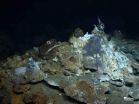
Scientists from the MARUM Center for Marine Environmental Sciences and the Max Planck Institute for Marine Microbiology in Bremen on board the German research vessel Meteor have discovered a new hydrothermal vent 500 kilometres south-west of the Azores. The vent with chimneys as high as one meter and fluids with temperatures up to 300 degrees Celsius was found at one thousand metres water depth in the middle of the Atlantic Ocean. The discovery of the new deep-sea vent is remarkable because the area in which it was found has been intensively studied during previous research ...
Read more →
Novel protein critical for cellular proliferation discovered
Medicine 2010-10-08

Novel protein critical for cellular proliferation discovered

Accurate duplication of genetic material and the faithful segregation of chromosomes are critical for cell survival. The initiation of DNA replication is linked both to cell cycle progression and chromatin organization. In plants, animals and other "eukaryotes," the assembly of a multi-protein complex called pre-replicative complex (preRC) is the first step in the initiation of DNA replication. As the name implies, origin recognition complex (ORC) proteins bind to origins of DNA replication. Subsequently, other components of preRC are assembled at these sites. In addition ...
Read more →
Science 2010-10-08

An X-ray for your genes

Prescription drugs and their dosages may be standardized, but not every patient reacts to a medicine in the same way. The personal genetic characteristics of individuals and populations can explain why a specific prescription successfully treats one patient and not another, so medical researchers are adopting the new approach called "personalized medicine" and a Tel Aviv University lab is leading the way. Dr. Noam Shomron of Tel Aviv University's Sackler Faculty of Medicine is developing a new method for the advancement of personalized medicine, an expanding area of ...
Read more →
Medicine 2010-10-08

Queen's University discovery could impact how the body receives medicine

Researchers at Queen's University have discovered how molecules in glass or plastic are able to move when exposed to light from a laser. The findings could one day be used to facilitate medicinal drug distribution by allowing doctors to control the time and rate at which drugs are delivered into the body. The drugs, in a solid plastic carrier, could be released through the body when exposed to light. Lead researcher Jean-Michel Nunzi, a professor in the departments of Chemistry and Physics, has determined that "molecular cooperation" is what allows the molecules to move ...
Read more →
You may not be able to say how you feel about your race
Science 2010-10-08

You may not be able to say how you feel about your race

INDIANAPOLIS –A new study from the School of Science at Indiana University-Purdue University Indianapolis looks at how much African Americans and whites favor or prefer their own racial group over the other, how much they identify with their own racial group, and how positively they feel about themselves. The work, by Leslie Ashburn-Nardo, Ph.D., associate professor of psychology in the School of Science at IUPUI, looked at both consciously controllable sentiments and gut feelings about social stigma and found a significant difference in both groups between what people ...
Read more →