THE ORIGINAL COLLECTION · SINCE 2010

The press release
archive.

Research announcements from universities, hospitals and scientific institutions. Explore the stories, people and discoveries behind the headlines.

Original publication datesPage 937
FIND A STORY

Find a past release.

Dates and source material belong to the original release.

Read our research explainers

Browse the collection · original publication order

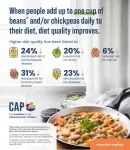
Adding beans and pulses can lead to improved shortfall nutrient intakes and a higher diet quality in American adults
Medicine

Adding beans and pulses can lead to improved shortfall nutrient intakes and a higher diet quality in American adults

Moscow, Idaho, October 3, 2024: New research showing the association between greater bean and pulse consumption and improved shortfall nutrient intakes and a higher diet quality in American adults will be presented during the Academy of Nutrition and Dietetics (the Academy) Food & Nutrition Conference & Expo (FNCE) 2024 in Minneapolis, MN. The poster session is scheduled for Tuesday, October 8, 2024, from 10:45 – 11:45 AM CT at the Minneapolis Convention Center. Researchers assessed the effect of increased bean and pulse consumption, in the typical US dietary pattern, on shortfall ...

Read the release
What happens in the brain when a person with schizophrenia “hears voices”?
Medicine

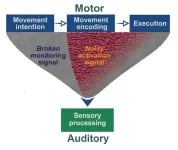
What happens in the brain when a person with schizophrenia “hears voices”?

Auditory hallucinations are likely the result of abnormalities in two brain processes: a “broken” corollary discharge that fails to suppress self-generated sounds, and a “noisy” efference copy that makes the brain hear these sounds more intensely than it should. That is the conclusion of a new study published October 3rd in the open-access journal PLOS Biology by Xing Tian, of New York University Shanghai, China, and colleagues. Patients with certain mental disorders, including schizophrenia, often hear voices in the absence of sound. Patients may fail to distinguish between their ...

Read the release
Ant agriculture began 66 million years ago in the aftermath of the asteroid that doomed the dinosaurs
Space

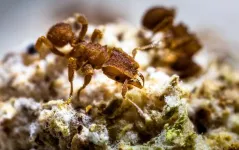
Ant agriculture began 66 million years ago in the aftermath of the asteroid that doomed the dinosaurs

When humans began farming crops thousands of years ago, agriculture had already been around for millions of years. In fact, several animal lineages have been growing their own food since long before humans evolved as a species. According to a new study, colonies of ants began farming fungi when an asteroid struck Earth 66 million years ago. This impact caused a global mass extinction but also created ideal conditions for fungi to thrive. Innovative ants began cultivating the fungi, creating an evolutionary partnership that became even more tightly intertwined 27 million years ago and continues to this day. In a paper published today, Oct. 3, in the journal Science, scientists at the Smithsonian’s ...

Read the release
A new era of solar observation
Environment

A new era of solar observation

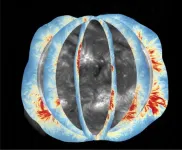
EMBARGOED: Not for Release Until 2:00 pm U.S. Eastern Time Thursday, 3 October 2024. A new era of solar observation International team produces global maps of coronal magnetic field Contacts: Audrey Merket, NSF NCAR and UCAR Science Writer and Public Information Officer amerket@ucar.edu 303-497-8293 David Hosansky, NSF NCAR and UCAR Manager of Media Relations hosansky@ucar.edu 720-470-2073 For the first time, scientists have taken near-daily measurements of the Sun’s global coronal magnetic field, a region of the Sun that has only been observed irregularly in the past. The resulting observations ...

Read the release
The true global impact of species-loss caused by humans is far greater than expected – new study reveals
Environment

The true global impact of species-loss caused by humans is far greater than expected – new study reveals

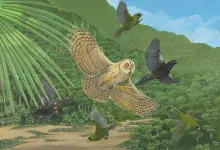
The extinction of hundreds of bird species caused by humans over the last 130,000 years has has led to substantial reductions in avian functional diversity – a measure of the range of different roles and functions that birds undertake within the environment – and resulted in the loss of approximately 3 billion years of unique evolutionary history, according to a new study published today in Science. Whilst humans have been driving a global erosion of species richness for millennia, the consequences of past extinctions for other dimensions of biodiversity are poorly known. ...

Read the release
Medicine

Smartphone-assisted “scavenger hunt” identifies people at risk for dementia

Researchers from DZNE and Otto von Guericke University Magdeburg have identified individuals with increased risk for dementia using mobility data, recorded during a smartphone-based wayfinding task on the university campus. The findings, reported in the journal PLOS Digital Health, show the potential of smartphone data, collected in conditions close to everyday life, for the early detection and monitoring of Alzheimer’s disease. The study included 72 adults; about a third of them with subjective cognitive decline (SCD), a condition that is a known risk factor for dementia. Alzheimer’s disease usually develops unnoticed over years and eventually ...

Read the release
Environment

Green subsidies may have hidden costs, experts warn

Government subsidies for business practices and processes should be approached with caution, even when they seem to be environmentally friendly, writes a group of scientists and economists in this week’s Policy Forum in the journal Science. They argue that subsidies can alter market pressures, leading to unintended consequences that not only perpetuate harmful subsidies over time but also diminish the overall effectiveness of those intended to promote environmental sustainability. Therefore, when they must be used, subsidies should have clear end-dates, advise the authors. “We’ve got this odd juxtaposition of ...

Read the release
Medicine

Small brains can accomplish big things, according to new theoretical research

Neuroscientists had a problem. For decades, researchers had a theory about how an animal’s brain keeps track of where it is relative to its surroundings without outside cues – like how we know where we are, even with our eyes closed. According to the theory, which was based on brain recordings from rodents, networks of neurons called ring attractor networks maintain an internal compass that keeps track of where you are in the world. An accurate internal compass was thought to require a large network with many neurons, while a small network with few neurons would cause the compass’s needle to drift, creating errors. Then researchers discovered an internal compass ...

Read the release
UTA professor honored for science education leadership
Social Science

UTA professor honored for science education leadership

University of Texas at Arlington UTeach Master Teacher Karen Jo Matsler will be awarded the 2025 Melba Newell Phillips Medal in January from the American Association of Physics Teachers (AAPT) in recognition of her extensive contributions to physics education and her tireless efforts to support educators nationwide. Founded in 1930, AAPT is a national organization dedicated to advancing the teaching and understanding of physics. For more than 20 years, Dr. Matsler has been a tireless advocate of physics education, working with state legislators and educational agencies ...

Read the release
Science

Decline of mpox antibody responses after modified vaccinia Ankara–Bavarian Nordic vaccination

About The Study: The modified vaccinia Ankara–Bavarian Nordic (MVA-BN) vaccination generated mpox antibodies that waned by 6 to 12 months. In participants who received 2 doses of MVA-BN vaccine, mpox antibody responses at 12 months were comparable to or lower than peak antibody responses in people receiving 1 dose, which provided limited protection. Quote from corresponding author Dan H. Barouch, MD, PhD: “In this observational study, we show that mpox antibody responses decline 6-12 months following Jynneos (MVA-BN) vaccination. Our data suggest that protective immunity may ...

Read the release
Medicine

Wider use of convalescent plasma might have saved thousands more lives during pandemic

A new study led by researchers at Johns Hopkins Bloomberg School of Public Health estimates that thousands of lives could have been saved during the first year of the COVID-19 pandemic if convalescent plasma had been used more broadly, particularly in outpatients at high risk for severe disease and in hospitalized patients during their first few days of admission. Convalescent plasma from patients who had recovered from COVID was used starting in the early months of the pandemic at the urging of a group of physicians who cited the blood ...

Read the release
Strong coupling between Andreev qubits mediated by a microwave resonator
Science

Strong coupling between Andreev qubits mediated by a microwave resonator

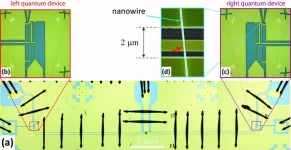
Quantum communication and quantum computing operate based on quantum bits (qubits) as the smallest unit of information — related to bits in a classical computer. Of the many different approaches currently being investigated around the world, one promising option is to use Andreev pair qubits. These qubits are formed at interfaces between a metal and a superconductor in a process known as Andreev reflection. Here, an electron from the metal enters the superconductor, where it becomes part of an electron pair (a Cooper pair) — while a hole, ...

Read the release
Science

UNF biological sciences professor receives NIH grant to study muscle atrophy

Jacksonville, Fla. – A University of North Florida biology professor has been awarded a prestigious four-year National Institutes of Health (NIH) grant totaling over $720K to study the functional role of an enzyme called dual-specificity phosphatase 4 (Dusp4) in skeletal muscle atrophy. Dr. David Waddell’s NIH-funded research project will help contribute to knowledge about skeletal muscle atrophy associated with neuromuscular disorders, neurodegenerative diseases and aging. Skeletal muscle atrophy is a decrease in muscle mass that occurs when protein degradation exceeds protein ...

Read the release
Medicine

Child Health Day 2024: influenza vaccine protects children from infection and hospitalization for the disease, Spanish study shows

A study published on Eurosurveillance has demonstrated that Spain's influenza vaccination campaign for children aged 6-59 months during the 2023/24 season was effective in preventing acute respiratory infections (ARI) and hospitalisation, as vaccination was recommended for this age group at the national level for the first time. In the context of Child Health Day 2024, this research emphasises that continued efforts should be made to increase vaccination coverage among children for future seasons. Context and methods Influenza A was dominant in the 2023/2024 season, ...

Read the release
Social Science

Announcing the 2024 Glenn Foundation Discovery Awards: Jeffrey Friedman, MD, Ph.D/ (the Rockefeller University) and Myriam Heiman, Ph.D. (MIT)

Santa Barbara, CA and New York, NY -- The Glenn Foundation for Medical Research (GFMR) and the American Federation for Aging Research (AFAR) are pleased to announce the 2024 recipients of the Glenn Foundation Discovery Awards: Jeffrey Friedman, MD, PhD (Professor, The Rockefeller University and Investigator, Howard Hughes Medical Institute) and Myriam Heiman, PhD (Associate Professor of Neuroscience, Massachusetts Institute of Technology). The Glenn Foundation Discovery Award supports research projects with strong potential to develop pioneering discoveries to understand ...

Read the release
Medicine

Stem cell transplants close macular holes in monkeys

Human stem cell transplants successfully repaired macular holes in a monkey model, researchers report October 3rd in the journal Stem Cell Reports. After transplantation, the macular holes were closed by continuous filling of the space with retinal tissue. “We confirmed for the first time in a non-human primate model that embryonic stem-derived retinal organoid sheet transplantation facilitates the closure of macular holes,” says senior study author Michiko Mandai of the Kobe City Eye Hospital. “Our results suggest that this method could become a practical, safe, and effective ...

Read the release
Medicine

Our brains divide the day into chapters. New psychology research offers details on how.

The moment a person steps off the street and into a restaurant—to take just one example—the brain mentally starts a new “chapter” of the day, a change that causes a big shift in brain activity. Shifts like this happen all day long, as people encounter new environments, like going out for lunch, attending their kid’s soccer game, or settling in for a night of watching TV. But what determines how the brain divides the day into individual events that we can understand and remember separately? That’s what a new paper in the journal Current Biology aimed to find ...

Read the release
Medicine

Fear of cancer recurrence in adult survivors of childhood cancer

About The Study: Decades following treatment, one-third of childhood cancer survivors in this study reported elevated fear their cancer will recur or a subsequent malignant neoplasm will develop. Findings suggest that fear of cancer recurrence should be routinely screened, and clinically significant symptoms intervened upon as a part of survivorship care. Corresponding Author: To contact the corresponding author, Nicole M. Alberts, PhD, email nicole.alberts@concordia.ca. To access the embargoed study: Visit our For The Media website at this link https://media.jamanetwork.com/ (doi:10.1001/jamanetworkopen.2024.36144) Editor’s ...

Read the release
Medicine

AI algorithm for subclinical breast cancer detection

About The Study: In this retrospective cohort study of women undergoing screening mammography, mean absolute artificial intelligence (AI) scores were higher for breasts developing vs not developing cancer 4 to 6 years before their eventual detection. These findings suggest that commercial AI algorithms developed for breast cancer detection may identify women at high risk of a future breast cancer, offering a pathway for personalized screening approaches that can lead to earlier cancer diagnosis. Corresponding Author: To contact the corresponding author, Solveig Hofvind, PhD, email sshh@kreftregisteret.no. To access the embargoed study: ...

Read the release
Medicine

Study identifies potential novel drug to treat tuberculosis

Highlights: Mycobacterium tuberculosis, which causes tuberculosis (TB), is a threat to public health. A new study identified that a semi-synthetic compound can be derived from natural compounds and shows potent activity against M. tuberculosis, including multi-drug resistant strains. This is a promising step toward new potent treatment for TB. Washington, D.C.—A new study published in the American Society for Microbiology journal Microbiology Spectrum demonstrates that a novel semi-synthetic compound can be derived from ...

Read the release
UTEP study: Zooplankton go “Eew!” to cleaning feces contaminated water
Science

UTEP study: Zooplankton go “Eew!” to cleaning feces contaminated water

EL PASO, Texas (Oct. 3, 2024) – Scientists at The University of Texas at El Paso and Stanford University were recently surprised to find that the natural community of zooplankton — tiny, aquatic animals known to graze on bacteria — present in freshwater and saltwater do not clean water that is contaminated with fecal microorganisms. The research, published today in the biology journal mSphere, reveals important insights about the limitations of zooplankton in treating bodies of water that have been contaminated with fecal organisms, the team said. A 2017 U.S. water quality inventory ...

Read the release
FAU awarded $10M to train people with disabilities for in-demand tech jobs
Science

FAU awarded $10M to train people with disabilities for in-demand tech jobs

The rising demand for tech jobs presents an outstanding opportunity for growth and inclusivity in the industry. Developing accessible training programs tailored for individuals with disabilities can foster a more diverse workforce. Florida Atlantic University’s College of Education and the College of Engineering and Computer Science have received a $9,961,460 grant from the United States Department of Education’s Office of Special Education and Rehabilitative Services to increase the capacity and participation of transition-age youths and working-age adults with disabilities in high demand technology jobs locally and nationally. ...

Read the release
Plants have a backup plan
Science

Plants have a backup plan

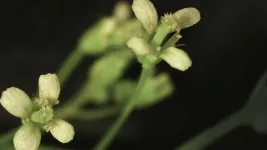
Tending a garden is hard work. Imagine it from the plants’ perspective. Each relies on fine-tuned genetic processes to pass down accurate copies of chromosomes to future generations. These processes sometimes involve billions of moving parts. Even the tiniest disruption can have a cascading effect. So, for plants like Arabidopsis thaliana, it’s good to have a backup plan. “Chromosomes have to be accurately partitioned every time a cell divides,” explains Cold Spring Harbor Laboratory (CSHL) Professor and HHMI Investigator Rob Martienssen. “For that to happen, each chromosome has ...

Read the release
Logic with light
Science

Logic with light

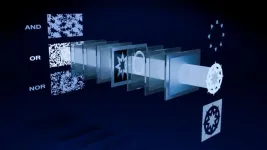
Increasingly complex applications such as artificial intelligence require ever more powerful and power-hungry computers to run. Optical computing is a proposed solution to increase speed and power efficiency but has yet to be realized due to constraints and drawbacks. A new design architecture, called diffraction casting, seeks to address these shortcomings. It introduces some concepts to the field of optical computing that might make it more appealing for implementation in next-generation computing devices. Whether ...

Read the release
Wastewater bacteria can breakdown plastic for food
Medicine

Wastewater bacteria can breakdown plastic for food

Researchers have long observed that a common family of environmental bacteria, Comamonadacae, grow on plastics littered throughout urban rivers and wastewater systems. But what, exactly, these Comamonas bacteria are doing has remained a mystery. Now, Northwestern University-led researchers have discovered how cells of a Comamonas bacterium are breaking down plastic for food. First, they chew the plastic into small pieces, called nanoplastics. Then, they secrete a specialized enzyme that breaks down the plastic even further. Finally, the bacteria use a ring of carbon atoms from the plastic as a ...

Read the release
From the original Press-News collection. Issuers of news releases are responsible for the accuracy of their content.