PRESS-NEWS.org - Press Release Distribution
PRESS RELEASES DISTRIBUTION

Flying without wings: Losing feathers has a detrimental effect on migrating birds
Flying without wings: Losing feathers has a detrimental effect on migrating birds
2015-07-02
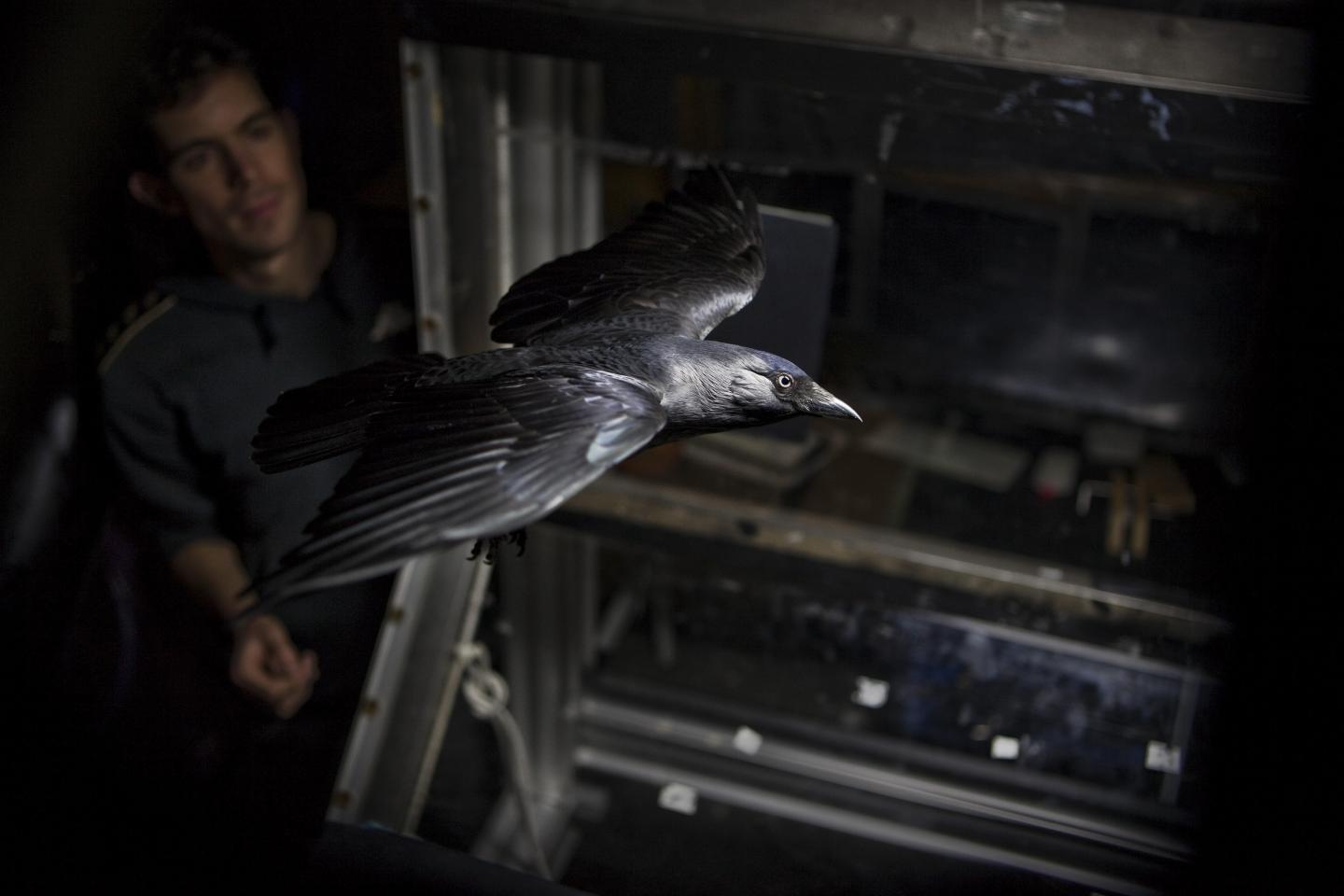
(Press-News.org) Birds that moult at the wrong time of the year could be disadvantaged, according to a study by scientists at Lund University, Sweden. Birds depend on a full set of feathers for maximum efficiency when flying long distances, but the study shows that moulting has a detrimental effect on their flight performance.

The researchers trained a jackdaw to fly in a wind tunnel and measured different types of drag experienced by the bird. "We expected the bird not to be able to glide at the lowest speeds that it could glide at before moult and our results confirmed this", says Marco Klein Heerenbrink, who is involved in the research.

The results imply the bird could not fully compensate for the missing feathers during moult. This suggests that if a migratory bird departs prematurely before it has fully moulted, it is likely it will need more energy to make the journey and may need more stopovers too.

The annual loss of flight feathers poses a potential challenge to birds due to the resulting reduced wing area and altered wing shape. However, birds have extraordinary flexibility in wing shape, which is thought to help maximise the efficiency of their wings and may compensate for missing flight feathers. "Understanding how moult affects the flight of a bird, can tell us something about the different moulting strategies birds use," says Klein Heerenbrink.

"In the wind tunnel, we can set a flight speed for the bird to fly at", he says. "The bird will try to stay in place relative to the walls of the wind tunnel. This means we can vary the speed, and the bird will attempt to adjust to this. For gliding flight we tilt the wind tunnel. This gives a vertical component to the airflow, simulating descending flight. If the bird can hold its position, this means that its weight is balanced by the aerodynamic forces (lift and drag)."

To compensate for the missing feathers, the bird needs to either move the wings forward or unload weight from the tail. There is a limit to how far the bird can move the wings forward and unloading from the tail requires increasing the loading on the main wings, which are already struggling due to the moult gaps. "So the bird has a difficult time finding the right balance," says Klein Heerenbrink.

Long distance migrants benefit from having a complete set of high quality flight feathers on their departure and this study implies it would be particularly bad to start migrating while certain feathers (called the outer primaries) are missing.

INFORMATION:


[Attachments] See images for this press release:
Flying without wings: Losing feathers has a detrimental effect on migrating birds

ELSE PRESS RELEASES FROM THIS DATE:

Simple classroom measures may reduce the impact of ADHD

2015-07-02
Children with Attention Deficit Hyperactivity Disorder (ADHD) may be successfully supported in classrooms through strategies that do not involve drugs, new research has indicated. These children are typically restless, act without thinking and struggle to concentrate, which causes particular problems for them and for others in school. A systematic review was led by the University of Exeter Medical School funded by NIHR's Health Research Technology Assessment programme and supported by the NIHR Collaboration for Leadership in Applied Health Research and Care South West ...

Baby seals that practice in pools make better divers

Baby seals that practice in pools make better divers
2015-07-02
Being able to dive is what matters most for seal pups, but how do they learn to do it? Grey seal pups that can play in pools may have better diving skills once they make the move to the sea, and this could increase their chance of survival. Researchers at Plymouth University have found that spending time in pools of water helps seal pups hold their breath for longer. Many seal species stay on land after they have weaned before they go to sea to feed for the first time. "It is during this period of fasting that access to water can make a difference to diving ability," ...

New chronic lung disease guidelines over-diagnose older men and under-diagnose younger women

2015-07-02
New guidelines for diagnosing chronic lung disease (chronic obstructive pulmonary disease or COPD), should be modified because they over-diagnose COPD in older men and under-diagnose COPD in young women. Writing in The BMJ this week, Professor Martin Miller and Dr Mark Levy say up to 13% of people thought to have COPD under the new criteria have been found to be misdiagnosed. They argue that clinicians should use internationally agreed standards when assessing patients for COPD. This, they say, will help to improve patient care through more accurate diagnosis, as well ...

End pharmacists' monopoly on selling certain drugs, argues expert

2015-07-02
Evidence is lacking that having a category of drugs that can be sold only by pharmacists or under their supervision ("pharmacy medicines") has benefits, writes a pharmacy professor in The BMJ this week. Professor Paul Rutter at the School of Pharmacy, University of Wolverhampton, calls for an end to pharmacists' monopoly on selling some drugs and thinks that a two tier system of prescription or non-prescription drugs, like in the US, would be simpler. He mentions the recent case of the painkiller, oral diclofenac, that used to be available as a non-prescription drug ...

Prolific authors raise concerns about industry dominance in diabetes research

2015-07-02
Diabetes research is dominated by a small group of prolific authors, raising questions about the imbalance of power and conflict of interests in this field, argue experts in The BMJ this week. In a new study, Frits Holleman and colleagues searched PubMed for all randomised controlled studies (RCTs) on glucose lowering treatments for diabetes from 1993 to 2013. In total, they identified 3,782 articles with 13,592 authors. The top 110 authors were named in a third (32.4%) of all articles, and they authored 991 RCTs, equivalent to 20 RCTs per author. Of these 110 ...

Temple doctors provide commentary in New England Journal of Medicine about major weight loss study

2015-07-02
Philadelphia -- Elias S. Siraj, M.D., FACP, FACE, director of the Diabetes Program at Temple University Hospital (TUH), and Kevin J. Williams, M.D., FACP, chief of endocrinology, diabetes and metabolism at TUH, co-authored an editorial piece published July 2 in the New England Journal of Medicine about a major weight loss study involving obese and overweight patients. Siraj and Williams offered their take on the significance of the randomized, double-blind clinical trial that showed a daily injection of 3.0 mg of the drug liraglutide, when given as an adjunct to diet ...

Study of gene mutations in aplastic anemia may help optimize treament

2015-07-02
Scientists have identified a group of genetic mutations in patients with aplastic anemia, which likely will help doctors optimize treatment for this rare and deadly blood condition. The study, appearing in the New England Journal of Medicine, could lead to tailor-made treatment plans for aplastic anemia patients as part of the emerging precision medicine movement. It is the largest study of its kind to examine gene mutations in aplastic anemia, the scientists note. The work involved researchers from the National Institutes of Health, the Cleveland Clinic, Cleveland, ...

Menopausal women have lower risk of dying from heart attack than men

2015-07-01
DALLAS, July 1, 2015 -- While menopause is commonly considered a risk factor for heart disease, menopausal women had a lower risk of dying from heart attack than men; however, this difference was less pronounced among blacks, according to research in the Journal of the American Heart Association. In the first study to compare men and women and how menopause types impact risk of heart attack, researchers studied 23,086 black and white adults over age 45 and found: White women who had surgical-induced menopause had a 35 percent reduced risk of non-fatal heart attacks ...

A tale of 2 (soil) cities

A tale of 2 (soil) cities
2015-07-01
As we walk along a forest path, the soil beneath our feet seems like a uniform substance. However, it is an intricate network of soil particles, pores, minerals, soil microbes, and more. It is awash in variety. Soil is a living, dynamic substance, and the microbial life within it is crucial to providing plant life with the food they need to grow. The microbes can be bacteria or fungi, but both need space--the pores--for a good living environment. Soil particles that clump together are aggregates. These are the architectural building blocks of soil. Their presence ...

EARTH: Bigger is better in the sea

2015-07-01
Alexandria, VA - Analyzing thousands of records, researchers have reinforced the claim that for marine life, bigger has been better for the last 542 million years. The study examined Cope's rule - the idea, named for paleontologist Edward Drinker Cope, that species evolve to larger sizes over time. With the help of undergraduate students and high-school interns, the researchers compiled information on five major marine phyla, including arthropods, brachiopods, chordates, echinoderms and mollusks. Find out how much bigger things got in the June issue of EARTH Magazine: ...

LAST 30 PRESS RELEASES:

Eye for trouble: Automated counting for chromosome issues under the microscope

The vast majority of US rivers lack any protections from human activities, new research finds

Ultrasound-responsive in situ antigen "nanocatchers" open a new paradigm for personalized tumor immunotherapy

Environmental “superbugs” in our rivers and soils: new one health review warns of growing antimicrobial resistance crisis

Triple threat in greenhouse farming: how heavy metals, microplastics, and antibiotic resistance genes unite to challenge sustainable food production

Earthworms turn manure into a powerful tool against antibiotic resistance

AI turns water into an early warning network for hidden biological pollutants

Hidden hotspots on “green” plastics: biodegradable and conventional plastics shape very different antibiotic resistance risks in river microbiomes

Engineered biochar enzyme system clears toxic phenolic acids and restores pepper seed germination in continuous cropping soils

Retail therapy fail? Online shopping linked to stress, says study

How well-meaning allies can increase stress for marginalized people

Commercially viable biomanufacturing: designer yeast turns sugar into lucrative chemical 3-HP

Control valve discovered in gut’s plumbing system

George Mason University leads phase 2 clinical trial for pill to help maintain weight loss after GLP-1s

Hop to it: research from Shedd Aquarium tracks conch movement to set new conservation guidance

Weight loss drugs and bariatric surgery improve the body’s fat ‘balance:’ study

The Age of Fishes began with mass death

TB harnesses part of immune defense system to cause infection

Important new source of oxidation in the atmosphere found

A tug-of-war explains a decades-old question about how bacteria swim

Strengthened immune defense against cancer

Engineering the development of the pancreas

The Journal of Nuclear Medicine ahead-of-print tip sheet: Jan. 9, 2026

Mount Sinai researchers help create largest immune cell atlas of bone marrow in multiple myeloma patients

Why it is so hard to get started on an unpleasant task: Scientists identify a “motivation brake”

Body composition changes after bariatric surgery or treatment with GLP-1 receptor agonists

Targeted regulation of abortion providers laws and pregnancies conceived through fertility treatment

Press registration is now open for the 2026 ACMG Annual Clinical Genetics Meeting

Understanding sex-based differences and the role of bone morphogenetic protein signaling in Alzheimer’s disease

Breakthrough in thin-film electrolytes pushes solid oxide fuel cells forward

[Press-News.org] Flying without wings: Losing feathers has a detrimental effect on migrating birds