Broad collaboration produces high-resolution atlas of developing human brain
Johns Hopkins and other BRAIN Initiative Cell Atlas Network researchers have enhanced a cellular road map of how the brain forms and adapts early in life by bringing together genetic information and insights from nearly 200 studies and 30 million cells
Published 2026-03-25 · Original archive entry · Explore research explainers
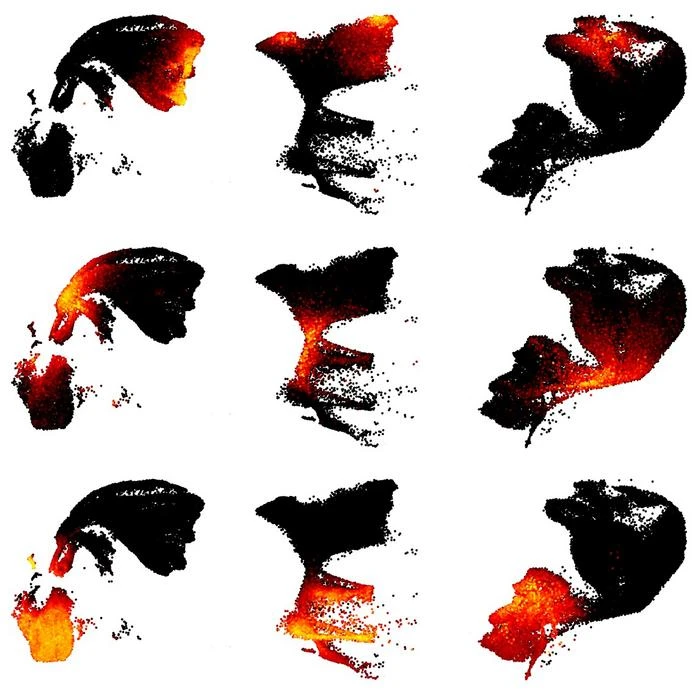
In a bid to better understand, and potentially treat, a host of conditions that affect early cognition, neurodevelopment and the brain later in life, investigators at Johns Hopkins Medicine and colleagues throughout the world have been mapping the molecular construction of the human brain. These models, which are supported in part by federal and international research grants, are helping researchers study genetic links and pathways involved in a variety of conditions, ranging from autism spectrum disorder, which affects about 1 in 31, or 3%, of children in the U.S., to Alzheimer’s disease, which is estimated to affect more than 7 million U.S. adults, including 1 in 9, or 11%, age 65 and older.
To support this blueprint, Carlo Colantuoni, Ph.D., an adjunct professor of neurology at Johns Hopkins Medicine and the Institute for Genome Sciences at the University of Maryland School of Medicine, and other researchers have, in their most recent study, brought together data from nearly 200 published studies and more than 30 million cells to advance insight about how the neocortex, the outermost layers of the brain, develops and forms over time. This region of the brain is responsible for a variety of functions, including how we think, sense, process and store information, and make decisions.
“Our goal is to understand how the neocortex is built on a cellular level, and identify clues to the earliest stages of developmental delays and brain disorders,” said Colantuoni. “By mapping the cell transitions and genes that give rise to the intricate structure and function of the neocortex, we can better understand, and then attempt to treat, disorders that arise in the womb, during infancy and childhood, and even much later in life.”
Not only does this enhanced atlas help researchers study genetic links for autism spectrum disorder, it can also provide insight into rare conditions like microcephaly, which can begin before birth and drastically affect the growth of the brain. A strength of bringing this information together, which is now available through Nature and Nature Neuroscience, is that researchers can study granular stages of development to identify typical growth patterns and then pinpoint the origins and pathways of neurodevelopmental delays and disease.
In addition to mapping a human model of the neocortex, the authors published a mammal and mouse model. These different atlases show that gene expression programs that began as diffuse networks millions of years ago were more recently focused in human neural stem cells to drive expansion of the human neocortex. This process, the researchers say, helped contribute to and, in part, explains differences in higher human cognitive abilities compared with other animals.
Using the accumulated data, the researchers also charted the maturation of neurons in the human neocortex, a process that has become longer over evolutionary time as the human neocortex and mental capacity have expanded. For example, this type of neural development takes weeks in a mouse but many years in humans. This represents differences in advanced systems that enable the human brain to adapt and learn how to interpret complex social, environmental and sensory inputs over an extended developmental period.
These resources are now available as an open-access web portal to empower other researchers investigating human brain development and disease. Collectively, says Colantuoni, these and other brain-charting efforts aim to help researchers study mechanisms of brain disease throughout the lifespan and provide a tool to better support and accelerate everyday research.
Researchers without coding expertise can explore the expression patterns of individual genes of interest, chart the coordinated expression of gene modules that work together in specific ways during development, and contribute their own data to expand the resource.
Previous Brain Research Through Advancing Innovative Neurotechnologies (BRAIN) Initiative efforts have generated human and mouse brain cell censuses, which catalog the diversity of cell types in the mammalian brain. Other projects are exploring how opioid use affects the brain among people living with HIV, how hair cells within the inner ear could possibly be regenerated to restore hearing, and how cellular pathways are distributed in dementia, including Alzheimer’s disease.
These brain-mapping studies are complemented by broader efforts to chart the entire cellular landscape of the human body, including the Human Cell Atlas (HCA). The HCA was founded in 2016 with the goal of bringing investigators throughout the world together to create open-access resources to map every cell in the human body. In 2024, experts published insights from more than 40 papers examining 62 million cells from nearly 10,000 humans.
Research from the HCA and related studies has already led to the discovery of new lung cells, a greater understanding of how the body responds to infections, and identification of networks of cells that work together to help the heart beat, regulate heart rate and enable communication among organs throughout the body.
“We’re living in an unprecedented time, when advancements in using technology to coordinate and analyze large datasets, work with researchers throughout the world and leverage insights across disease states is paramount to identifying new treatments that can save and improve lives,” said Colantuoni. “As these initiatives reach major milestones, we’re also seeing that the way investigators can collaborate and use these atlases is just getting started.”
Colantuoni adds that it is critical to recruit more academic and industry partners to invest in these precompetitive data exploration spaces that will greatly expand identification of novel molecular targets for treating brain disorders. “Combined with AI algorithms to guide large-scale screening in stem cell systems, these resources promise to enable precision tailoring of treatments to help individual patients with neurodevelopmental and neurodegenerative disease,” he says.
To support this vision, Colantuoni and colleagues, including Paul Worley, Jin-Chong Xu, Xiangyu Liao and Yuelin Lao (all from Johns Hopkins Medicine), Carol A. Barnes (from the University of Arizona), and Matthew Huetelman and Ignazio S. Piras (from TGen, the Translational Genomics Research Institute), have also created an open-data resource focused on Alzheimer’s disease.
Other authors of the neocortical development paper include Shreyash Sonthalia, Ricky S. Adkins, Joshua Orvis, Guangyan Li, Xoel Mato Blanco, Alex Casella, Jinrui Liu, Genevieve Stein-O’Brien, Brian Caffo, Ronna Hertzano, Anup Mahurkar, Jesse Gillis, Jonathan Werner, Shaojie Ma, Nicola Micali, Nenad Sestan, Pasko Rakic, Gabriel Santpere and Seth A. Ament.
The research described in the new report was supported in part by a PTE federal award (#N626451920001), NIH research grants R01-DC013817, R01-DC019370, R01HG010898-01, R24-MH114788, R24-MH114815, HG010898, R00-NS122085, MH124619, MH130991, the NIDCD/NIH Intramural Research Program (DC000094-01), international awards MS20/00064 (ISCIII-MICINN/FEDER), PID2019-104700GA-I00, PID2022-140137NB-I00 (AEI/ 10.13039/501100011033) and the Johns Hopkins University Discovery Award. The authors have no disclosures to report.
About Johns Hopkins Medicine
Johns Hopkins Medicine is an $11 billion integrated global health enterprise and one of the leading academic health care systems in the United States. It unites the physicians and scientists of the Johns Hopkins University School of Medicine with the organizations, health professionals and facilities of the Johns Hopkins Health System. Diverse and inclusive, Johns Hopkins educates medical students, scientists, health care professionals and the public; conducts biomedical research; and provides patient-centered medicine to prevent, diagnose and treat human illness. Johns Hopkins Medicine has six academic and community hospitals in Maryland, the Washington, D.C., metropolitan region and Florida, including The Johns Hopkins Hospital, which opened in 1889. The organization operates four health care and surgery centers, more than six ambulatory surgery centers, and more than 50 primary and specialty care outpatient sites under Johns Hopkins Community Physicians. Johns Hopkins Medicine extends health care into the community through Johns Hopkins Care at Home and Johns Hopkins Health Plans, and around the world through Johns Hopkins Medicine International. For information about the enterprise and its research, education and clinical programs, and for the latest health, science and research news, visit hopkinsmedicine.org.
END
To support this blueprint, Carlo Colantuoni, Ph.D., an adjunct professor of neurology at Johns Hopkins Medicine and the Institute for Genome Sciences at the University of Maryland School of Medicine, and other researchers have, in their most recent study, brought together data from nearly 200 published studies and more than 30 million cells to advance insight about how the neocortex, the outermost layers of the brain, develops and forms over time. This region of the brain is responsible for a variety of functions, including how we think, sense, process and store information, and make decisions.
“Our goal is to understand how the neocortex is built on a cellular level, and identify clues to the earliest stages of developmental delays and brain disorders,” said Colantuoni. “By mapping the cell transitions and genes that give rise to the intricate structure and function of the neocortex, we can better understand, and then attempt to treat, disorders that arise in the womb, during infancy and childhood, and even much later in life.”
Not only does this enhanced atlas help researchers study genetic links for autism spectrum disorder, it can also provide insight into rare conditions like microcephaly, which can begin before birth and drastically affect the growth of the brain. A strength of bringing this information together, which is now available through Nature and Nature Neuroscience, is that researchers can study granular stages of development to identify typical growth patterns and then pinpoint the origins and pathways of neurodevelopmental delays and disease.
In addition to mapping a human model of the neocortex, the authors published a mammal and mouse model. These different atlases show that gene expression programs that began as diffuse networks millions of years ago were more recently focused in human neural stem cells to drive expansion of the human neocortex. This process, the researchers say, helped contribute to and, in part, explains differences in higher human cognitive abilities compared with other animals.
Using the accumulated data, the researchers also charted the maturation of neurons in the human neocortex, a process that has become longer over evolutionary time as the human neocortex and mental capacity have expanded. For example, this type of neural development takes weeks in a mouse but many years in humans. This represents differences in advanced systems that enable the human brain to adapt and learn how to interpret complex social, environmental and sensory inputs over an extended developmental period.
These resources are now available as an open-access web portal to empower other researchers investigating human brain development and disease. Collectively, says Colantuoni, these and other brain-charting efforts aim to help researchers study mechanisms of brain disease throughout the lifespan and provide a tool to better support and accelerate everyday research.
Researchers without coding expertise can explore the expression patterns of individual genes of interest, chart the coordinated expression of gene modules that work together in specific ways during development, and contribute their own data to expand the resource.
Previous Brain Research Through Advancing Innovative Neurotechnologies (BRAIN) Initiative efforts have generated human and mouse brain cell censuses, which catalog the diversity of cell types in the mammalian brain. Other projects are exploring how opioid use affects the brain among people living with HIV, how hair cells within the inner ear could possibly be regenerated to restore hearing, and how cellular pathways are distributed in dementia, including Alzheimer’s disease.
These brain-mapping studies are complemented by broader efforts to chart the entire cellular landscape of the human body, including the Human Cell Atlas (HCA). The HCA was founded in 2016 with the goal of bringing investigators throughout the world together to create open-access resources to map every cell in the human body. In 2024, experts published insights from more than 40 papers examining 62 million cells from nearly 10,000 humans.
Research from the HCA and related studies has already led to the discovery of new lung cells, a greater understanding of how the body responds to infections, and identification of networks of cells that work together to help the heart beat, regulate heart rate and enable communication among organs throughout the body.
“We’re living in an unprecedented time, when advancements in using technology to coordinate and analyze large datasets, work with researchers throughout the world and leverage insights across disease states is paramount to identifying new treatments that can save and improve lives,” said Colantuoni. “As these initiatives reach major milestones, we’re also seeing that the way investigators can collaborate and use these atlases is just getting started.”
Colantuoni adds that it is critical to recruit more academic and industry partners to invest in these precompetitive data exploration spaces that will greatly expand identification of novel molecular targets for treating brain disorders. “Combined with AI algorithms to guide large-scale screening in stem cell systems, these resources promise to enable precision tailoring of treatments to help individual patients with neurodevelopmental and neurodegenerative disease,” he says.
To support this vision, Colantuoni and colleagues, including Paul Worley, Jin-Chong Xu, Xiangyu Liao and Yuelin Lao (all from Johns Hopkins Medicine), Carol A. Barnes (from the University of Arizona), and Matthew Huetelman and Ignazio S. Piras (from TGen, the Translational Genomics Research Institute), have also created an open-data resource focused on Alzheimer’s disease.
Other authors of the neocortical development paper include Shreyash Sonthalia, Ricky S. Adkins, Joshua Orvis, Guangyan Li, Xoel Mato Blanco, Alex Casella, Jinrui Liu, Genevieve Stein-O’Brien, Brian Caffo, Ronna Hertzano, Anup Mahurkar, Jesse Gillis, Jonathan Werner, Shaojie Ma, Nicola Micali, Nenad Sestan, Pasko Rakic, Gabriel Santpere and Seth A. Ament.
The research described in the new report was supported in part by a PTE federal award (#N626451920001), NIH research grants R01-DC013817, R01-DC019370, R01HG010898-01, R24-MH114788, R24-MH114815, HG010898, R00-NS122085, MH124619, MH130991, the NIDCD/NIH Intramural Research Program (DC000094-01), international awards MS20/00064 (ISCIII-MICINN/FEDER), PID2019-104700GA-I00, PID2022-140137NB-I00 (AEI/ 10.13039/501100011033) and the Johns Hopkins University Discovery Award. The authors have no disclosures to report.
About Johns Hopkins Medicine
Johns Hopkins Medicine is an $11 billion integrated global health enterprise and one of the leading academic health care systems in the United States. It unites the physicians and scientists of the Johns Hopkins University School of Medicine with the organizations, health professionals and facilities of the Johns Hopkins Health System. Diverse and inclusive, Johns Hopkins educates medical students, scientists, health care professionals and the public; conducts biomedical research; and provides patient-centered medicine to prevent, diagnose and treat human illness. Johns Hopkins Medicine has six academic and community hospitals in Maryland, the Washington, D.C., metropolitan region and Florida, including The Johns Hopkins Hospital, which opened in 1889. The organization operates four health care and surgery centers, more than six ambulatory surgery centers, and more than 50 primary and specialty care outpatient sites under Johns Hopkins Community Physicians. Johns Hopkins Medicine extends health care into the community through Johns Hopkins Care at Home and Johns Hopkins Health Plans, and around the world through Johns Hopkins Medicine International. For information about the enterprise and its research, education and clinical programs, and for the latest health, science and research news, visit hopkinsmedicine.org.
END