FAU-collaborative NSF study: Stem teacher pipeline shows resilience amid challenges
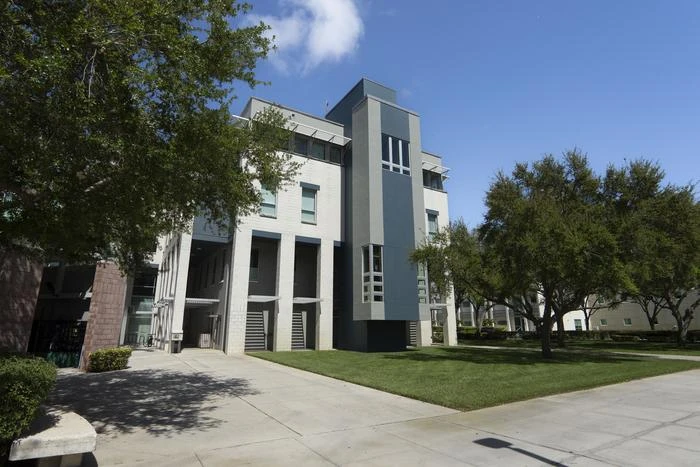
A landmark multiyear collaborative National Science Foundation study conducted by researchers at Florida Atlantic University, the Brookings Institution and Texas State University, as well as four partnering Noyce institutions, sheds new light on the state of the STEM teacher workforce in high-need schools across the United States. The research highlights both the resilience of STEM teachers under significant pressures and the ongoing challenges that threaten equitable access to high-quality STEM education for students in underserved communities.
Increasing student achievement in math, science and other STEM subjects is a critical national priority, closely linked to economic growth, international competitiveness and national security. However, the pipeline of qualified STEM teachers has struggled to keep pace with demand. Teacher preparation programs are producing fewer graduates, high school STEM curriculum requirements continue to expand, and the financial rewards of STEM careers outside education lure many potential teachers away. These factors have contributed to staffing shortages, high turnover and gaps in teacher qualifications, particularly in schools serving disadvantaged student populations.
“Strong STEM instruction is vital not just for student success, but for the country’s future in a high-tech global economy,” said David Devraj Kumar, Ed.D., one of the principal investigators of the collaborative study and a professor of science education and founding director of the STEM Education Laboratory, Department of Curriculum and Instruction, within FAU’s College of Education. “This research shows that, despite these pressures, the qualifications of STEM teachers in high-need schools have remained surprisingly stable over the past two decades. This resilience reflects the impact of targeted policies, programs, and collaborative initiatives designed to support teachers and maintain access to quality STEM instruction for students who need it most.”
The study examined three primary areas: long-term trends in the STEM teacher workforce, the influence of the Robert Noyce Teacher Scholarship Program, and the experiences of Noyce scholars at collaborating institutions. The research revealed that, despite widespread concerns about staffing pressures, the overall qualifications and turnover rates of STEM teachers in high-need schools have been largely stable, with some improvement in credential alignment relative to classroom instruction. These findings challenge prior research that suggested high-need schools faced sharply declining teacher quality and excessive turnover, illustrating the nuanced reality of the STEM teaching landscape.
“Findings from this research indicate that Noyce scholars are well-prepared to meet the demands of teaching in high-need schools,” said Henry Schaefer III, Ph.D., Graham Perdue Professor of Chemistry and director of the Center for Computational Quantum Chemistry at the University of Georgia. “The program works best for individuals who already have a passion for teaching, which highlights the importance of ongoing efforts to expand recruitment and outreach to new candidates.”
The Noyce program, an initiative of the NSF established in 2002, has played a critical role in building the STEM teacher pipeline. Named after Robert Noyce, the inventor of the integrated circuit, the program provides scholarships to future STEM teachers and fosters partnerships between teacher education programs and STEM faculty to prepare candidates for high-need schools. Evidence from the study indicates that districts near Noyce institutions experienced increases in qualified STEM teachers and reduced vacancy rates, suggesting that the program is achieving meaningful impact in strengthening the workforce.
“Noyce graduates bring strong content knowledge, pedagogical skills, and a commitment to serving students in communities that historically face barriers to high-quality STEM instruction,” said Joshua Strate, Ed.D., mathematics and science teacher at Florida Virtual School.
Despite encouraging signs, the research underscores persistent challenges. Gaps in subject-specific qualifications remain, particularly in physical sciences and computer science, where out-of-field instruction is prevalent. The STEM teacher workforce in high-need schools also relies heavily on foreign-trained teachers and alternative certification pathways, exposing schools to potential vulnerabilities if these labor sources fluctuate. Additionally, compensation and incentive structures remain insufficient to fully address the financial pressures that drive teachers away from high-need settings, highlighting the need for expanded scholarship support, loan forgiveness programs and targeted salary differentials.
The study also examined how schools cope with staffing pressures. Districts increasingly implement policies offering incentives for teachers in shortage fields and hard-to-staff schools. While these measures appear to contribute to workforce stability, researchers caution that continued monitoring and support are essential to ensure the long-term sustainability of the STEM teacher pipeline.
“The STEM teacher workforce is resilient, but it is not invulnerable. To ensure every student has access to quality STEM education, we need a comprehensive approach that includes financial support, thoughtful policy and programs like Noyce that prepare and retain skilled teachers in high-need schools,” said Sabrina Sembiante, Ph.D., professor of TESOL and bilingual education and co-chair of the Department of Curriculum and Instruction within FAU’s College of Education. “These findings give us reason to be optimistic, but they also remind us that there is much more work to be done.”
This collaborative research represents one of the most detailed examinations of the STEM teacher workforce to date, combining national survey analysis, district-level outcomes and in-depth mixed-method studies of teacher preparation programs. It provides valuable evidence to guide policymakers, education leaders and universities in efforts to strengthen STEM education and expand opportunities for students in underserved communities.
The full report of the collaborative study released is titled, “The STEM Teacher Workforce in High-Need Settings: Evidence on Trends, Challenges, and the Role of the Noyce Program.”
- FAU -
About the College of Education:
In 1964, Florida Atlantic University’s College of Education became South Florida’s first provider of education professionals. Dedicated to advancing research and educational excellence, the College is nationally recognized for its innovative programs, evidence-based training, and professional practice. The College spans five departments: Curriculum and Instruction, Educational Leadership and Research Methodology, Special Education, Counselor Education, and Communication Sciences and Disorders, to prepare highly skilled teachers, school leaders, counselors, and speech pathologists. Faculty engage in cutting-edge research supported by prestigious organizations, including the National Science Foundation, the U.S. Department of Education, and the State of Florida.
About Florida Atlantic University:
Florida Atlantic University serves more than 32,000 undergraduate and graduate students across six campuses along Florida’s Southeast coast. Recognized as one of only 13 instutitions nationwide to achieve three Carnegie Foundation designations - R1: Very High Research Spending and Doctorate Production,” “Opportunity College and University,” and Carnegie Community Engagement Classification - FAU stands at the intersection of academic excellence and social mobility. Ranked among the Top 100 Public Universities by U.S. News & World Report, FAU is also nationally recognized as a Top 25 Best-In-Class College and cited by Washington Monthly as “one of the country’s most effective engines of upward mobility.” To learn more, visit www.fau.edu.
END
Increasing student achievement in math, science and other STEM subjects is a critical national priority, closely linked to economic growth, international competitiveness and national security. However, the pipeline of qualified STEM teachers has struggled to keep pace with demand. Teacher preparation programs are producing fewer graduates, high school STEM curriculum requirements continue to expand, and the financial rewards of STEM careers outside education lure many potential teachers away. These factors have contributed to staffing shortages, high turnover and gaps in teacher qualifications, particularly in schools serving disadvantaged student populations.
“Strong STEM instruction is vital not just for student success, but for the country’s future in a high-tech global economy,” said David Devraj Kumar, Ed.D., one of the principal investigators of the collaborative study and a professor of science education and founding director of the STEM Education Laboratory, Department of Curriculum and Instruction, within FAU’s College of Education. “This research shows that, despite these pressures, the qualifications of STEM teachers in high-need schools have remained surprisingly stable over the past two decades. This resilience reflects the impact of targeted policies, programs, and collaborative initiatives designed to support teachers and maintain access to quality STEM instruction for students who need it most.”
The study examined three primary areas: long-term trends in the STEM teacher workforce, the influence of the Robert Noyce Teacher Scholarship Program, and the experiences of Noyce scholars at collaborating institutions. The research revealed that, despite widespread concerns about staffing pressures, the overall qualifications and turnover rates of STEM teachers in high-need schools have been largely stable, with some improvement in credential alignment relative to classroom instruction. These findings challenge prior research that suggested high-need schools faced sharply declining teacher quality and excessive turnover, illustrating the nuanced reality of the STEM teaching landscape.
“Findings from this research indicate that Noyce scholars are well-prepared to meet the demands of teaching in high-need schools,” said Henry Schaefer III, Ph.D., Graham Perdue Professor of Chemistry and director of the Center for Computational Quantum Chemistry at the University of Georgia. “The program works best for individuals who already have a passion for teaching, which highlights the importance of ongoing efforts to expand recruitment and outreach to new candidates.”
The Noyce program, an initiative of the NSF established in 2002, has played a critical role in building the STEM teacher pipeline. Named after Robert Noyce, the inventor of the integrated circuit, the program provides scholarships to future STEM teachers and fosters partnerships between teacher education programs and STEM faculty to prepare candidates for high-need schools. Evidence from the study indicates that districts near Noyce institutions experienced increases in qualified STEM teachers and reduced vacancy rates, suggesting that the program is achieving meaningful impact in strengthening the workforce.
“Noyce graduates bring strong content knowledge, pedagogical skills, and a commitment to serving students in communities that historically face barriers to high-quality STEM instruction,” said Joshua Strate, Ed.D., mathematics and science teacher at Florida Virtual School.
Despite encouraging signs, the research underscores persistent challenges. Gaps in subject-specific qualifications remain, particularly in physical sciences and computer science, where out-of-field instruction is prevalent. The STEM teacher workforce in high-need schools also relies heavily on foreign-trained teachers and alternative certification pathways, exposing schools to potential vulnerabilities if these labor sources fluctuate. Additionally, compensation and incentive structures remain insufficient to fully address the financial pressures that drive teachers away from high-need settings, highlighting the need for expanded scholarship support, loan forgiveness programs and targeted salary differentials.
The study also examined how schools cope with staffing pressures. Districts increasingly implement policies offering incentives for teachers in shortage fields and hard-to-staff schools. While these measures appear to contribute to workforce stability, researchers caution that continued monitoring and support are essential to ensure the long-term sustainability of the STEM teacher pipeline.
“The STEM teacher workforce is resilient, but it is not invulnerable. To ensure every student has access to quality STEM education, we need a comprehensive approach that includes financial support, thoughtful policy and programs like Noyce that prepare and retain skilled teachers in high-need schools,” said Sabrina Sembiante, Ph.D., professor of TESOL and bilingual education and co-chair of the Department of Curriculum and Instruction within FAU’s College of Education. “These findings give us reason to be optimistic, but they also remind us that there is much more work to be done.”
This collaborative research represents one of the most detailed examinations of the STEM teacher workforce to date, combining national survey analysis, district-level outcomes and in-depth mixed-method studies of teacher preparation programs. It provides valuable evidence to guide policymakers, education leaders and universities in efforts to strengthen STEM education and expand opportunities for students in underserved communities.
The full report of the collaborative study released is titled, “The STEM Teacher Workforce in High-Need Settings: Evidence on Trends, Challenges, and the Role of the Noyce Program.”
- FAU -
About the College of Education:
In 1964, Florida Atlantic University’s College of Education became South Florida’s first provider of education professionals. Dedicated to advancing research and educational excellence, the College is nationally recognized for its innovative programs, evidence-based training, and professional practice. The College spans five departments: Curriculum and Instruction, Educational Leadership and Research Methodology, Special Education, Counselor Education, and Communication Sciences and Disorders, to prepare highly skilled teachers, school leaders, counselors, and speech pathologists. Faculty engage in cutting-edge research supported by prestigious organizations, including the National Science Foundation, the U.S. Department of Education, and the State of Florida.
About Florida Atlantic University:
Florida Atlantic University serves more than 32,000 undergraduate and graduate students across six campuses along Florida’s Southeast coast. Recognized as one of only 13 instutitions nationwide to achieve three Carnegie Foundation designations - R1: Very High Research Spending and Doctorate Production,” “Opportunity College and University,” and Carnegie Community Engagement Classification - FAU stands at the intersection of academic excellence and social mobility. Ranked among the Top 100 Public Universities by U.S. News & World Report, FAU is also nationally recognized as a Top 25 Best-In-Class College and cited by Washington Monthly as “one of the country’s most effective engines of upward mobility.” To learn more, visit www.fau.edu.
END