THE ORIGINAL COLLECTION · SINCE 2010

Environment
press releases.

Research announcements from universities, hospitals and scientific institutions. Explore the stories, people and discoveries behind the headlines.

Original publication datesPage 131
FIND A STORY

Find a past release.

Dates and source material belong to the original release.

Read our research explainers

Browse the collection · original publication order

Rice husk and recycled newspaper may be the eco-friendly insulation material of the future
Environment

Rice husk and recycled newspaper may be the eco-friendly insulation material of the future

The building sector is the second largest sector in plastic consumption and is responsible for more than a third of energy related greenhouse gas emissions worldwide. Manufacturing processes of construction materials pollute air, land, and water. Accordingly, construction materials made from agro-industrial waste become increasingly attractive due to their lower environmental impact. To contribute to a new generation of materials made from what is often considered waste, researchers in Panama have now developed a rice husk-based insulation material and evaluated its thermal and mechanical ...

Read the release

Scientists create framework to guide development and assessment of urban climate action plans
Environment

Scientists create framework to guide development and assessment of urban climate action plans

With the world projected to be highly urbanized by 2050, cities are encouraged to take urgent climate actions to mitigate and adapt to the threats of climate change. As climate change intensifies and urbanization increases rapidly, local governments are expected now more than ever to lead climate action planning. However, studies show the limitations of the existing climate action plans (CAPs). So scientists from Hiroshima University have created an Urban Climate Action Planning (UCAP) framework to guide the development of urban CAPs and support the assessment of the level of suitability of these plans. Their work is published ...

Read the release
Environment

Air pollution from fossil fuel use accounts for over 5 million extra deaths a year

Air pollution from using fossil fuels in industry, power generation, and transportation accounts for 5.1 million extra deaths a year worldwide, finds a new modelling study published by The BMJ today. This equates to 61% of a total estimated 8.3 million deaths worldwide due to ambient (outdoor) air pollution from all sources in 2019, which could potentially be avoided by replacing fossil fuels with clean, renewable energy sources. These new estimates of fossil fuel-related deaths are larger than most previously reported values ...

Read the release
Environment

Your local sea snail might not make it in warmer oceans – but oysters will

The frilled dog winkle may sound like a complex knot for a tie, but this local sea snail holds clues to our warmer future, including a dire outlook for species that can’t move, adapt, or acclimate as fast as their environment heats up. Strait of Georgia hotspot To figure out how location affects vulnerability to a changing climate, UBC zoology researchers Drs. Fiona Beaty and Chris Harley collected marine snails from the Strait of Georgia, a potential hot spot of climate risk, and the Central Coast, where waters are cooler and warming more slowly. They monitored snails ...

Read the release
Environment

600 years of tree rings reveal climate risks in California

The San Joaquin Valley in California has experienced vast variability in climate extremes, with droughts and floods that were more severe and lasted longer than what has been seen in the modern record, according to a new study of 600 years of tree rings from the valley. The researchers used the tree rings to reconstruct plausible daily records of weather and streamflow scenarios during the 600-year period. This new approach, combining paleo information with synthetic weather generation, may help policymakers and scientists better understand – and anticipate ...

Read the release
The Global Biodiversity Data Portal: enabling biodiversity research worldwide
Environment

The Global Biodiversity Data Portal: enabling biodiversity research worldwide

EMBL’s European Bioinformatics Institute (EMBL-EBI) has launched the Global Biodiversity Portal – an open access data portal that will consolidate genomic information from different biodiversity projects within the Earth BioGenome Project. Sequencing and storing the genomic data of all species on Earth is vital for future conservation and biodiversity efforts. In an era where biodiversity is under threat from various environmental pressures, there is an urgent need for centralised, accessible, and actionable data. ...

Read the release
Environment

Plastic pollution from cigarette butts likely costs US$26 billion/year or US$186 billion over 10 years

The costs of environmental pollution caused by plastics in cigarette butts and packaging amount to an estimated US$26 billion every year or US$186 billion every 10 years—adjusted for inflation—in waste management and marine ecosystem damage worldwide, finds a data analysis published online in the journal Tobacco Control. These costs may seem small compared with the overall economic and human toll of tobacco, but they are cumulative and preventable, highlights the researcher. And ...

Read the release
Researchers working to develop next-generation polymer membranes for sustainable materials science
Environment

Researchers working to develop next-generation polymer membranes for sustainable materials science

Michele Galizia, a President’s Associates Presidential Professor in the School of Sustainable Chemical, Biological and Materials Engineering at the University of Oklahoma, is leading a research team that recently received a grant from the U.S. Department of Energy that will develop improved polymer membranes to advance molecular separation and related materials science. “We currently separate chemicals, gases and liquids using a thermal-based distillation technology that is very expensive to operate and consumes the equivalent of eight GJ of electricity per person on the planet per year,” ...

Read the release
Slash-and-burn agriculture can increase forest biodiversity
Environment

Slash-and-burn agriculture can increase forest biodiversity

The slash-and-burn agriculture practiced by many Indigenous societies across the world can actually have a positive impact on forests, according to a new study done in Belize. Researchers found that in areas of the rainforest in which Indigenous farmers using slash-and-burn techniques created intermediate-sized farm patches – neither too small nor too large – there were increases in forest plant diversity. This contradicts what had long been the standard view in the past, promoted by the ...

Read the release
Environment

MU fish ecologist’s research indicates need to conserve iconic migratory snook in Mexico

Allison Pease grew up fascinated by river fish, spending countless summers in a mask beneath the surface of Texas creeks. Now a fish ecologist in the College of Agriculture, Food and Natural Resources at the University of Missouri, Pease is studying the common snook — an iconic game fish that has filled an important cultural, ecological and economic niche in Mexico for centuries. Her latest study focuses on this species’ migration patterns and the effects of proposed hydrodams on their population in southern Mexico. For the study, Pease traveled to the states of Tabasco and Chiapas, where she investigated the snook’s almost ...

Read the release
Human rights are a low priority for many national climate change adaptation policies, new Concordia research finds
Environment

Human rights are a low priority for many national climate change adaptation policies, new Concordia research finds

The link between human rights and climate change adaptation policy has not been a major source of discussion in national policies, according to a new Concordia-led study. Moreover, the researchers say the topic should play a bigger role in the upcoming COP28 conference, opening this week in Dubai. The paper was published in the journal Climate Policy. Assistant professor in Concordia’s Department of Geography, Planning and Environment Alexandra Lesnikowski co-authored the study with researchers from McGill University’s Faculty ...

Read the release
Scientists track rapid retreat of Antarctic glacier
Environment

Scientists track rapid retreat of Antarctic glacier

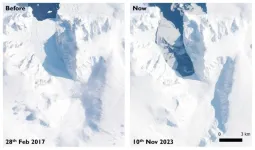
Scientists are warning that apparently stable glaciers in the Antarctic can “switch very rapidly” and lose large quantities of ice as a result of warmer oceans. Their finding comes after a research team led by Benjamin Wallis, a glaciologist at the University of Leeds, used satellites to track the Cadman Glacier, which drains into Beascochea Bay, on the west Antarctic peninsula. Between November 2018 and May 2021, the glacier retreated eight kilometres as the ice shelf at the end ...

Read the release
Toward a sustainable EV battery supply chain globally
Environment

Toward a sustainable EV battery supply chain globally

Decarbonization of the global economy will require the production of a large number of batteries for electric vehicles (EVs). However, these batteries require energy and an array of minerals to produce and are not without their own environmental impacts. Fanran Meng and colleagues trace the energy consumption and greenhouse gas emissions in the global productions and supply chains of two common battery technologies as well as their future variants: nickel-manganese-cobalt (NMC) and lithium-iron-phosphate (LFP). Today, two-thirds of battery-related emissions occur in China (45%), Indonesia (13%), and Australia (9%), in part due to emissions-intensive electricity for ...

Read the release
Environment

Commitments needed to solve aviation’s impact on our climate, says new research

Concerted efforts and commitments are needed to solve the complex trade-offs involved in reducing the impact of aviation on the climate, according to new research. Non-CO2 emissions from aircraft - largely of nitrogen oxides, soot and water vapour – are known to add to global warming effects alongside the aviation sector’s other CO2 emissions. Soot triggers the formation of contrails and ‘contrail cirrus’, which are line-shaped clouds produced by aircraft engine exhaust. This causes an increase in high clouds that can warm the Earth’s atmosphere. In a comprehensive assessment ...

Read the release
Environment

Proposals for an efficient and effective corporate sustainability due diligence in Europe

The Supply Chain Intelligence Institute Austria (ASCII) advocates for a revision of the EU Corporate Sustainable Due Diligence Directive (CS3D). The proposed amendments focus on direct monitoring of suppliers – instead of bilateral supply links – and the introduction of negative and positive lists to streamline due diligence processes, improving effectiveness and reducing costs for EU importers. The Corporate Sustainability Due Diligence Directive (CS3D), currently under negotiation by EU institutions with a potential adoption in 2024, aligns with international norms to cover both human rights and environmental ...

Read the release
Environment

Culling grey squirrels not necessary for overall biodiversity, expert suggests

Life on Earth is facing the greatest rate of extinction in history – and humans are the disruptive force, according to a leading ecologist. Protecting biodiversity, according to consultant ecologist Nigel Dudley who has worked with international organizations including WWF International and UNESCO, does not mean prioritizing animal lives at all costs or focusing narrowly on nature’s economic values. The author defines biodiversity rights here as ‘the right of all species to continue their natural span of existence within a functioning ecosystem’. Dudley says the failure of some governments to respect biodiversity ...

Read the release
Deoxygenation levels similar to today’s played a major role in marine extinctions during major past climate change event
Environment

Deoxygenation levels similar to today’s played a major role in marine extinctions during major past climate change event

Scientists have made a surprising discovery that sheds new light on the role that oceanic deoxygenation (anoxia) played in one of the most devastating extinction events in Earth’s history. Their finding has implications for current day ecosystems – and serves as a warning that marine environments are likely more fragile than apparent. New research, published today in leading international journal Nature Geosciences, suggests that oceanic anoxia played an important role in ecosystem disruption and extinctions in marine environments during the Triassic–Jurassic mass extinction, ...

Read the release
Environment

Wind and solar projects can profit from bitcoin mining

ITHACA, N.Y. – Bitcoin mining is often perceived as environmentally damaging because it uses huge amounts of electricity to power its intensive computing needs, but a new study demonstrates how wind and solar projects can profit from bitcoin mining during the precommercial development phase — when a wind or solar farm is generating electricity, but has not yet been integrated into the grid. The findings suggest some developers could recoup millions of dollars to potentially invest in future renewable energy projects. The ...

Read the release
Vampire bats make northward flight seeking stable climates
Environment

Vampire bats make northward flight seeking stable climates

Vampire bats may soon take up residence in the United States and bring with them an ancient pathogen. “What we found was that the distribution of vampire bats has moved northward across time due to past climate change, which has corresponded with an increase in rabies cases in many Latin American countries,” said Paige Van de Vuurst, a Ph.D. student in Virginia Tech’s Translational Biology, Medicine, and Health Graduate Program. Van de Vuurst is the lead author of research recently published in the Ecography journal that predicts ...

Read the release
Sensitive ecosystems at risk from mine waste
Environment

Sensitive ecosystems at risk from mine waste

Nearly a third of the world’s mine tailings are stored within or near protected conservation areas, University of Queensland research has found. A study led by UQ’s Bora Aska, from the Sustainable Minerals Institute and School of the Environment, said these waste facilities pose an enormous risk to some of earth’s most precious species and landscapes. “Mine tailings contain the waste and residue that remains after mineral processing, and the storage facilities built to contain it are some of the world’s largest engineered structures,” Ms Aska said. “We found of the 1,721 disclosed tailings ...

Read the release
Kavli Exploration Award backs Rice-led sustainable carbon materials research
Environment

Kavli Exploration Award backs Rice-led sustainable carbon materials research

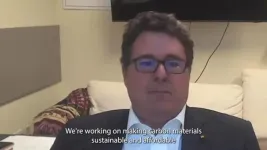
HOUSTON – (Nov. 27, 2023) – An international team of scientists led by Rice University’s Matteo Pasquali has won a $4.1 million grant to optimize carbon nanotube synthesis, a process that could help drive the green energy transition by providing more sustainable alternatives to materials dependent on heavy industry. The award is a joint effort by The Kavli Foundation, with a $1.9 million Kavli Exploration Award in Nanoscience for Sustainability, and Rice’s Carbon Hub, which contributed an additional $2.2 million. “The energy transition is primarily a material transition,” Pasquali said. “Renewable energy ...

Read the release
Environment

A fifth higher: Tropical cyclones substantially raise the Social Cost of Carbon

Extreme events like tropical cyclones have immediate impacts, but also long-term implications for societies. A new study published in the journal Nature Communications now finds: Accounting for the long-term impacts of these storms raises the global Social Cost of Carbon by more than 20 percent, compared to the estimates currently used for policy evaluations. This increase is mainly driven by the projected rise of tropical-cyclone damages to the major economies of India, USA, China, Taiwan, and Japan under global warming. “Intense tropical cyclones have the power to slow down the economic development of a country for more than a decade, our analysis shows. With global warming, the share ...

Read the release
Study reveals how shipwrecks are providing a refuge for marine life
Environment

Study reveals how shipwrecks are providing a refuge for marine life

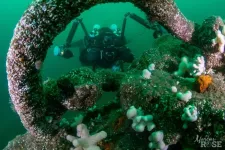
An estimated 50,000 shipwrecks can be found around the UK’s coastline and have been acting as a hidden refuge for fish, corals and other marine species in areas still open to destructive bottom towed fishing, a new study has shown. Many of these wrecks have been lying on the seabed for well over a century, and have served as a deterrent to fishers who use bottom towed trawling to secure their catches. As a result, while many areas of the seabed have been damaged significantly in areas of heavy fishing pressure, the ...

Read the release
Professor Tao Jun's team at Yangzhou University analyses the molecular mechanism of PoWRKY71 in response to drought stress of Paeonia ostii
Environment

Professor Tao Jun's team at Yangzhou University analyses the molecular mechanism of PoWRKY71 in response to drought stress of Paeonia ostii

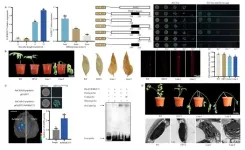
Paeonia ostii is a widely grown woody crop with up to 40% α-linolenic acid in its seed oil, which is beneficial to human health. Drought is a major environmental factor limiting the popularisation of P. ostii in hilly and mountainous areas, which may affect plant growth or lead to plant death.WRKY is one of the largest families of transcription factors in plants, and plays an important role in plant response to drought stress. However, the molecular mechanism by which P. ostii WRKY transcription factors respond to drought stress is still unclear. In September 2023, Horticulture ...

Read the release
Earliest known European common hippopotamus fossil reveals their Middle Pleistocene dispersal
Environment

Earliest known European common hippopotamus fossil reveals their Middle Pleistocene dispersal

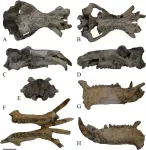
Modern hippos first dispersed in Europe during the Middle Pleistocene, according to a study published November 22, 2023 in the open-access journal PLOS ONE by Beniamino Mecozzi of the Sapienza University of Rome and colleagues. Modern hippos, Hippopotamus amphibius, arose from African ancestors during the Quaternary, a time when hippos were widespread in Europe. However, the details of the modern species’ origin and dispersal into Europe are unclear and highly debated. In this study, Mecozzi and colleagues provide new insights via analysis of a fossil hippo skull from the study area of Tor di Quinto in Rome. The skull of Tor di Quinto, currently housed at the ...

Read the release
From the original Press-News collection. Issuers of news releases are responsible for the accuracy of their content.