THE ORIGINAL COLLECTION · SINCE 2010

Environment
press releases.

Research announcements from universities, hospitals and scientific institutions. Explore the stories, people and discoveries behind the headlines.

Original publication datesPage 130
FIND A STORY

Find a past release.

Dates and source material belong to the original release.

Read our research explainers

Browse the collection · original publication order

Environment

Researchers predict climate change-driven reduction in beneficial plant microbes

UNIVERSITY PARK, Pa. ­— Bacteria that benefit plants are thought to be a critical contributor to crops and other ecosystems, but climate change may reduce their numbers, according to a new study by an international team of researchers. They published their findings in Nature Food. The collaboration, including Francisco Dini-Andreote, professor of plant science at Penn State, characterized the abundances and distributions of plant beneficial bacteria (PBB) from soils collected across the globe. The researchers ...

Read the release

Environment

Conference on microplastics in water: characterization, cure and prevention

Plastics are ubiquitous in all aspects of modern life, including food packaging, health care and household products. There has been a massive increase in plastics production over the past several decades and there has been serious attention paid to managing plastic wastes, particularly focused on recycling/reuse. However, as of the present time it has not been feasible, either technically or economically, to achieve a fully circular system. Those plastic materials that are not processed for reuse, known as end-of-life pastics, end up in landfillsor in other waste processing systems (e.g., incineration) or advanced recycling (eg., pyrolysis) or directly disposed in the ...

Read the release
Study finds plant nurseries are exacerbating the climate-driven spread of 80% of invasive species
Environment

Study finds plant nurseries are exacerbating the climate-driven spread of 80% of invasive species

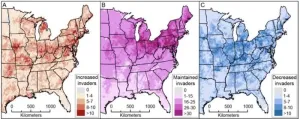
AMHERST, Mass. – Researchers at the University of Massachusetts Amherst recently published a pair of papers that, together, provide the most detailed maps to date of how 144 common invasive plants species will react to 2° Celsius of climate change in the eastern U.S., as well as the role that garden centers currently play in seeding future invasions. Together, the papers, published in Diversity and Distributions and BioScience, and the publicly available maps, which track species at the county level, promise to give invasive species managers in the U.S. the tools they need ...

Read the release
Environment

Three decades of data in Bangladesh show elevated risk of infant mortality In flood-prone areas

A new study from researchers at UC San Diego’s Scripps Institution of Oceanography and UC San Francisco estimates 152,753 excess infant deaths were attributable to living in flood-prone areas in Bangladesh over the past 30 years. Additionally, across the study period, children born during rainy months faced higher risk of death than those born in dry months. The paper was published Dec. 5 in the Proceedings of the National Academy of Sciences and supported by the National Institute of Allergy and Infectious Diseases. The findings begin to unspool the long term public health impacts of recurring environmental hazards such as flooding, ...

Read the release
Green macroalga caulerpa has replaced seagrass in Florida’s Indian River Lagoon
Environment

Green macroalga caulerpa has replaced seagrass in Florida’s Indian River Lagoon

The Indian River Lagoon was considered one of the last “unpolluted coastal lagoons” in Florida in the 1970s. Fast forward to today and most of the 156-mile lagoon is now considered impaired because of external sources of nutrients including human waste, fertilizers, stormwater runoff, agriculture, rainfall and sub-marine groundwater discharge. As a result, the lagoon – especially the Northern Indian River Lagoon and Banana River – has experienced various harmful algal blooms, catastrophic seagrass losses, and is the epicenter of Florida ...

Read the release
Recycling concrete using carbon can reduce emissions and waste
Environment

Recycling concrete using carbon can reduce emissions and waste

Amid the rubble of large-sale earthquake, war or other disaster – and as ageing buildings and infrastructure are replaced – mountains of concrete are often taken to landfill or pounded into rubble for roads. For a more sustainable approach, Flinders University and The University of Melbourne experts are developing a ‘value add’ for old broken concrete to ‘upcycling’ coarse aggregate to produce a strong, durable and workable concrete using a small amount of a secret ingredient – graphene. The novel method is gaining ground ...

Read the release
Environment

Fossil CO2 emissions at record high in 2023

Global carbon emissions from fossil fuels have risen again in 2023 – reaching record levels, according to new research from the Global Carbon Project science team. The annual Global Carbon Budget projects fossil carbon dioxide (CO2 emissions of 36.8 billion tonnes in 2023, up 1.1% from 2022. Fossil CO2 emissions are falling in some regions, including Europe and the USA, but rising overall – and the scientists say global action to cut fossil fuels is not happening fast enough to prevent dangerous climate change. Emissions from land-use change ...

Read the release
Strange burn: new research identifies unique patterns in Utah wildfires
Environment

Strange burn: new research identifies unique patterns in Utah wildfires

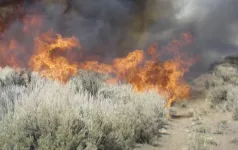
For a century fire ecologists have worked to decipher a complex question — what does a “normal'' wildfire year look like in the West? That’s a hard question to answer for many reasons, but new research from a team in the Quinney College of Natural Resources shows that thanks to the state’s unique landscapes, Utah’s wildfire patterns may never fit into what is considered “normal” for other Western states. Utah landscapes are diverse — from dense forests of pinyon-juniper to scattered patches of sagebrush and grasslands, Utah’s variable topography produces ...

Read the release
Environment

New study identifies the greatest threat to wildlife across North America and Canada: people

You see posts like these on neighborhood Facebook pages all the time: “An owl just flew into my window and appears stunned! Help!” or “I found a baby squirrel on the ground after the wind storm last night. Who do I call?” The answer is a local wildlife rehabilitation center—licensed individuals and organizations that take in hundreds of thousands of sick and injured wild animals nationwide each year. Wildlife rehabilitators see the highest number and greatest range of species of any government or nonprofit organization in the country, giving them unique insight into animal health—and making them great bellwethers of what’s ...

Read the release
Soil drought weakens forest microclimatic cooling
Environment

Soil drought weakens forest microclimatic cooling

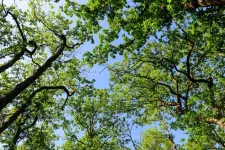
Scientists from Stockholm University have investigated the mechanisms that create cool microclimates beneath forest canopies during warm and dry summer days. The study reveals how canopy shading and water evaporation together create cooler forest microclimates compared to temperatures outside forests. The article is published in Agricultural and Forest Meteorology. ”The findings are alarming in the context of climate change as more frequent and more severe droughts may threaten the cooling functions of forests,” says Caroline Greiser, researcher at the Physical Geography Department, Stockholm ...

Read the release
Environment

SFU researchers sound out Canadian military’s plan to combat ocean noise pollution

new study from Simon Fraser University researchers examines the Canadian military’s efforts to reduce the impacts of underwater noise pollution on species during training exercises in the Pacific Ocean but caveat that more can still be done. The paper, published today in Marine Policy, takes aim at a report commissioned by the Canadian Department of National Defence (DND) to reduce the effects of noise pollution from military small-arms munitions training within “Whiskey Hotel”, a 330-square-kilometre ...

Read the release
Environment

Botany must feature more prominently on the school curriculum to promote awareness of climate change, study warns

Children must be taught more about the importance of plants if education about climate change and sustainability is to be effective, experts have warned. Botany should feature more heavily in the school curriculum, and be a greater focus of educational policy, the study says. It warns neither the importance of plants for sustainability or the threats facing many of them are adequately represented in science education. While the problem has been identified for some time, attempts to address it have often struggled to gain a foothold in science education practice. Dr Bethan Stagg from the University of Exeter and Professor Justin Dillon ...

Read the release
University of Houston challenges students to solve plastic waste crisis
Environment

University of Houston challenges students to solve plastic waste crisis

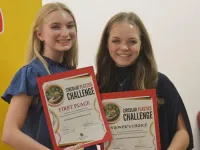
Plastics are firmly entrenched in today’s world thanks to their cheap, light and versatile nature, but the downside is that plastic waste continues piling up. Earlier this year, United Nations Secretary-General Antonio Guterres said that every day, the equivalent of over 2,000 garbage trucks full of plastics is dumped into our oceans, rivers and lakes. According to the World Economic Forum, the United States only recycled about 6% of the 40 million tons of plastic waste it generated in 2021. Around the world, about 400 million tons of plastic waste is produced each year. Much of it ends up in landfills, oceans and natural ...

Read the release
Environment

Unlocking the secret strength of marine mussels

How do you create strong, yet quick-release connections between living and non-living tissues? This is a question that continues to puzzle bioengineers who aim to create materials that bond together for advanced biomedical applications. Looking to nature for inspiration, the McGill-led research zeroed in on the marine mussel byssus, a fibrous holdfast, which these bivalve mollusks use to anchor themselves in seashore habitats. The byssus attaches to rocky surfaces using an underwater glue, but the other end (the byssus stem root) is firmly anchored within the mussel’s soft living tissue. This area of contact between the living ...

Read the release
New project investigating how aerosols could affect climate change in near future
Environment

New project investigating how aerosols could affect climate change in near future

A researcher from The University of Texas at Austin has received a grant from the National Oceanic and Atmospheric Administration (NOAA) to study how changing aerosol pollution could influence climate change in the United States in the coming decades. Aerosols are tiny solid particles and liquid droplets that contribute to smog and are emitted from industrial factories, power plants and vehicle tailpipes, as well as natural sources like volcanic eruptions. These small particles can influence the Earth’s climate by reflecting or absorbing sunlight and changing the behavior of clouds. Geeta ...

Read the release
Environment

Thomas Fire research reveals that ash can fertilize the oceans

(Santa Barbara, Calif.) — Flames roared through Santa Barbara County in late 2017. UC Santa Barbara canceled classes, and the administration recommended donning an N95, long before the COVID pandemic made the mask a household item. Smoke and ash choked the air, but the Thomas Fire’s effects weren’t restricted to the land and sky. Huge amounts of ash settled into the oceans, leaving researchers to wonder what effect it might have on marine life. Now scientists at UC Santa Barbara have discovered that wildfire ash adds nutrients to marine systems, ...

Read the release
Environment

Study identifies key algae species helping soft corals survive warming oceans

BUFFALO, N.Y. --- Scleractinian corals, or hard corals, have been disappearing globally over the past four decades, a result of climate change, pollution, unsustainable coastal development and overfishing. However, some Caribbean octocorals, or soft corals, are not meeting the same fate. During a two-year survey of soft corals in the Florida Keys, Mary Alice Coffroth, professor emerita of geology at the University at Buffalo, along with a small team of UB researchers, identified three species of octocorals that have survived heat waves. While the coral animal itself may be ...

Read the release
Discovery of planet too big for its sun throws off solar system formation models
Environment

Discovery of planet too big for its sun throws off solar system formation models

UNIVERSITY PARK, Pa. – The discovery of a planet that is far too massive for its sun is calling into question what was previously understood about the formation of planets and their solar systems, according to Penn State researchers. In a paper published online today (Nov. 30) in the journal Science, researchers report the discovery of a planet more than 13 times as massive as Earth orbiting the “ultracool” star LHS 3154, which itself is nine times less massive than the sun. The mass ratio of the newly found planet with its host star is more than 100 times higher than that of Earth and the sun. The finding reveals the most massive known ...

Read the release
Carbon dioxide becomes more potent as climate changes, study finds
Environment

Carbon dioxide becomes more potent as climate changes, study finds

Embargoed: Not for Release Until 2:00 pm U.S. Eastern Time Thursday, 30 November 2023. A team of scientists found that carbon dioxide becomes a more potent greenhouse gas as more is released into the atmosphere. The new study, led by scientists at the University of Miami Rosenstiel School of Marine, Atmospheric, Science, was published in Science and comes as world leaders meet in Dubai, United Arab Emirates, this week for the United Nations Climate Change Conference COP28. “Our finding means that ...

Read the release
Snake skulls show how species adapt to prey
Environment

Snake skulls show how species adapt to prey

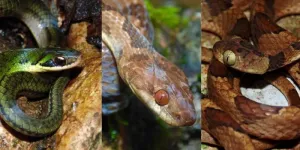
By studying the skull shapes of dipsadine snakes, researchers at The University of Texas at Arlington have found how these species of snakes in Central and South America have evolved and adapted to meet the demands of their habitats and food sources. The research, conducted in collaboration with colleagues at the University of Michigan, was published in the peer-reviewed journal BMC Ecology and Evolution. “We now have evidence that this group of snakes is one of the most spectacular and largest vertebrate adaptive radiations currently known to science,” said Gregory Pandelis, collections manager at UTA’s Amphibian and Reptile Diversity ...

Read the release
Environment

Antarctica's ancient ice sheets foreshadow dynamic changes in Earth’s future

MADISON – Nineteen million years ago, during a time known as the early Miocene, massive ice sheets in Antarctica rapidly and repeatedly grew and receded. The Miocene is widely considered a potential analog for Earth's climate in the coming century, should humanity remain on its current carbon emissions trajectory. Identifying how and why Antarctica's major ice sheets behaved the way they did in the early Miocene could help inform understanding of the sheets' behavior under a warming climate. Together, the ice sheets lock a volume of water equivalent to more than 50 meters of sea level rise and influence ocean currents that affect marine food webs and regional climates. ...

Read the release
Environment

Climate: why disinformation is so persistent

Melting of glaciers, rising sea levels, extreme heat waves: the consequences of climate change are more visible than ever, and the scientific community has confirmed that humans are responsible. Yet studies show that a third of the population still doubts or disputes these facts. The cause is disinformation spread by certain vested interests. To try and prevent this phenomenon, a team from the University of Geneva (UNIGE) has developed and tested six psychological interventions on nearly 7,000 participants from twelve countries. The research, published in ...

Read the release
Hurricanes boost cone production in longleaf pine
Environment

Hurricanes boost cone production in longleaf pine

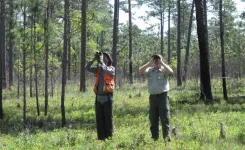
New research on tree reproduction is helping solve a puzzle that has stumped tree scientists for decades. Many tree species exhibit a reproductive phenomenon known as “masting”, where individual trees have very low seed production in most years followed by a sudden burst of seed production that is synchronized over large parts of its range. The reason for this coordinated reproduction within a species is unclear. A new study by scientists at The Jones Center at Ichauway and the USDA Forest Service Southern Research Station showed ...

Read the release
Environment

Decoding past climates through dripstones

“Dripstones, or speleothems, are unique natural archives - like Earth’s USB sticks. They store a wealth of information on past climate which helps us to better understand the environment in which early humans lived”, Jenny Maccali explains. She is a scientist at SapienCE Centre of Excellence, and has has lead the study, now published in Climate of the Past. New perspective to ancient climate South Africa has a highly dynamic climate resulting from its position at the convergence of two oceanic basins, the Atlantic Ocean to the west and the Indian Ocean to the east. ...

Read the release
Lower voltage and reduced carbon input for cleaner energy in the works
Environment

Lower voltage and reduced carbon input for cleaner energy in the works

There is an ever-present struggle to reduce carbon-based energy sources and replace them with low or no-carbon alternatives. The process of splitting water could be the resolution. Hydrogen production is a simple, safe, and effective method to produce more energy than gasoline can by the simple process of splitting water. Harvesting energy this way as opposed to relying heavily (or at all) on carbon-based energy sources is increasingly becoming the standard. Researchers have found a method to use transition metal ...

Read the release
From the original Press-News collection. Issuers of news releases are responsible for the accuracy of their content.