THE ORIGINAL COLLECTION · SINCE 2010

Environment
press releases.

Research announcements from universities, hospitals and scientific institutions. Explore the stories, people and discoveries behind the headlines.

Original publication datesPage 129
FIND A STORY

Find a past release.

Dates and source material belong to the original release.

Read our research explainers

Browse the collection · original publication order

Study: Extreme rainfall increases ag nutrient runoff, conservation strategies can help
Environment

Study: Extreme rainfall increases ag nutrient runoff, conservation strategies can help

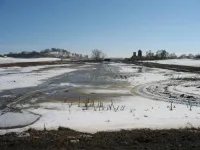
URBANA, Ill. – Nutrient runoff from agricultural production is a significant source of water pollution in the U.S., and climate change that produces extreme weather events is likely to exacerbate the problem. A new study from the University of Illinois Urbana-Champaign looks at how extreme rainfall impacts runoff and suggests possible mitigation strategies. “We look at more than a decade of precipitation events in the state of Wisconsin and quantify the increase in nutrient runoff right around the event and at the end of the growing season. Climate ...

Read the release
Environment

NASA’s MAVEN observes the disappearing solar wind

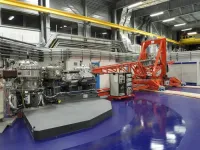
In December 2022, NASA’s MAVEN (Mars Atmosphere and Volatile EvolutioN) mission observed the dramatic and unexpected “disappearance” of a stream of charged particles constantly emanating off the Sun, known as the solar wind. This was caused by a special type of solar event that was so powerful, it created a void in its wake as it traveled through the solar system. Due to this event, MAVEN’s measurements at Mars showed that the number of particles making up the solar wind dropped significantly. Without the pressure of the solar wind, the Martian atmosphere and magnetosphere expanded by thousands of kilometers. MAVEN is the only asset currently at Mars able to ...

Read the release
Researchers combine biopolymers derived from the ocean to replace synthetic plastic films
Environment

Researchers combine biopolymers derived from the ocean to replace synthetic plastic films

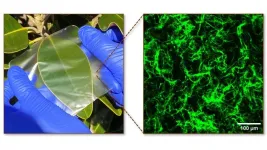
Materials with enhanced structure derived from crustaceans and seaweed could be part of a next-generation answer to the challenge of replacing petroleum-based plastic films, according to new research from North Carolina State University. Combining chitosan, a biopolymer that makes crab shells hard, with agarose, a biopolymer extracted from seaweed that is used to make gels, creates unique biopolymer composite films with enhanced strength. The films are also biodegradable, have antibacterial properties, repel water and are transparent. The findings could eventually lead to sustainable packaging films for food ...

Read the release
A cause for the "strange" behavior of cuprates discovered - a step towards more sustainable superconductor applications
Environment

A cause for the "strange" behavior of cuprates discovered - a step towards more sustainable superconductor applications

Milan, December 11, 2023 - Taking a significant step forward in superconductivity research, the discovery could pave the way for sustainable technologies and contribute to a more environmentally friendly future. The study just published in Nature Communications by researchers from Politecnico di Milano, Chalmers University of Technology in Göteborg and Sapienza University of Rome sheds light on one of the many mysteries of high-critical-temperature copper-based superconductors: even at temperatures above the critical temperature, they are special, behaving like "strange" metals. This means that their electrical resistance ...

Read the release
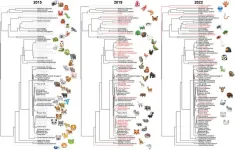
Nature and animal emojis don’t accurately represent natural biodiversity—Researchers say they should
Environment

Nature and animal emojis don’t accurately represent natural biodiversity—Researchers say they should

The current emoji library doesn’t accurately represent the “tree of life” and the breadth of biodiversity seen in nature according to an analysis presented December 11 in the journal iScience. A team of conservation biologists categorized emojis related to nature and animals and mapped them onto the phylogenetic tree of life. They found that animals are well represented by the current emoji catalog, whereas plants, fungi, and microorganisms are poorly represented. Within the animal kingdom, vertebrates were overrepresented while arthropods were underrepresented with respect to their actual biodiversity. The researchers argue that creating a more diverse and representative ...

Read the release
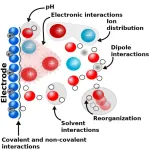
New insight on electrochemical reactions – advancing the green transition
Environment

New insight on electrochemical reactions – advancing the green transition

Electrochemical reactions are central to the green transitions. These reactions use the electric current and potential difference to carry out chemical reactions, which enables binding and realizing electric energy from chemical bonds. This chemistry is the basis for several applications, such as hydrogen technology, batteries, and various aspects of circular economy. Developments and improvement in these technologies require detailed insight into the electrochemical reactions and different factors impacting them. Recent studies have shown that besides the electrode material also the used solvent, its acidity, and ...

Read the release
Environment

Global annual finance flows of $7 trillion fueling climate, biodiversity, and land degradation crises

Almost US$7 trillion per year in government subsidies and private investment - around 7 per cent of global GDP - has a direct negative impact on nature. Nature-based solutions remain dramatically underfunded. Current public and private finance flows are only US$200 billion per year. To meet climate, biodiversity, and restoration targets, this needs to triple by 2030 and quadruple by 2050. Realignment of public and private nature-negative finance flows is urgently needed Dubai, 9 December 2022 – Close to $7 trillion is invested globally each year in activities that have a direct negative impact on nature from both public and private sector sources - equivalent to ...

Read the release
Environment

Polyethylene waste could be a thing of the past

An international team of experts undertaking fundamental research has developed a way of using polyethylene waste (PE) as a feedstock and converted it into valuable chemicals, via light-driven photocatalysis. The University of Adelaide’s Professor Shizhang Qiao, Chair of Nanotechnology, and Director, Centre for Materials in Energy and Catalysis, at the School of Chemical Engineering, led the team which published their findings in the journal Science Advances. “We have upcycled polyethylene plastic waste into ethylene and propionic acid with high selectivity using atomically dispersed metal catalysts,” said Professor Qiao. “An oxidation-coupled ...

Read the release
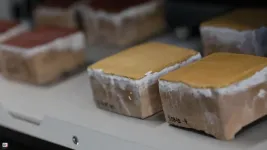
Environment

New insights into Zebra mussel attachment fibers offer potential solutions to combat invasive species, develop sustainable materials

A recent study from researchers in Canada and Germany has revealed that an unlikely event, occurring over 12 million years ago played an important role in shaping one of Canada’s most damaging invasive species. Zebra and quagga mussels, belonging to the Dreissenid family, are widespread freshwater invasive species throughout North America that present a significant danger to native ecosystems by competing for resources. Using a fibrous anchor called a byssus, Dreissenid mussels contribute to biofouling on surfaces and obstruct intake structures in power stations and water treatment plants. “This new study, which looks into the way these mussels stick to surfaces, may help improve ...

Read the release
Environment

Study on battery recycling shows China is in 1st place

With the increase in the production of batteries for electric vehicles, demand is also rising for the necessary raw materials. In view of risks to the supply chain, environmental problems and precarious working conditions which are all associated with the mining and transportation of these materials, the recycling of battery materials has become an important issue in research, politics and industry. Prof. Stephan von Delft from the University of Münster (Germany) heads a team of researchers from the fields of science ...

Read the release
The first European manifesto for more sustainable museums
Environment

The first European manifesto for more sustainable museums

Venice, Amsterdam, Paris, December 8, 2023 – Today, the Center for Cultural Heritage Technologies of the Italian Institute of Technology (CCHT-IIT), the University of Amsterdam/Rijksmuseum, and CNRS/École Normale Supérieure de Paris-Saclay launch the first manifesto for sustainable conservation of cultural heritage. The manifesto aims to improve conservation practices and promote more sustainable and ecological methods in museum practices. During the COP28 in Dubai, the United Nations event on ...

Read the release
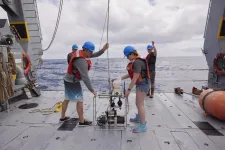
Atlantic Ocean near Bermuda is warmer and more acidic than ever, 40 years of observation show
Environment

Atlantic Ocean near Bermuda is warmer and more acidic than ever, 40 years of observation show

Decade-long ocean warming which impacts ocean circulation, a decrease in oxygen levels that contributes to changes in salinification and nutrient supply, and ocean acidification are just some of the challenges the world’s oceans are facing. In 1988, a comprehensive sustained ocean time-series of observations, called the Bermuda Atlantic Time-series Study (BATS), began at a site about 80 km southeast of the island of Bermuda. There, scientists take monthly samples of the physics, biology, and chemistry of the ocean’s surface and depths. In a new paper published in Frontiers in Marine Science, researchers have now presented the latest findings from ...

Read the release
Environment

Molecular fossils shed light on ancient life

Paleontologists are getting a glimpse at life over a billion years in the past based on chemical traces in ancient rocks and the genetics of living animals. Research published Dec. 1 in Nature Communications combines geology and genetics, showing how changes in the early Earth prompted a shift in how animals eat. David Gold, associate professor in the Department of Earth and Planetary Sciences at the University of California, Davis, works in the new field of molecular paleontology, using the tools of both geology and biology to study the evolution ...

Read the release
Environment

Trees in wetter forests more sensitive to drought than trees in drier regions – a finding with policy implications

Annual tree-ring growth records from more than 122 species of trees show that trees growing in wetter forests are more sensitive to increasing drought. The findings – which tackle a research question that has yielded contradictory results in the past – suggest that land management and policy focused solely on drought effects in drier regions overestimates the resilience of forests in wetter regions. Forests cover roughly 30% of Earth’s surface and, in addition to providing a host of valuable ecosystem services and harboring huge biodiversity, they play a crucial role in the planet’s carbon cycle, absorbing more atmospheric carbon than all other terrestrial ...

Read the release
A new 66 million-year history of carbon dioxide offers little comfort for today
Environment

A new 66 million-year history of carbon dioxide offers little comfort for today

A massive new review of ancient atmospheric carbon-dioxide levels and corresponding temperatures lays out a daunting picture of where the Earth’s climate may be headed. The study covers geologic records spanning the past 66 million years, putting present-day concentrations into context with deep time. Among other things, it indicates that the last time atmospheric carbon dioxide consistently reached today’s human-driven levels was 14 million years ago—much longer ago than some existing assessments indicate. It asserts that long-term climate is highly sensitive to greenhouse gas, with cascading effects that may evolve over many millennia. The ...

Read the release
Sister climate cities, utility data predict future water, electricity demands
Environment

Sister climate cities, utility data predict future water, electricity demands

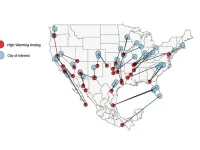
UNIVERSITY PARK, Pa. – Modern-day Ciudad Mante, Mexico, could help Tampa, Florida, plan for shifting water and electricity demands due to climate change, according to an international team of researchers. Led by Renee Obringer, assistant professor of energy and mineral engineering at Penn State, the researchers used utilities data and climate analogs — contemporary cities with climates close to what other cities are predicted to experience in the future — to assess how climate change may impact residential water and electricity use across 46 cities in the United States. Their computationally efficient model projected strong regional differences for future water and electricity ...

Read the release
It turns out, this fossil plant is really a fossil baby turtle
Environment

It turns out, this fossil plant is really a fossil baby turtle

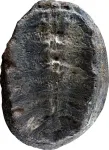
From the 1950s to the 1970s, a Colombian priest named Padre Gustavo Huertas collected rocks and fossils near a town called Villa de Levya. Two of the specimens he found were small, round rocks patterned with lines that looked like leaves; he classified them as a type of fossil plant. But in a new study, published in the journal Palaeontologia Electronica, researchers re-examined these “plant” fossils and found that they weren’t plants at all: they were the fossilized remains of baby turtles. “It was truly surprising to find these fossils,” says Héctor Palma-Castro, a paleobotany student at the Universidad Nacional de Colombia. The plants in question ...

Read the release
Environment

Ecology: Mediterranean green turtles nesting range expands under warming climate

Rising global temperatures could lead to an increase in the nesting range of green turtles in the Mediterranean Sea, according to a modelling study published in Scientific Reports. Under the worst-case climate scenario, the nesting range could increase by over 60 percentage points, spreading west from the current area to include much of the North African, Italian, and Greek coastlines. Human-caused climate change has caused sea surface temperatures to increase globally, with severe impacts on some marine life. Sea turtles are potentially particularly susceptible, as the sex of their offspring is dependent on incubation temperature. Although previous research ...

Read the release
Three-day exceptional heatwave in China linked to human-induced climate change
Environment

Three-day exceptional heatwave in China linked to human-induced climate change

In June, temperatures in North China hit record breaking heights, with temperatures in Beijing reaching or exceeding 40℃ for three consecutive days. The intensity of such events has increased by at least 1.0℃ due to human-induced climate change. Heatwaves like these will occur twice as likely even under proposed carbon neutral targets and will be 0.5℃ more intense. Current emissions scenario will increase the probability of reoccurrence to over five times this century with a 2.9℃ rise in intensity. A record-breaking heatwave occurred in North China in June, marking the ...

Read the release
Environment

Focus on people to boost Africa’s climate resilience

Investments in Africa’s infrastructure can make people and communities far more resilient to the threats posed by climate change, a new report says. Traditionally, financiers and developers have focused on risks to infrastructure such as transport, water and energy systems when considering climate resilience (being able to cope with threats such as extreme heat and storms). However, a new report launched today at COP28 – produced by the Private Infrastructure Development Group (PIDG) and the University of Exeter – calls for an expanded focus. Specifically, ...

Read the release
The ocean may be storing more carbon than estimated in earlier studies
Environment

The ocean may be storing more carbon than estimated in earlier studies

The ocean's capacity to store atmospheric carbon dioxide is some 20% greater than the estimates contained in the latest IPCC report1. These are the findings of a study to be published in the journal Nature on December 6, 2023, led by an international team including a biologist from the CNRS2. The scientists looked at the role played by plankton in the natural transport of carbon from surface waters down to the seabed. Plankton gobble up carbon dioxide and, as they grow, convert it into organic tissue via photosynthesis. When they die, part of ...

Read the release
Greenhouse gases in oceans are altered by climate change impact on microbes – an Incheon National University study
Environment

Greenhouse gases in oceans are altered by climate change impact on microbes – an Incheon National University study

The ocean is a critical life-support system for our planet through its role in global climate regulation. It absorbs most of the carbon emissions and heat trapped in the atmosphere which are a result of human activities. Over the years, this has led to ocean warming (OW), ocean acidification (OA), and ocean deoxygenation (OD). Moreover, increased anthropogenic‑nitrogen-deposition (AND) has largely influenced marine environments. As part of these consequences, the gases nitrous oxide (N2O) and methane (CH4) are largely controlled by 'prokaryotes’ or microbial organisms living in the ocean. While several studies have analyzed ...

Read the release
Environment

Climate change shown to cause methane to be released from the deep ocean

New research has shown that fire-ice - frozen methane which is trapped as a solid under our oceans - is vulnerable to melting due to climate change and could be released into the sea. An international team of researchers led by Newcastle University found that as frozen methane and ice melts, methane - a potent greenhouse gas - is released and moves from the deepest parts of the continental slope to the edge of the underwater shelf. They even discovered a pocket which had moved 25 miles (40 kilometres). Publishing in the journal Nature Geoscience, the researchers say this means that much more methane could potentially be vulnerable and released into the atmosphere ...

Read the release
Limitations of asteroid crater lakes as climate archives
Environment

Limitations of asteroid crater lakes as climate archives

In southern Germany just north of the Danube, there lies a large circular depression between the hilly surroundings: the Nördlinger Ries. Almost 15 million years ago, an asteroid struck this spot. Today, the impact crater is one of the most useful analogues for asteroid craters on early Mars. Studying the deposits of the former lake that formed in the crater is particularly informative. These deposits have been of great interest ever since NASA began exploring Martian craters for signs of water and life on Mars. However, the chemical development of the former crater lake and its habitable areas is only partially understood. An international research team led by the ...

Read the release
Shuqing Xu receives ERC Consolidator Grant for his research on the evolution in ecological communities in response to climate change
Environment

Shuqing Xu receives ERC Consolidator Grant for his research on the evolution in ecological communities in response to climate change

Eating or being eaten, competing for resources – these are certainly the best-known interactions among organisms coexisting in an ecosystem, but they are by no means the only ones. In fact, different species live together and interact in complex ways. But how do different species evolve or coevolve in a community as temperatures rise due to climate change? Current research focuses primarily on how individual species react to climate change. However, as species interact with each other in the ecosystem, the evolutionary responses to climate change are difficult to predict from studying each species in isolation. For example, a plant may grow faster due ...

Read the release
From the original Press-News collection. Issuers of news releases are responsible for the accuracy of their content.