THE ORIGINAL COLLECTION · SINCE 2010

Environment
press releases.

Research announcements from universities, hospitals and scientific institutions. Explore the stories, people and discoveries behind the headlines.

Original publication datesPage 160
FIND A STORY

Find a past release.

Dates and source material belong to the original release.

Read our research explainers

Browse the collection · original publication order

Environment

Genomic resources to help boost climate resilience of fisheries

Candidate genes that could help fish to tolerate warmer and saltier water have been identified in new research from the Earlham Institute, potentially providing a vital resource to guide breeding programmes in freshwater aquaculture. As water quality and availability is reduced by higher global temperatures, these insights can be used to breed more resilient fish and safeguard a key source of food for millions of people. The Nile tilapia, Oreochromis niloticus, is widely farmed in freshwater aquaculture, providing essential nutrients and protein. Their use in aquaculture has risen dramatically, largely due to their adaptability to different water conditions and ...

Read the release
MethaneMapper is poised to solve the problem of underreported methane emissions
Environment

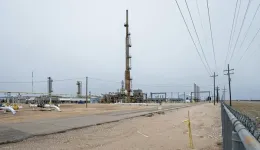
MethaneMapper is poised to solve the problem of underreported methane emissions

(Santa Barbara, Calif.) — Wildfires. Many see them as purely destructive forces, disasters that blaze through a landscape, charring everything in their paths. But a study published in the journal Ecology Letters reminds us that wildfires are also generative forces, spurring biodiversity in their wakes. “There’s a fair amount of biodiversity research on fire and plants,” said Max Moritz, a wildfire specialist with UC Cooperative Extension who is based at UC Santa Barbara’s Bren School of Environmental Science & Management, and is the study’s lead author. Research has shown that in ecosystems where fire is a natural and regular occurrence, there ...

Read the release
Environment

Climate underlies African forest and savanna biomes

Coupled field observations and phytoclimatic modeling show that the distribution of African forest and savanna ecosystems are highly predictable by climate, researchers report in a new study. The findings suggest that the effects of climate change on the distribution of African forests and savanna may be more easily forecasted than previously recognized. An important yet challenging goal for ecological science is predicting how global vegetation patterns will be altered by ongoing climate change. Generally, the distribution of Earth’s vegetation biomes is determined by climate. However, at local or regional ...

Read the release
Environment

Without fully implementing net-zero pledges, the world will miss climate goals

Without more legally binding and well-planned net-zero policies, the world is highly likely to miss key climate targets. In the new study, led by Imperial College London and published today in Science, researchers ranked 90% of global net-zero greenhouse gas emissions pledges as providing low confidence in their full implementation. The researchers recommend nations make their targets legally binding and back them up with long-term plans and short-term implementation policies to increase the likelihood of avoiding ...

Read the release
Environment

Universities in California, Arizona, and Nevada form consortium to address clean water access and sustainability challenges

A novel collaboration between the University of Southern California (USC), the University of Arizona (UA), and the University of Nevada, Reno (UNR), has resulted in the Water Reuse Consortium. This groundbreaking partnership has been awarded a $12.3 million cooperative agreement for phase one of a three-phase $38 million program with ERDC-CERL to tackle pressing water challenges through innovative research, education, communication, and unprecedented collaborative efforts between government, local communities, industry, and academia. The Water Reuse Consortium brings together ...

Read the release
Confinement effects of carbon nanotubes on polyoxometalate clusters enhance electrochemical energy storage
Environment

Confinement effects of carbon nanotubes on polyoxometalate clusters enhance electrochemical energy storage

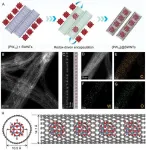
Carbon nanotubes (CNTs) are considered ideal electrochemical energy storage materials due to their high electrical conductivity, large theoretical surface area, and good chemical stability. However, CNTs tend to aggregate due to strong van der Waals forces, which reduces their electrochemically active area. This problem is even worse for single-walled carbon nanotubes (SWNTs) due to their high length-to-diameter ratio. Recently, a joint research team led by Dr. WANG Xiao from the Shenzhen Institute of Advanced Technology (SIAT) of the Chinese ...

Read the release
Team finds reliable predictor of plant species persistence, coexistence
Environment

Team finds reliable predictor of plant species persistence, coexistence

CHAMPAIGN, Ill. — Like many ecological scientists, University of Illinois Urbana-Champaign plant biology professor James O’Dwyer has spent much of his career searching for ways to measure and predict how specific plant communities will fare over time. Which species in a diverse population will persist and coexist? Which will decline? What factors might contribute to continuing biodiversity? In a new study reported in the journal Nature, O’Dwyer and his colleague, U. of I. graduate student Kenneth Jops, report the development of a method for determining ...

Read the release
Environment

Greenhouse gas emissions at ‘an all-time high’ - and it is causing an unprecedented rate of global warming, say scientists

University of Leeds Press Release Under embargo until 09.00 am (British Summer Time) on Thursday, June 8 **With details of a linked press conference at the UNFCC meeting in Bonn - see under notes to journalists** Greenhouse gas emissions at ‘an all-time high’ - and it is causing an unprecedented rate of global warming, say scientists Human-induced ...

Read the release
Despite major progress nationally, two mercury emissions hotspots remain
Environment

Despite major progress nationally, two mercury emissions hotspots remain

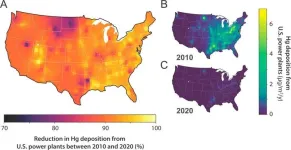
Missing from partisan political debates over regulations affecting the energy sector is the stunning success of the federal government’s signature environmental laws. A prime example: the U.S. Environmental Protection Agency’s rules aimed at reducing the harmful effects of hazardous air pollutant (HAP) emissions from fossil fuel-fired power plants known as the Mercury and Air Toxics Standards, or MATS. A new study from the Harvard John A. Paulson School of Engineering and Applied Sciences (SEAS) shows that in the decade since the standard was ...

Read the release
Detection dog can sniff out highly-endangered great crested newts
Environment

Detection dog can sniff out highly-endangered great crested newts

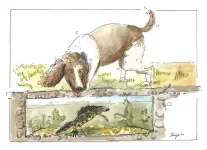
A trained detection dog was highly accurate at finding great crested newts underground or at a distance, which might aid conservation efforts for this highly-endangered species, according to a study published June 7, 2023 in the open-access journal PLOS ONE by Nicola Jayne Glover from the University of Salford, UK, and colleagues. The highly-endangered great crested newt (Triturus cristatus) is a species of special conservation concern across the UK and central and northern Europe. While much is known about the great crested newts’ aquatic life phase, comparatively little is known about their terrestrial ...

Read the release
Parker Solar Probe flies into the fast solar wind and finds its source
Environment

Parker Solar Probe flies into the fast solar wind and finds its source

NASA's Parker Solar Probe (PSP) has flown close enough to the sun to detect the fine structure of the solar wind close to where it is generated at the sun's surface, revealing details that are lost as the wind exits the corona as a uniform blast of charged particles. It's like seeing jets of water emanating from a showerhead through the blast of water hitting you in the face. In a paper to be published this week in the journal Nature, a team of scientists led by Stuart D. Bale, a professor of physics at the University of California, Berkeley, and James Drake of the University of Maryland-College ...

Read the release
Environment

Pathways to global sustainability revealed through a worldwide survey of experts

The majority of sustainable development researchers believe that in affluent countries, it is necessary to look beyond economic growth to achieve sustainable development, a recent study from the University of Eastern Finland suggests. The study, published in the scientific journal Ecological Economics, investigated the preferred future paths for countries at different income levels among 461 sustainability scholars. The survey results shed light on the strategic choices necessary for achieving global sustainability. The study focused on green growth and post-growth economic strategies. The green growth strategy aims to enhance both societal and environmental ...

Read the release
Environment

Experts uncover the water and emissions footprint of snowmaking: Can we rely on it in an era of climate change?

The first-ever national study to assess the impact of developing artificial snow shows the pressure the process is putting on the climate, with the equivalent of nearly 17,000 homes’ worth of annual energy needed to produce snow for yearly ski operations in just Canada alone. Publishing their findings in the peer-reviewed journal Current Issues in Tourism, experts from the University of Waterloo, in Canada, and the University of Innsbruck, Austria, found 130,095 tonnes CO2e are needed to produce the estimated 42 million cubic meters of machine-made snow in Canada in an average winter. For context, this is comparable to 155,141 ...

Read the release
Knowledge coproduction: Working together to solve a complex conservation problem
Environment

Knowledge coproduction: Working together to solve a complex conservation problem

A new publication from a team of scientists at USGS, Point Blue Conservation Science, and Conservation Biology Institute shows how knowledge coproduction - the collaborative creation of actionable information by scientists, resource managers, and policy makers - can help identify viable conservation options for a dynamic ecosystem with a complex web of stressors. The wetland habitats of California’s Central Valley support millions of migratory birds each year and are an important part of the Pacific Flyway, a bird migration route that ...

Read the release
Environment

Measuring greenhouse gas from ponds improves climate predictions

ITHACA, N.Y. – Shallow lakes and ponds emit significant amounts of greenhouse gases into the atmosphere, but emissions from these systems vary considerably and are not well understood. Now, a new Cornell University-led study measures methane and carbon dioxide emissions from 30 small lakes and ponds (one acre or less) in temperate areas of Europe and North America, revealing that the smallest and shallowest bodies of water exhibit the greatest variability over time. The paper marks an important step toward calibrating climate models so they better predict emissions from inland waterbodies, and it points to the need to study small waterbodies more closely. “This ...

Read the release
Environment

Predictive models show wildlife managers where to find destructive feral swine

UNIVERSITY PARK, Pa. — Feral swine are considered one of the top invasive species of concern in North America because of the damage they do to agricultural and natural systems. To best manage them, resource management agencies need to know more precisely where and when to implement control methods. A new study by a Penn State-led research team developed a method to help guide control efforts in the Great Smoky Mountains National Park. Descended from wild European boars imported centuries ago that bred with escaped domestic pigs, feral swine cause widespread damage to ecosystems by wallowing ...

Read the release
Order in chaos: Atmosphere’s Antarctic oscillation has natural cycle
Environment

Order in chaos: Atmosphere’s Antarctic oscillation has natural cycle

HOUSTON – (June 6, 2023) – Climate scientists at Rice University have discovered an “internally generated periodicity” — a natural cycle that repeats every 150 days — in the north-south oscillation of atmospheric pressure patterns that drive the movement of the Southern Hemisphere’s prevailing westerly winds and the Antarctic jet stream. “This is something that arises from the internal dynamics of the atmosphere,” said Pedram Hassanzadeh, co-author of a study about the discovery in the open-access journal AGU Advances. “We were playing with some new equations that we had derived ...

Read the release
Elastocaloric cooling system opens door to climate-friendly AC
Environment

Elastocaloric cooling system opens door to climate-friendly AC

College Park, Md. — Air conditioning, refrigeration, and other cooling technologies account for more than 20 percent of today’s global energy consumption, while the refrigerants they use have a global warming potential thousands of times greater than carbon dioxide. In a recent study in the journal Science, a team led by Maryland Engineering Professors Ichiro Takeuchi, Reinhard Radermacher, and Yunho Hwang introduced a high-performance elastocaloric cooling system that could represent the next generation of cooling devices. Takeuchi calls ...

Read the release
Fungi stores a third of carbon from fossil fuel emissions and could be essential to reaching net zero, new study reveals
Environment

Fungi stores a third of carbon from fossil fuel emissions and could be essential to reaching net zero, new study reveals

Fungi stores a third of carbon from fossil fuel emissions and could be essential to reaching net zero, new study reveals Mycorrhizal fungi are responsible for holding up to 36 per cent of yearly global fossil fuel emissions below ground - more than China emits each year The fungi make up a vast underground network all over the planet underneath grasslands and forests, as well as roads, gardens, and houses on every continent on Earth It is not only crucial to storing carbon and keeping the planet cooler, but are also essential to global biodiversity Researchers ...

Read the release
Climate justice: Global North owes $170 trillion for excessive CO2 emissions, says study
Environment

Climate justice: Global North owes $170 trillion for excessive CO2 emissions, says study

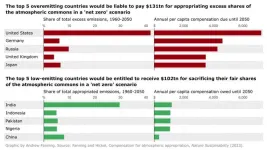
Industrialised nations responsible for excessive levels of carbon dioxide emissions could be liable to pay a total of $170 trillion in compensation or reparations by 2050 to ensure climate change targets are met, say researchers. This money, which amounts to nearly $6 trillion per year or about 7% of annual global Gross Domestic Product (GDP), would be distributed as compensation to low-emitting countries that must decarbonise their economies far more rapidly than would otherwise be required. Financial redress for the losses and damages that climate-vulnerable countries face due to the excessive CO2 emissions of others is seen as an increasingly important ...

Read the release
Whales not to be counted on as ‘climate savers’: study
Environment

Whales not to be counted on as ‘climate savers’: study

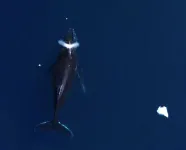
Do whales increase the removal of carbon from the atmosphere? Despite some hope that this would be the case, a new study led by Griffith University and a team of global researchers has found the amount of potential carbon capture by whales is too little to meaningfully alter the course of climate change. Marine scientist Dr Olaf Meynecke and the team from the Griffith-led Whales and Climate Research Program including Professor Brendan Mackey and Dr Jasper De Bie, reviewed the primary ways in which baleen whales (such as humpback whales) removed atmospheric carbon ...

Read the release
Carbon-based stimuli-responsive nanomaterials: classification and application
Environment

Carbon-based stimuli-responsive nanomaterials: classification and application

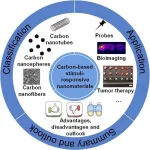
Carbon-based stimuli-responsive nanomaterials are gaining much attention due to their versatility, including disease diagnosis and treatment. They work under endogenous (pH, temperature, enzyme, and redox) or exogenous (temperature, light, magnetic field, ultrasound) stimuli. Carbon-based stimuli-responsive nanomaterials can be used as smart materials with dynamically tunable physicochemical properties in response to changes in internal or external environmental stimuli. Their diverse combinations of nanostructures and molecular designs, as well as functional ...

Read the release
Environment

New study finds strengthening protection of existing parks is crucial for biodiversity conservation

-With pictures- In a new study, bioscientists argue that strengthening the protection given to areas already protected under law or by local communities is as critical for safeguarding biodiversity as creating new protected areas. The research team, which included scientists from Durham University, National University of Singapore (NUS) and Princeton University, found that about 70 per cent of the roughly 5000 species analysed either have no apparent representation in protected areas, occur in protected areas that have been downgraded, downsized or degazetted, ...

Read the release
Environment

New research suggests wheat crops may be threatened by unprecedented heat and drought

The world is getting hotter, causing shifts in seasonal patterns and increasing the amount of extreme weather such as severe droughts and heat waves, which can affect crop yields and food supplies. A recent study led by a researcher at the Friedman School of Nutrition Science and Policy at Tufts University found that the likelihood of extreme temperatures that could affect crop yields has increased significantly in wheat-producing regions of the U.S. and China. The findings predict heat waves that happened approximately ...

Read the release
Environment

Underwater forest's recovery offers hope for marine restoration across the globe

Human activity has degraded ecosystems and damaged biodiversity around the world, but ecosystem restoration offers hope for the future. Scientists studying the restoration of underwater seaweed forests which provide other species with food and shelter have found that 10 years of restoration efforts have helped a damaged forest regrow to richness and strength comparable to forests that have never been disturbed. “Macroalgal forests are found along over one-third of the world’s coastlines and underpin ...

Read the release
From the original Press-News collection. Issuers of news releases are responsible for the accuracy of their content.