THE ORIGINAL COLLECTION · SINCE 2010

Environment
press releases.

Research announcements from universities, hospitals and scientific institutions. Explore the stories, people and discoveries behind the headlines.

Original publication datesPage 159
FIND A STORY

Find a past release.

Dates and source material belong to the original release.

Read our research explainers

Browse the collection · original publication order

When is migration successful adaptation to climate change?
Environment

When is migration successful adaptation to climate change?

A new study by an international team from Africa, Asia and Europe has put forward three criteria for evaluating the success of migration as adaptation in the face of climate change: well-being, equity and sustainability. The study shows that while migration is increasingly recognised as an effective way to deal with climate risks, or a form of adaptation, it is far from a silver-bullet solution. For example, remittances – which include flows of money, ideas, skills and goods between migrants and their places of origin – are thought to be key to facilitating adaptation to climate change. But, drawing on evidence from every continent ...

Read the release

Japan’s subtropical forests home to a newly discovered beetle species
Environment

Japan’s subtropical forests home to a newly discovered beetle species

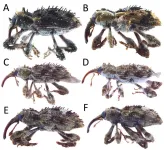
A new weevil species was discovered in Japan’s pristine subtropical forests on Ishigaki Island and Yanbaru National Park in Okinawa. Renowned for their remarkable biodiversity, the Ryukyu Islands are a chain of subtropical islands distributed between mainland Japan and Taiwan that boast a relatively isolated evolutionary history, and are home to a distinctive and fascinating insect fauna. Researchers at the Okinawan Institute of Science and Technology (OIST) have been placing net traps to monitor insects on Okinawa ...

Read the release
Environment

IIASA analysis underpins new 2040 climate targets by EU Advisors

In two new reports, IIASA researchers, with support from colleagues at the Potsdam Institute for Climate Impact Research (PIK), examined the feasibility and fairness of emissions targets and considerations for the European Climate Law. Keywan Riahi, a member of the 15-strong EU Advisory Board and IIASA Energy, Climate, and Environment Program Director, took the lead in conducting the analyses. The European Scientific Advisory Board on Climate Change is an independent board entrusted with the crucial responsibility of providing transparent and scientific guidance to the EU on setting a new emissions reduction target to be achieved by 2040, as well as budgets for greenhouse ...

Read the release
IU researcher receives NSF award to study carbon-trapping mineral systems
Environment

IU researcher receives NSF award to study carbon-trapping mineral systems

An Indiana University researcher is investigating critical geochemical processes that trap carbon dioxide in rock to better predict the potential for atmospheric carbon removal and storage at scale. Chen Zhu, a globally recognized geologist and professor of Earth and Atmospheric Sciences within the College of Arts and Sciences at Indiana University Bloomington, has been awarded $736,000 from the National Science Foundation to solve long-standing gaps in scientists’ understanding of CO2-water-rock interactions that naturally remove carbon dioxide from the ...

Read the release
Environment

Climate change likely led to violence in early Andean populations

Climate change in current times has created problems for humans such as wildfires and reduced growing seasons for staple crops, spilling over into economic effects. Many researchers predict, and have observed in published literature, an increase in interpersonal violence and homicides when temperatures increase. Violence during climatic change has evidence in history. University of California, Davis, researchers said they have have found a pattern of increased violence during climatic change in the south central Andes between A.D. 470 and 1500. During that time, which includes the Medieval Climatic ...

Read the release
Carbon mitigation payments can make bioenergy crops more appealing for farmers
Environment

Carbon mitigation payments can make bioenergy crops more appealing for farmers

URBANA, Ill. — Bioenergy crops such as miscanthus and switchgrass provide several environmental benefits, but low returns and profit risks are barriers for investment by farmers. A new study from the University of Illinois Urbana-Champaign shows that carbon mitigation payments could increase net returns and reduce income risk, potentially enticing more farmers to grow these crops. “We were interested in looking at the returns to farmers and the risks to farm income of adopting bioenergy crops compared to conventional corn and soybean crops. We ...

Read the release
Environment

Light Pollution Special Issue

Light pollution is increasing around the globe, both in its intensity and geographic extent. Researchers are documenting its impact on ecosystems, human health, and culture, while warning that the wasted light has financial costs, environmental impacts, and is responsible for substantial greenhouse gas emissions. In a special issue of Science, five papers discuss the growing adverse impacts of light pollution, along with the regulatory and technological solutions that could help mitigate its effects. Artificial ...

Read the release
How microgrids can help communities adapt to wildfires
Environment

How microgrids can help communities adapt to wildfires

– By Dan Mullen Wildfires have become increasingly frequent due to climate change, with record occurrences in areas not historically prone to them. In California, wildfires and regional power shutoffs have cost billions and taken lives. For some 46 million Americans living next to forests – at what scientists call the “wildland-urban interface” (WUI) – the risks of wildfire can be especially acute. Microgrids can build resilience in vulnerable communities. By using small-scale, local energy sources and disconnecting from regional grids during emergencies, they can deliver essential services to keep homes and communities ...

Read the release
How will a warming world impact the Earth’s ability to offset our carbon emissions?
Environment

How will a warming world impact the Earth’s ability to offset our carbon emissions?

Washington, DC—As the world heats up due to climate change, how much can we continue to depend on plants and soils to help alleviate some of our self-inflicted damage by removing carbon pollution from the atmosphere? New work led by Carnegie’s Wu Sun and Anna Michalak tackles this key question by deploying a bold new approach for inferring the temperature sensitivity of ecosystem respiration—which represents one side of the equation balancing carbon dioxide uptake and carbon dioxide output in terrestrial environments. Their findings are published in Nature Ecology & Evolution. “Right now, plants in the terrestrial ...

Read the release
Environment

How antelopes under threat from the climate crisis have responded to rising temperatures

The climate crisis is turning the temperature up all over the world, but in southern Africa, the rise has been particularly concerning. Wild animals dependent on delicate ecosystems which are already dry, so that food and water scarcity limits their ability to cope with increased heat, are at serious risk. Scientists studied the behavior of three different species of antelope with overlapping ranges in Namibia to try to understand how animals of different sizes and behaviors adapt to the heat. “Even the indigenous wildlife, adapted to hot and arid conditions, shows sensitivity to extreme heat,” said Paul Berry of the University of Potsdam, lead author of the study in ...

Read the release
A marine mystery: Discovering the link between climate change and sea sponge loss
Environment

A marine mystery: Discovering the link between climate change and sea sponge loss

Sea sponges are essential to marine ecosystems. They play critical roles in the ocean, as they provide shelter and food to a plethora of marine creatures, recycle nutrients by filtering thousands of litres of sea water daily, and are hosts to microbes that may be the key to some of the most pressing medical challenges we face today. Now, scientists from UNSW have discovered that when a tropical sea sponge is exposed to warmer temperatures, it loses an important microbe, which could explain why the sponge tissue dies. The latest study, published today in ISME Communications, has revealed that by exposing sea sponges ...

Read the release
Environment

National economies recover faster when countries are powered by renewable energy – new research

National economies recover significantly faster from shocks when countries are powered by renewable energy sources, according to new research that has profound implications for global energy policy. Researchers from Trinity College Dublin looked for patterns in data from 133 systemic economic crises that affected 98 countries over a 40-year span. And while their analyses show that countries relying on a broader range of energy sources experience longer recovery times, the best predictor of economic recovery was the extent to which a country relied on renewable energy. Underlining the significance of the finding is the fact that while data ...

Read the release
Ocean current comes to the rescue for Pacific island reefs
Environment

Ocean current comes to the rescue for Pacific island reefs

Marine heatwaves are emerging as a key impact of climate change and pose a particularly significant threat to corals that form the backbone of coral reefs. Researchers have now identified a phenomenon that could help coral reef managers better plan and act for the future.[1] Every few years, the cyclic climate pattern called El Niño arises in the tropical Pacific, causing significant changes in winds, weather and ocean temperatures. From April 2015 to May 2016, the Central Pacific witnessed one of the strongest El Niño events ever recorded. Coral reefs were so stressed by the warmer ocean temperatures that they experienced mass bleaching, whereby the ...

Read the release
Light pollution confuses coastal woodlouse
Environment

Light pollution confuses coastal woodlouse

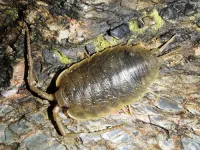
Artificial night-time light confuses a colour-changing coastal woodlouse, new research shows. The sea slater is an inch-long woodlouse that lives around the high-tide line and is common in the UK and Europe. Sea slaters forage at night and can change colour to blend in and conceal themselves from predators. The new study, by the University of Exeter, tested the effects of a single-point light source (which casts clear shadows) and “diffuse” light (similar to “skyglow” found near towns and cities). While the single light did not interfere with the sea slaters’ camouflage, diffuse light caused them to turn ...

Read the release
Largest global map of marine life protections released
Environment

Largest global map of marine life protections released

ProtectedSeas Navigator—the first global map of the world’s marine life regulations and their boundaries is now available. Navigator is a free, interactive map of over 21,000 marine protected and managed areas across 220 countries and territories and in over 25 languages. Navigator offers a global view of marine life protections to help inform progress towards international conservation goals, including protecting 30 percent of the global ocean by 2030, which was adopted at the UN Biodiversity ...

Read the release
Environment

Integrating offshore wind into China’s power grid can further carbon neutrality goals

OFFSHORE WIND POWER OFFERS A PROMISING SOLUTION to the challenge of decarbonizing coastal China. China’s coastal provinces, though small in land mass, are home to 76% of the population; they are also responsible for 72% of total national power consumption and 70% of total CO2 emissions. Transitioning the coastal areas away from fossil fuels is one of China’s core challenges for achieving carbon neutrality by 2060, and offshore wind power may hold the key. New research published in Nature Communications develops a bottom-up model to ...

Read the release
Treating wastewater using passive processes
Environment

Treating wastewater using passive processes

Human activities have a significant impact on natural waters, aquatic biodiversity and the quality of drinking water resources. For Professor Mathieu Lapointe of the Department of Construction Engineering at École de technologie supérieure (ÉTS), it is possible to treat certain types of wastewater—not currently treated—globally using more sustainable and affordable in situ methods. In a study carried out by Professor Lapointe and published in the Nature journal, the rate of discharge into the environment of certain ...

Read the release
Environment

Where there’s smoke are lessons in demands of global sustainability

As the world struggles for sustainability in the face of climate change, wildfire smoke becomes a lesson in how people can become victims far from the root of a problem and far from their control. In this month’s open access National Science Review, Jianguo “Jack” Liu, MSU Rachel Carson Chair in Sustainability, makes a case for the world to shake off the constraints of traditional governance, which tends to address issues in one place without considering how people or ecologies near and far might be impacted. Justice at a global scale can be threatened when natural events or human decisions in one part of the world to protect, reroute, ...

Read the release
Environment

Experiment in Brazil identifies flood-prone areas of cities

Scientists affiliated with the National Space Research Institute (INPE) in Brazil have combined models that predict urban expansion and land-use changes with hydrodynamic models to create a methodology capable of supplying geographical information that identifies flood-prone areas of cities, especially those vulnerable to the impact of extremely heavy rainfall. The groundbreaking study was based on data for São Caetano do Sul, a city in metropolitan São Paulo, but the methodology can be used by other cities to devise public policies and make ...

Read the release
Environment

Becker receives funding for scientific support in solar physics

Peter Becker, Professor of Astrophysics and Space Sciences, received funding for: "Scientific Support in Solar Physics, Remote Sensing, Space Weather, High-Energy Astrophysics, and Associated Scientific Fields." As part of this project, Mason researchers will conduct research in collaboration with the Naval Research Laboratory (NRL). Areas covered by this research include: space sciences research (encompassing solar physics and studies of the integrated Sun-Earth system); computational physics and computational fluid dynamics; high-energy astrophysics; instrumentation ...

Read the release
Environment

All-electric rideshare fleet could reduce carbon emissions, increase traffic issues

Two major ridesharing companies have promised all-electric fleets by 2030 in an effort to reduce their carbon footprint. To understand additional impacts of this transition, researchers reporting in ACS’ Environmental Science & Technology conducted life-cycle comparisons of battery-powered electric vehicle fleets to a gas-powered one, using real-world rideshare data. They found up to a 45% reduction in greenhouse gas emissions from full electrification; however, traffic problems and air pollution could increase. Ridesharing apps are an increasingly popular way to travel around urban areas, ...

Read the release
Twenty species of sea lettuce found along the Baltic and Scandinavian coasts
Environment

Twenty species of sea lettuce found along the Baltic and Scandinavian coasts

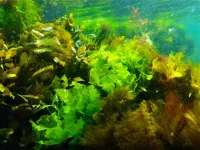
The number of species of the green alga sea lettuce in the Baltic Sea region and Skagerak and is much larger than what was previously known. Researchers at the University of Gothenburg have surveyed 10,000 kilometres of coast and found twenty species of sea lettuce. Green macroalgae of the genus Ulva, also known as sea lettuce, are almost ubiquitous in the wider Baltic Sea region and and can be found from the Atlantic waters all the way up to the Bay of Bothnia in the Baltic Sea. Sea lettuce reproduce easily and grow ...

Read the release
Environment

Canada’s carbon pricing poses a $256 billion financial risk for borrowers and banks

By putting a price on the cost of carbon, the Government of Canada aims to curtail greenhouse gas (GHG) emissions, but it comes with an increased risk for financial lenders and borrowers with high carbon emissions. In a first-of-its-kind study, University of Waterloo researchers analyzed the effects of Canada’s carbon price regime on the economy. The results indicate that as carbon costs rise, high-emitting carbon industries such as mining and energy are at the greatest risk of default, with total assets of $256 billion at risk of being lost and almost a quarter ...

Read the release
Environment

USTC reveals reconfiguration process of solar eruptions

Recently, a research team led by Prof. GOU Yanyu from the University of Science and Technology of China (USTC) of the Chinese Academy of Sciences (CAS) found that the solar outburst structure undergoes a complex reconfiguration evolution during the early outbursts, thus making important advances in the study of solar outburst activity. This study was published in Nature Astronomy. In classical images, the core structure of a solar eruption is a magnetic rope consisted of spirally wound magnetic lines. When the eruption begins, the magnetic ropes around the core are transformed by magnetic reconnection ...

Read the release
Aston University wins £1.8m to boost West Midlands low carbon markets
Environment

Aston University wins £1.8m to boost West Midlands low carbon markets

Aston University and local industry to develop technology to convert organic material into commercially valuable products Sawdust, diseased trees and dried chicken litter among what can be transformed into sustainable bioproducts West Midlands companies are invited to join a cluster to develop new low carbon products for growing markets. Aston University is to receive £1.8 million to transform the West Midlands into a powerhouse of low-carbon product development and commercialisation. The University will be building on its existing research facilities to lead the region’s Biochar CleanTech Accelerator as part of the West Midlands Innovation Accelerator. The project ...

Read the release
From the original Press-News collection. Issuers of news releases are responsible for the accuracy of their content.