THE ORIGINAL COLLECTION · SINCE 2010

Environment
press releases.

Research announcements from universities, hospitals and scientific institutions. Explore the stories, people and discoveries behind the headlines.

Original publication datesPage 158
FIND A STORY

Find a past release.

Dates and source material belong to the original release.

Read our research explainers

Browse the collection · original publication order

Report reveals return on investments in Global Biodiversity Information Facility
Environment

Report reveals return on investments in Global Biodiversity Information Facility

Every €1 invested in the Global Biodiversity Information Facility provides €3 in direct benefits to users and up to €12 in societal benefits, according to the the first economic valuation of GBIF's network, infrastructure and services. This finding is one of several insights outlined in the report, Economic valuation and assessment of the impact of the GBIF network, prepared and published by Deloitte Access Economics. The Deloitte team of economists applied multiple analytical methods to produce this estimate, comparing and combining the results to quantify the total ...

Read the release
Lessons in sustainability, evolution and human adaptation — courtesy of the Holocene
Environment

Lessons in sustainability, evolution and human adaptation — courtesy of the Holocene

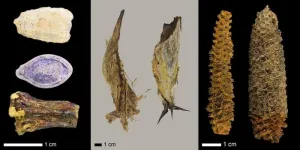
The El Gigante rockshelter in western Honduras is among only a handful of archaeological sites in the Americas that contain well-preserved botanical remains spanning the last 11,000 years. Considered one of the most important archaeological sites discovered in Central America in the last 40 years, El Gigante was recently nominated as a UNESCO World Heritage site. “No other location shows, as clearly as El Gigante,” state UNESCO materials about the site’s universal value, “the dynamic character of hunter-gatherer societies, and their adaptive way of life in the Central ...

Read the release
Environment

Higher efficiency catalyst key to green hydrogen

The race to make the widespread use of intermittent renewable energy a reality has taken a step forward with new research by experts from the University of Adelaide who are improving the efficiency of iridium-based catalysts. “Currently it is difficult for commercial iridium oxide catalysts to achieve high activity and stability at the same time in proton exchange membrane water electrolysis (PEMWE),” said the University of Adelaide’s Associate Professor Yao Zheng, ARC Future Fellow, School of Chemical Engineering. “We have found that a lattice-water-assisted mechanism – a ...

Read the release
Global warming accelerates CO2 emissions from soil microbes
Environment

Global warming accelerates CO2 emissions from soil microbes

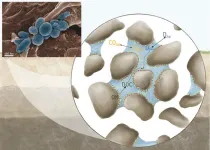
The rise in atmospheric carbon dioxide (CO2) concentration is a primary catalyst for global warming, and an estimated one fifth of the atmospheric CO2 originates from soil sources. This is partially attributed to the activity of microorganisms, including bacteria, fungi, and other microorganisms that decompose organic matter in the soil utilizing oxygen, such as deceased plant materials. During this process, CO2 is released into the atmosphere. Scientists refer to it as heterotrophic soil respiration. Based on a recent study published in the scientific journal Nature Communications, a team of researchers from ...

Read the release
A new species of early toothed whale
Environment

A new species of early toothed whale

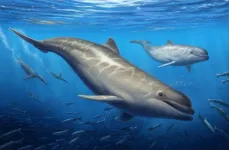
Have you ever wondered what the earliest ancestors of today’s dolphins looked like? Then look no further, meet Olympicetus thalassodon, a new species of early odontocete, or toothed whale, that swam along the North Pacific coastline around 28 million years ago. This new species is one of several that are helping us understand the early history and diversification of modern dolphins, porpoises and other toothed whales. The new species is described in a new study published in the open access journal ...

Read the release
Environment

Large herbivores slow Arctic tundra diversity losses associated with sea ice decline

Tundra diversity, including plants, lichens and fungi, declined over a 15-year experiment in the Arctic due to warming temperatures mediated by the disappearance of sea ice, according to Eric Post and colleagues. However, the presence of large herbivores such as caribou and musk oxen slowed this decline, by affecting the plant understory with their different browsing behaviors, the researchers concluded. Their findings offer support for the idea that encouraging herbivore diversity in the tundra could temper some of the impacts of climate warming. Post et al. observed the interacting effects of warming temperatures, sea ice changes, tundra diversity and herbivore exclusion in ...

Read the release
Highest honor in Antarctic exploration goes to Ian Dalziel
Environment

Highest honor in Antarctic exploration goes to Ian Dalziel

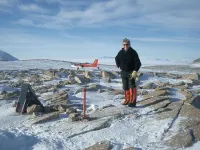
Ian Dalziel of The University of Texas at Austin has been honored with the Polar Medal — the United Kingdom’s top award for polar exploration. The medal recognizes Dalziel’s contributions to Antarctic geology, including discoveries about the icy continent’s ancient past and the fragility of its ice sheet today. The award will be presented by King Charles III at Buckingham Palace later this year. Early recipients of the medal, which has existed for more than 150 years, include pioneers of polar exploration Capt. R.F. Scott and Sir Ernest Shackleton, who made the first attempt to reach the South Pole in 1902. Dalziel’s ...

Read the release
Environment

Flooding tackled by helping citizens take action – study

Extreme weather caused by climate change - such as flooding - will be to easier to prepare for after scientists developed a new method that empowers citizens to identify solutions to the threats their communities face. The approach works by researchers bringing community groups together to discuss and understand the likely impacts of climate change in a local area. In the UK, these include indirect risks such as food shortages and energy disruption as well as physical threats like heat stress and flooding. Most climate adaptation initiatives are developed by governments or by businesses, rather than to help citizens help themselves. The new approach, published ...

Read the release
Environment

Antarctic ice shelves experienced only minor changes in surface melt since 1980

Antarctic ice shelves have experienced only minor changes in surface melt rates over the past four decades, unlike the rapid increase in surface melt experienced by Greenland’s glaciers during the same time period, according to new research. The news is not cause for celebration just yet, though—the researchers expect Antarctic ice shelf surface melt rates to increase substantially in the coming decades due to rising global air temperatures. Ice shelves are the parts of glaciers that extend into the ocean and float on top of seawater. In a new study published today in Geophysical Research Letters, glaciologists ...

Read the release
New MU study examines variability of water, carbon in Missouri agriculture ecosystems and future impact on crops
Environment

New MU study examines variability of water, carbon in Missouri agriculture ecosystems and future impact on crops

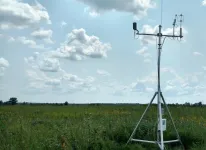
One of the main reasons plants use water is to allow them to absorb carbon dioxide from the atmosphere. This means that, in plants, the water and carbon cycles are tightly linked. In a new study, researchers from the University of Missouri and the United States Department of Agriculture (USDA) used this foundational principle to identify sustainable farming practices aimed at helping staple crops like corn and soybeans thrive during extreme weather conditions that have become more common in the Midwest. This study examined how farming practices affect crop resilience to climate change by examining water and carbon ...

Read the release
New study in Nature Water demonstrates a vastly more sustainable, cost-effective method to desalinate industrial wastewater
Environment

New study in Nature Water demonstrates a vastly more sustainable, cost-effective method to desalinate industrial wastewater

Vanderbilt researchers are part of a team that has developed a cutting-edge method that seeks to make the removal of salt from hypersaline industrial wastewater far more energy-efficient and cost-effective. While desalination through reverse osmosis has made tremendous strides—allowing for salt removal from seawater for less than a penny per gallon—it still falls short in eliminating saline in wastewater from industries like mining, oil and gas and power generation and in inland brackish water. The industrial brines are currently injected into deep geological formations or transferred to a evaporation ponds, and both disposal methods are facing more regulatory and ...

Read the release
Environment

Conservation policies risk damaging global biodiversity, researchers argue

‘Green’ farming policies may accelerate global biodiversity loss, two leading academics have warned. Rewilding, organic farming and the ‘nature friendly farming’ measures included in some government conservation policies risk worsening the global biodiversity crisis by reducing how much food is produced in a region, driving up food imports and increasing environmental damage overseas. In an article published today in the journal Nature, Professor Ian Bateman of the University of Exeter and Professor Andrew Balmford of the University of Cambridge urge policy-makers to consider a bolder approach known as ...

Read the release
Environment

Could bamboo be the next source of renewable energy?

An article in GCB Bioenergy describes why bamboo may be an attractive resource in efforts to develop environmentally friendly renewable energy to replace fossil fuels. The authors note that bamboo grows rapidly, absorbs carbon dioxide, and releases large amounts of oxygen into the atmosphere. They describe various processes—such as fermentation and pyrolysis—that can be performed to convert its raw material into bioethanol, biogas, and other bioenergy products. A tool with limitations is currently available for selecting the most appropriate bamboo species ...

Read the release
Climate change could lead to "widespread chaos" for insect communities
Environment

Climate change could lead to "widespread chaos" for insect communities

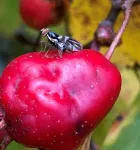
BINGHAMTON, N.Y. -- New species continue to evolve the world over, as different groups of organisms separate and take divergent paths. What happens when you add climate change to the mix? That’s the question Thomas H.Q. Powell, assistant professor of biological sciences at Binghamton University, State University of New York, and his lab seek to answer in “Contrasting effects of warming in diverging insects,” recently published in Ecology Letters. In the 1850s, the apple maggot fly — a major agricultural pest ...

Read the release
Environment

Study explores climate change impacts on seagrass meadows

Hidden beneath the waves of coastal waters lies an important member of the marine food chain – seagrasses. These marine meadows are in many ways the unsung heroes of the ocean, benefiting humans and the planet by producing oxygen, removing carbon dioxide from the air, and providing food and habitat for marine life. But these submerged savannahs may be in danger of disappearing, according to a new Stanford study that modeled the distribution of seagrass species around the world at two different timepoints in the future. Climate change is expected to hit marine species hard, in part because oceans absorb an estimated ...

Read the release
Environment

Brazilian fossil provides earliest evidence of evolutionary trait that enabled dinosaurs to become giants

The missing link has just been found between the earliest dinosaurs, whose size ranged from a few centimeters to at most 3 meters in length, and more recent giants that could be more than twice the length of a bus and have so much appeal to the popular imagination. Macrocollum itaquii, buried 225 million years ago in what is now Agudo, a town in Rio Grande do Sul state, South Brazil, is the oldest dinosaur studied hitherto with structures called air sacs. These bone cavities, which persist in present-day ...

Read the release
Science in the shadows: NASA selects 5 experiments for 2024 total solar eclipse
Environment

Science in the shadows: NASA selects 5 experiments for 2024 total solar eclipse

A total solar eclipse will darken a swath of North America as the Moon blocks the light of the Sun for a few minutes on April 8, 2024. In addition to casting a breathtaking, passing shadow over the heads of millions of people, this total solar eclipse gives scientists a unique opportunity to study the Sun, Earth, and their interactions. NASA will fund five interdisciplinary science projects for the 2024 eclipse to make the most of this opportunity. The projects, which are led by researchers at different academic institutions, will study the Sun and its influence on Earth with a variety of instruments, including cameras aboard high-altitude research planes, ham radios, and ...

Read the release
National Geographic Explorers win award for visualizing arctic climate change
Environment

National Geographic Explorers win award for visualizing arctic climate change

FOR IMMEDIATE RELEASE: June 20, 2023 - Washington, D.C. - An innovative virtual reality project created by National Geographic Explorers in collaboration with local communities was recognized with the “Best in Category: Visualize” during the XR Prize Challenge: Fight Climate Change earlier this month. The project, “Qikiqtaruk: Arctic at Risk” was selected for the award from across 150 submissions at the Augmented World Expo (AWE) in Santa Clara, California on June 1, 2023. “Qikiqtaruk: Arctic at Risk” brought together researchers, park rangers, educators and immersive content ...

Read the release
Environment

CEHD researchers receive funding for Appalachian Conservation Strategy Feasibility Pilot

Sammie Powers, Assistant Professor, Recreation Management, School of Sport, Recreation, and Tourism Management (SRTM); Hung-Ling Liu, Associate Professor, Recreation Management, SRTM; and Ellen Rodgers, Associate Dean, College of Education and Human Development (CEHD), received funding from the Appalachian Trail Conservancy (ATC) for the project: "Appalachian Conservation Strategy Feasibility Pilot: Conservation and Human Dimensions Stakeholder Engagement Action Plan Project." They are collaborating with Nate Trauntvein, Associate Professor, ...

Read the release
Company culture shapes willingness of workers to act sustainably, research shows
Environment

Company culture shapes willingness of workers to act sustainably, research shows

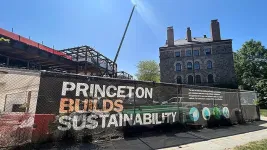
Amidst rising concerns about the global climate crisis, Princeton researchers have uncovered the surprisingly large role that companies play in shaping sustainable behaviors among employees, as well as a link between eco-friendly behaviors and happier workers. In research published in Current Research in Ecological and Social Psychology, the Princeton team reported the results from a nationwide study of employees to understand the factors that influence whether workers take sustainable actions and incorporate the environment into their day-to-day decision making. The results ...

Read the release
Climate action plans mobilize limited urban change, researchers report
Environment

Climate action plans mobilize limited urban change, researchers report

The Intergovernmental Panel on Climate Change Fifth Assessment Report (AR5), released just prior to an international climate convention in 2015, explicitly stated that human-caused greenhouse gas emissions were the highest in history, with clear and widespread impacts on the climate system. Since then, hundreds of cities across the world have published their own climate action plans (CAPs), detailing how their urban areas will handle climate change. How do the plans stack up against one another and against the recommended ...

Read the release
Environment

Toxic emissions from wildland-urban interface fires

Fires in the wildland-urban interface (WUI) emit more toxic smoke than wildfires burning in natural vegetation, due to the chemicals in the structures, vehicles, and other manufactured goods that burn in fires in areas of human habitation. Amara Holder and colleagues surveyed the literature on emissions from urban fuels, finding 28 experimental studies that reported emission factors—emissions per unit of fuel burned—for various items, such as home furnishings, consumer electronics, and vehicle ...

Read the release
These long-necked reptiles were decapitated by their predators, fossil evidence confirms
Environment

These long-necked reptiles were decapitated by their predators, fossil evidence confirms

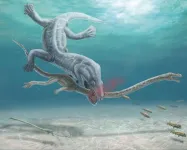
In the age of dinosaurs, many marine reptiles had extremely long necks compared to reptiles today. While it was clearly a successful evolutionary strategy, paleontologists have long suspected that their long-necked bodies made them vulnerable to predators. Now, after almost 200 years of continued research, direct fossil evidence confirms this scenario for the first time in the most graphic way imaginable. Researchers reporting in the journal Current Biology on June 19 studied the unusual necks of two Triassic ...

Read the release
Environment

Assessment of how climate scientists communicate risk shows imperfections, improvements

Scientists have long struggled to find the best way to present crucial facts about future sea level rise, but are getting better at communicating more clearly, according to an international group of climate scientists, including a leading Rutgers expert. The consequences of improving communications are enormous, the scientists said, as civic leaders actively incorporate climate scientists’ risk assessments into major planning efforts to counter some of the effects of rising seas. Writing in Nature Climate Change, the scientists ...

Read the release
Fossil study sheds light on famous spirals found in nature
Environment

Fossil study sheds light on famous spirals found in nature

Leaf arrangements in the earliest plants differ from most modern plants, overturning a long-held theory regarding the origins of a famous mathematical pattern found in nature, research shows. The findings indicate that the arrangement of leaves into distinctive spirals, that are common in nature today, were not common in the most ancient land plants that first populated the earth’s surface. Instead, the ancient plants were found to have another type of spiral. This negates a long held theory about the evolution of plant leaf spirals, indicating that they evolved ...

Read the release
From the original Press-News collection. Issuers of news releases are responsible for the accuracy of their content.