THE ORIGINAL COLLECTION · SINCE 2010

Environment
press releases.

Research announcements from universities, hospitals and scientific institutions. Explore the stories, people and discoveries behind the headlines.

Original publication datesPage 157
FIND A STORY

Find a past release.

Dates and source material belong to the original release.

Read our research explainers

Browse the collection · original publication order

Environment

Climate disasters, traumatic events have long-term impacts on youths' academics

UNIVERSITY PARK, Pa. — Experiencing traumatic events such as natural disasters may have long-term consequences for the academic progress and future food security of youth — a problem researchers said could worsen with the increased frequency of extreme weather events due to climate change. In a study using data from Peru, researchers from Penn State’s College of Agricultural Sciences found that being exposed to a greater number of traumatic events or “shocks,” such as a natural disaster or loss of family income, in early ...

Read the release
Protection of biodiversity and ecosystems: we are still far from the European targets
Environment

Protection of biodiversity and ecosystems: we are still far from the European targets

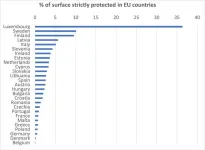
The goal of fully protecting 10% of the EU's land area is ambitious for European countries that have been profoundly shaped by millennia of human transformation. A recently published study, coordinated by the University of Bologna, has carried out the first analysis at European level on the strictly protected areas (classified by the IUCN as integral reserves, wilderness areas and national parks) across the EU, studying how extensive integral protection is across biogeographical regions, countries and elevation gradients. "We have discovered – explains Prof. Roberto Cazzolla Gatti, conservation ...

Read the release
Environment

TGI-led research finds climate change, increasing population put Kenya at risk of famine

ST. LOUIS - Research published in Outlook on Agriculture has shown that the population relative to available climate-suitable areas in Kenya has increased, posing a threat to the country’s economy and food security. The study, “Spatial changes to climate suitability and availability of agropastoral farming systems across Kenya (1980-2020),” was published online on May 29. The research team analyzed Kenya’s farming systems and climate zones between 1980-2020. Over that time, the population ...

Read the release
Environment

Push to green energy is not without consequences, PSU prof explores

From a proposed lithium mine near the Oregon-Nevada border to a proposed pumped hydropower facility in Washington, the transition from fossil fuels to renewables is not all clean and green. The extraction, manufacturing, storage and recycling of metals and minerals needed for electric cars, wind and solar has impacts on land, water, wildlife and people — and thanks to a new grant, a Portland State professor will take a closer look at those impacts, both good and bad. Alida Cantor, associate professor of geography, ...

Read the release
State-of-the-art climate models provide new insights into the relationship between Asia–Pacific upper-tropospheric temperatures and precipitation
Environment

State-of-the-art climate models provide new insights into the relationship between Asia–Pacific upper-tropospheric temperatures and precipitation

The Asian–Pacific Oscillation (APO) is a recently identified atmospheric teleconnection pattern in the Asia–Pacific sector characterized by a seesaw vibration of upper-tropospheric temperatures between Asia and the North Pacific. Teleconnections are links between weather phenomena at widely separated locations. The APO has substantial impacts on atmospheric circulation, monsoon rainfall, and cyclone activity, amongst other phenomena. Therefore, the link between the APO and climate change has become a hot topic within the climate change community. The Coupled Model Intercomparison Project (CMIP) ...

Read the release
Researchers on UN Maritime Organization: "At the moment, it’s working against its own green transition"
Environment

Researchers on UN Maritime Organization: "At the moment, it’s working against its own green transition"

The UN’s International Maritime Organization (IMO) is actively contributing to the shipping industry being far off course from ever reaching its climate goals. In large part, this is because the organization lacks funding and expertise. Without strengthening the IMO, any transition of the enormous industry is hazily imaginable. This, according to the Copenhagen and Lund university researchers behind a new study of the organization. Three percent of the world's total greenhouse gas emissions is attributable to the shipping industry. And things remain headed in the wrong direction – with CO2 emissions from ships continuing to rise year after year. This has increased ...

Read the release
Environment

Zapping municipal waste helps recover valuable phosphorus fertilizer

One of humankind’s most precious fertilizers is slipping away. Phosphorus, which today comes mostly from nonrenewable reserves of phosphate rock, typically winds up in municipal waste streams. In the best cases, wastewater treatment plants sequester about 90% of that phosphorus in “sludge” and decompose that sludge into something known as digestate. Engineers hope to establish a more sustainable cycle for reusing phosphorus, but toxic compounds in digestate limit the possibility of recycling it as fertilizer — it’s hard to recover phosphorus from solid waste like digestate. “Existing ...

Read the release
Acutely exposed to changing climate, many Greenlanders do not blame humans
Environment

Acutely exposed to changing climate, many Greenlanders do not blame humans

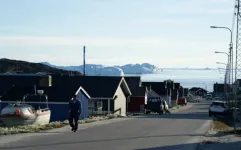
A new survey shows that the largely Indigenous population of Greenland is highly aware that the climate is changing, and far more likely than people in other Arctic nations to say they are personally affected. Yet, many do not blame human influences—especially those living traditional subsistence lifestyles most directly hit by the impacts of rapidly wasting ice and radical changes in weather. The study appears this week in the journal Nature Climate Change. "Greenland is off the charts when it comes to the proportion of people who are seeing and personally experiencing the effects of climate change. But there is a big mismatch between ...

Read the release
Environment

New research from Portland State shows climate change will increase impacts of volcanic eruptions

Volcanic disasters have been studied since Pompeii was buried in 79 A.D., leading the public to believe that scientists already know why, where, when and how long volcanoes will erupt. But Jonathan Fink, volcanologist and director of PSU’s Digital City Testbed Center, said these fundamental questions remain a mystery. Fink and Idowu "Jola" Ajibade, associate professor of Geography, recently published an article about how climate change will affect the societal impacts of eruptions. Their work is part of a novel 33-paper collection in the Bulletin of Volcanology, co-edited by Fink, which attempts to track how the entire field of volcanology has ...

Read the release
World’s first glue derived from industrial bio-waste will make furniture recyclable
Environment

World’s first glue derived from industrial bio-waste will make furniture recyclable

An innovative new adhesive, derived from purified and refined industrial bio-waste, should enable 90 percent of engineered wood products, such as furniture and construction boards, to become fully recyclable and helping to develop a sustainable circular economy in this sector. Currently, formaldehyde adhesives used by manufacturers, are toxic petrochemicals that are carcinogenic in nature. This prevents recycling and incineration meaning most construction panels and furniture made from engineered wood ends up in landfill. The new adhesive, derived from extracted and purified waste is ...

Read the release
Undergrad-driven project reveals drought’s effects on painted turtles
Environment

Undergrad-driven project reveals drought’s effects on painted turtles

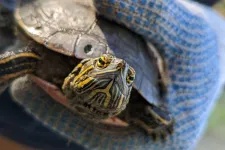
A projected rise in droughts could muddy the waters for painted turtles and some fellow freshwater-dwelling reptiles, says 11 years of data collected by 50-plus undergraduates from the University of Nebraska–Lincoln. Two recent studies based on the data suggest that drought can lower the survival odds, slow the growth and even skew the ratio of female-to-male painted turtles inhabiting the ponds of the Cornhusker State. Those outcomes emerged despite the water level of a sampled pond in southwestern Nebraska remaining relatively steady throughout the observed periods ...

Read the release
Forecasting flash floods an hour in advance
Environment

Forecasting flash floods an hour in advance

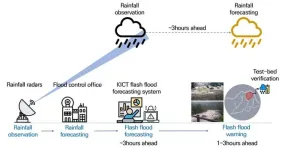
Korea has recently seen a surge in localized torrential rain and floods due to global warming. Frequent flash floods are hard to forecast and, when forecast, the accuracy is low. This often leads to major disasters that take hundreds of lives, as seen in Germany and China (Henan) in July 2021. Floods are one of the deadliest types of natural disasters, but climate change has made the forecasting of them even more challenging. Researchers at the Korea Institute of Civil Engineering and Building Technology (KICT, President Kim Byung-Suk) have developed a system that can forecast ...

Read the release
Newly discovered Jurassic fossils are a Texas first
Environment

Newly discovered Jurassic fossils are a Texas first

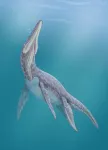
A team led by scientists at The University of Texas at Austin has filled a major gap in the state’s fossil record – describing the first known Jurassic vertebrate fossils in Texas. The weathered bone fragments are from the limbs and backbone of a plesiosaur, an extinct marine reptile that would have swum the shallow sea that covered what is now northeastern Mexico and far western Texas about 150 million years ago. The bones were discovered in the Malone Mountains of West Texas during two fossil hunting missions led by Steve May, a research associate at UT Austin’s Jackson School of Geosciences Museum of Earth ...

Read the release
Environment

UC Irvine scientists develop freely available risk model for hurricanes, tropical cyclones

Irvine, Calif., June 27, 2023 — As human-driven climate change amplifies natural disasters, hurricanes and typhoons stand to increase in intensity. Until now, there existed very few freely available computer models designed to estimate the economic costs of such events, but a team of researchers led by Jane W. Baldwin at the University of California, Irvine recently announced the completion of an open-source model that stands to help countries with high tropical cyclone risks better calculate just how much those storms will impact their people and their economies. “Tropical cyclones are some of the most impactful natural disasters on Earth. They pose huge risks ...

Read the release
Air pollution speeds snowmelt
Environment

Air pollution speeds snowmelt

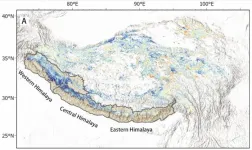
Diminished anthropogenic pollutant emissions during 2020 Covid-19 lockdowns reduced snowmelt in the Himalayas, according to a study. Liqiang Zhang and colleagues used multiple satellite data from the Moderate Resolution Imaging Spectroradiometer (MODIS) and Ozone Monitoring Instrument (OMI), as well as a coupled atmosphere-chemistry-snow model (GEOS-Chem-SNICAR) to explore how the sudden, dramatic reduction in particulate pollution in the region affected snow and ice melt. Snow and ice on the Tibetan plateau act as a water source for over 20% of the global population. However, ice and snow in the Himalayas have been melting at an accelerating rate in recent decades. ...

Read the release
New study reveals key to sustainable, eco-friendly next-generation polymers for various uses
Environment

New study reveals key to sustainable, eco-friendly next-generation polymers for various uses

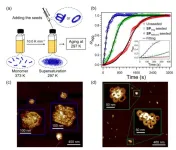
Supramolecular polymers are a new class of polymers that are currently being evaluated for material applications. These interesting compounds also play an important role in cellular activities in the body. "Supra," as the name suggests, is attributed to some unique properties that go beyond those of conventional polymers. Unlike traditional polymers, which are held together by strong, irreversible covalent bonds, supramolecular polymers are held together by weaker, reversible hydrogen bonds. They can reversibly assemble and disassemble, are highly versatile, and can be used for developing targeted drug delivery therapies, sensors to detect pollutants, diagnostic ...

Read the release
Some black truffles grown in eastern U.S. may be less valuable lookalike species, study finds
Environment

Some black truffles grown in eastern U.S. may be less valuable lookalike species, study finds

Some truffle producers in the eastern U.S. intending to grow European black truffles –scientific name, Tuber melanosporum — are also accidentally cultivating winter truffles — Tuber brumale — a related species that looks nearly identical but sells at a lower price, according to a new study from truffle researchers at the University of Florida and Michigan State University. In the U.S. and around the globe, European black truffles are produced commercially in truffle orchards, which contain trees ...

Read the release
UNF professor & Bureau of Land Management team discover ancient marine reptile fossil, publish ground-breaking evolutionary insight
Environment

UNF professor & Bureau of Land Management team discover ancient marine reptile fossil, publish ground-breaking evolutionary insight

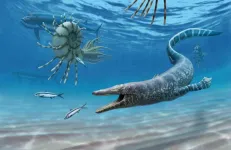
University of North Florida faculty member Dr. Barry Albright is part of a research team led by the Bureau of Land Management (BLM) who have unlocked new evolutionary information following the discovery of a 94-million-year-old mosasaur in the gray shale badlands of the National Park Service Glen Canyon National Recreation Area in southern Utah. Mosasaurs are fully marine-adapted reptiles that swam the seas while dinosaurs ruled the land. The ground-breaking research was just published in Cretaceous Research. The journey began nearly 11 years ago as Scott Richardson, a trained volunteer working under Dr. Albright, searched for fossilized remains of creatures ...

Read the release
Research questions value of sagebrush control in conserving sage grouse
Environment

Research questions value of sagebrush control in conserving sage grouse

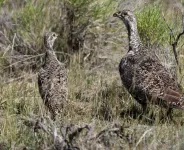
Efforts to improve sage grouse habitat through conventional management practices may be ineffective -- and even counterproductive -- according to research by University of Wyoming and other scientists. Sagebrush reduction strategies, including mowing and herbicide application, are often employed to enhance habitat for the greater sage grouse and other sagebrush-dependent species. The theory is that clearing large sagebrush shrubs improves food sources in sage grouse nesting and brood-rearing habitats by allowing ...

Read the release
Study finds human impact on wildlife even in protected areas
Environment

Study finds human impact on wildlife even in protected areas

HOUSTON – (June 26, 2023) – By 2030, if the 30 by 30 initiative supported by more than 100 countries is successful, 30% of our land and ocean ecosystems will be designated protected areas meant to safeguard biodiversity and help limit the impacts of climate change. However, a study by Rice University ecologist Lydia Beaudrot and collaborators reports for the first time that tropical mammals living inside protected areas are not spared the effects of human activity even when it occurs outside of the protected boundaries. Based on the ...

Read the release
Webb makes first detection of crucial carbon molecule
Environment

Webb makes first detection of crucial carbon molecule

A team of international scientists has used NASA’s James Webb Space Telescope to detect a new carbon compound in space for the first time. Known as methyl cation (pronounced cat-eye-on) (CH3+), the molecule is important because it aids the formation of more complex carbon-based molecules. Methyl cation was detected in a young star system, with a protoplanetary disk, known as d203-506, which is located about 1,350 light-years away in the Orion Nebula. Carbon compounds form the foundations of all known life, ...

Read the release
Environment

Worse than diesel and gasoline? Bioenergy as bad as fossils if there is no pricing of CO2 emissions from land-use change

Demand for modern biofuels is expected to grow substantially in order to mitigate climate emissions. However, they are far from being a climate neutral alternative to gasoline and diesel. A new study in Nature Climate Change shows that under current land-use regulations, CO2 emission factors for biofuels might even exceed those for fossil diesel combustion due to large-scale land clearing related to growing biomass. Before bioenergy can effectively contribute to achieving carbon neutrality, international agreements need to ensure the effective protection of forests and other natural lands by introducing carbon ...

Read the release
Environment

Study of Earth’s stratosphere reduces uncertainty in future climate change

New research led by the University of East Anglia (UEA) reduces uncertainty in future climate change linked to the stratosphere, with important implications for life on Earth. Man-made climate change is one of the greatest challenges facing us today, but uncertainty in the exact magnitude of global change hampers effective policy responses. A significant source of uncertainty relates to future changes to water vapour in the stratosphere, an extremely dry region of the atmosphere 15–50 km above the Earth’s surface. Future increases in water vapour here risk amplifying climate change and slowing down the recovery ...

Read the release
Study of deep-sea corals reveals ocean currents have not fuelled rise in atmospheric carbon dioxide
Environment

Study of deep-sea corals reveals ocean currents have not fuelled rise in atmospheric carbon dioxide

Pioneering analysis of deep-sea corals has overturned the idea that ocean currents contributed to increasing global levels of carbon dioxide in the air over the past 11,000 years. The study, led by the University of Bristol in the UK and Nanjing University in China, examined historic deep-sea corals to shed intriguing new light on the history of ocean chemistry. Understanding what has led to the pre-industrial rise in carbon dioxide (CO2) levels during the Holocene period, which dates back some 11,700 years to the present day, is a source of scientific debate. One theory suggests the increase in physical ...

Read the release
50-million-year-old katydid fossil reveals muscles, digestive tract, glands and a testicle
Environment

50-million-year-old katydid fossil reveals muscles, digestive tract, glands and a testicle

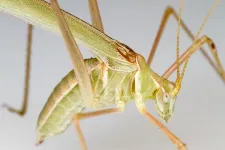
CHAMPAIGN, Ill. — 50 million years ago in what is now northwestern Colorado, a katydid died, sank to the bottom of a lake and was quickly buried in fine sediments, where it remained until its compressed fossil was recovered in recent years. When researchers examined the fossil under a microscope, they saw that not only had many of the insect’s hard structures been preserved in the compressed shale, so had several internal organs and tissues, which are not normally fossilized. They describe their findings in the journal Palaeoentomology. “Katydids ...

Read the release
From the original Press-News collection. Issuers of news releases are responsible for the accuracy of their content.