THE ORIGINAL COLLECTION · SINCE 2010

Environment
press releases.

Research announcements from universities, hospitals and scientific institutions. Explore the stories, people and discoveries behind the headlines.

Original publication datesPage 156
FIND A STORY

Find a past release.

Dates and source material belong to the original release.

Read our research explainers

Browse the collection · original publication order

Environment

Doom-and-gloom climate news may scare but also encourage audiences

UNIVERSITY PARK, Pa. — A team of Penn State researchers investigated how seeing frightening news about climate change day after day may shape the way people feel about the phenomenon and how willing they are to take action to address it. Christofer Skurka, Jessica Myrick and graduate student Yin Yang found that seeing bad news about climate change can make people more afraid over time, but it also may encourage audiences to think about what society can do to address the problem. They published the results of two separate studies in an article titled “Fanning the flames or burning out? Testing competing hypotheses ...

Read the release
Environment

Considerable but unsustainable water supply from thawing permafrost on the Tibetan Plateau in a changing climate

This study is led by Dr. Taihua Wang and Dr. Dawen Yang (Tsinghua University), together with experts in the field of both permafrost and glacier including Dr. Tandong Yao, Dr. Xin Li (Institute of Tibetan Plateau Research, Chinese Academy of Sciences), Dr. Guodong Cheng and Dr. Huijun Jin (Northwest Institute of Eco-Environment and Resources, Chinese Academy of Sciences). In a warming climate, the sustainability of cryospheric meltwater on the Tibetan Plateau has raised concerns because of its importance for the fragile ecosystem in the headwater regions and the dense populations in the downstream. Existing studies ...

Read the release

Arctic dust found to be a major source of particles that form ice crystals in Arctic low-level clouds
Environment

Arctic dust found to be a major source of particles that form ice crystals in Arctic low-level clouds

Researchers from Nagoya University and the National Institute of Polar Research in Japan have found that dust from land without snow cover in the Arctic is a major source of particles that form ice crystals in low-level clouds of the Arctic (at altitudes below about 3 km) during summer and fall. The formation of ice crystals in low-level clouds is considered to affect climate because it can cause ice particles to grow at the expense of liquid droplets and then fall as precipitation, resulting in a lower sunlight reflectance and a shorter lifetime for clouds. “The Arctic is said to be heating up two to four times faster than the rate ...

Read the release
Queensland native forestry can help achieve global environment goals
Environment

Queensland native forestry can help achieve global environment goals

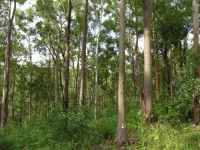
Research conducted by The University of Queensland has revealed that Queensland native forestry, including timber harvesting, could actually help conserve biodiversity and mitigate climate risks. Dr Tyron Venn from UQ’s School of Agriculture and Food Sustainability reviewed more than 350 publications, studying the ecological and economic impacts of Queensland native forest management, which includes everything from fire management to timber harvesting. “Stopping forestry in Queensland’s native forests may sound like a positive outcome for the environment, but the research suggests that it would further shift our impacts offshore and increase ...

Read the release
Wildlife crossing guards
Environment

Wildlife crossing guards

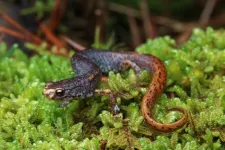
Oak Ridge National Laboratory researchers developed a model framework that identifies ways to ensure wildlife can safely navigate their habitats while not unduly affecting infrastructure. The project centered on the 32,000-acre Oak Ridge Reservation in Tennessee, home to Department of Energy facilities and several at-risk species like the four-toed salamander. Scientists identified habitats and simulated solutions like conservation buffers and open-bottom culverts to allow safe passage for salamanders and other wildlife, which cost far less than large-scale barrier removal ...

Read the release
Environment

Precipitation tolerance helped explain which vertebrate species spread between newly joined continents

A new study helps explain why rates of species exchange are at least twice as high from west to east than in the opposite direction across Wallace’s Line. The study included an analysis of more than 20,000 species belonging to all 227 families of terrestrial vertebrates present in the Indo-Australian archipelago. As tectonic plates merge, once disparate continents can connect and create new opportunities for biotic exchange. Species movement across newly connected continents millions of years ago continues to shape assemblages of flora and fauna today. One of the most well-known ...

Read the release
Bezos Earth Fund grants $12 million to Smithsonian to support major forest carbon project
Environment

Bezos Earth Fund grants $12 million to Smithsonian to support major forest carbon project

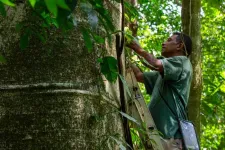
By conserving and replanting forests, the world buys time until it brings other climate and sustainability solutions online. As a critical step toward this goal, the Smithsonian Tropical Research Institute (STRI) received a $12 million grant from the Bezos Earth Fund to support GEO-TREES. This international consortium is the first worldwide system to independently ensure the accuracy of satellite monitoring of forest biomass—a way to measure carbon stored in trees—in all forest types and conditions. The GEO-TREES alliance offers a freely accessible database that integrates ...

Read the release

Legends of Norse Settlers drove Denmark towards Greenland
Environment

Legends of Norse Settlers drove Denmark towards Greenland

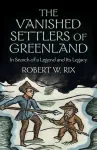
In 985, Viking explorer Erik the Red led a group of Icelandic farmers to Greenland, where they established a settlement on the west coast. Archaeological evidence suggests that the settlement existed for over 400 years, but the impact of the settlement lasted much longer. It is little recognised today that the hope of finding the descendants of the settlers dominated European and American perspectives on Greenland for centuries In his new book The Vanished Settlers of Greenland: In Search of a Legend and Its Legacy, Associate Professor Robert Rix argues that the lost Norse settlement played a decisive ...

Read the release
Shrinking Arctic glaciers are unearthing a new source of methane
Environment

Shrinking Arctic glaciers are unearthing a new source of methane

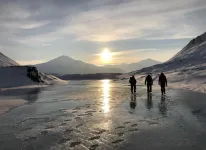
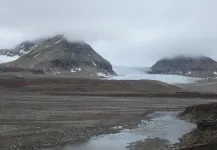
As the Arctic warms, shrinking glaciers are exposing bubbling groundwater springs which could provide an underestimated source of the potent greenhouse gas methane, finds new research published today in Nature Geoscience. The study, led by researchers from the University of Cambridge and the University Centre in Svalbard, Norway, identified large stocks of methane gas leaking from groundwater springs unveiled by melting glaciers. The research suggests that these methane emissions will likely increase as Arctic glaciers retreat and more ...

Read the release
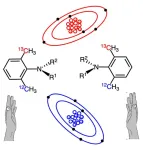
Scientists synthesize isotopic atropisomers based on carbon isotope discrimination
Environment

Scientists synthesize isotopic atropisomers based on carbon isotope discrimination

In chemistry, a molecule or ion is said to be chiral if it cannot be superposed on to its mirror image by any combination of rotations, translations, or conformational changes. A chiral molecule or ion exists in two forms, called enantiomers, that are mirror images of each other; they are often distinguished as either ‘right-handed’ or ‘left-handed’ by their absolute configuration. Enantiomers exhibit similar physical and chemical properties, except when interacting with polarized light and reacting with other chiral compounds, ...

Read the release
Environment

Species lump for the Western Flycatcher; species status for the goshawk of North America; and species splits in several Caribbean birds among 2023 Check-list changes

The 64th Supplement to the American Ornithological Society’s (AOS) Check-list of North American Birds, published today in Ornithology, includes numerous updates to the classification of North American bird species. A few highlights from this year’s supplement, detailed below, include a species lump for the Western Flycatcher, species status for the goshawk of North America, and species splits in several Caribbean birds leading to five additional species. The Check-list, published since 1886, is updated annually by the AOS’s North American Classification Committee (NACC), the official authority on the names and classification of the ...

Read the release
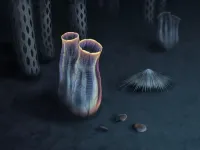
Discovery of 500-million-year-old fossil reveals astonishing secrets of tunicate origins
Environment

Discovery of 500-million-year-old fossil reveals astonishing secrets of tunicate origins

Karma Nanglu says his favorite animal is whichever one he’s working on. But his latest subject may hold first place status for a while: a 500-million-year-old fossil from the wonderfully weird group of marine invertebrates, the tunicates. “This animal is as exciting a discovery as some of the stuff I found when hanging off a cliffside of a mountain, or jumping out of a helicopter. It’s just as cool,” said Nanglu, postdoctoral researcher in the Department of Organismic and Evolutionary Biology at Harvard University. In a new study in Nature Communications, Nanglu and coauthors describe the new fossil, ...

Read the release
CAMRE helps marines take 3D printing to new heights
Environment

CAMRE helps marines take 3D printing to new heights

The Consortium for Additive Manufacturing Research and Education (CAMRE) at the Naval Postgraduate School (NPS) achieved the first successful demonstration of in-flight 3D printing aboard a U.S. Marine Corps MV-22 Osprey tiltrotor aircraft on June 21 in Southern California. CAMRE’s operational demonstration, which involved the printing of a medical cast aboard an airborne Osprey, was part of larger-scale exercise support provided by CAMRE and the Marine Innovation Unit (MIU) to forces participating in an integrated training exercise (ITX) at Marine Corps Air Ground Combat Center Twentynine Palms, Calif., from June 10-22. This successful test of in-flight ...

Read the release
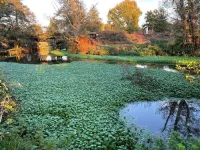
Invasive non-native species cost UK economy an estimated £4bn a year, new CABI-led study reveals
Environment

Invasive non-native species cost UK economy an estimated £4bn a year, new CABI-led study reveals

CABI scientists have carried out a study which reveals invasive non-native species (INNS) – such as the aquatic water weeds floating pennywort and Japanese knotweed as well as signal crayfish – cost the UK economy an estimated £4bn a year. However, when species only covered by the GB Non-native Species Strategy are considered – for instance with fungi excluded from the estimate – the total cost was estimated to be £1.9bn. Researchers working from CABI’s centres in Egham, UK, as well as Switzerland and Kenya, found a 135% increase in comparable costs since the last assessment was conducted in 2010. Annual estimated costs in 2021 were £3.02bn, ...

Read the release
Fossils reveal how ancient birds molted their feathers— which could help explain why ancestors of modern birds survived when all the other dinosaurs died
Environment

Fossils reveal how ancient birds molted their feathers— which could help explain why ancestors of modern birds survived when all the other dinosaurs died

Every bird you’ve ever seen— every robin, every pigeon, every penguin at the zoo— is a living dinosaur. Birds are the only group of dinosaurs that survived the asteroid-induced mass extinction 66 million years ago. But not all the birds alive at the time made it. Why the ancestors of modern birds lived while so many of their relatives died has been a mystery that paleontologists have been trying to solve for decades. Two new studies point to one possible factor: the differences between how modern birds and their ancient cousins molt their feathers. Feathers are one of the key traits that all birds share. They're made of a protein called keratin, the same material ...

Read the release
Tracking ships’ icy paths amidst climate change
Environment

Tracking ships’ icy paths amidst climate change

There has been much buzz about the warming planet’s melting Arctic region opening shipping routes and lengthening travel seasons in ocean passageways that ice once blocked. Expanded fishing, trade and tourism is envisioned. Operative word: Envisioned. Scientists at Michigan State University (MSU), University of Waterloo, and University of Alaska Fairbanks report in Climatic Change where vessels are traveling in the ice-covered waters of the Arctic between Alaska and Russia, and what those reports may mean for important wildlife and communities in the region. “Even with climate change, sea ice is still a substantial barrier to Arctic vessel traffic,” said Kelly Kapsar, ...

Read the release
Sunscreen leaching poses minimal threat to aquatic wildlife
Environment

Sunscreen leaching poses minimal threat to aquatic wildlife

New research reveals that sunscreen contamination may be less harmful to wildlife than previously thought. This study by Aaron Boyd, a PhD candidate at the University of Alberta in Edmonton, Canada, demonstrates how exposure to sunscreen is actually a low risk for small aquatic animals compared to some of the suncream’s individual chemicals. Sunscreens contain ultraviolet filters (UVFs) which have been found to be toxic to marine life such as corals, leading to the ban of some UVFs in Hawaii and Palau. If sunscreen is applied to the skin before swimming in lakes and rivers, these UVFs and other chemicals will leach into surrounding waters. Mr ...

Read the release
Exterminating greenhouse pests with bat-inspired drones
Environment

Exterminating greenhouse pests with bat-inspired drones

Researchers have been testing real-life Batman-style gadgets to eradicate moth pests from greenhouses, including bat-inspired flying drones that hunt down and destroy moths – but new research reveals that the noise from drones can alter moth flight behaviour. “The idea of using drones as an alternative solution to eliminating moths all started in the bedroom of one of the co-owners of the PATS startup company,” says Dayo Jansen, a PhD student from student from Wageningen University and Research in the Netherlands. ...

Read the release
World’s most threatened seabirds visit remote plastic pollution hotspots, study finds
Environment

World’s most threatened seabirds visit remote plastic pollution hotspots, study finds

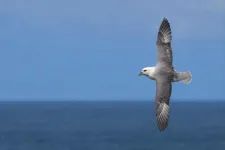
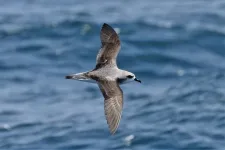
UNDER STRICT EMBARGO UNTIL 16:00 LONDON TIME (BST) / 11:00 (US ET) ON TUESDAY 4TH JULY 2023 Analysis of global tracking data for 77 species of petrel has revealed that a quarter of all plastics potentially encountered in their search for food are in remote international waters – requiring international collaboration to address. The extensive study assessed the movements of 7,137 individual birds from 77 species of petrel, a group of wide-ranging migratory seabirds including the Northern Fulmar and European Storm-petrel, and the Critically Endangered Newell’s Shearwater. This is ...

Read the release
Sea of plastic: Mediterranean is the area of the world most at risk for endangered seabirds
Environment

Sea of plastic: Mediterranean is the area of the world most at risk for endangered seabirds

New study reveals the areas most at risk of plastic exposure by the already endangered seabirds. The study, now published in Nature Communications, brings together more than 200 researchers worldwide around a pressing challenge, widely recognized as a growing threat to marine life: the pollution of oceans by plastic. Coordinated by Dr. Maria Dias, researcher at the Centre for Ecology, Evolution and Environmental Changes (cE3c) at the Faculty of Sciences of the University of Lisbon (Ciências ULisboa), ...

Read the release
How mercury emissions from industry can be greatly reduced
Environment

How mercury emissions from industry can be greatly reduced

Sulphuric acid is the world’s most used chemical. It is an important reagent used in many industries and it is used in the manufacture of everything from paper, pharmaceuticals and cosmetics to batteries, detergents and fertilisers. It is therefore a worldwide challenge that sulphuric acid often contains one of the most toxic substances – mercury. Researchers at Chalmers University of Technology, Sweden, have now developed a method that can reduce the levels of mercury in sulphuric acid by more than 90 per cent – even from low levels. “Until now, there has been no viable method for purifying finished sulphuric ...

Read the release
Environment

Three things to know: Climate change’s impact on extreme-weather events

In an article published in the Proceedings of the National Academy of Sciences, Michael Mann, professor in the Department of Earth and Environmental Science in the University of Pennsylvania's School of Arts & Sciences, and colleagues from Clemson University, the University of California Los Angeles, and Columbia University investigate the effects of climate change on exacerbating compounding heat and drought situations. Their findings offer new insights into predicting their interplay, which will provide scientists and policymakers with a clearer and more holistic approach to preventing and preparing for extreme-weather ...

Read the release
NASA’s Parker Solar Probe completes 16th close approach to the Sun
Environment

NASA’s Parker Solar Probe completes 16th close approach to the Sun

NASA’s Parker Solar Probe accomplished a milestone on June 27, 2023 – its 16th orbit of the Sun. This included a close approach to the Sun (known as perihelion) on June 22, 2023, where the spacecraft came within 5.3 million miles of the solar surface while moving at 364,610 miles per hour. The spacecraft emerged from the solar flyby healthy and operating normally. On Aug. 21, 2023, Parker Solar Probe will swing past Venus for its sixth flyby of the planet. To prepare for a smooth course, the mission team at the Johns Hopkins Applied Physics ...

Read the release
New study reveals abrupt shift in tropical Pacific climate during Little Ice Age
Environment

New study reveals abrupt shift in tropical Pacific climate during Little Ice Age

Summary An El Niño event has officially begun. The climate phenomenon, which originates in the tropical Pacific and occurs in intervals of a few years will shape weather across the planet for the next year or more and give rise to various climatic extremes. El Niño-like conditions can also occur on longer time scales of decades or centuries. This has been shown to have occurred in the recent past by an international research team led by Ana Prohaska of the University of Copenhagen and Dirk Sachse of the German Research Centre for Geosciences (GFZ). Their analysis of biomarkers – organic molecules or molecular fossils from vascular plants – in ...

Read the release
Hedging strategy for coral restoration balances diversity, ecosystem benefits
Environment

Hedging strategy for coral restoration balances diversity, ecosystem benefits

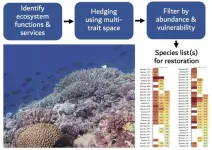
Resource managers and conservationists have been offered an innovative, new approach to selecting coral species for reef restoration. An international team of scientists worked together to develop this approach during a workshop organized by the University of Melbourne (U Melbourne) and the Australian Institute of Marine Science (AIMS). In a study published today in the Journal of Applied Ecology, this international team of scientists, led by a University of Hawai‘i (UH) at Mānoa researcher, revealed a strategy for choosing a set of key ...

Read the release
From the original Press-News collection. Issuers of news releases are responsible for the accuracy of their content.