THE ORIGINAL COLLECTION · SINCE 2010

Environment
press releases.

Research announcements from universities, hospitals and scientific institutions. Explore the stories, people and discoveries behind the headlines.

Original publication datesPage 155
FIND A STORY

Find a past release.

Dates and source material belong to the original release.

Read our research explainers

Browse the collection · original publication order

Plastic pollution on coral reefs increases with depth and mostly comes from fishing activities, Nature study finds
Environment

Plastic pollution on coral reefs increases with depth and mostly comes from fishing activities, Nature study finds

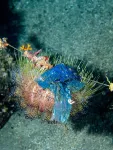
SAN FRANCISCO, CA (July 12, 2023) — In a paper published today in Nature, researchers from the California Academy of Sciences, University of São Paulo, University of Oxford, University of Exeter, and other collaborators reveal the extent of plastic pollution on coral reefs, finding that debris increases with depth, largely stems from fishing activities, and is correlated with proximity to marine protected areas. Through underwater visual surveys spanning more than two dozen locations across the Indian, Pacific, and Atlantic ...

Read the release

Global study details microplastics contamination in lakes and reservoirs
Environment

Global study details microplastics contamination in lakes and reservoirs

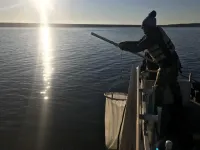
LAWRENCE, Kan. — Around 14 million tons of plastic end up in the ocean every year. But that is not the only water source where plastic represents a significant intrusion. “We found microplastics in every lake we sampled,” said Ted Harris, associate research professor for the Kansas Biological Survey & Center for Ecological Research at the University of Kansas. “Some of these lakes you think of as clear, beautiful vacation spots. But we discovered such places to be perfect examples of the link between plastics and humans.” Harris ...

Read the release
Environment

Scientists find evidence of world’s oldest glaciers

Scientists have discovered the traces of the world’s oldest known glaciers, dating from 2.9 billion years ago, in rocks sitting under the world’s largest gold deposits in South Africa. This suggests the presence of continental ice caps at that time and that either the area was closer to the poles, or that parts of the Earth may have been frozen in a previously unknown “snowball Earth” period of extreme cold weather. This work is presented for the first time at the Goldschmidt geochemistry conference in Lyon, after recent peer-reviewed ...

Read the release
Environment

Six research centers will lead innovation towards a fully sustainable energy sector

An investment of £53 million in six research centres will drive forward change in the energy system and help to meet the UK’s net zero target by 2050. The energy research centres will boost knowledge, create innovative green technologies and reduce demand for energy to achieve greener, cleaner domestic, industrial and transport energy systems. UK Research and Innovation (UKRI) has awarded: £15 million for a new Energy Demand Research Centre that will provide solutions for energy demand reduction, understand the impact on consumers, and enable equitable policy decision-making. £17.5 ...

Read the release
University of Illinois study finds turning food waste into bioenergy can become a profitable industry
Environment

University of Illinois study finds turning food waste into bioenergy can become a profitable industry

URBANA, Ill. — Food waste is a major problem around the world. In the United States, an estimated 30 to 40% of edible food is lost or wasted, costing billions of dollars each year. One potential solution is to divert food waste from landfills to renewable energy production, but this isn’t done on a large scale anywhere. A new study from the University of Illinois Urbana-Champaign investigates the feasibility of implementing energy production from food waste in the state of Illinois. “We have a large amount of organic waste in the U.S., which eventually enters landfills and emits greenhouse gasses. However, this material ...

Read the release
Working to make steel greener, cleaner
Environment

Working to make steel greener, cleaner

CLEVELAND–Case Western Reserve University chemical engineer Rohan Akolkar is leading a research team working to develop a new zero-carbon, electrochemical process to produce iron metal from ore. If successful, the project could be a first step toward eliminating harmful greenhouse gas emissions by eventually replacing century-old, blast-furnace ironmaking with a new electrolytic-iron production process. Reducing iron ore to metal is carbon- and energy-intensive, leading to significant carbon-dioxide emissions that drive global warming. “We don’t use carbon at all in our process, so ...

Read the release
Carbon taxes that focus on luxury consumption are fairer than those that tax all emissions equally
Environment

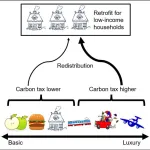
Carbon taxes that focus on luxury consumption are fairer than those that tax all emissions equally

Not all carbon emissions are made for the same reason—they range from more essential purposes like heating a home to nonessential “luxury” activities like leisure travel. However, proposals for the implementations of carbon taxes tend to apply to all emissions at an equal rate. This can give rise to and exacerbate inequalities. A new analysis published on July 11 in the journal One Earth suggests taxing luxury carbon emissions at a higher rate instead; if all 88 countries analyzed in this study adopted the luxury-focused policy, this would achieve 75% of the emissions reduction needed to reach the Paris Agreement’s goal of limiting climate change ...

Read the release
Marine fossils are a reliable benchmark for degrading and collapsing ecosystems
Environment

Marine fossils are a reliable benchmark for degrading and collapsing ecosystems

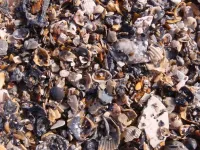
Biologists attempting to conserve and restore denuded environments are limited by their scant knowledge of what those environments looked like before the arrival of humans. This is especially true of coastal ecosystems, many of which had already been drastically altered by pollution and overharvesting hundreds of years before scientists began monitoring them. According to a new study published in the journal PeerJ, a faithful analogue of modern marine ecosystems lies just beneath the surface. Building on more than 20 years of conservation paleobiology, the results suggest that fossils of various marine groups — including worms, mollusks, crabs and sea urchins — are ...

Read the release
Deciphering fish species interactions for climate change insights
Environment

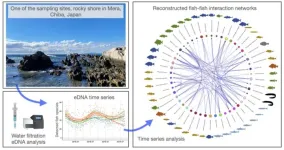
Deciphering fish species interactions for climate change insights

A team led by the Hong Kong University of Science and Technology (HKUST) has developed a technique to study how different fish species interact with each other in a coastal region, a breakthrough that helps explain the complex relationships among marine species and how global warming impacts fish populations. By analyzing minute traces of fish DNA from samples of seawater, the team combined the use of environmental DNA – known as eDNA – and advanced statistical analysis to not only detect ...

Read the release
Environment

Unused renewable energy an option for powering NFT trade

ITHACA, N.Y. -- Unused solar, wind, and hydroelectric power in the U.S. could support the exponential growth of transactions involving non-fungible tokens (NFTs), Cornell Engineering researchers have found. Fengqi You, the Roxanne E. and Michael J. Zak Professor in Energy Systems Engineering in Cornell Engineering, is corresponding author of “Climate Concerns and the Future of Non-Fungible Tokens: Leveraging Environmental Benefits of the Ethereum Merge,” which published July 10 in Proceedings of the National Academy of Sciences. You’s co-author is Apoorv Lal, ...

Read the release
Environment

NJIT awarded $10 million for technical assistance at polluted brownfield sites through EPA grant

New Jersey Institute of Technology has been awarded $10 million by the U.S. Environmental Protection Agency (EPA) as part of a $315 million initiative from President Biden’s Investing in America Agenda to expedite the assessment and cleanup of brownfield sites across the country. The funding comes entirely from the historic $1.5 billion investment from Biden’s Bipartisan Infrastructure Law. Brownfields are abandoned or underutilized properties that may have hazardous substances, pollutants, or contaminants present, making their redevelopment complex. Under the EPA’s Technical Assistance to ...

Read the release
New fish species discovered after decades of popularity in the aquarium trade
Environment

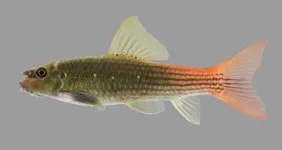
New fish species discovered after decades of popularity in the aquarium trade

With just a few clicks of a mouse, you can purchase your very own redtail garra, a type of fish that feeds on algae. Information about the fish’s biology, however, is much less easily obtained. That’s because redtail garra, although popular in the aquarium trade since the early 2000s, has until now been unknown to science. Researchers were peripherally aware of the fish’s existence, but “discovering” a new species requires scientific description based on specimens collected in their natural ...

Read the release
Global study finds while humans sheltered in place, wildlife roamed
Environment

Global study finds while humans sheltered in place, wildlife roamed

MISSOULA – While humans sheltered in place during the COVID-19 pandemic, wild animals took the opportunity to roam spaces typically avoided by wildlife, according to a study published last month in Science. Photos quickly emerged of wild goats spotted on the city streets of Wales and coyotes touring downtown San Francisco, yet evidence explaining this phenomenon was sparse. Dr. Mark Hebblewhite, professor of ungulate habitat ecology at the University of Montana, joined an international research team of 175, led by Dr. Marlee Tucker – an ecologist at Radboud University in the Netherlands – in analyzing ...

Read the release
Scientists discover 36-million-year geological cycle that drives biodiversity
Environment

Scientists discover 36-million-year geological cycle that drives biodiversity

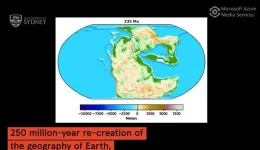
Movement in the Earth’s tectonic plates indirectly triggers bursts of biodiversity in 36‑million-year cycles by forcing sea levels to rise and fall, new research has shown. Researchers including geoscientists at the University of Sydney believe these geologically driven cycles of sea level changes have a significant impact on the diversity of marine species, going back at least 250 million years. As water levels rise and fall, different habitats on the continental shelves and in shallow seas expand and contract, ...

Read the release
Global cooling caused diversity of species in orchids, confirms study
Environment

Global cooling caused diversity of species in orchids, confirms study

Research led by the Milner Centre for Evolution at the University of Bath looking at the evolution of terrestrial orchid species has found that global cooling of the climate appears to be the major driving factor in their diversity. The results help scientists understand the role of global climate on diversity of species, and how our current changing global climate might affect biodiversity in the future. One of the largest families of plants, there are around 28,000 species of orchids growing across the world. These plants are known for their huge variety of different sized and shaped flowers, so why are there so many species Climate change driving speciation Charles ...

Read the release
New biodegradable plastics are compostable in your backyard
Environment

New biodegradable plastics are compostable in your backyard

We use plastics in almost every aspect of our lives. These materials are cheap to make and incredibly stable. The problem comes when we're done using something plastic — it can persist in the environment for years. Over time, plastic will break down into smaller fragments, called microplastics, that can pose significant environmental and health concerns. The best-case solution would be to use bio-based plastics that biodegrade instead, but many of those bioplastics are not designed to degrade in backyard composting conditions. They must be processed in commercial composting facilities, which are not accessible in all regions of the ...

Read the release
Environment

Girls Deliver: building an integrated, feminist ecosystem to support adolescent girls at the Women Deliver 2023 Conference

July 10, 2023 — The Population Council’s GIRL Center, and co-hosts AFIDEP, AMPLIFY Girls, Baobab Research Programme Consortium, Children’s Investment Fund Foundation, Coalition for Adolescent Girls, Exemplars in Global Health, FP2030, Girl Effect, Girls First Fund, Conrad N. Hilton Foundation, the National Democratic Institute (NDI), Plan International, PMNCH, Purposeful, Together for Girls, UNICEF, Women Deliver, and The World Bank Africa Gender Innovation Lab, are proud to host the “Girls Deliver: Pre-Conference on Adolescent Girls,” on July 16. This one-day global convening ...

Read the release
Environment

Conservation in Indonesia is at risk, a team of researchers who study the region argues

Indonesia, home to the largest tropical rainforest in Southeast Asia and over 17,500 islands, is a country packed with biodiversity and endangered species. However, scientists studying the region’s species and ecosystems are getting banned from Indonesia, and conservation plans are being blocked. In a letter publishing in the journal Current Biology on July 10, a team of conservation researchers with long-term experience in Indonesia discuss scientific suppression and other research challenges they have witnessed while working in the region. They offer suggestions for how to promote nature conservation, protect data ...

Read the release
Addressing justice in wildfire risk management
Environment

Addressing justice in wildfire risk management

The frequency and severity of wildfires have become increasingly alarming in recent years, substantially due to the effects of climate change. Rising global temperatures, altered weather patterns, and prolonged droughts are all consequences of climate change that contribute to the heightened risk of wildfires. The 2019-2020 Australian wildfires demonstrated that compound climatic events – long-lasting record high temperatures combined with record low precipitation – can lead to unprecedented ...

Read the release
ERC Advanced Grant awarded to study laughing gas and its relation to climate change
Environment

ERC Advanced Grant awarded to study laughing gas and its relation to climate change

Ülo Mander, Professor of Physical Geography and Landscape Ecology at the University of Tartu, received the Advanced Grant from the European Research Council to study the cycle of nitrous oxide (N2O), commonly known as the laughing gas, in fens and peatlands, its links to global climate change, and possible land-use practices that could help curb the production of this greenhouse gas in the future. Laughing gas is one of the most dangerous greenhouse gases produced by microbial life in the soils of agricultural areas and drained ...

Read the release
Developer dollars not enough to save species
Environment

Developer dollars not enough to save species

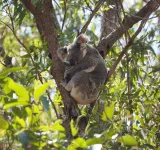
Financial payments made by land developers to offset their impacts on threatened species may fall short, according to University of Queensland-led research. Professor Jonathan Rhodes from the School of the Environment focused on koala populations in the fast-developing South East Queensland region and a government scheme which allows developers to make financial payments to compensate for environmental consequences. “Just like when you make a financial contribution to offset your carbon emissions when ...

Read the release
Strawberry fields forever? Strawberry production leaves long-term plastic pollution
Environment

Strawberry fields forever? Strawberry production leaves long-term plastic pollution

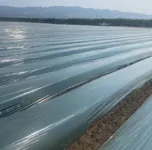
Researchers have found that the plastic mulch used to support the growth of Californian strawberries sheds large quantities of plastic mulch fragments. These particles have been shown to negatively impact soil qualities, casting doubt on the long-term viability of their use. The findings from the survey are likely to apply world-wide to plastic use in agricultural production. Presenting their work at the Goldschmidt geochemistry conference in Lyon, postdoctoral researcher Dr Ekta Tiwari (from Sistla group at California Polytechnic ...

Read the release
Environment

Bees get week early wakeup call from warming climate

Warmer springs are causing British bees to wake up earlier, a new study has found, threatening the pollination of crops such as apples and pears. The research – which is believed to be the largest of its kind in Great Britain – found that for every 1 degree Celsius rise in temperature caused by climate change, wild bees, such as bumblebees, emerge from their nests 6.5 days earlier on average. As spring starts earlier and bees emerge closer to the start of the year, they may lose sync with the plants on which ...

Read the release
From bad to worse: h=How micro- and meso-plastics collect heavy metals
Environment

From bad to worse: h=How micro- and meso-plastics collect heavy metals

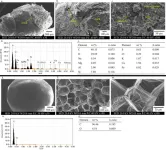
Tokyo, Japan – A team led by researchers from Tokyo Metropolitan University studied how microplastics in the environment accumulate heavy metals. As the microplastics spread, so do their toxic cargo. Focusing on polystyrene foam, they collected particles along a river running through Ulaanbaatar, Mongolia. They found significant levels of heavy metals accumulated on the particles, reflecting local land use and industries, as well as surface features like holes and biofilms which help pollutants collect. The spread of plastic debris into the natural environment is an ecological disaster. As plastic waste makes ...

Read the release
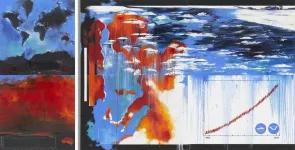
Art that integrates data visualizations can help bridge the US political divide over climate change
Environment

Art that integrates data visualizations can help bridge the US political divide over climate change

MADISON – Communicating science to a general audience can be challenging. Successfully conveying research on polarizing topics such as climate change can be even more difficult. But a new study from University of Wisconsin–Madison researcher Nan Li shows that intentionally integrating art with data visualizations can help non-expert audiences more meaningfully engage with climate change while also bridging political divides in ways that data alone cannot. In fact, data graphs on their own can exacerbate political division on climate change. As an assistant professor in the Department of Life Sciences Communication, Li studies how innovative visual representations of science ...

Read the release
From the original Press-News collection. Issuers of news releases are responsible for the accuracy of their content.